The big picture
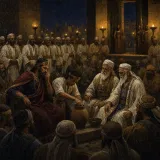
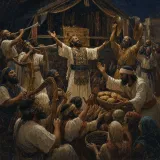
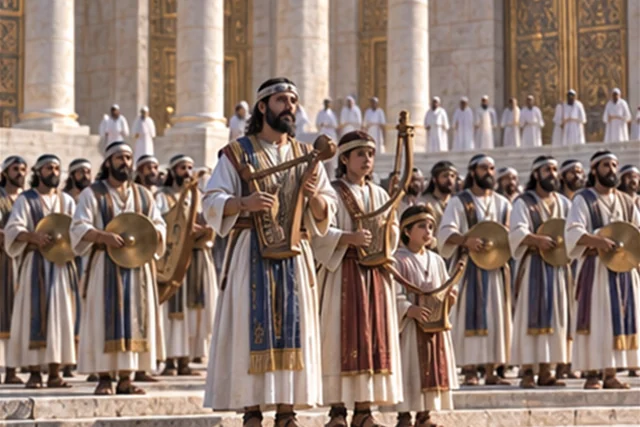
David, the king of Israel, appoints families to lead music in God's house. Israel is God's people, and Asaph, Heman and Jeduthun are the heads of the musical groups. Their sons serve under their direction with stringed instruments and cymbals. The music gives thanks and carries words spoken for God. Skilled singers receive ordered turns, and the drawing of lots includes both teachers and learners rather than leaving the whole task to one household.
In this chapter
- Musical Families Are Chosen for Service 1 Chronicles 25:1-3
David and the army leaders set apart the sons of Asaph, Heman and Jeduthun for musical service.
- Teachers and Learners Draw Their Turns 1 Chronicles 25:4-8
Heman's sons are named as another musical household.
- Each Named Group Has Twelve Members 1 Chronicles 25:9-31
The list gives twenty-four turns for the musicians.
Central truth
Music in God's house is trained, shared service, with families placed in ordered groups and teachers taking their turns alongside learners.

Scripture beside the summary
1 Chronicles · King James Version · 311 Chronicles 25:1-3
Musical Families Are Chosen for Service
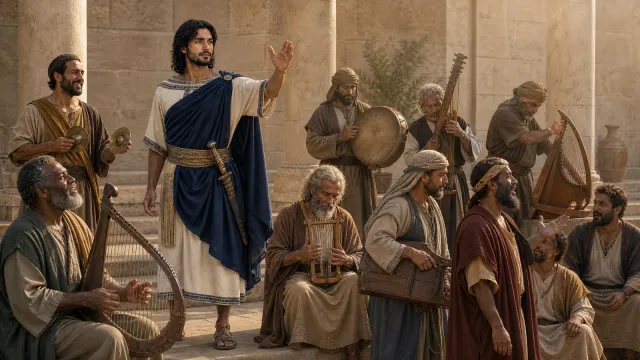
David and the army leaders set apart the sons of Asaph, Heman and Jeduthun for musical service. They prophesy with instruments. Their music gives voice to God's message as well as praise. Asaph's sons serve under his hand according to the king's direction. Jeduthun's family also works under its father, using the harp to thank and praise God. The account begins with households and leaders rather than a single gifted performer. Music belongs to the organised service of the house and has a stated purpose directed toward God.
In everyday life
A radio producer gathers a team to record a memorial programme. Each musician knows the words and purpose of the broadcast before taking a place at the microphone. The producer asks for a shared message rather than competing solos. Skill serves what is being said. The appointed families also prophesy and give thanks to God in sacred service.
Notice
1 Chronicles 25:3 Jeduthun's harp is linked directly with thanks and praise. The instrument is not listed as decoration; it serves the words and purpose of the worship.
1 Chronicles 25:1-3
King James Version1Moreover David and the captains of the host separated to the service of the sons of Asaph, and of Heman, and of Jeduthun, who should prophesy with harps, with psalteries, and with cymbals: and the number of the workmen according to their service was:
2Of the sons of Asaph; Zaccur, and Joseph, and Nethaniah, and Asarelah, the sons of Asaph under the hands of Asaph, which prophesied according to the order of the king.
3Of Jeduthun: the sons of Jeduthun; Gedaliah, and Zeri, and Jeshaiah, Hashabiah, and Mattithiah, six, under the hands of their father Jeduthun, who prophesied with a harp, to give thanks and to praise the LORD.
1 Chronicles 25:4-8
Teachers and Learners Draw Their Turns
Heman's sons are named as another musical household. Heman is the king's seer, a man who speaks God's words. God has given him fourteen sons and three daughters. The musicians work under their fathers and the king's order, using cymbals and stringed instruments in God's house. With their relatives, the trained singers number two hundred eighty-eight. Lots assign their turns without separating the great from the small or the teacher from the learner. Skill and training matter, but neither removes anyone from the common order of service.

In everyday life
The pottery tutor draws firing slots with beginners for the shared kiln. Her skill gives her a teaching role, but she still waits for the time assigned. Learners see that expertise does not make common rules optional. The workshop can hold both skill and shared access. These musical lots assign worship duties, not use of equipment.
Notice
1 Chronicles 25:8 Both skilled teachers and those still learning take part in the drawing. The process keeps differences in skill from turning into a separate claim over when each group serves.
1 Chronicles 25:4-8
King James Version4Of Heman: the sons of Heman; Bukkiah, Mattaniah, Uzziel, Shebuel, and Jerimoth, Hananiah, Hanani, Eliathah, Giddalti, and Romamti-ezer, Joshbekashah, Mallothi, Hothir, and Mahazioth:
5All these were the sons of Heman the king’s seer in the words of God, to lift up the horn. And God gave to Heman fourteen sons and three daughters.
6All these were under the hands of their father for song in the house of the LORD, with cymbals, psalteries, and harps, for the service of the house of God, according to the king’s order to Asaph, Jeduthun, and Heman.
7So the number of them, with their brethren that were instructed in the songs of the LORD, even all that were cunning, was two hundred fourscore and eight.
8And they cast lots, ward against ward, as well the small as the great, the teacher as the scholar.
1 Chronicles 25:9-31
Each Named Group Has Twelve Members
The list gives twenty-four turns for the musicians. Joseph receives the first, followed by Gedaliah and the other named leaders. Each group includes sons and relatives, with twelve members in the repeated entries. Romamti-ezer receives the last turn. The steady pattern shows how the full body of singers is divided for use. Family links remain visible, but the groups have a common size and a clear place in the order. The long list turns the earlier total into teams that can report for their appointed service.
In everyday life
The ferry steward checks a passenger manifest divided into equal boarding groups. She calls each group by its assigned number and confirms that no names disappear between the first and last page. A large total becomes manageable through a complete sequence. The singers are enduring family teams for worship, not travellers grouped for a single crossing.
Notice
1 Chronicles 25:31 The last group receives the same count as those before it. The repeated number carries the arrangement through to the final name rather than leaving the end vague.
1 Chronicles 25:9-31
King James Version9Now the first lot came forth for Asaph to Joseph: the second to Gedaliah, who with his brethren and sons were twelve:
10The third to Zaccur, he, his sons, and his brethren, were twelve:
11The fourth to Izri, he, his sons, and his brethren, were twelve:
12The fifth to Nethaniah, he, his sons, and his brethren, were twelve:
13The sixth to Bukkiah, he, his sons, and his brethren, were twelve:
14The seventh to Jesharelah, he, his sons, and his brethren, were twelve:
15The eighth to Jeshaiah, he, his sons, and his brethren, were twelve:
16The ninth to Mattaniah, he, his sons, and his brethren, were twelve:
17The tenth to Shimei, he, his sons, and his brethren, were twelve:
18The eleventh to Azareel, he, his sons, and his brethren, were twelve:
19The twelfth to Hashabiah, he, his sons, and his brethren, were twelve:
20The thirteenth to Shubael, he, his sons, and his brethren, were twelve:
21The fourteenth to Mattithiah, he, his sons, and his brethren, were twelve:
22The fifteenth to Jeremoth, he, his sons, and his brethren, were twelve:
23The sixteenth to Hananiah, he, his sons, and his brethren, were twelve:
24The seventeenth to Joshbekashah, he, his sons, and his brethren, were twelve:
25The eighteenth to Hanani, he, his sons, and his brethren, were twelve:
26The nineteenth to Mallothi, he, his sons, and his brethren, were twelve:
27The twentieth to Eliathah, he, his sons, and his brethren, were twelve:
28The one and twentieth to Hothir, he, his sons, and his brethren, were twelve:
29The two and twentieth to Giddalti, he, his sons, and his brethren, were twelve:
30The three and twentieth to Mahazioth, he, his sons, and his brethren, were twelve:
31The four and twentieth to Romamti-ezer, he, his sons, and his brethren, were twelve.
Details worth noticing
The opening image
1 Chronicles 25:1 begins with “Moreover David and the captains of the host separated to the service of the sons of Asaph, and of Heman, and of Jeduthun, who should prophesy with harps…”
Where the chapter turns
1 Chronicles 25:9 forms a natural hinge: “Now the first lot came forth for Asaph to Joseph: the second to Gedaliah, who with his brethren and sons were twelve:”
The final note
1 Chronicles 25:31 leaves the reader with “The four and twentieth to Romamti-ezer, he, his sons, and his brethren, were twelve.”
A word trail through the chapter
The words sons, brethren, twelve, Asaph, Heman, Jeduthun help reveal the chapter’s repeated concerns.
Music and video connected to the passage
Related media appears when its Scripture reference overlaps this study. Music and video can illuminate a theme while the biblical text remains the foundation.