
1 Chronicles

29 Chapters
1 Chronicles: The Whole Book, Chapter by Chapter
Before There Was an Israel
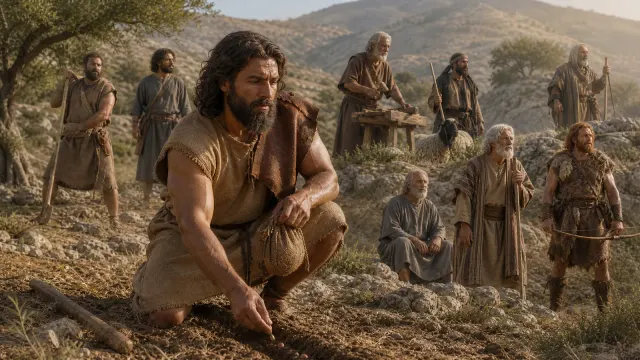
The Book of 1 Chronicles opens before Israel, kingship, or even Abraham. A spare chain of names runs from Adam to Noah, then spreads through the families of Japheth, Ham, and Shem until descent begins to function almost like a map of the peoples surrounding Israel. The register then narrows toward Abraham, but Ishmael and Keturah's descendants remain on the page before Isaac's line takes priority. Esau and Seir likewise receive substantial attention, and Edom's kings appear before Israel has a king of its own. The chapter is selective at every stage, yet its selection does not erase neighboring branches. Its destination will eventually be David, but its opening insists that the royal line belongs within a human and regional history much older and wider than the throne.
One complete chapter pageOpen chapter →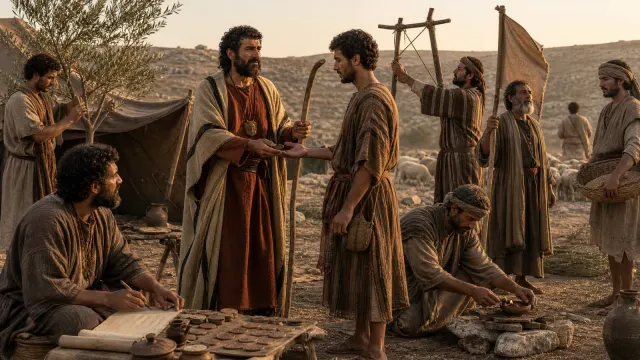
Judah's Family Is Larger Than the Royal Line
Israel's twelve sons appear briefly before Judah fills most of the chapter, yet the expanded Judah register refuses to become a polished royal pedigree. Er's wickedness remains visible, Tamar remains essential, and Achar is remembered through the trespass that troubled Israel. The line toward David is important, but so are David's sisters and the family ties that explain later military figures. Other branches lead toward Bezaleel, Gilead, childless households, an Egyptian servant who becomes a son-in-law, settlements, and scribal families. Women, marriages, occupations, and towns keep breaking the simple father-to-son rhythm. The result is a genealogy that establishes royal ancestry while showing how much larger Judah is than the throne. The crown comes from one line inside a complicated tribal network, not from a sanitized chain of isolated men.
One complete chapter pageOpen chapter →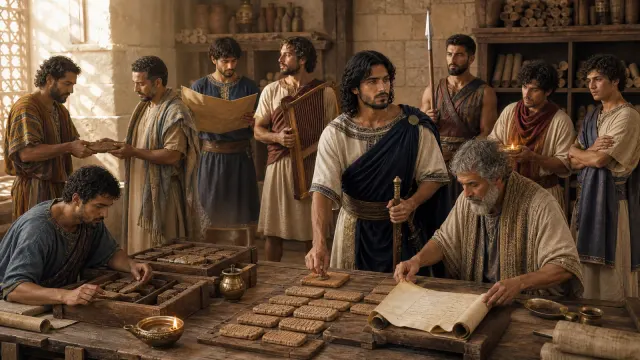
The Royal Line Outlives the Throne
David's household is arranged first by the two cities of his reign, Hebron and Jerusalem, and then narrowed into the succession of Judah's kings. Mothers, brothers, and Tamar keep the palace visible as a family before the genealogy becomes a royal line. That royal sequence compresses reigns of very different character into the same father-to-son formula, showing that descent records continuity rather than equal moral approval. The decisive turn comes after Jeconiah. The monarchy collapses, yet the names continue through Zerubbabel and later generations. The throne is no longer the form of the list, but the family has not disappeared. 1 Chronicles thus separates the endurance of David's line from the uninterrupted possession of royal power. Several relationships remain compressed or difficult, but the larger continuity does not depend on forcing every detail into artificial certainty.
One complete chapter pageOpen chapter →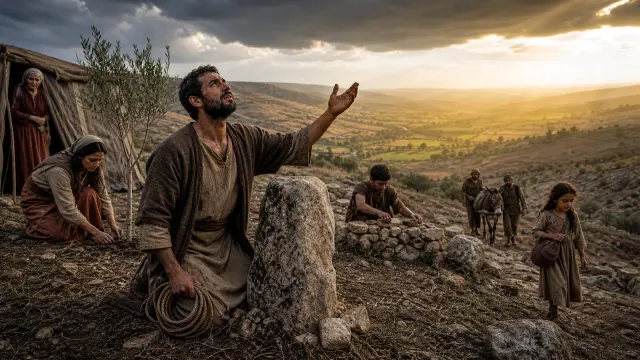
Prayer, Skilled Hands, and the Search for Room
Further records of Judah place ordinary households, women, craftsmen, and settlements beside the brief but memorable prayer of Jabez. His two verses interrupt the register with sorrow, petition, and an answer, yet the chapter does not turn that prayer into a general formula for material prosperity. Work soon returns to the foreground through craftsmen, linen workers, potters, and royal service. Then the focus shifts to Simeon, where one unusually large household is carefully distinguished from the tribe's more modest growth. Geography closes the chapter with pressure for pasture and territorial expansion. The land found by the expanding families is called wide, quiet, and peaceable before violence changes the situation. 1 Chronicles records successful settlement while keeping the destruction and displacement that made that settlement possible plainly visible.
One complete chapter pageOpen chapter →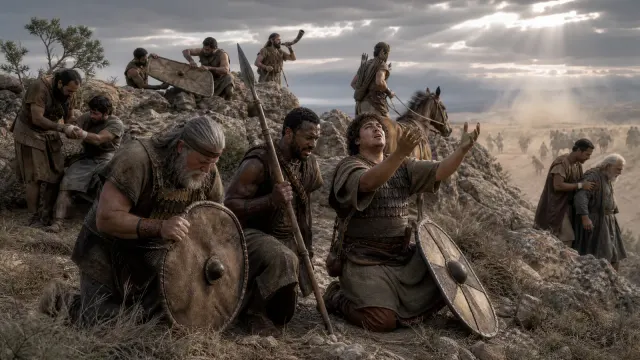
The Firstborn, the Birthright, and the Exile
The eastern tribes are introduced through a careful separation of privileges that later readers might otherwise collapse. Reuben is still Israel's firstborn, Joseph receives the birthright, and Judah supplies the chief ruler. Reuben, Gad, and the half tribe of Manasseh are then remembered through settlements, genealogical reckonings, military skill, expansion, and a major victory attributed to answered prayer. Yet captivity has already entered the chapter before the triumph reaches its height. The same tribes that win territory and take captives eventually lose their own land. The closing explanation does not blame a shortage of capable fighters. Their chiefs are mighty and famous. The stated reversal concerns unfaithfulness to the God of their fathers. Past privilege, military competence, and earlier divine help do not make possession permanent when allegiance changes.
One complete chapter pageOpen chapter →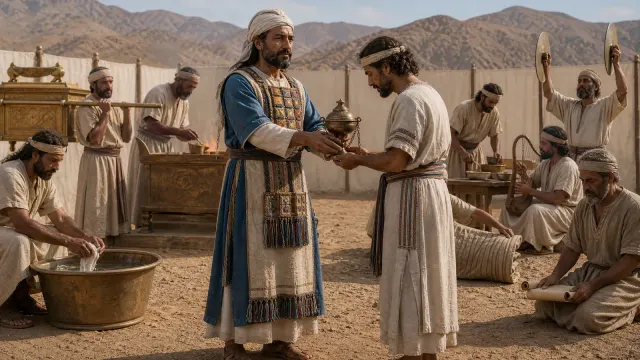
The Families That Kept the Sanctuary Serving
Levi's descendants are arranged around responsibilities as much as ancestry. The chapter opens with Aaron's priestly line and carries it all the way to Jehozadak's deportation, placing priesthood inside the same national history that ends in exile. It then broadens to Gershom, Kohath, and Merari before locating Heman, Asaph, and Ethan within a carefully ordered musical service. Aaron's sons remain distinct in sacrificial duties, while the wider Levite body supports the sanctuary through other work. Finally, long lists of cities show how those households were distributed across Israel on both sides of Jordan. The result is a family record that becomes an institutional map: lineage identifies people, offices distinguish their work, and towns provide the practical network that allows sanctuary service to continue.
One complete chapter pageOpen chapter →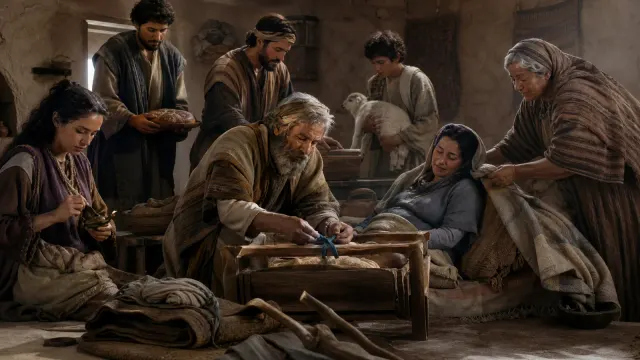
Households, Fighting Men, and a Daughter's Buildings
The northern tribal registers are uneven in size and form, which is precisely why they should not be treated as one standardized census. Issachar and Benjamin are remembered through family heads and military numbers, Naphtali through a single verse, Manasseh through complicated households in which women are essential to continuity, and Asher through named families that culminate in a military reckoning. Ephraim's section breaks the pattern most sharply. Sons are killed, a father mourns, relatives come to comfort him, Beriah is named out of household trouble, Sherah is credited with building towns, and the line eventually reaches Joshua. Grief, work, settlement, and leadership occupy the same genealogy. The chapter preserves what its different records contain without pretending that every tribe submitted the same kind of information.
One complete chapter pageOpen chapter →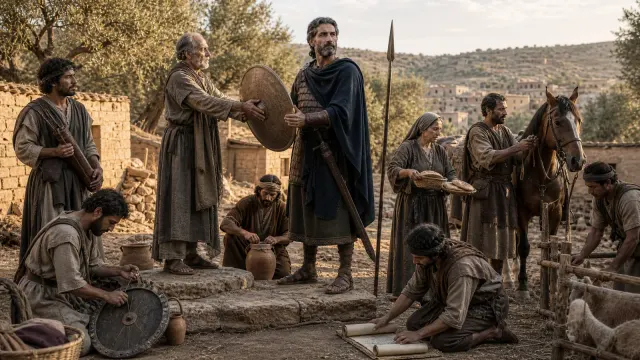
Benjamin Before and Beyond Saul
Benjamin receives a second and fuller register that moves steadily toward Saul without reducing the tribe to its first king. Families migrate, children are born in Moab, towns are built, local leaders confront neighboring populations, and chief households settle in Jerusalem. The Gibeon material then leads into Saul's ancestry, but even there the chapter does not stop with the king. Jonathan's descendants continue through multiple generations, and the closing household is remembered for numerous sons and skilled archers. The result prepares for Saul's death in chapter 10 while already establishing that his biological line survives beyond that catastrophe. Benjamin's royal establishment can fail without Benjamin itself disappearing. The tribe has a history before Saul, a network around Saul, and a future after him.
One complete chapter pageOpen chapter →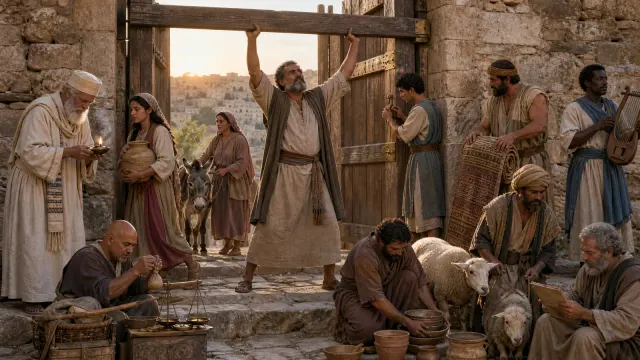
The Work That Opens the Gates Each Morning
The genealogical introduction reaches Jerusalem after stating plainly that Judah was carried to Babylon for transgression. Restoration is then given an everyday shape through named inhabitants and sanctuary workers. Priests are called able men for the service of God's house, gatekeepers work in rotations and open the doors each morning, vessels are counted, supplies are supervised, bread is prepared, and singers are freed from other tasks because their own service occupies them continually. The chapter draws records from different periods to show continuity rather than pretending everything happened at once. Finally, Saul's genealogy returns almost word for word from the previous chapter. That repetition opens the door from ancestry into royal history, positioning the reader to meet Saul not at his anointing but at the battlefield where his reign ends.
One complete chapter pageOpen chapter →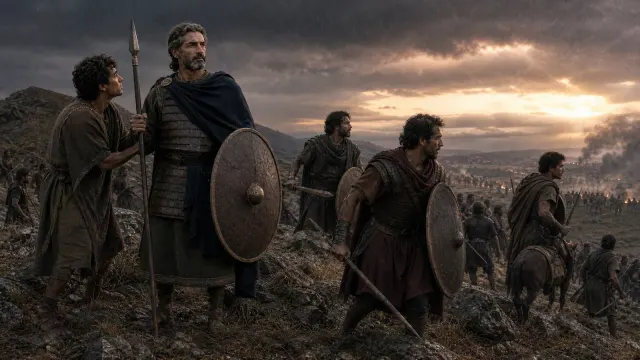
Saul's Reign Ends Before David's Begins
After nine chapters of ancestry, 1 Chronicles begins sustained royal history with a collapse. Saul's sons are killed on Gilboa, the king dies on his own sword, nearby Israelites abandon their towns, and the Philistines turn his body and armor into public trophies. The men of Jabesh-gilead recover the dead and give them burial, preserving a final act of loyalty even after defeat. Then the chapter supplies its own explanation beneath the battlefield sequence. Saul dies for transgression, failure to keep the Lord's word, and resort to a familiar spirit. The book can describe the physical means of his death and still attribute the larger outcome to divine judgment. The kingdom is then turned to David, making Saul's failure the dark threshold through which the Davidic account begins.
One complete chapter pageOpen chapter →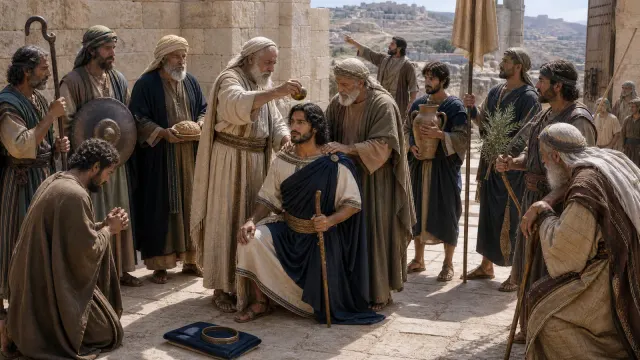
A King Established Through Other People's Courage
David's kingship is established through converging forms of recognition rather than through solitary conquest. Israel's elders appeal to kinship, previous leadership, and the Lord's word before making covenant with him at Hebron. Jerusalem then becomes his city, but Joab's initiative remains part of its capture and repair. The chapter widens further into the deeds of mighty men who strengthen the kingdom alongside all Israel. Their courage is memorable, yet the account repeatedly attributes deliverance to the Lord and refuses to let the king monopolize credit. The water brought from Bethlehem becomes the chapter's sharpest image of costly devotion, since David refuses to treat a life-risking gift as ordinary refreshment. The long closing honor roll then preserves men from varied backgrounds, including outsiders whose identities remain visible within David's force.
One complete chapter pageOpen chapter →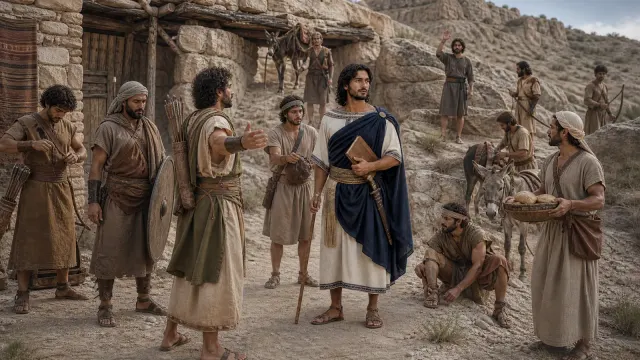
Before the Crown, Men Kept Arriving
The chapter looks backward to the period when David was still restricted by Saul and shows support gathering before public kingship was secure. Benjaminite warriors, Gadites, men from Judah and Manasseh, and others arrive with distinct skills and varying risks attached to their allegiance. David does not accept every newcomer blindly, and Amasai's declaration of peace answers a genuine fear of betrayal. The scene then broadens to Hebron, where tribal contingents come with different numbers, leaders, weapons, and descriptions. Unity does not require uniformity. Issachar brings discernment about what Israel should do, Zebulun brings disciplined ranks and an undivided heart, and the rest contribute according to their strengths. The final picture is unexpectedly domestic: three days of eating and drinking, abundant provisions, and joy in Israel.
One complete chapter pageOpen chapter →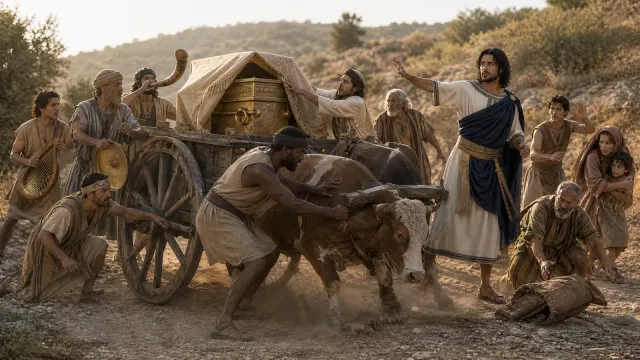
A Joyful Procession Stops at a Breach
David proposes bringing the ark back into national attention after the neglect associated with Saul's days, and the plan receives broad approval. All Israel gathers, music fills the procession, and the ark is placed on a new cart. Yet good intention, consensus, new equipment, and vigorous celebration do not make the method correct. When the oxen stumble, Uzza touches the ark and dies. David's anger turns to fear, the journey stops, and the ark is taken to Obed-edom's house. The chapter would be easy to reduce to danger if it ended there, but it does not. The same ark remains with Obed-edom for three months, and the Lord blesses his household. The failed procession therefore becomes an unresolved interruption that chapter 15 will answer through corrected order rather than abandoned joy.
One complete chapter pageOpen chapter →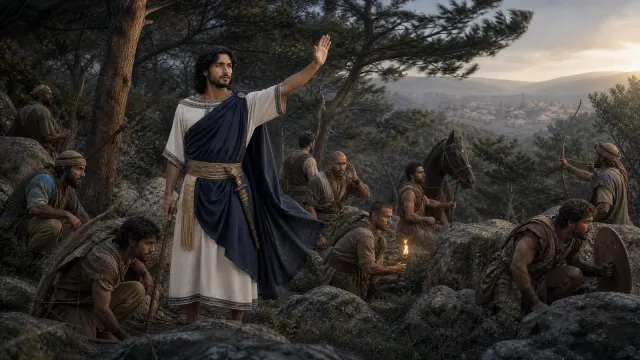
The King Asks Again
David's establishment in Jerusalem becomes visible through Hiram's materials, skilled builders, and the growth of the royal household, yet David understands the elevation of his kingdom as something done for Israel's sake. The chapter then turns to two Philistine attacks in the same valley. The repetition exposes an important discipline: David asks God both times. The first answer sends him directly against the enemy and produces the name Baal-perazim through the image of God breaking forth. The second answer gives a different route and a signal in the trees. Similar circumstances do not justify reusing the first instruction without fresh inquiry. David's growing fame follows obedience to specific direction, while the Lord remains the one who goes before him and spreads fear among the nations.
One complete chapter pageOpen chapter →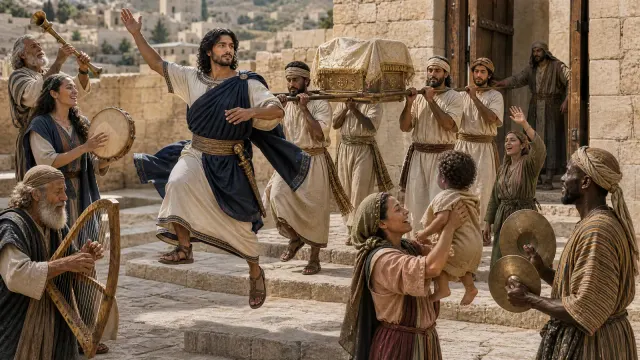
The Ark Moves on Shoulders, and the Music Returns
The second attempt to bring the ark to Jerusalem begins with a changed decision, not with better luck. David states that the Levites are the appointed bearers, gathers their chiefs, calls for sanctification, and identifies the earlier breach as a failure to seek the Lord “after the due order.” The ark now travels on shoulders with staves, according to the command associated with Moses. At the same time, the chapter expands the musical organization dramatically. Singers, cymbal players, string players, trumpeters, doorkeepers, and skilled leaders receive distinct assignments. Correction does not drain the procession of joy. Sacrifice, shouting, instruments, and David's dancing fill the successful movement into the city. The final verse then isolates Michal at a window, preserving one private response of contempt inside a moment of national celebration.
One complete chapter pageOpen chapter →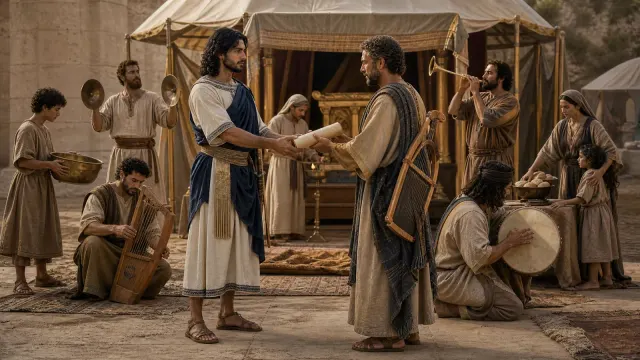
A Song Large Enough for Israel and the Nations
The ark is finally in Jerusalem, but 1 Chronicles 16 refuses to let the arrival remain a single spectacular day. Sacrifice becomes shared food, celebration becomes assigned service, and a song begins with Israel’s remembered covenant before widening until nations, seas, fields, and trees are caught in its praise. The widening is not vague. The Lord is distinguished from idols as the maker of heaven, and judgment itself becomes part of creation’s rejoicing. Yet the song can still ask to be gathered and delivered, holding triumph and dependence together. Then the crowd goes home. Asaph’s group remains before the ark, Zadok’s priests continue at Gibeon, and the morning-and-evening work proceeds. The festival matters, but the chapter’s final image is a rota still functioning after the applause is gone.
One complete chapter pageOpen chapter →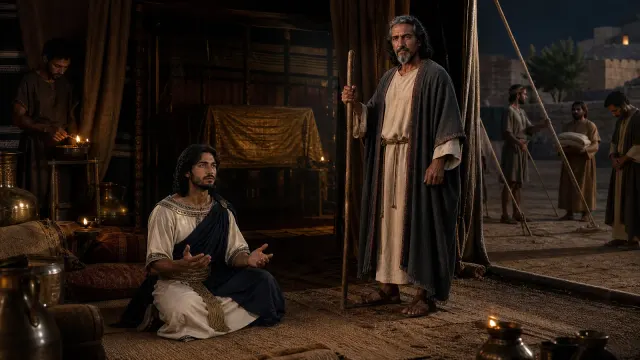
David Offers a House and Receives a Dynasty
David begins 1 Chronicles 17 looking at cedar walls and a tent, and the obvious project seems to be giving the ark a permanent house. By the end of the chapter, the meaning of “house” has turned completely. Nathan’s first approval is corrected by a word from God, who has never depended on cedar and who reminds David that the relationship began with God taking a shepherd from the sheepfold. The king’s proposed gift is answered with a dynastic promise: a son will build the temple, while David’s line is established beyond his lifetime. David then moves from sitting in his own house to sitting before the Lord. His prayer does not bargain for the project he wanted. It asks that the promise already spoken be established, making received promise the source of petition rather than its replacement.
One complete chapter pageOpen chapter →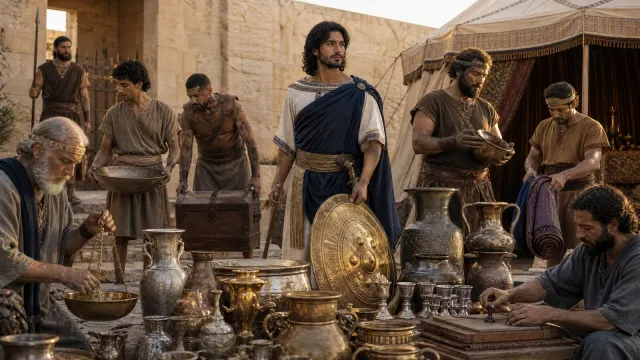
Victories Become Resources for an Unbuilt House
1 Chronicles 18 moves rapidly across campaigns, tributaries, garrisons, captured metals, diplomatic gifts, and officers of state, but one line keeps returning: “the LORD preserved David whithersoever he went.” The book’s theological explanation never erases the human machinery of the victories. Armies fight, horses are disabled, rulers become servants, and tribute follows defeat. At the same time, the spoils do not remain trophies with no future. Gold, silver, and especially bronze are dedicated, and the book reaches ahead to tell the reader that Solomon will use some of it for temple furnishings. Then the chapter changes scale again. Successful kingship is not finished when enemies are beaten. Judgment, justice, military command, priestly service, recordkeeping, scribal work, guards, and household offices still require named people. Conquest produces a realm that must be governed.
One complete chapter pageOpen chapter →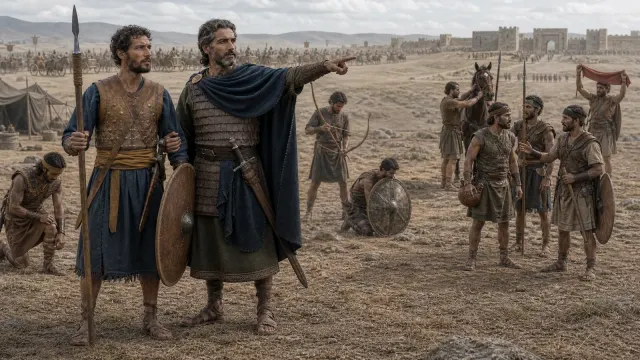
A Suspicion Turns Sympathy Into War
A condolence mission opens 1 Chronicles 19, and suspicion turns it into an international war. The account is careful about the first cause: David says he intends kindness toward Hanun, while Hanun’s advisers allege espionage and overthrow. Their charge is recorded as suspicion, not revealed as David’s hidden motive. The humiliation of the envoys then creates the hostility the advisers thought they were detecting. Ammon spends heavily on foreign military support, Joab and Abishai coordinate against two fronts, and Syrian reinforcements widen the conflict again until David takes command. The ending is political as much as military. Hadarezer’s servants make peace, the Syrians refuse further help to Ammon, and Hanun is left more isolated than before. The chapter’s irony is severe: fear of an enemy helps manufacture the very crisis it feared.
One complete chapter pageOpen chapter →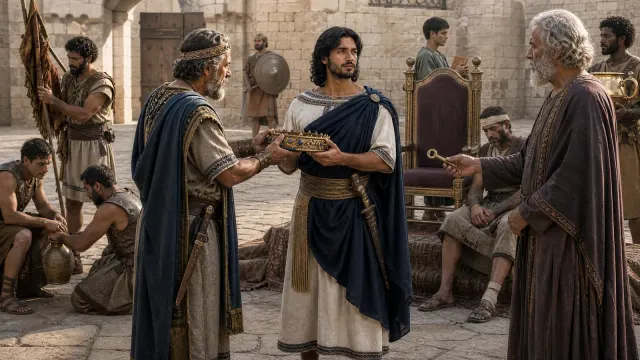
Rabbah Falls, and the Warriors Remain in View
1 Chronicles 20 finishes the Ammonite conflict and then turns to a cluster of victories over formidable Philistine opponents. The chapter is compact, but its selectivity matters. The opening recalls the season in which 2 Samuel gives a much fuller account involving David, Bathsheba, and Uriah; Chronicles instead moves directly to Rabbah’s capture. That difference is a choice of material, not a denial that the other events occurred. The account also preserves a difficult description of the defeated population whose wording can be read as brutal violence or, in a disputed alternative, forced labor. Then the focus shifts from David to his servants. Sibbechai, Elhanan, and Jonathan each receive named victories over men associated with Gath. The famous king remains in view, but the actual fighters are not swallowed by his reputation.
One complete chapter pageOpen chapter →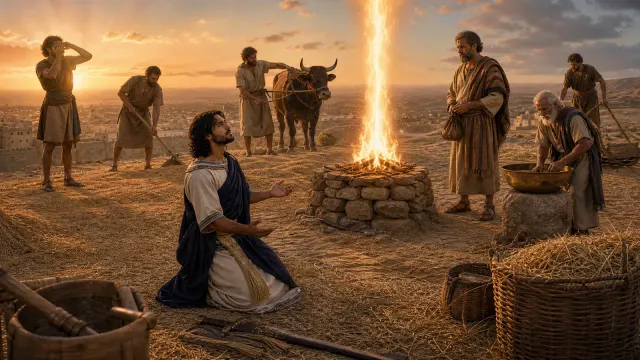
A Drawn Sword Above the Future Temple Site
1 Chronicles 21 is the dark hinge on which the temple preparations turn. A military census becomes trespass, and the chapter refuses to let the opening reference to Satan dissolve David’s responsibility. He overrides Joab, receives the count, confesses his own sin, and then watches the measured strength of Israel collapse under plague. Seventy thousand die before the destroying angel is restrained above Jerusalem. Only after that restraint does David purchase Ornan’s threshingfloor, build an altar, and receive an answer by fire. The order is crucial: mercy interrupts destruction before the king pays for the site. The chapter ends with the angel’s sword sheathed and David sacrificing where judgment stopped, too afraid to go to Gibeon. Catastrophe, mercy, sacrifice, and the future temple site become inseparable in the book’s memory.
One complete chapter pageOpen chapter →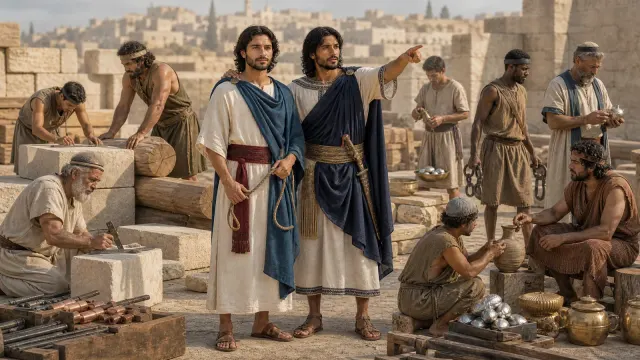
The King Who Will Not Build Still Prepares
The first words of 1 Chronicles 22 turn Ornan’s threshingfloor into a construction site: “This is the house of the LORD God.” David then devotes himself to a building he has been told not to build. That paradox shapes the chapter. He gathers stoneworkers, iron, brass, cedar, wealth, and skilled labor because Solomon is young and the work is immense. He also explains the distinction between their reigns. David has been a man of war; Solomon is to be a man of rest, and temple construction belongs to that different setting. Yet materials are not the only preparation. Solomon needs wisdom to keep the law, courage to act, and leaders willing to help him. The chapter refuses to treat a mountain of resources as sufficient. The house requires obedience, cooperation, and a successor who actually takes up the commission.
One complete chapter pageOpen chapter →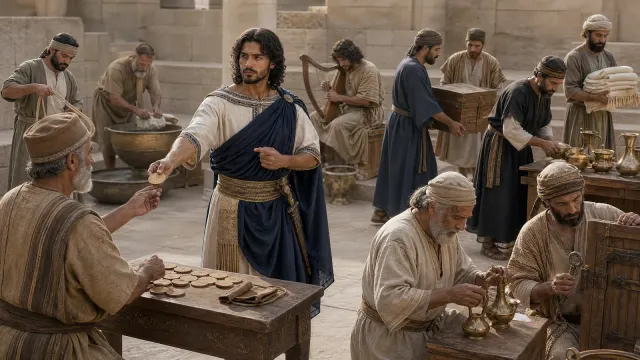
Rest Changes the Levites' Work
1 Chronicles 23 treats rest as a change of work, not the end of it. David is old, Solomon’s succession is in view, and the Levites are reorganized for a sanctuary that will no longer travel from place to place. The chapter begins with a count that is plainly legitimate, which immediately prevents the census disaster of chapter 21 from becoming a blanket ban on numbering people. Levites are assigned across house service, public administration, gatekeeping, and music. Family lines still matter, but actual household size and priestly distinctions matter too. Then the age of service shifts as the need to carry the tabernacle disappears. The closing duties are almost domestic in their specificity: courts, chambers, flour, bread, measurements, morning and evening praise, sabbaths, new moons, and feasts. Permanent worship means recurring, coordinated labor.
One complete chapter pageOpen chapter →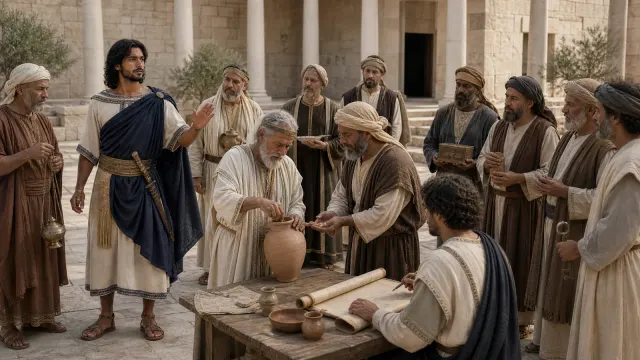
The Priestly Households Receive Their Turns
1 Chronicles 24 turns priestly ancestry into a working schedule. Aaron’s line has narrowed through Eleazar and Ithamar, and the unequal number of surviving chief households is acknowledged rather than forced into symmetry. Yet the assignments are not handed out as private favors. Lots are drawn, a scribe records the results, and the king, priests, princes, and family heads stand as witnesses. Twenty-four names then become twenty-four turns of service, an order rather than a ranking of holiness. The eighth course of Abijah will later appear in Luke’s account of Zacharias, showing how durable this institutional arrangement became. The chapter then extends the same logic to other Levite households. Family leadership remains real, but even principal fathers stand within a common procedure. Genealogy determines who belongs to the service; ordered allocation determines when and where they serve.
One complete chapter pageOpen chapter →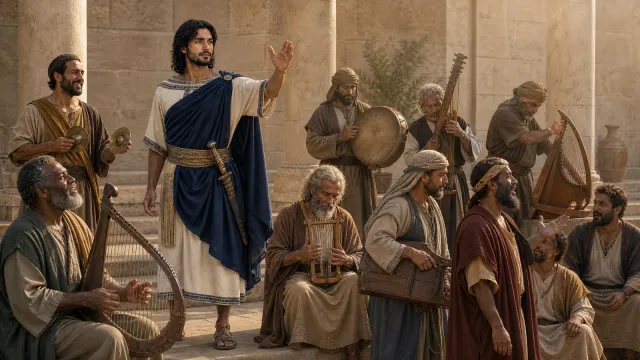
Prophetic Music with Teachers and Schedules
1 Chronicles 25 places music among the organized ministries of the house with the same seriousness given to priests and gatekeepers. Asaph, Heman, and Jeduthun lead a service described as prophecy, thanksgiving, and praise, which immediately broadens prophecy beyond prediction alone. The musicians are also trained and skillful. Inspiration does not make instruction unnecessary, and the presence of teachers and learners keeps sacred music from becoming a vague burst of feeling. Lots are then cast “as well the small as the great, the teacher as the scholar,” preventing expertise from turning into ownership of the schedule. Twenty-four groups of twelve complete the chapter, matching the stated total of 288. The result is not one giant solo under famous leaders but a durable rotation of trained households whose vocation has both spiritual language and an actual roster.
One complete chapter pageOpen chapter →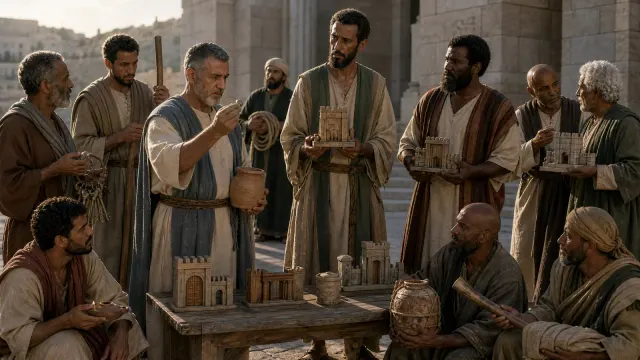
The Gates, the Treasury, and the Work Beyond the Walls
The work of the house in 1 Chronicles 26 moves to thresholds, treasuries, and responsibilities beyond the sanctuary walls. Gatekeepers are repeatedly described as strong or valiant, giving dignity to a task that depends on guarding access rather than leading public worship. Their posts are assigned by lot and mapped across actual gates and approaches. Treasuries then require equally named custody, because dedicated objects do not manage themselves after they become sacred. The inventory preserves contributions from Samuel, Saul, Abner, Joab, David, and military leaders, allowing particular gifts to remain part of the house even when the donors stand on complicated sides of Israel’s earlier conflicts. Finally, Levite officers and judges are placed throughout the nation, west and east of Jordan. Sanctuary service belongs within an ordered national life, and David is still appointing capable people in his fortieth year.
One complete chapter pageOpen chapter →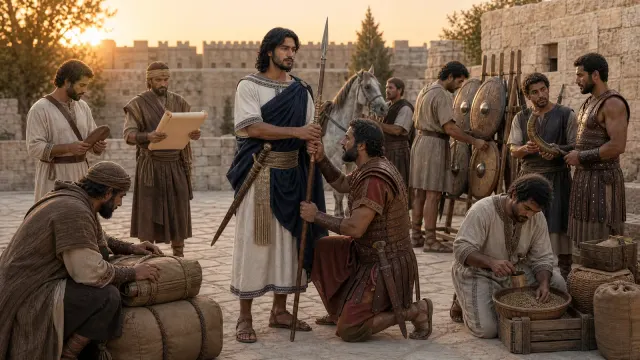
The Kingdom Needs Farms as Well as Commanders
1 Chronicles 27 finishes David’s administrative picture by placing armies, tribal officers, farms, herds, storehouses, and counselors in the same record. Military strength is no longer a sequence of famous clashes but a twelve-month rotation, each division entering service in its turn. The chapter then deliberately remembers the census failure, refusing to let efficient organization turn into unqualified celebration of royal control. From there the focus drops into the material life of the kingdom: vineyards, olive trees, oil cellars, camels, asses, flocks, fields, and rural stores all have named overseers. Royal wealth is not a magic pile; it must be produced, kept, and managed. The final verses return inward to the people closest to David, distinguishing counsel, writing, companionship, care of royal sons, and army command. The kingdom rests on many kinds of recurring work.
One complete chapter pageOpen chapter →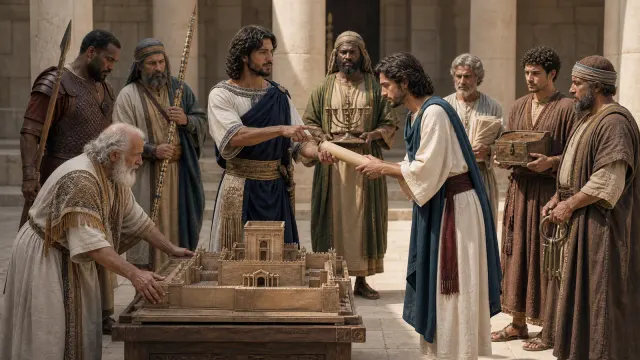
The Plan Is Handed Over in Public
The organizational lists of the preceding chapters finally become a public assembly in 1 Chronicles 28. Military captains, tribal leaders, estate officers, royal servants, and mighty men gather to hear David explain why Solomon, not David, will build the house. The succession is presented as divine choice, but never as entitlement without obligation. Solomon is charged to seek, know, and serve God with a willing heart because the Lord “searcheth all hearts.” Then David hands over something remarkably concrete: plans for rooms, courts, treasuries, vessels, weights, priestly courses, and the place of the mercy seat. Divine direction reaches down into small implements. Yet Solomon is not left alone with blueprints. Priests, Levites, skilled workers, princes, and people stand ready to help. The chapter joins inward faithfulness, public accountability, detailed planning, and shared labor in one commission.
One complete chapter pageOpen chapter →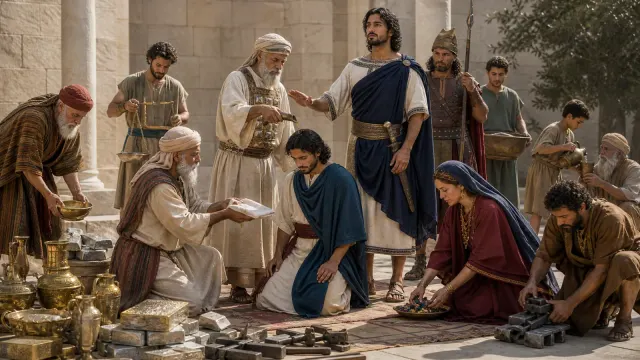
Everything Given Was Already God's
The final chapter of 1 Chronicles gathers wealth, willingness, worship, succession, and mortality into one closing movement. David distinguishes the resources already prepared for the temple from an additional personal gift motivated by his affection for the house, and Israel’s leaders answer with willing offerings of their own. Yet the enormous totals do not make the donors benefactors standing above God. David’s prayer immediately declares that greatness, power, riches, honor, and the kingdom itself belong to the Lord, and that “of thine own have we given thee.” He then asks for something money cannot secure: enduring hearts for the people and wholehearted obedience for Solomon. The assembly worships, sacrifices, feasts, and publicly establishes the new king. Finally David dies. Riches and honor remain part of his epitaph, but so does finitude. The prepared work passes to the son.
One complete chapter pageOpen chapter →Source: eBible.org · eng-kjv2006