The big picture
The Book of 1 Chronicles begins with names rather than a scene. Adam, the first ancestor in this list, heads a line reaching Noah, an ancestor of many peoples. The list then spreads through his sons’ families before narrowing toward Abraham, the father of the family central to this history. It ends with the family and rulers of Edom, a neighbouring people. These names place the later kings within a much larger human family.
In this chapter
- From Adam to Noah’s Sons 1 Chronicles 1:1-4
The first names form a line from Adam through Sheth and Enosh.
- The Family Spreads Into Peoples 1 Chronicles 1:5-23
The list follows the families of Japheth, Ham, and Shem.
- The Line Reaches Abraham 1 Chronicles 1:24-34
Shem’s line is repeated, now moving through Peleg toward Abram.
- Esau and Seir Have Families 1 Chronicles 1:35-42
Esau’s sons and their descendants are listed before the families of Seir.
- Kings and Chiefs of Edom 1 Chronicles 1:43-54
Edom has kings before Israel has a king of its own.
Central truth
The opening family lists place Israel’s ancestors among many related peoples whose lives began long before its kings.
Scripture beside the summary
1 Chronicles · King James Version · 541 Chronicles 1:1-4
From Adam to Noah’s Sons
The first names form a line from Adam through Sheth and Enosh. More names follow until the list reaches Noah and his three sons. No ages, speeches, or events explain these people here. The brief line gives a starting point for all the families that follow. Shem, Ham, and Japheth will each have branches named next. The opening therefore begins much further back than the kings who fill later chapters. Before tracing one people, the book places their ancestors within the beginning of this wider family record.
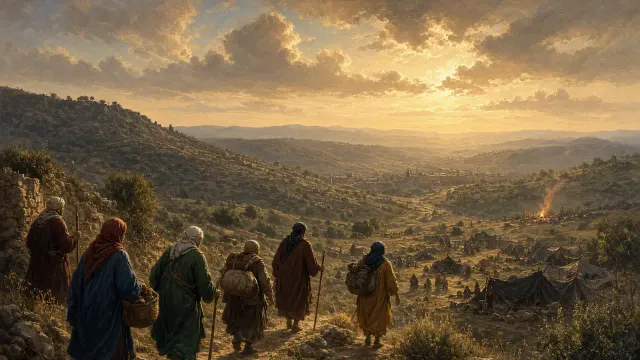
In everyday life
A grandmother unfolds a long family chart across a picnic blanket. Her finger moves down the single line at its top until it reaches three brothers. Below them the chart spreads into many branches. The children can now see where the separate pages connect. Her chart records one household’s past, not the book’s account of humanity’s ancestors.
Notice
1 Chronicles 1:4 Noah’s three sons appear together at the end of the short opening line. Their names become the main branches followed in the next list.
1 Chronicles 1:1-4
King James Version1Adam, Sheth, Enosh,
2Kenan, Mahalaleel, Jered,
3Henoch, Methuselah, Lamech,
4Noah, Shem, Ham, and Japheth.
1 Chronicles 1:5-23
The Family Spreads Into Peoples
The list follows the families of Japheth, Ham, and Shem. Some names become the names of peoples, including the Philistines and several peoples linked with Canaan. Nimrod receives a brief note about his strength on earth. Shem’s line reaches Eber and his sons Peleg and Joktan. Peleg’s name comes with a note that the earth was divided in his days. The account does not explain that division here. It then lists Joktan’s sons. The many branches show a world of related peoples before the history narrows to one line.
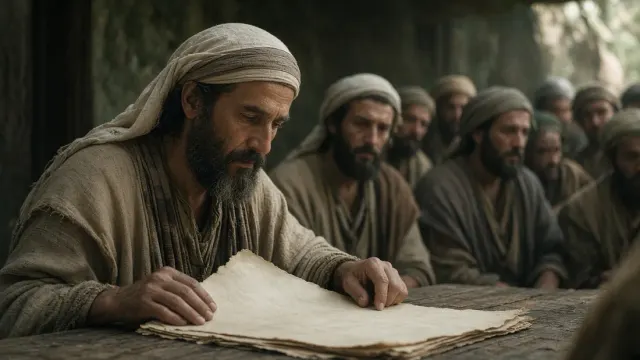
In everyday life
A genealogy club member pins cards onto a corkboard in a village tent. She adds different surnames beneath cousins who moved to separate regions. Visitors first look for their own name, then notice strings joining it to distant groups. The board makes scattered branches visible at once. These biblical lists connect peoples as well as the households on her board.
Notice
1 Chronicles 1:10 Nimrod receives a comment while most names stand alone. The short note gives one person a distinct place within a list mainly concerned with descent.
1 Chronicles 1:5-23
King James Version5The sons of Japheth; Gomer, and Magog, and Madai, and Javan, and Tubal, and Meshech, and Tiras.
6And the sons of Gomer; Ashchenaz, and Riphath, and Togarmah.
7And the sons of Javan; Elishah, and Tarshish, Kittim, and Dodanim.
8The sons of Ham; Cush, and Mizraim, Put, and Canaan.
9And the sons of Cush; Seba, and Havilah, and Sabta, and Raamah, and Sabtecha. And the sons of Raamah; Sheba, and Dedan.
10And Cush begat Nimrod: he began to be mighty upon the earth.
11And Mizraim begat Ludim, and Anamim, and Lehabim, and Naphtuhim,
12And Pathrusim, and Casluhim, (of whom came the Philistines,) and Caphthorim.
13And Canaan begat Zidon his firstborn, and Heth,
14The Jebusite also, and the Amorite, and the Girgashite,
15And the Hivite, and the Arkite, and the Sinite,
16And the Arvadite, and the Zemarite, and the Hamathite.
17The sons of Shem; Elam, and Asshur, and Arphaxad, and Lud, and Aram, and Uz, and Hul, and Gether, and Meshech.
18And Arphaxad begat Shelah, and Shelah begat Eber.
19And unto Eber were born two sons: the name of the one was Peleg; because in his days the earth was divided: and his brother’s name was Joktan.
20And Joktan begat Almodad, and Sheleph, and Hazarmaveth, and Jerah,
21Hadoram also, and Uzal, and Diklah,
22And Ebal, and Abimael, and Sheba,
23And Ophir, and Havilah, and Jobab. All these were the sons of Joktan.
1 Chronicles 1:24-34
The Line Reaches Abraham
Shem’s line is repeated, now moving through Peleg toward Abram. The list explains that Abram is Abraham. His sons Isaac and Ishmael are named, followed by Ishmael’s descendants. It also names children born to Keturah, Abraham’s concubine, a partner with lower standing than a wife. The account then returns to Isaac. His sons are Esau and Israel. This repeated return to a chosen branch keeps the main line clear without removing the other relatives. Abraham’s family is larger than the line the book will follow most closely.
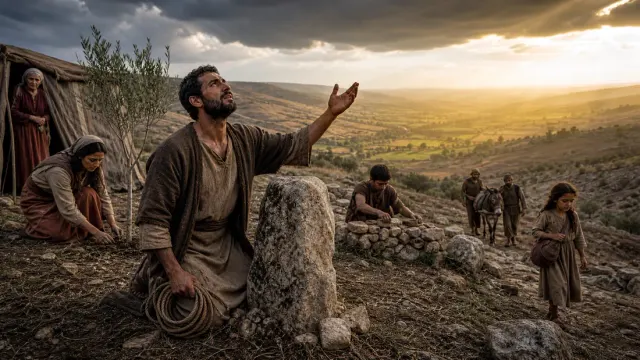
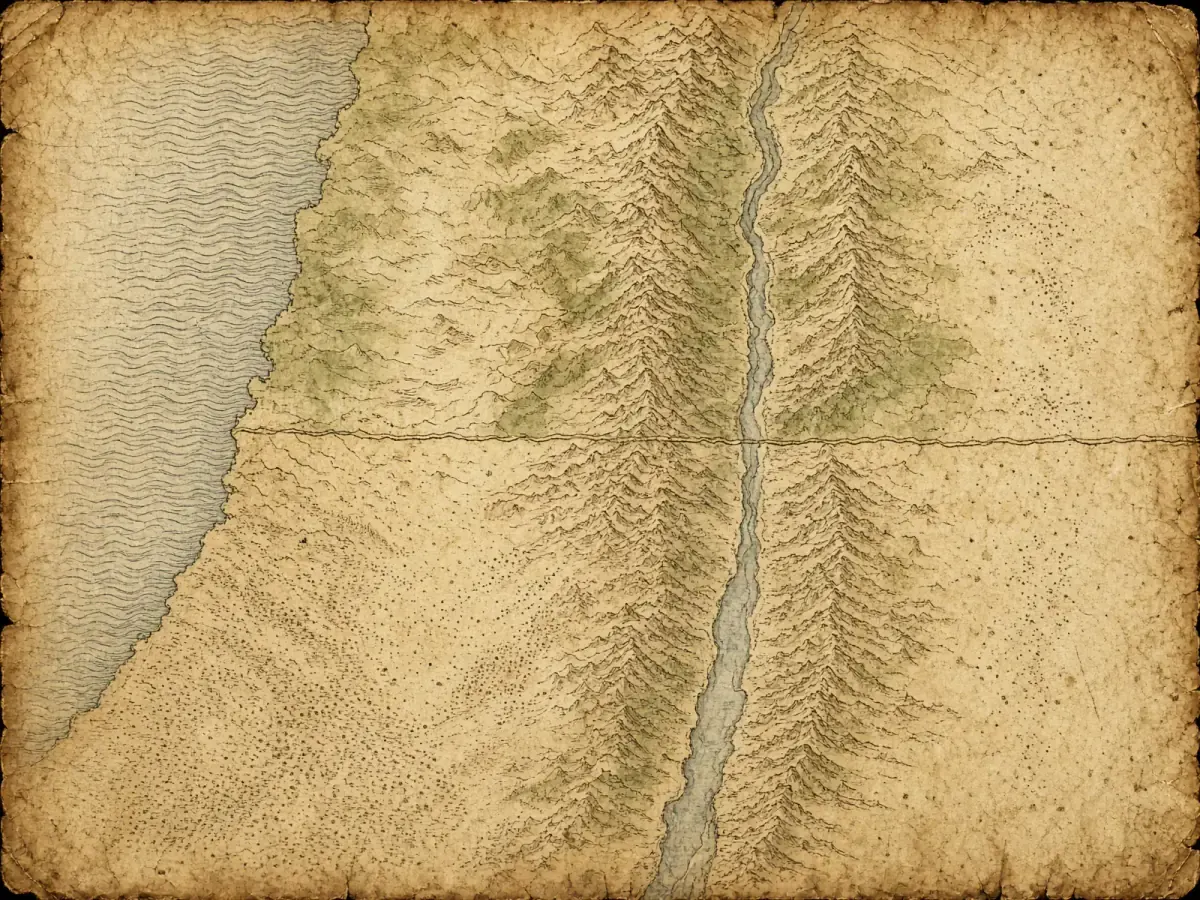
In everyday life
A wedding host sorts name cards on a long dining table. She groups the bride’s cousins from several branches, then returns to the card for the bride’s father. His branch leads to the couple at the centre of the day. The other relatives still keep their places. A seating plan arranges guests, while this list traces descent across generations.
Notice
1 Chronicles 1:27 Abram and Abraham are identified as the same person. That brief explanation prevents a reader from treating the two names as separate links in the family.
1 Chronicles 1:24-34
King James Version24Shem, Arphaxad, Shelah,
25Eber, Peleg, Reu,
26Serug, Nahor, Terah,
27Abram; the same is Abraham.
28The sons of Abraham; Isaac, and Ishmael.
29These are their generations: The firstborn of Ishmael, Nebaioth; then Kedar, and Adbeel, and Mibsam,
30Mishma, and Dumah, Massa, Hadad, and Tema,
31Jetur, Naphish, and Kedemah. These are the sons of Ishmael.
32Now the sons of Keturah, Abraham’s concubine: she bare Zimran, and Jokshan, and Medan, and Midian, and Ishbak, and Shuah. And the sons of Jokshan; Sheba, and Dedan.
33And the sons of Midian; Ephah, and Epher, and Henoch, and Abida, and Eldaah. All these are the sons of Keturah.
34And Abraham begat Isaac. The sons of Isaac; Esau and Israel.
1 Chronicles 1:35-42
Esau and Seir Have Families
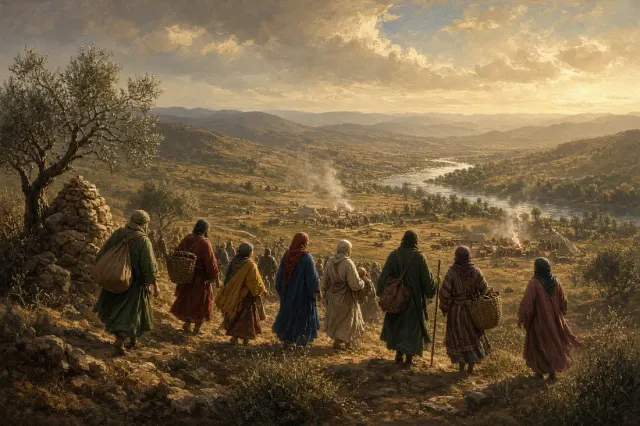
Esau’s sons and their descendants are listed before the families of Seir. The names form several small groups, each linked to a father. Timna is also named as Lotan’s sister. The list does not give a separate event for every person. It keeps family links in view as one group branches into another. These are relatives and neighbours around the line that will lead into Israel’s tribes. Their place in the record shows that the book has not yet reduced its view to the later royal family.
In everyday life
A reunion organiser labels photographs on the wall of a rented barn. She writes each parent’s name above the children and marks one woman as a sister. Without those links, the faces would look like an unrelated crowd. Visitors begin finding how one group joins the next. Photographs preserve faces that this ancient list gives only as names.
Notice
1 Chronicles 1:39 Timna is identified through her brother Lotan. The record uses more than father-to-son links to show where a person belongs within the family.
1 Chronicles 1:35-42
King James Version35The sons of Esau; Eliphaz, Reuel, and Jeush, and Jaalam, and Korah.
36The sons of Eliphaz; Teman, and Omar, Zephi, and Gatam, Kenaz, and Timna, and Amalek.
37The sons of Reuel; Nahath, Zerah, Shammah, and Mizzah.
38And the sons of Seir; Lotan, and Shobal, and Zibeon, and Anah, and Dishon, and Ezer, and Dishan.
39And the sons of Lotan; Hori, and Homam: and Timna was Lotan’s sister.
40The sons of Shobal; Alian, and Manahath, and Ebal, Shephi, and Onam. And the sons of Zibeon; Aiah, and Anah.
41The sons of Anah; Dishon. And the sons of Dishon; Amram, and Eshban, and Ithran, and Cheran.
42The sons of Ezer; Bilhan, and Zavan, and Jakan. The sons of Dishan; Uz, and Aran.
1 Chronicles 1:43-54
Kings and Chiefs of Edom
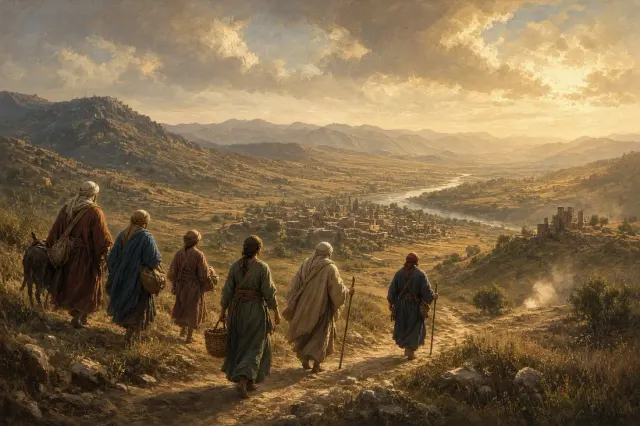
Edom has kings before Israel has a king of its own. The account names a ruler, then records his death and the next ruler. Several entries also name a city or family connection. Hadad receives a note about a victory over Midian. After the last king’s death, the list turns to Edom’s chiefs. These leaders are called dukes in the older wording. The change from family branches to rulers gives a glimpse of a neighbouring people’s public life before the book turns back to Israel’s descendants.
In everyday life
A local historian walks a visitor along portraits in a guild hall. She points to each chairperson and the plaque naming the next. A second board lists district leaders whose roles differ from the central chair. Together the displays show how leadership changed over time. Edom’s kings rule a people, not a voluntary guild.
Notice
1 Chronicles 1:43 Edom’s kings are placed before Israel’s kings in time. The note locates this neighbouring people’s rule within the larger history the book is beginning.
1 Chronicles 1:43-54
King James Version43Now these are the kings that reigned in the land of Edom before any king reigned over the children of Israel; Bela the son of Beor: and the name of his city was Dinhabah.
44And when Bela was dead, Jobab the son of Zerah of Bozrah reigned in his stead.
45And when Jobab was dead, Husham of the land of the Temanites reigned in his stead.
46And when Husham was dead, Hadad the son of Bedad, which smote Midian in the field of Moab, reigned in his stead: and the name of his city was Avith.
47And when Hadad was dead, Samlah of Masrekah reigned in his stead.
48And when Samlah was dead, Shaul of Rehoboth by the river reigned in his stead.
49And when Shaul was dead, Baal-hanan the son of Achbor reigned in his stead.
50And when Baal-hanan was dead, Hadad reigned in his stead: and the name of his city was Pai; and his wife’s name was Mehetabel, the daughter of Matred, the daughter of Mezahab.
51Hadad died also. And the dukes of Edom were; duke Timnah, duke Aliah, duke Jetheth,
52Duke Aholibamah, duke Elah, duke Pinon,
53Duke Kenaz, duke Teman, duke Mibzar,
54Duke Magdiel, duke Iram. These are the dukes of Edom.
Details worth noticing
The opening image
1 Chronicles 1:1 begins with “Adam, Sheth, Enosh,”
Where the chapter turns
1 Chronicles 1:32 forms a natural hinge: “Now the sons of Keturah, Abraham’s concubine: she bare Zimran, and Jokshan, and Medan, and Midian, and Ishbak, and Shuah. And the sons of Jokshan; Sheba…”
The final note
1 Chronicles 1:54 leaves the reader with “Duke Magdiel, duke Iram. These are the dukes of Edom.”
A word trail through the chapter
The words sons, duke, reigned, begat, dead, stead help reveal the chapter’s repeated concerns.
KJV words made clear
- begat
- became the father of
- unto
- to
Music and video connected to the passage
Related media appears when its Scripture reference overlaps this study. Music and video can illuminate a theme while the biblical text remains the foundation.