New · FreePlay The Witnesses The in-depth puzzle battle quest through Bible history

People of the Bible

Esau

The red hunter who sold his birthright for a bowl of stew, lost the blessing to his twin, and forgave him anyway.

Also called Edom; the father of the Edomites

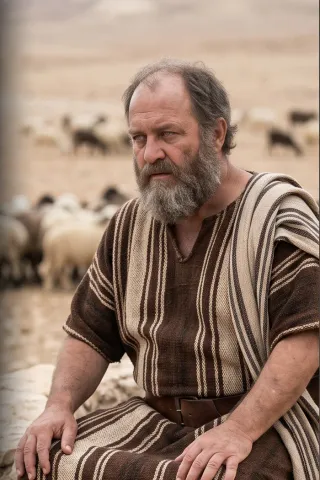
Esau is the elder twin of Isaac and Rebekah, born first, red and covered in hair like a garment, and named for it. He grows into a skilled hunter, a man of the field, and his father loves him for the game he brings in. He comes home one day faint with hunger and sells his birthright to Jacob for bread and red lentil stew, which gives him his other name, Edom. At forty he marries two Hittite women who are a grief to his parents. When Isaac is old and about to bless him, Jacob takes the blessing first by disguise, and Esau's cry when he learns it, bless me, even me also, O my father, is one of the loudest griefs in Genesis. He receives a lesser blessing, by the sword he will live, and resolves to kill Jacob once their father dies.

Twenty years later, when Jacob comes back from Haran, Esau rides out with four hundred men. Jacob expects an attack. Instead Esau runs to meet him, embraces him, falls on his neck, kisses him, and they weep. He refuses Jacob's gift until pressed, offers to travel together, and goes home to Seir. The brothers meet once more to bury Isaac. Genesis 36 gives his descendants, the chiefs and kings of Edom, a nation before Israel had a king. Later Scripture treats Edom as Israel's hostile brother, and the New Testament holds Esau up as the profane man who sold what could not be bought back.

Where he appearsGenesis 25 to 36

Scroll down to the account
Esau

The movements, in the order the text gives them.

The Account of Esau

  1. 01

    Genesis 25:24-28

    First out, red and hairy

    The first twin comes out red, all over like an hairy garment, and is called Esau. He grows to be a cunning hunter, a man of the field, and Isaac loves him because he eats of his venison.

    He is described before he is named. The first came out red, all over like an hairy garment, and the name Esau follows from the look of him. His brother arrives holding his heel. They grow into opposites the text draws in one line each: Esau was a cunning hunter, a man of the field; and Jacob was a plain man, dwelling in tents. Neither description is an insult. Then the sentence that ruins the family: Isaac loved Esau, because he did eat of his venison, but Rebekah loved Jacob. The father's love is given a reason and it is a small one. Esau is the son his father enjoys, the outdoor son, the one who brings something home, and everything he later loses he loses to a brother whose mother had been told the ending before either of them was born.

    Verse by verse

    1. 25:25

      Red, all over like an hairy garment: red is admoni, which will attach to Edom, his other name and his nation.

    2. 25:27

      A cunning hunter, a man of the field: skilled, not sly. The words describe competence in the open country.

    3. 25:28

      Because he did eat of his venison: Isaac's preference has an appetite behind it. Rebekah's is given no reason at all.

    Genesis 25:24-28

    King James Version · 5 verses

    25:24And when her days to be delivered were fulfilled, behold, there were twins in her womb.

    25:25And the first came out red, all over like an hairy garment; and they called his name Esau.

    25:26And after that came his brother out, and his hand took hold on Esau’s heel; and his name was called Jacob: and Isaac was threescore years old when she bare them.

    25:27And the boys grew: and Esau was a cunning hunter, a man of the field; and Jacob was a plain man, dwelling in tents.

    25:28And Isaac loved Esau, because he did eat of his venison: but Rebekah loved Jacob.

    Genesis 25:24-28: First out, red and hairy
  2. 02

    Genesis 25:29-34

    The red stew

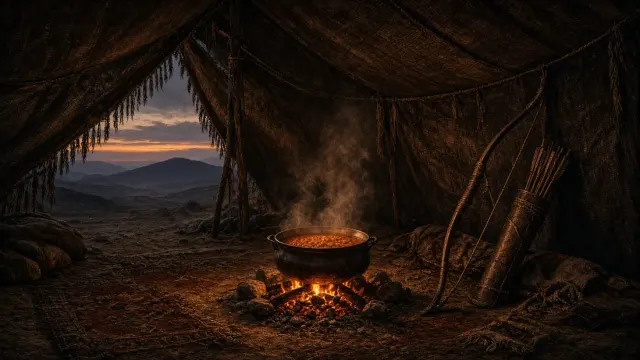
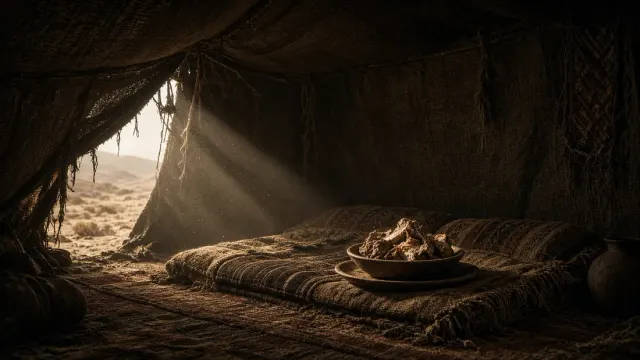
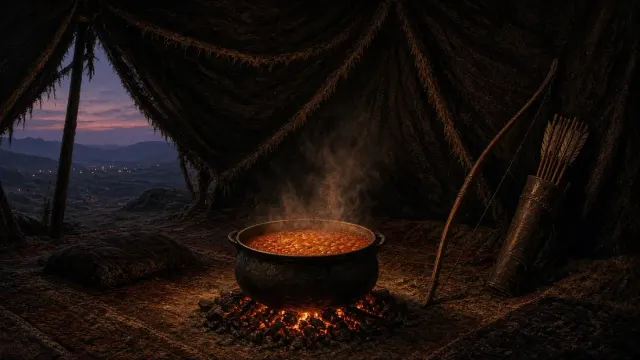
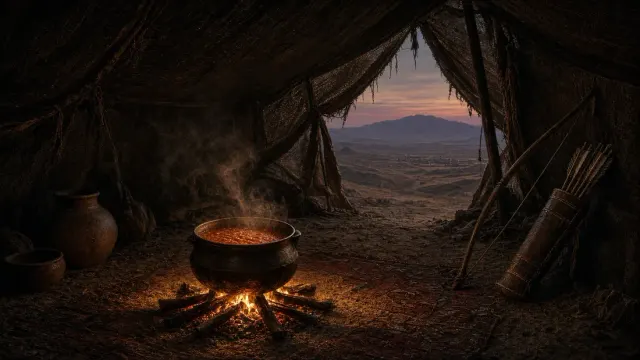
    Esau comes in from the field faint and asks for that same red pottage. Jacob demands his birthright in exchange, and Esau says, behold, I am at the point to die, and what profit shall this birthright do to me. He swears, eats, drinks and goes his way. Thus Esau despised his birthright.

    He comes in from the field faint, and the scene is short and unsparing on both men. Jacob has pottage ready and will not give it without terms: sell me this day thy birthright. Esau's answer is the speech of a man who cannot see past the next hour. Behold, I am at the point to die: and what profit shall this birthright do to me? He is not starving in a tent full of food; he is very hungry and unwilling to wait. Jacob makes him swear, which is cold, and then the meal is listed like an inventory: bread and pottage of lentiles, and he did eat and drink, and rose up, and went his way. Five flat verbs, no conversation, no regret. The Book of Genesis supplies the verdict the scene refuses to dramatise: thus Esau despised his birthright.

    Verse by verse

    1. 25:31

      Sell me this day thy birthright: Jacob sees an opportunity in his brother's hunger. The chapter does not admire him for it.

    2. 25:32

      I am at the point to die: an exaggeration. The birthright is traded against a feeling, not a real emergency.

    3. 25:34

      He did eat and drink, and rose up, and went his way: the speed is the point. Hebrews 12:16 calls him a profane person for this one transaction.

    Genesis 25:29-34

    King James Version · 6 verses

    25:29And Jacob sod pottage: and Esau came from the field, and he was faint:

    25:30And Esau said to Jacob, Feed me, I pray thee, with that same red pottage; for I am faint: therefore was his name called Edom.

    25:31And Jacob said, Sell me this day thy birthright.

    25:32And Esau said, Behold, I am at the point to die: and what profit shall this birthright do to me?

    25:33And Jacob said, Swear to me this day; and he sware unto him: and he sold his birthright unto Jacob.

    25:34Then Jacob gave Esau bread and pottage of lentiles; and he did eat and drink, and rose up, and went his way: thus Esau despised his birthright.

    Genesis 25:29-34: The red stew
  3. 03

    Genesis 26:34-35

    Hittite wives

    At forty he marries Judith the daughter of Beeri and Bashemath the daughter of Elon, both Hittites, and they are a grief of mind to Isaac and Rebekah.

    At forty, the age his father was when a wife was found for him with an oath and a journey and a prayer, Esau chooses two for himself: Judith the daughter of Beeri the Hittite, and Bashemath the daughter of Elon the Hittite. He consults nobody. The result is given in one phrase that names both parents together, which nothing else in the account manages: which were a grief of mind unto Isaac and to Rebekah. The Hebrew is a bitterness of spirit. This is the marriage Abraham made his servant swear against in chapter 24, and Esau walks into it twice without appearing to notice. It also hands Rebekah the reason she will use, truthfully, to send Jacob away in 27:46.

    Verse by verse

    1. 26:34

      Forty years old: the same age as Isaac in 25:20, which puts the two marriages side by side to be compared.

    2. 26:35

      A grief of mind: literally a bitterness of spirit. It is the only thing Isaac and Rebekah are recorded agreeing about.

    Genesis 26:34-35

    King James Version · 2 verses

    26:34And Esau was forty years old when he took to wife Judith the daughter of Beeri the Hittite, and Bashemath the daughter of Elon the Hittite:

    26:35Which were a grief of mind unto Isaac and to Rebekah.

    Genesis 26:34-35: Hittite wives
  4. 04

    Genesis 27:1-4, 30-40

    Bless me, even me also

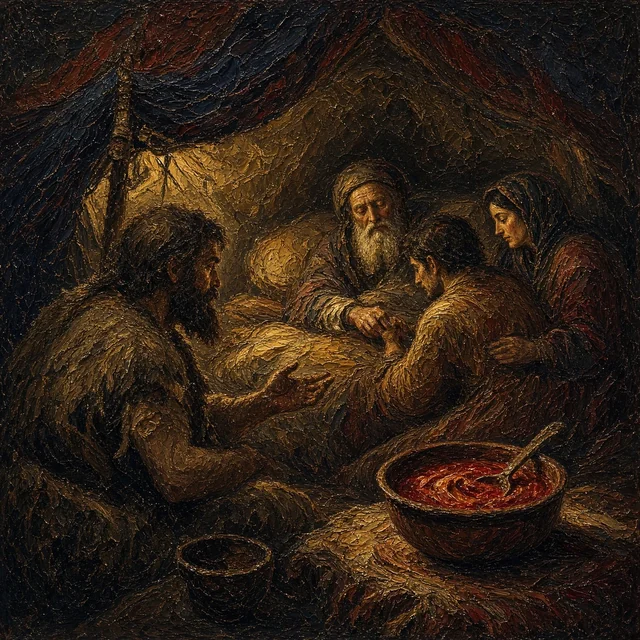
    Isaac sends him to hunt venison for the meal before the blessing. He comes back to find Jacob has been blessed in his place. He cries with a great and exceeding bitter cry, asks whether his father has only one blessing, and lifts up his voice and weeps. Isaac gives him what is left: by thy sword shalt thou live, and shalt serve thy brother, and thou shalt break his yoke from off thy neck.

    Isaac sends him out for venison so the blessing can be given over a meal, and while he hunts, his brother takes it. He comes back, makes the food, brings it in, and says who he is, and Isaac trembled very exceedingly, and asks who then was here. Then the line that is hard to read quickly: he cried with a great and exceeding bitter cry, and said, Bless me, even me also, O my father. He asks three times. Hast thou not reserved a blessing for me? Hast thou but one blessing, my father? And he lifted up his voice, and wept. What he receives is not nothing but it is not the promise: the fatness of the earth, the dew of heaven, by thy sword shalt thou live, and thou shalt serve thy brother, with a clause at the end that is his own, when thou shalt have the dominion, thou shalt break his yoke from off thy neck.

    Verse by verse

    1. 27:34

      A great and exceeding bitter cry: the strongest description of grief in Genesis. Hebrews 12:17 says he found no place of repentance though he sought it with tears.

    2. 27:36

      Is not he rightly named Jacob: the name means he supplants, and Esau uses it as an accusation, counting the birthright and the blessing together.

    3. 27:38

      Hast thou but one blessing, my father: the question of the chapter. A blessing spoken was understood to be spent.

    4. 27:40

      Thou shalt break his yoke: Edom does exactly this in 2 Kings 8:20, revolting from Judah centuries later.

    Genesis 27:1-4, 30-40: Bless me, even me also

    Genesis 27:1-4, 30-40

    King James Version · 15 verses

    27:1And it came to pass, that when Isaac was old, and his eyes were dim, so that he could not see, he called Esau his eldest son, and said unto him, My son: and he said unto him, Behold, here am I.

    27:2And he said, Behold now, I am old, I know not the day of my death:

    27:3Now therefore take, I pray thee, thy weapons, thy quiver and thy bow, and go out to the field, and take me some venison;

    27:4And make me savoury meat, such as I love, and bring it to me, that I may eat; that my soul may bless thee before I die.

    27:30And it came to pass, as soon as Isaac had made an end of blessing Jacob, and Jacob was yet scarce gone out from the presence of Isaac his father, that Esau his brother came in from his hunting.

    27:31And he also had made savoury meat, and brought it unto his father, and said unto his father, Let my father arise, and eat of his son’s venison, that thy soul may bless me.

    27:32And Isaac his father said unto him, Who art thou? And he said, I am thy son, thy firstborn Esau.

    27:33And Isaac trembled very exceedingly, and said, Who? where is he that hath taken venison, and brought it me, and I have eaten of all before thou camest, and have blessed him? yea, and he shall be blessed.

    27:34And when Esau heard the words of his father, he cried with a great and exceeding bitter cry, and said unto his father, Bless me, even me also, O my father.

    27:35And he said, Thy brother came with subtilty, and hath taken away thy blessing.

    27:36And he said, Is not he rightly named Jacob? for he hath supplanted me these two times: he took away my birthright; and, behold, now he hath taken away my blessing. And he said, Hast thou not reserved a blessing for me?

    27:37And Isaac answered and said unto Esau, Behold, I have made him thy lord, and all his brethren have I given to him for servants; and with corn and wine have I sustained him: and what shall I do now unto thee, my son?

    27:38And Esau said unto his father, Hast thou but one blessing, my father? bless me, even me also, O my father. And Esau lifted up his voice, and wept.

    27:39And Isaac his father answered and said unto him, Behold, thy dwelling shall be the fatness of the earth, and of the dew of heaven from above;

    27:40And by thy sword shalt thou live, and shalt serve thy brother; and it shall come to pass when thou shalt have the dominion, that thou shalt break his yoke from off thy neck.

  5. 05

    Genesis 27:41-45

    A vow to kill

    Esau hates Jacob for the blessing and says in his heart that the days of mourning for his father are at hand, and then he will slay his brother. Rebekah hears of it and sends Jacob away.

    Esau hated Jacob because of the blessing wherewith his father blessed him, and the text lets him say his intention in his own words: the days of mourning for my father are at hand; then will I slay my brother Jacob. Even the hatred waits for a decent interval, which is a strange detail and a human one. He does not act in the moment, he plans, and the plan is spoken aloud often enough that it reaches Rebekah. She sends Jacob away for what she calls a few days. In the end Esau never does it. Twenty years later he will come with four hundred men and do the opposite, and the chapter that promises murder is left standing as evidence of how far he travelled.

    Verse by verse

    1. 27:41

      The days of mourning for my father: Isaac lives another forty-three years, so the plan is built on a deadline that never comes.

    2. 27:42

      These words of Esau were told to Rebekah: he said it to someone. The intention was not kept private.

    3. 27:44

      A few days: Rebekah's estimate. The exile lasts twenty years and she dies before it ends.

    Genesis 27:41-45

    King James Version · 5 verses

    27:41And Esau hated Jacob because of the blessing wherewith his father blessed him: and Esau said in his heart, The days of mourning for my father are at hand; then will I slay my brother Jacob.

    27:42And these words of Esau her elder son were told to Rebekah: and she sent and called Jacob her younger son, and said unto him, Behold, thy brother Esau, as touching thee, doth comfort himself, purposing to kill thee.

    27:43Now therefore, my son, obey my voice; and arise, flee thou to Laban my brother to Haran;

    27:44And tarry with him a few days, until thy brother’s fury turn away;

    27:45Until thy brother’s anger turn away from thee, and he forget that which thou hast done to him: then I will send, and fetch thee from thence: why should I be deprived also of you both in one day?

    Genesis 27:41-45: A vow to kill
  6. 06

    Genesis 28:6-9

    A third wife

    Seeing that his parents dislike Canaanite wives and that Jacob has been sent to Laban for one, Esau goes to Ishmael and marries Mahalath, Ishmael's daughter, in addition to the two he has.

    This short passage is the most sympathetic thing Genesis records about him. Esau sees that Isaac has blessed Jacob and sent him to Padan-aram for a wife, and that Jacob obeyed his father and his mother, and he sees that the daughters of Canaan pleased not Isaac his father. So he goes to Ishmael's household and marries Mahalath, a granddaughter of Abraham. He is trying to fix the thing he got wrong, by copying what his brother was praised for. Nobody asked him to and nobody notices. It is also a marriage between the two sons who were passed over, Abraham's firstborn and Isaac's, and the Book of Genesis records it without a word of judgement either way.

    Verse by verse

    1. 28:8

      The daughters of Canaan pleased not Isaac his father: he works it out by watching, not by being told. Nobody explained it to him.

    2. 28:9

      Mahalath the daughter of Ishmael: the two rejected firstborn lines join. She is called Bashemath in the genealogy of 36:3.

    Genesis 28:6-9

    King James Version · 4 verses

    28:6When Esau saw that Isaac had blessed Jacob, and sent him away to Padan-aram, to take him a wife from thence; and that as he blessed him he gave him a charge, saying, Thou shalt not take a wife of the daughters of Canaan;

    28:7And that Jacob obeyed his father and his mother, and was gone to Padan-aram;

    28:8And Esau seeing that the daughters of Canaan pleased not Isaac his father;

    28:9Then went Esau unto Ishmael, and took unto the wives which he had Mahalath the daughter of Ishmael Abraham’s son, the sister of Nebajoth, to be his wife.

    Genesis 28:6-9: A third wife
  7. 07

    Genesis 32:3-8

    Four hundred men

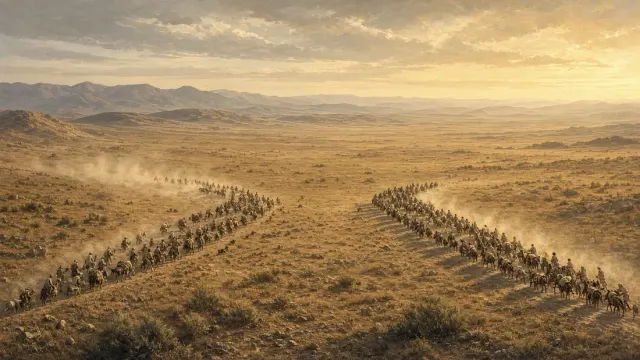
    Jacob sends messengers ahead to Esau in Seir, calling himself thy servant Jacob. They return to say Esau is coming to meet him with four hundred men, and Jacob is greatly afraid and distressed.

    Twenty years on, Jacob sends messengers ahead with a carefully humble message, my lord Esau, thy servant Jacob, and they come back with one sentence and no reply: we came to thy brother Esau, and also he cometh to meet thee, and four hundred men with him. That is all the information anyone gets, and the chapter is honest about its effect: then Jacob was greatly afraid and distressed. He divides the camp so that half might survive. The reader is given no more than Jacob is given, which is the craft of the passage. Four hundred men is an army or an escort, and nothing in the verse says which. Esau is coming, and both possibilities stay open until chapter 33.

    Verse by verse

    1. 32:3

      Unto the land of Seir, the country of Edom: Esau has already moved south and established himself. He is not waiting where Jacob left him.

    2. 32:6

      Four hundred men with him: the same number David later takes as a fighting band in 1 Samuel 22:2, which is why Jacob reads it as he does.

    3. 32:7

      Greatly afraid and distressed: the fear drives him to the prayer of verse 9 and the wrestling of verse 24.

    Genesis 32:3-8

    King James Version · 6 verses

    32:3And Jacob sent messengers before him to Esau his brother unto the land of Seir, the country of Edom.

    32:4And he commanded them, saying, Thus shall ye speak unto my lord Esau; Thy servant Jacob saith thus, I have sojourned with Laban, and stayed there until now:

    32:5And I have oxen, and asses, flocks, and menservants, and womenservants: and I have sent to tell my lord, that I may find grace in thy sight.

    32:6And the messengers returned to Jacob, saying, We came to thy brother Esau, and also he cometh to meet thee, and four hundred men with him.

    32:7Then Jacob was greatly afraid and distressed: and he divided the people that was with him, and the flocks, and herds, and the camels, into two bands;

    32:8And said, If Esau come to the one company, and smite it, then the other company which is left shall escape.

    Genesis 32:3-8: Four hundred men
  8. 08

    Genesis 33:1-16

    He ran to meet him

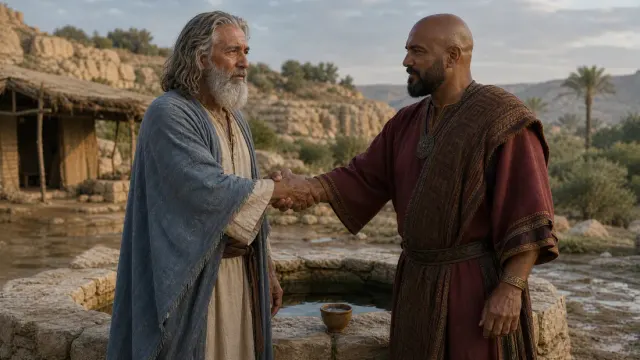
    Esau runs, embraces Jacob, falls on his neck and kisses him, and they weep. He asks about the women and children, refuses the droves of animals, I have enough, my brother, and takes them only when Jacob urges. He offers to travel together or leave men with him, and returns that day to Seir.

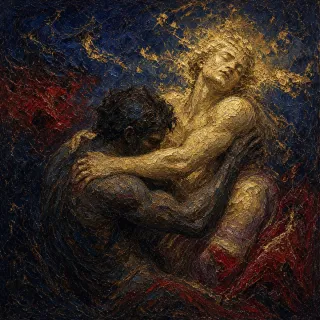
    Jacob arranges his family by how much he can bear to lose and goes ahead of them, bowing seven times. Then the verse the whole account has been waiting for: Esau ran to meet him, and embraced him, and fell on his neck, and kissed him: and they wept. Four verbs in a row and not one of them was expected. He asks who the women and children are and what the droves were for, and refuses the gift with a sentence that answers the pottage of chapter 25 without mentioning it: I have enough, my brother; keep that thou hast unto thyself. The man who sold his future for one meal says he has enough. Jacob presses the gift on him and Esau takes it, offers to travel with him, offers to leave men with him, and is quietly refused both times. They part without a quarrel, and they do not live near each other again.

    Verse by verse

    1. 33:4

      Ran, embraced, fell on his neck, kissed him: the same welcome the father gives in Luke 15:20, which some readers hear behind that parable.

    2. 33:9

      I have enough, my brother: the word is a full, sufficient portion. Jacob's reply in verse 11 uses a different word meaning all things.

    3. 33:10

      I have seen thy face, as though I had seen the face of God: said the morning after Peniel, where Jacob said he had seen God face to face.

    4. 33:14

      I will lead on softly: Jacob declines the escort and then goes to Succoth rather than Seir. The reconciliation is real and the distance is kept.

    Genesis 33:1-16: He ran to meet him

    Genesis 33:1-16

    King James Version · 16 verses

    33:1And Jacob lifted up his eyes, and looked, and, behold, Esau came, and with him four hundred men. And he divided the children unto Leah, and unto Rachel, and unto the two handmaids.

    33:2And he put the handmaids and their children foremost, and Leah and her children after, and Rachel and Joseph hindermost.

    33:3And he passed over before them, and bowed himself to the ground seven times, until he came near to his brother.

    33:4And Esau ran to meet him, and embraced him, and fell on his neck, and kissed him: and they wept.

    33:5And he lifted up his eyes, and saw the women and the children; and said, Who are those with thee? And he said, The children which God hath graciously given thy servant.

    33:6Then the handmaidens came near, they and their children, and they bowed themselves.

    33:7And Leah also with her children came near, and bowed themselves: and after came Joseph near and Rachel, and they bowed themselves.

    33:8And he said, What meanest thou by all this drove which I met? And he said, These are to find grace in the sight of my lord.

    33:9And Esau said, I have enough, my brother; keep that thou hast unto thyself.

    33:10And Jacob said, Nay, I pray thee, if now I have found grace in thy sight, then receive my present at my hand: for therefore I have seen thy face, as though I had seen the face of God, and thou wast pleased with me.

    33:11Take, I pray thee, my blessing that is brought to thee; because God hath dealt graciously with me, and because I have enough. And he urged him, and he took it.

    33:12And he said, Let us take our journey, and let us go, and I will go before thee.

    33:13And he said unto him, My lord knoweth that the children are tender, and the flocks and herds with young are with me: and if men should overdrive them one day, all the flock will die.

    33:14Let my lord, I pray thee, pass over before his servant: and I will lead on softly, according as the cattle that goeth before me and the children be able to endure, until I come unto my lord unto Seir.

    33:15And Esau said, Let me now leave with thee some of the folk that are with me. And he said, What needeth it? let me find grace in the sight of my lord.

    33:16So Esau returned that day on his way unto Seir.

  9. 09

    Genesis 35:29

    Burying Isaac

    Isaac dies at Hebron, old and full of days, and his sons Esau and Jacob bury him. It is the last time the brothers are seen together.

    Isaac dies at a hundred and eighty, and the burial notice is one clause long: his sons Esau and Jacob buried him. They are both there. Esau is named first here, where in 25:9 Isaac was named before Ishmael at Abraham's grave, and Genesis makes no comment on the order either time. Whatever the two brothers were to each other after Seir, they came back to the same cave in Hebron and put their father in the ground together. The book has a habit of ending its family quarrels at gravesides in a single line, without telling the reader what to feel about it.

    Verse by verse

    1. 35:29

      His sons Esau and Jacob buried him: the same closing formula as 25:9, where Isaac and Ishmael buried Abraham.

    2. 35:29

      Old and full of days: the phrase used of Abraham in 25:8. Isaac outlived both patriarchs at a hundred and eighty.

    Genesis 35:29

    King James Version · 1 verse

    35:29And Isaac gave up the ghost, and died, and was gathered unto his people, being old and full of days: and his sons Esau and Jacob buried him.

    Genesis 35:29: Burying Isaac
  10. 10

    Genesis 36

    The generations of Esau

    The chapter lists his wives, sons and grandsons, the dukes of Edom, and the kings that reigned in Edom before there reigned any king over Israel. Esau took his family and cattle and went into the country from the face of his brother Jacob, for their riches were more than that they might dwell together.

    A whole chapter is given to his descendants, which is more space than Genesis gives to most of the covenant line's branches. Esau is Edom, and the chapter says so four times. It lists his wives, his sons, his move to Seir because the land was not able to bear them both, exactly the reason Abram and Lot separated, and then the dukes, and then a line that has puzzled readers for a long time: these are the kings that reigned in the land of Edom, before there reigned any king over the children of Israel. Edom has kings while Israel is still a family in tents. The son who lost the blessing gets a nation, a territory, a royal line and a chapter of his own, and the book gives all of it without a hint that this is consolation.

    Verse by verse

    1. 36:6

      The land wherein they were strangers could not bear them: the same reason and almost the same wording as Abram and Lot in 13:6.

    2. 36:8

      Esau is Edom: stated flatly, and repeated, so the reader connects every later Edom passage back to this brother.

    3. 36:31

      Before there reigned any king over the children of Israel: Edom is organised into kingship centuries before Israel is. Numbers 20:14-21 shows the two nations meeting again.

    Genesis 36: The generations of Esau

    Genesis 36

    King James Version · 43 verses

    36:1Now these are the generations of Esau, who is Edom.

    36:2Esau took his wives of the daughters of Canaan; Adah the daughter of Elon the Hittite, and Aholibamah the daughter of Anah the daughter of Zibeon the Hivite;

    36:3And Bashemath Ishmael’s daughter, sister of Nebajoth.

    36:4And Adah bare to Esau Eliphaz; and Bashemath bare Reuel;

    36:5And Aholibamah bare Jeush, and Jaalam, and Korah: these are the sons of Esau, which were born unto him in the land of Canaan.

    36:6And Esau took his wives, and his sons, and his daughters, and all the persons of his house, and his cattle, and all his beasts, and all his substance, which he had got in the land of Canaan; and went into the country from the face of his brother Jacob.

    36:7For their riches were more than that they might dwell together; and the land wherein they were strangers could not bear them because of their cattle.

    36:8Thus dwelt Esau in mount Seir: Esau is Edom.

    36:9And these are the generations of Esau the father of the Edomites in mount Seir:

    36:10These are the names of Esau’s sons; Eliphaz the son of Adah the wife of Esau, Reuel the son of Bashemath the wife of Esau.

    36:11And the sons of Eliphaz were Teman, Omar, Zepho, and Gatam, and Kenaz.

    36:12And Timna was concubine to Eliphaz Esau’s son; and she bare to Eliphaz Amalek: these were the sons of Adah Esau’s wife.

    36:13And these are the sons of Reuel; Nahath, and Zerah, Shammah, and Mizzah: these were the sons of Bashemath Esau’s wife.

    36:14And these were the sons of Aholibamah, the daughter of Anah the daughter of Zibeon, Esau’s wife: and she bare to Esau Jeush, and Jaalam, and Korah.

    36:15These were dukes of the sons of Esau: the sons of Eliphaz the firstborn son of Esau; duke Teman, duke Omar, duke Zepho, duke Kenaz,

    36:16Duke Korah, duke Gatam, and duke Amalek: these are the dukes that came of Eliphaz in the land of Edom; these were the sons of Adah.

    36:17And these are the sons of Reuel Esau’s son; duke Nahath, duke Zerah, duke Shammah, duke Mizzah: these are the dukes that came of Reuel in the land of Edom; these are the sons of Bashemath Esau’s wife.

    36:18And these are the sons of Aholibamah Esau’s wife; duke Jeush, duke Jaalam, duke Korah: these were the dukes that came of Aholibamah the daughter of Anah, Esau’s wife.

    36:19These are the sons of Esau, who is Edom, and these are their dukes.

    36:20These are the sons of Seir the Horite, who inhabited the land; Lotan, and Shobal, and Zibeon, and Anah,

    36:21And Dishon, and Ezer, and Dishan: these are the dukes of the Horites, the children of Seir in the land of Edom.

    36:22And the children of Lotan were Hori and Hemam; and Lotan’s sister was Timna.

    36:23And the children of Shobal were these; Alvan, and Manahath, and Ebal, Shepho, and Onam.

    36:24And these are the children of Zibeon; both Ajah, and Anah: this was that Anah that found the mules in the wilderness, as he fed the asses of Zibeon his father.

    36:25And the children of Anah were these; Dishon, and Aholibamah the daughter of Anah.

    36:26And these are the children of Dishon; Hemdan, and Eshban, and Ithran, and Cheran.

    36:27The children of Ezer are these; Bilhan, and Zaavan, and Akan.

    36:28The children of Dishan are these; Uz, and Aran.

    36:29These are the dukes that came of the Horites; duke Lotan, duke Shobal, duke Zibeon, duke Anah,

    36:30Duke Dishon, duke Ezer, duke Dishan: these are the dukes that came of Hori, among their dukes in the land of Seir.

    36:31And these are the kings that reigned in the land of Edom, before there reigned any king over the children of Israel.

    36:32And Bela the son of Beor reigned in Edom: and the name of his city was Dinhabah.

    36:33And Bela died, and Jobab the son of Zerah of Bozrah reigned in his stead.

    36:34And Jobab died, and Husham of the land of Temani reigned in his stead.

    36:35And Husham died, and Hadad the son of Bedad, who smote Midian in the field of Moab, reigned in his stead: and the name of his city was Avith.

    36:36And Hadad died, and Samlah of Masrekah reigned in his stead.

    36:37And Samlah died, and Saul of Rehoboth by the river reigned in his stead.

    36:38And Saul died, and Baal-hanan the son of Achbor reigned in his stead.

    36:39And Baal-hanan the son of Achbor died, and Hadar reigned in his stead: and the name of his city was Pau; and his wife’s name was Mehetabel, the daughter of Matred, the daughter of Mezahab.

    36:40And these are the names of the dukes that came of Esau, according to their families, after their places, by their names; duke Timnah, duke Alvah, duke Jetheth,

    36:41Duke Aholibamah, duke Elah, duke Pinon,

    36:42Duke Kenaz, duke Teman, duke Mibzar,

    36:43Duke Magdiel, duke Iram: these be the dukes of Edom, according to their habitations in the land of their possession: he is Esau the father of the Edomites.


The people, the places and the rest of Scripture.

Reading Esau closely

The people he dealt with

Jacob is the brother at the centre of everything. Esau is shown despising the birthright before Jacob steals the blessing, so the fault is shared, but Esau's grief in chapter 27 is real and the Book of Genesis lets it stand. His hatred lasts twenty years in the reader's view and no time at all in the text, since the next thing we see is him running to embrace Jacob. Whether he had come with four hundred men as a threat or an escort, Genesis does not say. Jacob's caution afterwards, declining to travel with him and going to Succoth instead of Seir, suggests the trust was never full.

Isaac loves him openly, and the one reason given, the venison, is a small verdict on both of them. Isaac's blessing on Esau is not a curse: it promises the fatness of the earth and a day when he will break Jacob's yoke, which Edom's later history under the kings of Judah bore out. Rebekah appears in his account only as the one who works against him, and he seems to know it, since his choice of a third wife from Ishmael's family is an attempt to please his parents after the fact.

His wives, Hittites and then an Ishmaelite, set him apart from the line of promise as much as the oracle did. His sons and grandsons in Genesis 36 include Amalek, whose people will attack Israel in the wilderness, and Eliphaz, a name that reappears among Job's friends as a Temanite, Teman being an Edomite clan.

Genesis 25
Genesis 25

The birthright and the blessing

The two are different things. The birthright was the firstborn's double share of the inheritance and headship of the family; the blessing was the father's prophetic word over the son who would carry the promise. Esau sold the first for stew and lost the second by his brother's trick, and Hebrews joins them: having sold the one, he was rejected when he sought the other. The tears in Hebrews 12 are the tears of Genesis 27, and the point is that they could not turn the clock back.

Jewish and Christian readers alike have noticed how ordinary the sale is. Esau is not tempted by anything grand. He is hungry, the stew is in front of him, and the future is far away. That is what makes him the warning he became.

Genesis 26

What came before and what followed

Behind Esau is the oracle to Rebekah and the pattern already set by Ishmael: the elder is passed over, is blessed in a lesser way, and becomes a nation of his own. Ahead of him is Edom. Moses is told not to meddle with the children of Esau in Seir because God gave them that land, and Deuteronomy commands Israel not to abhor an Edomite, for he is thy brother. Yet Edom refuses Israel passage in Numbers, is conquered by David, revolts under Jehoram, and in the prophets stands aloof and gloating when Babylon takes Jerusalem. Obadiah, Amos, Isaiah, Jeremiah and Ezekiel all speak against Edom, and Malachi opens with its ruined hills as proof of what God's hatred means. The Herods who ruled Judea in the time of Christ were Idumeans, descendants of Esau.

Genesis 26

Where the rest of Scripture reaches back

Hebrews 11:20 counts Isaac's blessing of both Jacob and Esau as an act of faith concerning things to come. Hebrews 12:16-17 makes Esau the example of the profane person who trades what is holy for what is immediate and cannot get it back. Romans 9 uses him with Jacob to show that God's purpose according to election stands. Malachi 1:2-3, quoted there, says Esau's mountains were laid waste and his heritage given to the dragons of the wilderness. The name Edom, and the account of a brother who would not help, runs through Psalm 137, Lamentations 4 and the whole of Obadiah, and Isaiah 63 pictures the LORD himself coming from Edom with garments stained red.

Genesis 26

Why it matters

Esau is the elder who was not chosen, and Scripture uses him to say what election is. Before the twins were born, before they had done good or evil, God told Rebekah the elder would serve the younger, and Paul builds Romans 9 on it: not of works, but of him that calleth. Malachi's words, I loved Jacob and I hated Esau, are about the two nations and their fortunes, yet Paul quotes them of the two men. Esau's account is where the Bible insists that the promise runs by grace and not by birth order.

Hebrews adds the warning. Esau was a profane person, who for one morsel of meat sold his birthright, and afterward, when he would have inherited the blessing, he was rejected, for he found no place of repentance, though he sought it carefully with tears. The lesson is not that he could not be forgiven, but that some trades cannot be undone. Yet the same Esau who is the type of the profane is also the man who ran to embrace the brother who had cheated him, and Jacob said of his face, it is as though I had seen the face of God. Edom, his nation, becomes in the prophets the picture of a brother who stood aloof on the day of Jerusalem's calamity, and Obadiah's whole book is addressed to it.

9 songs

The music

Every song in the catalogue whose passage falls inside these chapters.

  1. Genesis 23:1-25:18

    Led to the Well

  2. Genesis 25:19-28:22

    The Blessing and the Ladder

  3. Genesis 25:19-34; 27

    The Blessing Taken

  4. Genesis 28:10-22

    A Ladder in the Night

  5. Genesis 28:10-22

    Jacob's Ladder

  6. Genesis 28:10-22

    The Gate of Heaven

  7. Genesis 29:1-31:55

    Twenty Years in Haran

  8. Genesis 32:1-36:40

    No Longer Jacob

  9. Genesis 32:22-32

    Until the Breaking of Day

Nearby

All the people

Report an error on this page