The big picture
After receiving God’s promise for his family, King David fights neighbouring peoples. His kingdom is Israel, the people under his rule. The Philistines and Moabites, nearby enemies, come under his control. Fighting also reaches Syria, a region with rival rulers and armies. The victories bring wealth, forced service, and many deaths. The chapter credits God with preserving David, then turns to the officials through whom he governs his own people.
In this chapter
- Neighbouring Armies Lose to David 1 Chronicles 18:1-6
David defeats the Philistines and takes Gath and its towns.
- War Wealth Is Set Apart 1 Chronicles 18:7-11
David brings gold shields to Jerusalem and takes great stores of bronze from enemy towns.
- Edom Comes Under David’s Rule 1 Chronicles 18:12-13
Abishai leads a victory over Edom in the valley of salt.
- Officials Help David Govern 1 Chronicles 18:14-17
David rules all Israel and gives judgement and justice to his people.
Central truth
David’s military victories bring neighbouring peoples under his rule, while named officials support the justice of his government.
Scripture beside the summary
1 Chronicles · King James Version · 171 Chronicles 18:1-6
Neighbouring Armies Lose to David
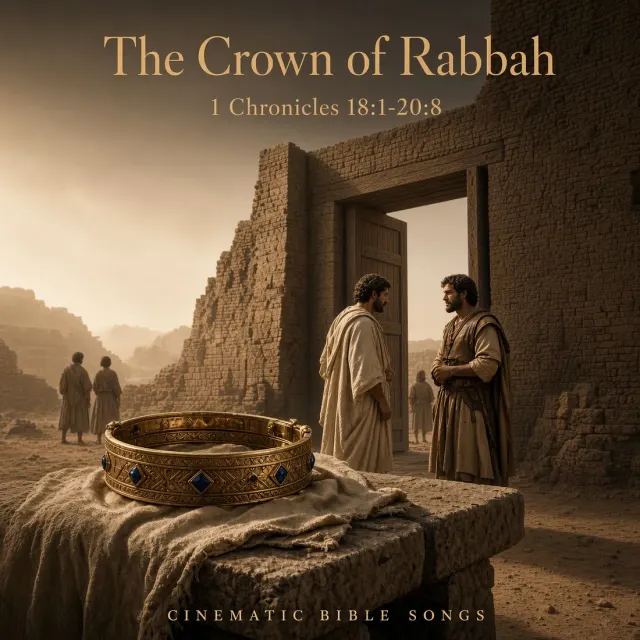
David defeats the Philistines and takes Gath and its towns. Moab also falls under his rule and brings payments. He defeats Hadarezer of Zobah and captures chariots, horsemen, and foot soldiers. Most chariot horses are disabled by cutting their leg tendons. When men from Damascus come to help his enemy, David kills twenty-two thousand of them. He places troops in their land, and they serve him and bring tribute. The account credits God with preserving him, while describing conquest through deaths, captured strength, and imposed rule.
In everyday life
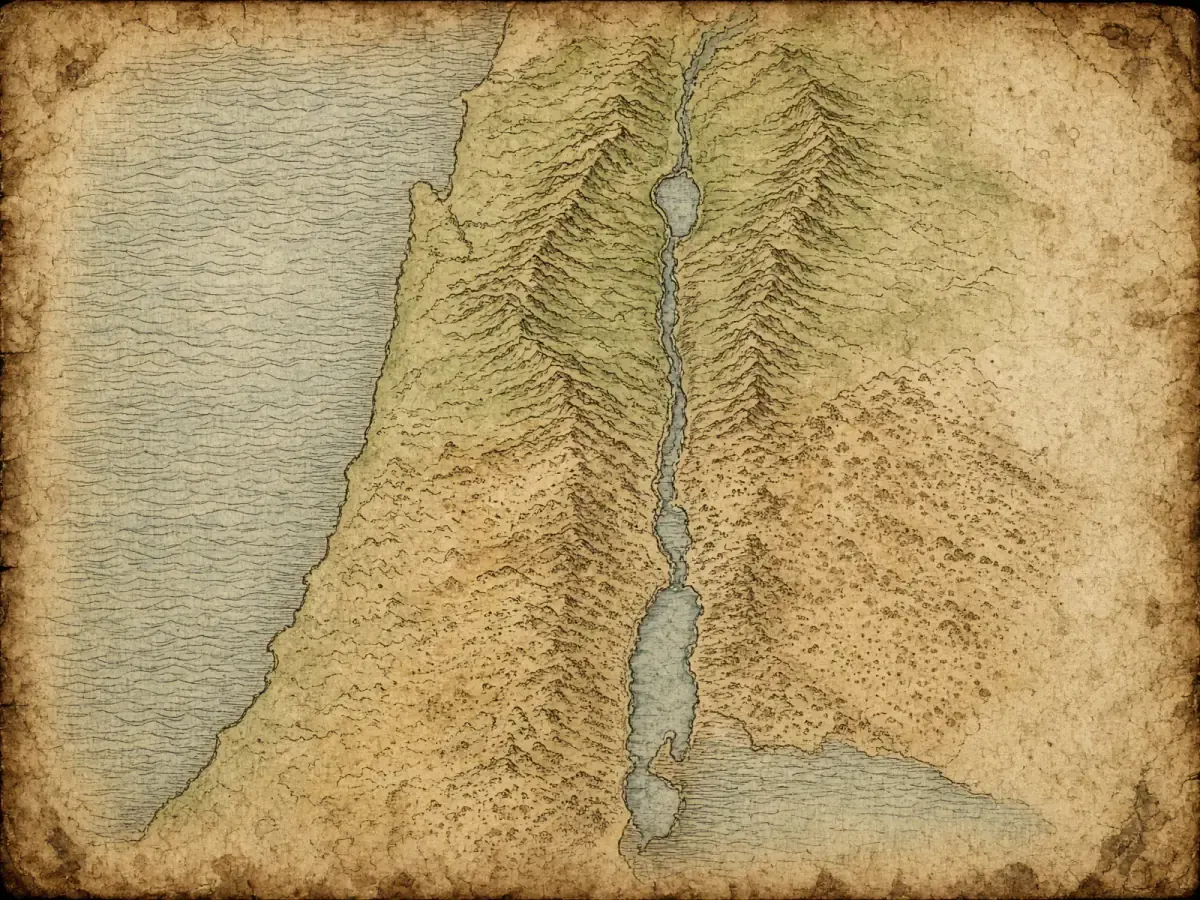
A war relief accountant unrolls a border map on a cargo pallet at an aid airstrip. New colours show the victor’s control, but the forms beside it list displaced households and deaths. She keeps those sheets with the supply totals. The changed map cannot tell the full cost. The account of David also claims God’s preservation of the king.
Notice
1 Chronicles 18:6 Troops remain in the defeated land, and payments follow. The victory changes who rules there; it is not only the outcome of one battle.
1 Chronicles 18:1-6
King James Version1Now after this it came to pass, that David smote the Philistines, and subdued them, and took Gath and her towns out of the hand of the Philistines.
2And he smote Moab; and the Moabites became David’s servants, and brought gifts.
3And David smote Hadarezer king of Zobah unto Hamath, as he went to stablish his dominion by the river Euphrates.
4And David took from him a thousand chariots, and seven thousand horsemen, and twenty thousand footmen: David also houghed all the chariot horses, but reserved of them an hundred chariots.
5And when the Syrians of Damascus came to help Hadarezer king of Zobah, David slew of the Syrians two and twenty thousand men.
6Then David put garrisons in Syria-damascus; and the Syrians became David’s servants, and brought gifts. Thus the LORD preserved David whithersoever he went.
1 Chronicles 18:7-11
War Wealth Is Set Apart
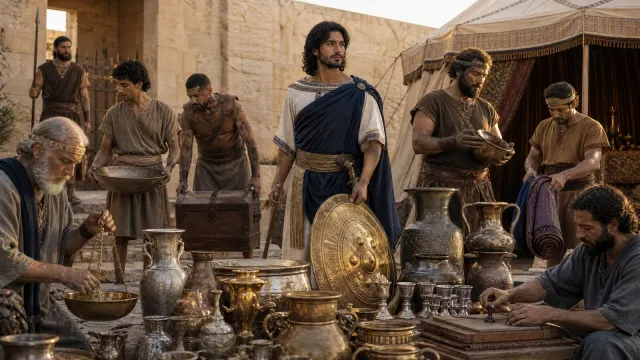
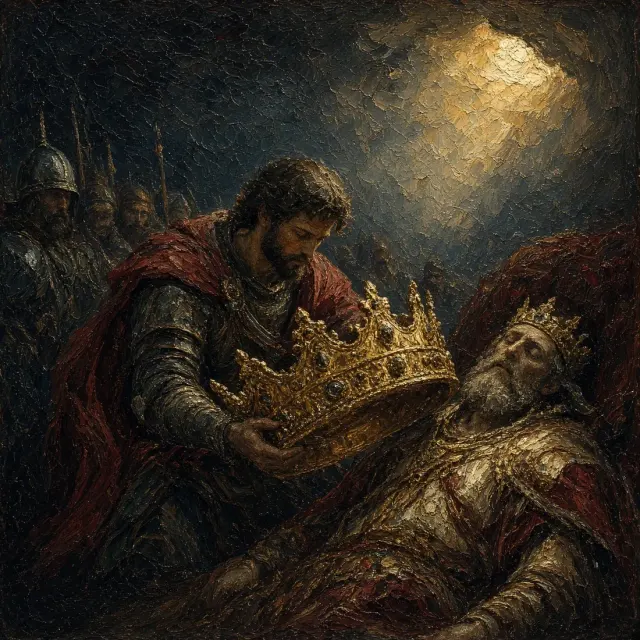
David brings gold shields to Jerusalem and takes great stores of bronze from enemy towns. The account looks ahead to Solomon using that bronze for temple fittings. Tou, another king, welcomes David’s defeat of their shared enemy. He sends his son Hadoram with greetings and gifts of precious metals. David dedicates these objects to God along with wealth taken from other peoples. The riches therefore come through both conquest and a friendly ruler’s gifts. Their later use in worship is recorded without hiding their connection to war.
In everyday life
A trophy restorer labels silver cups on the bench of a metalworking studio. Some reached a town through gifts, others through a settled dispute. She records each source before polishing the worn surfaces. The objects carry a past that their shine does not reveal. David sets his war wealth apart for God and later temple work.
Notice
1 Chronicles 18:8 Solomon will use this bronze for temple fittings. The account connects the spoils of these campaigns with work belonging to the next reign.
1 Chronicles 18:7-11
King James Version7And David took the shields of gold that were on the servants of Hadarezer, and brought them to Jerusalem.
8Likewise from Tibhath, and from Chun, cities of Hadarezer, brought David very much brass, wherewith Solomon made the brasen sea, and the pillars, and the vessels of brass.
9Now when Tou king of Hamath heard how David had smitten all the host of Hadarezer king of Zobah;
10He sent Hadoram his son to king David, to enquire of his welfare, and to congratulate him, because he had fought against Hadarezer, and smitten him; (for Hadarezer had war with Tou;) and with him all manner of vessels of gold and silver and brass.
11Them also king David dedicated unto the LORD, with the silver and the gold that he brought from all these nations; from Edom, and from Moab, and from the children of Ammon, and from the Philistines, and from Amalek.
1 Chronicles 18:12-13
Edom Comes Under David’s Rule
Abishai leads a victory over Edom in the valley of salt. Eighteen thousand Edomites are killed. Troops are then placed in the land, and its people become subject to David. The account again says that God preserves David wherever he goes. This short report combines a commander’s action, a large death toll, and lasting control of another people. David’s success is not described as a bloodless rise in influence. Rule expands through warfare that leaves soldiers stationed among those who have been defeated.
In everyday life
A border clinic volunteer listens to displaced families beside a mobile X-ray van. New troops control the roads to their villages, where neighbours have died. She records urgent needs while they wait beneath the van’s small awning. Changed rule reaches into grief and daily health. These needs cannot explain God’s stated part in David’s victory.
Notice
1 Chronicles 18:13 The soldiers stay after the battle, and the people become David’s subjects. The brief report describes continuing control as well as military victory.
1 Chronicles 18:12-13
King James Version12Moreover Abishai the son of Zeruiah slew of the Edomites in the valley of salt eighteen thousand.
13And he put garrisons in Edom; and all the Edomites became David’s servants. Thus the LORD preserved David whithersoever he went.
1 Chronicles 18:14-17
Officials Help David Govern
David rules all Israel and gives judgement and justice to his people. The account then names those holding major duties. Joab commands the army, while Jehoshaphat keeps records. Zadok and Abimelech serve as priests, and Shavsha is the scribe. Benaiah commands the Cherethites and Pelethites, groups serving the king. David’s sons hold leading places near him. The chapter ends with organised rule at home after the reports of war abroad. A kingdom needs continuing decisions and assigned service, not only victories over neighbouring armies.
In everyday life
A municipal clerk places a duty chart on the counter of a service centre. Residents need decisions, records, and people responsible for carrying them out. She sends each case to the named officer instead of leaving it under the mayor’s title. Good administration requires more than a prominent leader. David’s officials serve a hereditary kingdom with sacred priestly offices.
Notice
1 Chronicles 18:14 Justice for the people is named before the list of officials. The administrative roles follow a statement about how the king is meant to govern.
1 Chronicles 18:14-17
King James Version14So David reigned over all Israel, and executed judgment and justice among all his people.
15And Joab the son of Zeruiah was over the host; and Jehoshaphat the son of Ahilud, recorder.
16And Zadok the son of Ahitub, and Abimelech the son of Abiathar, were the priests; and Shavsha was scribe;
17And Benaiah the son of Jehoiada was over the Cherethites and the Pelethites; and the sons of David were chief about the king.
Details worth noticing
The opening image
1 Chronicles 18:1 begins with “Now after this it came to pass, that David smote the Philistines, and subdued them, and took Gath and her towns out of the hand of the Philistines.”
Where the chapter turns
1 Chronicles 18:9 forms a natural hinge: “Now when Tou king of Hamath heard how David had smitten all the host of Hadarezer king of Zobah;”
The final note
1 Chronicles 18:17 leaves the reader with “And Benaiah the son of Jehoiada was over the Cherethites and the Pelethites; and the sons of David were chief about the king.”
A word trail through the chapter
The words David, Hadarezer, king, servants, became, brass help reveal the chapter’s repeated concerns.
KJV words made clear
- dominion
- responsibility or rule
- unto
- to
Music and video connected to the passage
Related media appears when its Scripture reference overlaps this study. Music and video can illuminate a theme while the biblical text remains the foundation.