The big picture
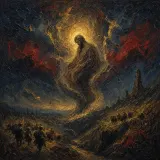
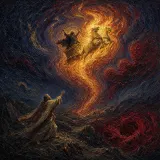
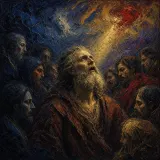
Hoshea, king of Israel, the northern kingdom, faces Assyria, the empire demanding payment from him. When he seeks another ally, Assyria imprisons him and besieges Samaria, his capital. The city's fall ends a long period of rejected warnings. Kings explains the defeat through Israel's breach with God, who had rescued the people from slavery. New settlers then arrive under Assyrian orders. Their mixed worship shows that learning about God is not the same as giving him undivided loyalty.
In this chapter
- Samaria Falls and Its People Are Exiled 2 Kings 17:1-6
Hoshea rules nine years and does evil, though not in the same way as earlier kings.
- The People Worship What God Had Forbidden 2 Kings 17:7-12
Kings gives the reason for this fall: Israel sinned against the God who freed it from Egypt and its king.
- Warnings Fail to Stop Idolatry and Child Sacrifice 2 Kings 17:13-18
God repeatedly sent prophets to Israel and Judah, urging both kingdoms to turn back and keep his laws.
- Judah Shares the Same Failure 2 Kings 17:19-23
Judah has not kept God's commands either.
- New Settlers Add God to Their Old Worship 2 Kings 17:24-33
Assyria moves people from several lands into Samaria's towns.
- The Covenant Requires Undivided Worship 2 Kings 17:34-41
The account says these people still do not truly fear God, despite its earlier description of their mixed practice.
Central truth
Israel loses its land after long refusal of God's commands, and the new settlers repeat the failure of adding him to other worship.

Scripture beside the summary
2 Kings · King James Version · 412 Kings 17:1-6
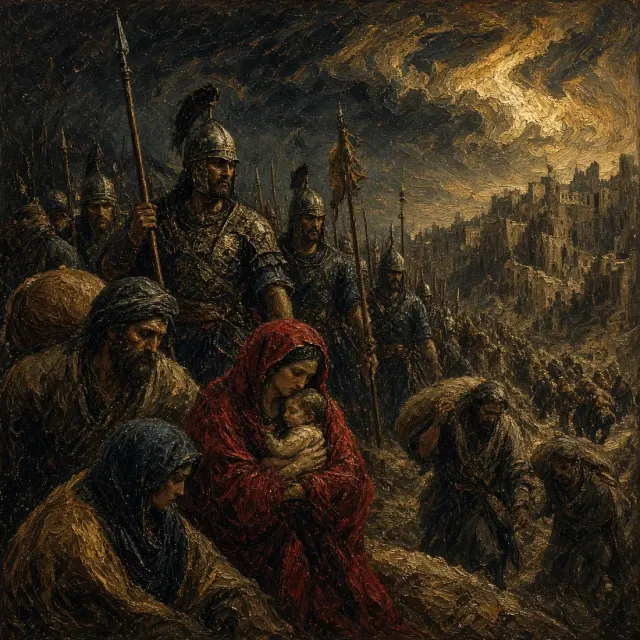
Samaria Falls and Its People Are Exiled
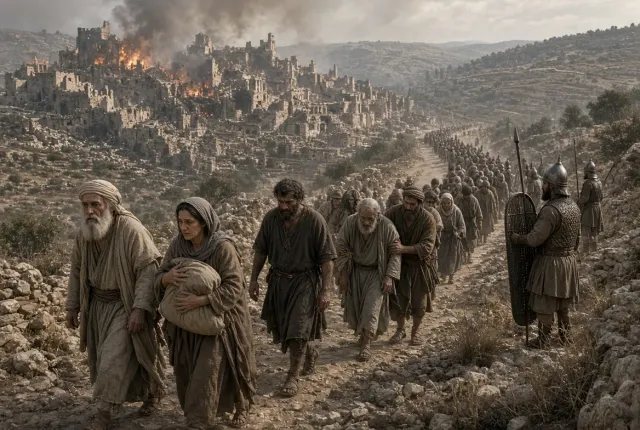
Hoshea rules nine years and does evil, though not in the same way as earlier kings. Shalmaneser of Assyria makes him a subject who pays tribute. Hoshea then stops the yearly payment and sends envoys to So, king of Egypt. Assyria treats this as rebellion and puts him in prison. Its army besieges Samaria for three years before taking it. Israel's people are carried away to distant places under Assyrian rule. The loss reaches both the throne and the homes of the people.
In everyday life
A bus station attendant writes destination tags for families ordered to leave their flood-damaged district. They hold bags while strangers decide where they will sleep. The board shows distant towns instead of the streets they know. Their loss of home gives a limited likeness; Israel is forcibly exiled by a conquering empire.
Notice
2 Kings 17:6 The account names places where the captives are settled. Exile means being uprooted into new communities, not merely losing a king or paying a larger tribute.
2 Kings 17:1-6
King James Version1In the twelfth year of Ahaz king of Judah began Hoshea the son of Elah to reign in Samaria over Israel nine years.
2And he did that which was evil in the sight of the LORD, but not as the kings of Israel that were before him.
3Against him came up Shalmaneser king of Assyria; and Hoshea became his servant, and gave him presents.
4And the king of Assyria found conspiracy in Hoshea: for he had sent messengers to So king of Egypt, and brought no present to the king of Assyria, as he had done year by year: therefore the king of Assyria shut him up, and bound him in prison.
5Then the king of Assyria came up throughout all the land, and went up to Samaria, and besieged it three years.
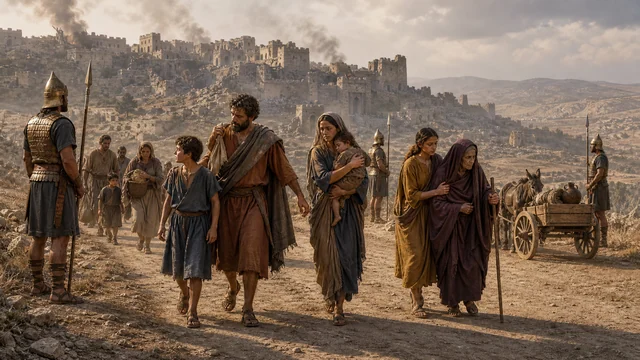
6In the ninth year of Hoshea the king of Assyria took Samaria, and carried Israel away into Assyria, and placed them in Halah and in Habor by the river of Gozan, and in the cities of the Medes.
2 Kings 17:7-12
The People Worship What God Had Forbidden
Kings gives the reason for this fall: Israel sinned against the God who freed it from Egypt and its king. The people copied the nations driven out before them and the rules made by their own kings. They built local worship sites throughout the land, raised images and sacred groves, and burned incense there. Some wrongs were done secretly. These were not customs God had left open for them to choose. They served idols despite his direct command against doing so.
In everyday life
The laboratory trainee finds old staff instructions that permit a practice the written safety rule forbids. Senior workers defend it because everyone in the room has done it for years. She sets both documents side by side, exposing the conflict. Israel's breach concerns worship of the God who rescued it, not competing laboratory procedures.
Notice
2 Kings 17:9 Secret wrongs appear beside worship sites spread through the towns. The account joins concealed conduct with visible public practice when explaining Israel's unfaithfulness.
2 Kings 17:7-12
King James Version7For so it was, that the children of Israel had sinned against the LORD their God, which had brought them up out of the land of Egypt, from under the hand of Pharaoh king of Egypt, and had feared other gods,
8And walked in the statutes of the heathen, whom the LORD cast out from before the children of Israel, and of the kings of Israel, which they had made.
9And the children of Israel did secretly those things that were not right against the LORD their God, and they built them high places in all their cities, from the tower of the watchmen to the fenced city.
10And they set them up images and groves in every high hill, and under every green tree:
11And there they burnt incense in all the high places, as did the heathen whom the LORD carried away before them; and wrought wicked things to provoke the LORD to anger:
12For they served idols, whereof the LORD had said unto them, Ye shall not do this thing.
2 Kings 17:13-18
Warnings Fail to Stop Idolatry and Child Sacrifice
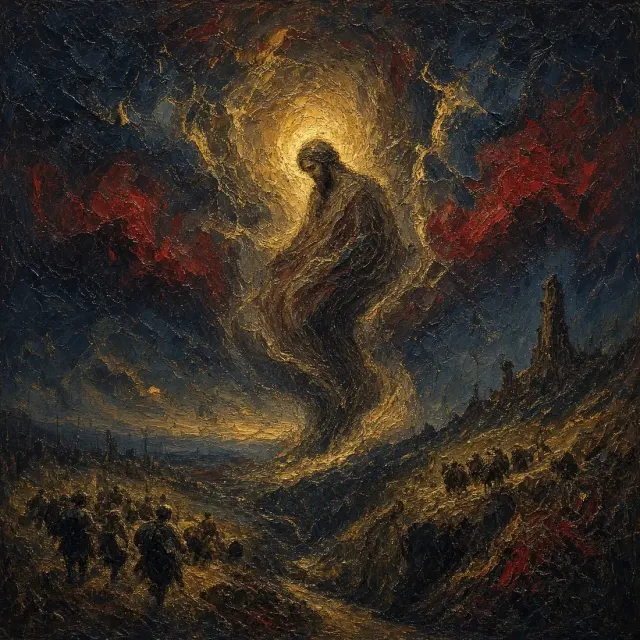
God repeatedly sent prophets to Israel and Judah, urging both kingdoms to turn back and keep his laws. The people refused as their ancestors had refused. They rejected his covenant, the binding promise and duties linking them to him. Metal calves, a sacred grove, heavenly bodies and Baal received their worship. Sons and daughters were offered through fire, while magic guided their choices. God removed Israel in anger, leaving Judah. The fall follows warnings and grave acts, not a lack of knowledge about what he required.
In everyday life
A child-protection worker closes a file thick with ignored warnings and sits silently with a colleague. Each dated page records a chance to stop harm before it grew. Their silence comes from knowing that someone had spoken in time. Israel's record includes child sacrifice and God's judgement, far more than a failure of casework.
Notice
2 Kings 17:13 God sends warnings to both kingdoms through many messengers. Israel's removal comes after repeated calls to change, rather than after one unexplained demand.
2 Kings 17:13-18
King James Version13Yet the LORD testified against Israel, and against Judah, by all the prophets, and by all the seers, saying, Turn ye from your evil ways, and keep my commandments and my statutes, according to all the law which I commanded your fathers, and which I sent to you by my servants the prophets.
14Notwithstanding they would not hear, but hardened their necks, like to the neck of their fathers, that did not believe in the LORD their God.
15And they rejected his statutes, and his covenant that he made with their fathers, and his testimonies which he testified against them; and they followed vanity, and became vain, and went after the heathen that were round about them, concerning whom the LORD had charged them, that they should not do like them.
16And they left all the commandments of the LORD their God, and made them molten images, even two calves, and made a grove, and worshipped all the host of heaven, and served Baal.
17And they caused their sons and their daughters to pass through the fire, and used divination and enchantments, and sold themselves to do evil in the sight of the LORD, to provoke him to anger.
18Therefore the LORD was very angry with Israel, and removed them out of his sight: there was none left but the tribe of Judah only.
2 Kings 17:19-23
Judah Shares the Same Failure
Judah has not kept God's commands either. It follows practices shaped in Israel, so the warning reaches the surviving kingdom too. Kings recalls how the northern tribes broke from David's royal house and made Jeroboam king. He turned them from God, and they stayed with his sins until exile came. The prophets had announced this removal. The people are now in Assyria, away from their own land. Their long history of inherited worship does not excuse it or make the final loss unexpected.
In everyday life
A union archivist reads years of meeting minutes in a disused branch hall. New officers keep renewing a rule first imposed by a former leader, even after warnings of its harm. The dates show how repetition turned one choice into a lasting pattern. Israel's history ends in divine judgement and exile, not a disputed union rule.
Notice
2 Kings 17:19 Judah is named as disobedient before the account returns to Israel's exile. The surviving kingdom cannot treat its neighbour's fall as proof of its own faithfulness.
2 Kings 17:19-23
King James Version19Also Judah kept not the commandments of the LORD their God, but walked in the statutes of Israel which they made.
20And the LORD rejected all the seed of Israel, and afflicted them, and delivered them into the hand of spoilers, until he had cast them out of his sight.
21For he rent Israel from the house of David; and they made Jeroboam the son of Nebat king: and Jeroboam drave Israel from following the LORD, and made them sin a great sin.
22For the children of Israel walked in all the sins of Jeroboam which he did; they departed not from them;
23Until the LORD removed Israel out of his sight, as he had said by all his servants the prophets. So was Israel carried away out of their own land to Assyria unto this day.
2 Kings 17:24-33
New Settlers Add God to Their Old Worship
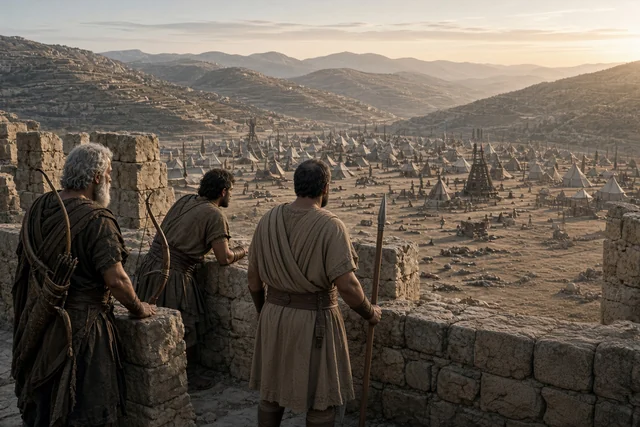
Assyria moves people from several lands into Samaria's towns. Because they do not fear God, he sends lions that kill some of them. Officials ask for someone to teach the worship of the land's God. A returned priest settles in Beth-el and teaches them. Yet each group keeps its own gods. Some settlers burn their children as offerings. They appoint priests at local shrines and combine fear of God with their former worship. Instruction has changed their practice without ending their divided loyalty.
In everyday life
A housing liaison officer listens as newly arrived families explain rules carried from their former homes. They add the building's safety meeting to their calendar but refuse to abandon a dangerous shared habit. Attendance and obedience have parted company. These settlers also practise child sacrifice, a horror no housing dispute can represent.
Notice
2 Kings 17:33 The settlers fear God while serving their own gods too. The two actions are placed together to show a divided practice, not a full return to his commands.
2 Kings 17:24-33
King James Version24And the king of Assyria brought men from Babylon, and from Cuthah, and from Ava, and from Hamath, and from Sepharvaim, and placed them in the cities of Samaria instead of the children of Israel: and they possessed Samaria, and dwelt in the cities thereof.
25And so it was at the beginning of their dwelling there, that they feared not the LORD: therefore the LORD sent lions among them, which slew some of them.
26Wherefore they spake to the king of Assyria, saying, The nations which thou hast removed, and placed in the cities of Samaria, know not the manner of the God of the land: therefore he hath sent lions among them, and, behold, they slay them, because they know not the manner of the God of the land.
27Then the king of Assyria commanded, saying, Carry thither one of the priests whom ye brought from thence; and let them go and dwell there, and let him teach them the manner of the God of the land.
28Then one of the priests whom they had carried away from Samaria came and dwelt in Beth-el, and taught them how they should fear the LORD.
29Howbeit every nation made gods of their own, and put them in the houses of the high places which the Samaritans had made, every nation in their cities wherein they dwelt.
30And the men of Babylon made Succoth-benoth, and the men of Cuth made Nergal, and the men of Hamath made Ashima,
31And the Avites made Nibhaz and Tartak, and the Sepharvites burnt their children in fire to Adrammelech and Anammelech, the gods of Sepharvaim.
32So they feared the LORD, and made unto themselves of the lowest of them priests of the high places, which sacrificed for them in the houses of the high places.
33They feared the LORD, and served their own gods, after the manner of the nations whom they carried away from thence.
2 Kings 17:34-41
The Covenant Requires Undivided Worship
The account says these people still do not truly fear God, despite its earlier description of their mixed practice. God's covenant with Israel forbids serving other gods. He alone rescued them from Egypt, and he promises help against enemies if they fear him. They must remember his written laws instead of treating him as one god among many. Yet the settlers keep their old ways, and their children follow them. The outward addition of God's worship leaves the central command unmet.
In everyday life
A swimming coach reads a signed commitment beside a parent's list of conflicting instructions for the same child. Both cannot govern the lesson at once. Repeating the pledge has not settled which voice the swimmer follows. God's covenant calls for exclusive worship and trust, not agreement about a sports lesson.
Notice
2 Kings 17:41 The mixed worship passes to children and grandchildren. A practice can become deeply rooted through family repetition without becoming faithful to the command it claims to honour.
2 Kings 17:34-41
King James Version34Unto this day they do after the former manners: they fear not the LORD, neither do they after their statutes, or after their ordinances, or after the law and commandment which the LORD commanded the children of Jacob, whom he named Israel;
35With whom the LORD had made a covenant, and charged them, saying, Ye shall not fear other gods, nor bow yourselves to them, nor serve them, nor sacrifice to them:
36But the LORD, who brought you up out of the land of Egypt with great power and a stretched out arm, him shall ye fear, and him shall ye worship, and to him shall ye do sacrifice.
37And the statutes, and the ordinances, and the law, and the commandment, which he wrote for you, ye shall observe to do for evermore; and ye shall not fear other gods.
38And the covenant that I have made with you ye shall not forget; neither shall ye fear other gods.
39But the LORD your God ye shall fear; and he shall deliver you out of the hand of all your enemies.
40Howbeit they did not hearken, but they did after their former manner.
41So these nations feared the LORD, and served their graven images, both their children, and their children’s children: as did their fathers, so do they unto this day.
Details worth noticing
The opening image
2 Kings 17:1 begins with “In the twelfth year of Ahaz king of Judah began Hoshea the son of Elah to reign in Samaria over Israel nine years.”
Where the chapter turns
2 Kings 17:20 forms a natural hinge: “And the LORD rejected all the seed of Israel, and afflicted them, and delivered them into the hand of spoilers, until he had cast them out of his sight.”
The final note
2 Kings 17:41 leaves the reader with “So these nations feared the LORD, and served their graven images, both their children, and their children’s children: as did their fathers, so do they unto…”
A word trail through the chapter
The words LORD, Israel, king, Assyria, children, fear help reveal the chapter’s repeated concerns.
KJV words made clear
- behold
- look, or pay close attention
- unto
- to
- thou
- you
- hath
- has
- spake
- spoke
Music and video connected to the passage
Related media appears when its Scripture reference overlaps this study. Music and video can illuminate a theme while the biblical text remains the foundation.