
2 Kings

25 Chapters
2 Kings: The Whole Book, Chapter by Chapter
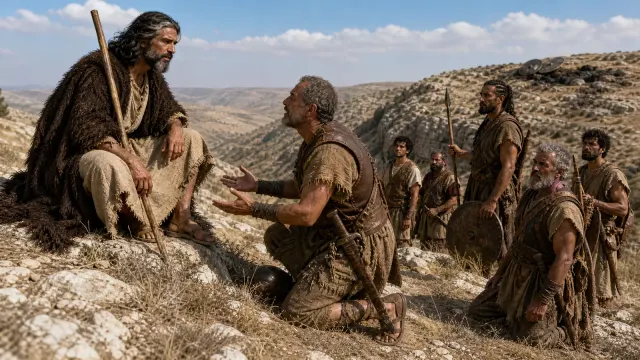
A King Sends Orders Up a Hill
Ahaziah begins his reign with two losses of control: Moab has rebelled, and an injury has confined him to bed. His attempt to seek an answer from Baalzebub never reaches Ekron because Elijah intercepts the messengers with a question sharper than the king's medical concern: why has Israel's king gone elsewhere as though there were no God in Israel? The rest of the chapter tests whether royal force can alter that word. Two captains call Elijah a man of God while ordering him down the hill, and fire answers both commands. The third captain kneels and asks for life, after which Elijah descends because the angel of the LORD tells him to go. Standing before Ahaziah changes nothing. The same sentence is repeated, and the king dies "according to the word of the LORD." A successor takes the throne, but no revised verdict ever arrives.
One complete chapter pageOpen chapter →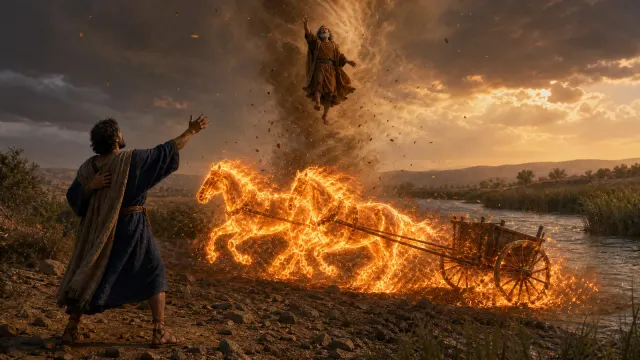
The Mantle Falls, and the Work Continues
Elijah's departure begins as a journey Elisha refuses to abandon. At Gilgal, Bethel, and Jericho he is invited to stay behind, yet he follows to the Jordan, crosses on dry ground, and asks for the double portion associated with an heir. The fiery chariot separates the men, but Elijah goes up by the whirlwind, leaving Elisha grieving and the mantle behind. What follows is not a costume change mistaken for succession. The Jordan divides again when Elisha appeals to the LORD God of Elijah, and the sons of the prophets recognize that Elijah's spirit rests on him. Their three-day search for the departed prophet finds nothing. Elisha's first public acts then pull the extraordinary into ordinary life: Jericho's dangerous water is healed at its source, while the severe episode at Bethel shows that the authority now resting on Elisha cannot be reduced to a harmless badge of office.
One complete chapter pageOpen chapter →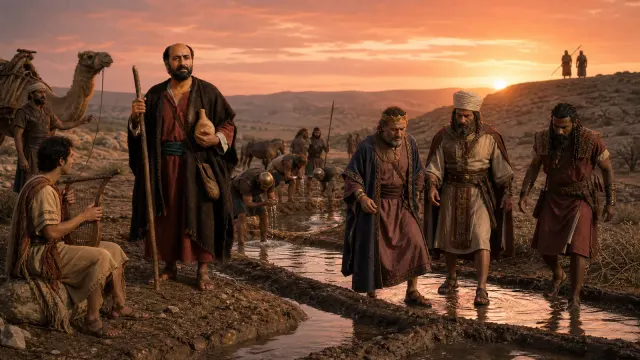
Water in the Wilderness and an Unresolved Ending
Jehoram is better than Ahab in one specific respect and still remains within Jeroboam's condemned pattern. His campaign against rebellious Moab quickly turns three kings and their animals into a thirsty force in the wilderness. Jehoram announces disaster; Jehoshaphat asks for a prophet. Elisha receives the kings with no reverence for Jehoram's rank, yet announces water without visible rain and a military victory beyond it. The same water that saves the allied force appears red to Moab in the morning light, and a mistaken interpretation sends the defenders toward what they think is an abandoned camp. The campaign then becomes systematic destruction, just as Elisha had announced. But the ending resists a clean victory paragraph. Mesha sacrifices his heir on the wall, "great indignation" comes against Israel without a named source, and the allies withdraw. The chapter ends with success, horror, and unresolved meaning occupying the same battlefield.
One complete chapter pageOpen chapter →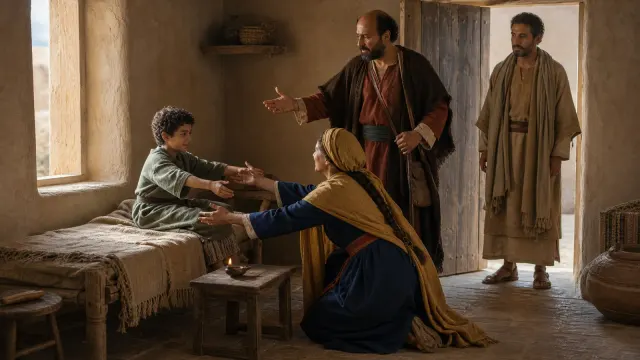
Oil, a Room, a Child, and Bread
The Book of 2 Kings 4 keeps moving from large prophetic claims into rooms, kitchens, fields, debts, and meals. A widow facing the loss of her sons discovers that the little oil left in her house can fill every borrowed vessel and leave enough to pay what she owes. A Shunammite woman builds Elisha a room without asking for reward, receives the promise of a son she never requested, and later carries that dead child back to the bed prepared for the prophet. Her protest forces the original promise back into view, while Elisha's prayer and persistent presence precede the child's restoration. The chapter then turns from one household to a hungry prophetic community: unfamiliar gourds make the common pot dangerous, and twenty barley loaves appear absurdly small for a hundred men. By the end, threatened bodies have repeatedly been preserved through ordinary objects that remain ordinary. Oil, a bed, meal, and barley loaves matter, but the chapter keeps attaching the decisive result to the LORD's word.
One complete chapter pageOpen chapter →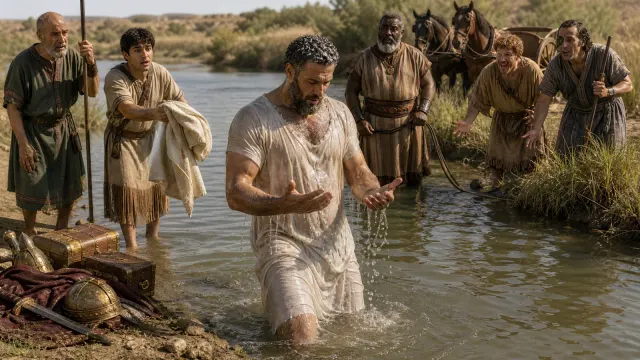
The Commander Is Cleansed; the Servant Goes Out Diseased
Naaman's healing begins with a contradiction the chapter refuses to flatten: he is Syria's honored commander, a man through whom the LORD has given victory, and he is also afflicted with leprosy. The person who knows where help can be found is a captive Israelite girl in his household. Royal channels then misroute that knowledge into a diplomatic crisis before Elisha brings Naaman to his own door and refuses to perform the ceremony the commander has imagined. Servants persuade Naaman to do the simple thing, and the man who arrived in rank and rage returns cleansed and confessing the God of Israel. Elisha refuses payment, leaving Naaman to name the complications of returning to Syrian service. Gehazi then reverses the chapter's movement. He secretly collects what Elisha rejected, lies about it, and walks out bearing the affliction that had left Naaman. The foreign commander is cleansed; the prophet's servant ends diseased.
One complete chapter pageOpen chapter →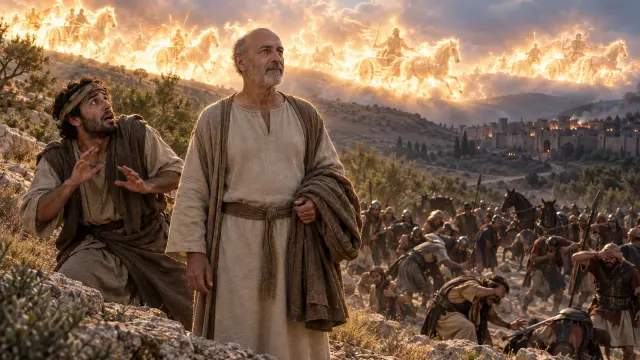
An Opened Hand, Opened Eyes, and a Besieged City
The chapter begins with a borrowed tool and ends inside a city starving under siege, a remarkable range held together by questions of what can be recovered, seen, and controlled. Elisha makes a lost axe head accessible again, then repeatedly exposes Syrian plans that were supposed to remain secret. When Syria surrounds Dothan to seize him, his frightened servant is shown horses and chariots of fire already surrounding the prophet. The captors are themselves blinded, led into Samaria, and fed at Elisha's command rather than executed by the king. That temporary end to raiding does not become permanent peace. Benhadad later besieges Samaria so tightly that famine reaches prices and acts almost beyond speech. The king wears sackcloth beneath his robes but responds to the horror by ordering Elisha's death. The final accusation, "what should I wait for the LORD any longer?", breaks off at precisely the point where the next chapter will answer with an impossible promise of abundance.
One complete chapter pageOpen chapter →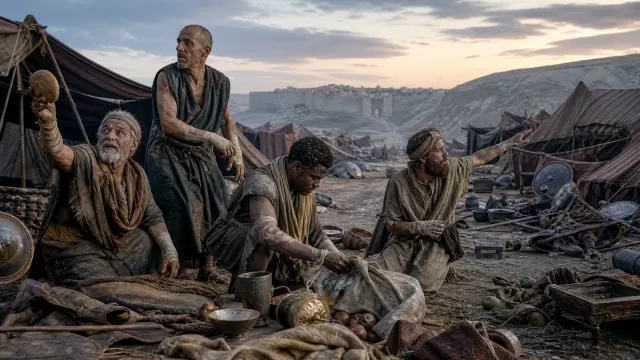
The Starving City Discovers an Empty Camp
Elisha answers a city dying of famine with numbers: by this time tomorrow, fine flour and barley will be cheap at Samaria's gate. A royal officer considers even heavenly windows insufficient and is told that he will see the abundance without eating it. The mechanism of deliverance is then discovered by four leprous men outside the city, people whose choices have narrowed to dying where they sit, dying inside, or risking the Syrian camp. They arrive to find the siege already abandoned because the LORD has filled the Syrians' hearing with the sound of a great host. After eating and hiding valuables, the men recognize that silence cannot continue and carry the news toward the gate. The king suspects a trap, scouts verify the flight, and the starving population floods outward. Food reaches exactly the announced prices. At the same gate, the skeptical officer is trampled. Collective rescue and the personal warning are fulfilled in one crowded place.
One complete chapter pageOpen chapter →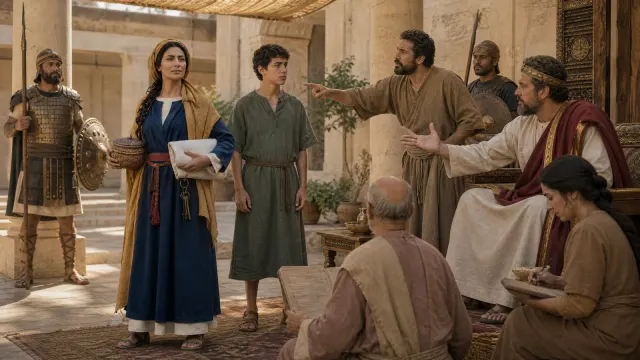
A Household Restored While Kingdoms Turn Toward Violence
Chapter 8 moves between a household rescued through perfect timing and kingdoms turning toward violence. The Shunammite returns from seven years abroad to ask for her land at the exact moment Gehazi is telling the king about her son's restoration, and the royal order restores both property and its produce. Elisha then travels to Damascus, where Benhadad's recoverable illness becomes the setting for a death by Hazael's hand and a future Elisha can only meet with tears. The focus shifts to Judah, where marriage into Ahab's house has carried the northern dynasty's pattern into David's line. Jehoram survives because of the promise to David, even as Edom and Libnah revolt. His son Ahaziah continues the same family connection and joins Joram of Israel in war against Hazael. Joram's wounds bring both related kings to Jezreel. Nothing in their visit sounds dramatic by itself, but their shared location places them directly in the path of the revolution about to begin.
One complete chapter pageOpen chapter →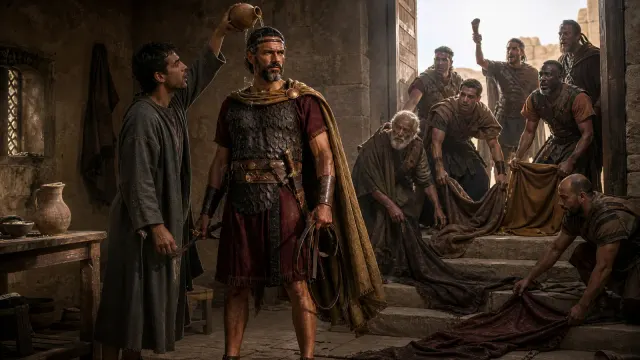
The Word Against Ahab Reaches Jezreel
Jehu's anointing begins in a private room at Ramothgilead and explodes into a rapid coup. A young prophet pours the oil, names the judgment on Ahab's house, and leaves before anyone can negotiate with him. Jehu's fellow officers first mock the messenger and then immediately proclaim Jehu king. Speed governs everything that follows. Joram's watchmen see the approach, messengers vanish into Jehu's company, and both Joram of Israel and Ahaziah of Judah ride out to meet him. The confrontation lands in Naboth's field, where Jehu explicitly ties Joram's death to the blood remembered from Ahab's reign. Ahaziah also falls while fleeing. Jezebel then meets Jehu from a window with an accusation drawn from Israel's own royal record, but palace attendants turn against her. Her violent death and unburied remains close the chapter under Elijah's earlier word. The long-delayed judgment reaches Jezreel in a matter of hours.
One complete chapter pageOpen chapter →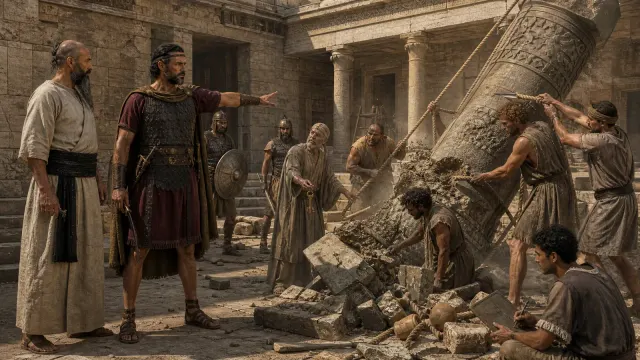
Jehu Destroys Ahab's House but Keeps Jeroboam's Calves
Jehu's destruction of Ahab's house widens from Jezreel to Samaria and from the royal family to Baal's institutional presence. He begins with letters that force the guardians of Ahab's descendants to choose between resistance and complicity, and their submission ends with seventy severed heads at Jezreel's gate. Relatives of Ahaziah are killed on the road, while Jehonadab is welcomed into Jehu's chariot as a witness to his declared zeal. Jehu then uses deception and religious ceremony to gather Baal's worshippers into one place, kills them, destroys the images, and turns the temple into a latrine. Yet the chapter's own evaluation refuses to let this become a simple portrait of complete faithfulness. The calves at Bethel and Dan remain, and Jehu does not walk in the law of the LORD with all his heart. He receives a promise of four generations on Israel's throne even as Hazael begins cutting away Israel's territory.
One complete chapter pageOpen chapter →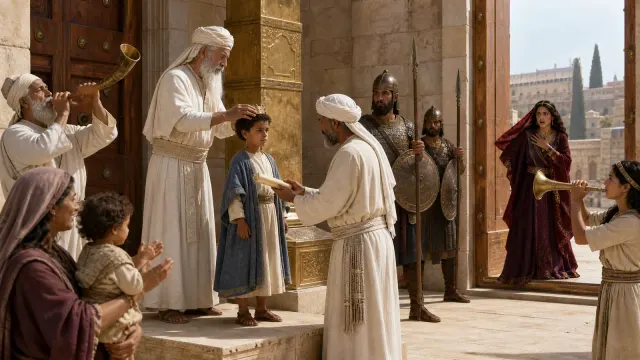
A Hidden Child and a Throne Reclaimed
Athaliah's seizure of power nearly extinguishes Judah's royal line, but the chapter narrows the whole future of David's house to one rescued child, one nurse, and years of concealment inside the temple. In the seventh year Jehoiada reveals Joash to trusted commanders, binds them by covenant, and uses the Sabbath change of guard to create a protective ring around the heir. David's stored weapons surround David's descendant, and the crown is placed beside the testimony. Athaliah arrives only after the public acclamation is underway and cries treason, but she is removed from the temple before being killed. Jehoiada then makes covenant between the LORD, king, and people, as well as between king and people. Baal's temple is destroyed, and Joash is escorted from sanctuary to palace. The final verse supplies the scale of the entire operation: the king at the center of armed guards, covenant, and national restoration is seven years old.
One complete chapter pageOpen chapter →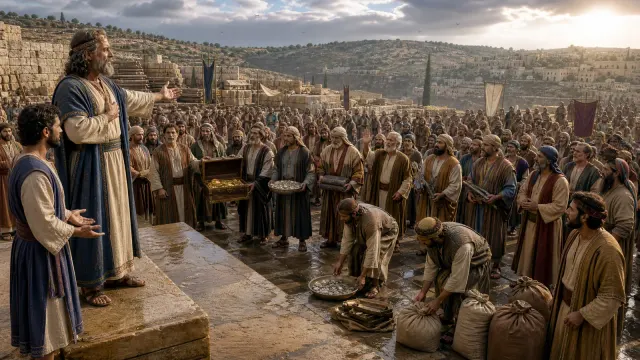
Repairing the House, Emptying the Treasury
Joash's long reign is remembered here less for spectacle than for a stubborn maintenance problem. He does what is right under Jehoiada's instruction, though the high places remain, and he orders temple income used to repair breaches in the house of the LORD. When years pass without the work being completed, he changes the system rather than merely repeating the demand. A chest with a hole in its lid creates a new stream for repair money, royal and priestly officers count it, and trustworthy overseers pay builders, masons, timber suppliers, and stonecutters. The restored building, however, does not stand outside regional danger. Hazael turns toward Jerusalem, and Joash sends temple and palace treasures to make him withdraw. The chapter that has watched money enter the sanctuary now watches accumulated wealth leave it. Joash survives that crisis, but not a later conspiracy. The child once protected from Athaliah eventually dies by the hands of his own servants.
One complete chapter pageOpen chapter →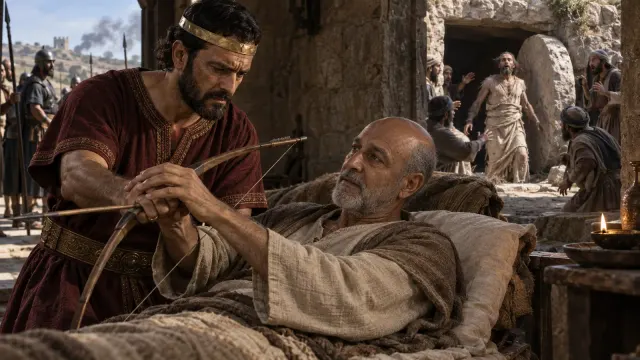
A Dying Prophet and a Deliverance Not Exhausted
Syria has reduced Israel nearly to military residue, yet chapter 13 refuses to identify relief with reform. Jehoahaz continues the sins of Jeroboam and still cries to the LORD under oppression; the LORD hears because he sees Israel's suffering. A deliverer is granted, but the worship pattern remains. Joash of Israel receives the same negative evaluation, then appears at the bedside of the dying Elisha and weeps with the old cry about Israel's chariot and horsemen. The prophet's final enacted word promises victory over Syria, while Joash's three strikes limit that victory to three occasions. Elisha dies, but the next scene at his grave unexpectedly brings a dead man back to his feet. The chapter closes by reaching behind every recent ruler to the covenant with Abraham, Isaac, and Jacob. That covenant explains why Israel is not yet cast away, and Joash's three recoveries of lost cities match the number fixed beside Elisha's deathbed.
One complete chapter pageOpen chapter →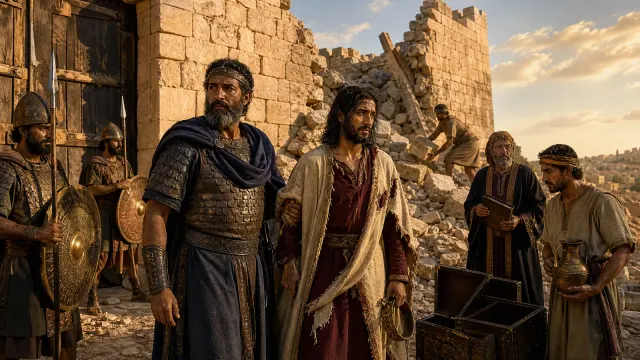
A Victory That Invites Defeat
Amaziah's reign opens with a measured act of justice. He executes the servants who killed his father but does not kill their children, explicitly following the law of Moses. That restraint sits beside a qualified positive evaluation and a military success over Edom. Success then becomes the setting for overreach. Amaziah challenges Joash of Israel, ignores a humiliating fable warning him to stay home, and loses at Bethshemesh. Jerusalem's wall is breached, temple and palace treasure are taken, and hostages go north. Amaziah survives the rival king by fifteen years but eventually dies after a conspiracy reaches him at Lachish. Judah installs the young Azariah and continues. The northern half of the chapter then makes another important distinction: Jeroboam son of Joash remains under the Book of 2 Kings' condemnation for continuing Jeroboam's sins, yet he restores Israel's borders according to the word spoken through Jonah. The reason given is Israel's bitter affliction. National mercy does not require a flattering verdict on the ruler through whom it comes.
One complete chapter pageOpen chapter →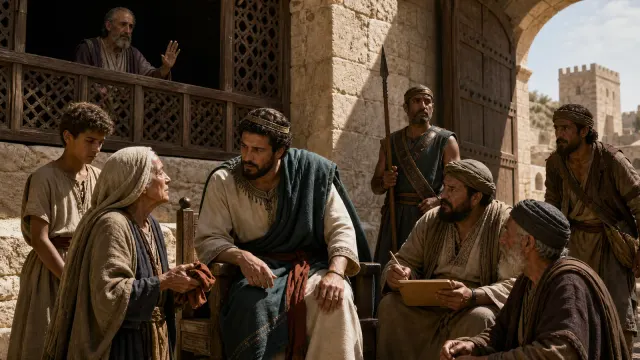
Long Reigns in Judah, Shattered Successions in Israel
The long reigns in Judah make the northern instability look even sharper. Azariah remains king for fifty-two years, though his leprosy separates royal title from daily rule, while Jotham later follows with another orderly succession. Israel moves differently: Zachariah lasts six months, Shallum one month, Pekahiah two years, and assassination repeatedly becomes the road to the throne. The promised limit on Jehu's house is reached, but no stable replacement appears. Menahem buys Assyrian support with silver collected from Israel's wealthy men, yet Assyria soon moves from accepting money to taking towns, territory, and people. By the chapter's end, the crisis has crossed southward. Pekah, himself part of Israel's violent succession, joins Rezin of Syria as pressure begins to build against Judah.
One complete chapter pageOpen chapter →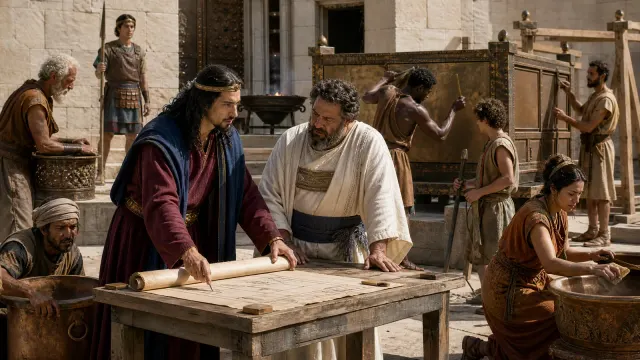
Ahaz Brings Damascus Into the Temple
Ahaz answers danger by placing himself beneath a greater foreign king. He calls himself Tiglath-pileser's “servant” and “son,” sends temple and palace wealth to Assyria, and receives the military result he asked for when Damascus falls and Rezin dies. The cost does not stop with money. Ahaz travels to conquered Damascus, copies an altar he sees there, and has Urijah build it in Jerusalem before he returns. The imported design takes over the regular sacrificial work while the older bronze altar is moved aside. Further changes to temple furnishings and entrances close the reign with Assyria's shadow inside the sanctuary itself. The chapter therefore moves from foreign pressure outside Jerusalem to foreign influence embedded in Judah's worship, while Hezekiah inherits the altered house.
One complete chapter pageOpen chapter →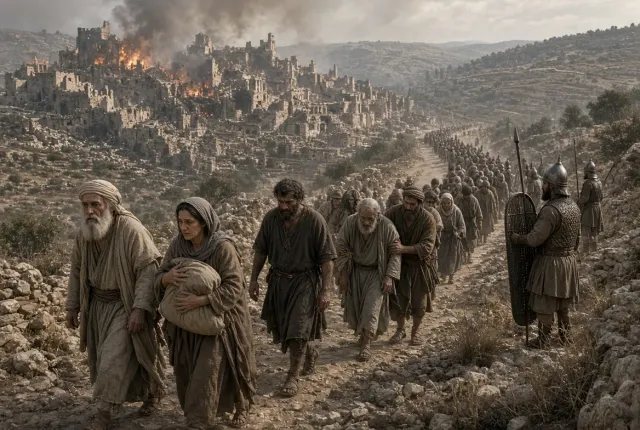
Samaria Falls, and the Book Explains Why
Samaria falls after a three-year siege, but the military report is only the doorway into the chapter. The Book of 2 Kings spends far more time answering why Israel is carried away than how Assyria penetrates the city. The explanation begins with the exodus, follows generations of rejected commands and prophetic warnings, and insists that Judah is not exempt from the same indictment. Israel follows “vanity, and became vain,” while worship spreads from high places to calves, Baal, heavenly bodies, divination, and the sacrifice of children. Assyria then repopulates Samaria with other peoples. A returned priest teaches them about the LORD, but their inherited gods remain. The chapter closes on that unresolved mixture, sharply distinguishing acknowledgment of the LORD from the exclusive covenant loyalty the command requires.
One complete chapter pageOpen chapter →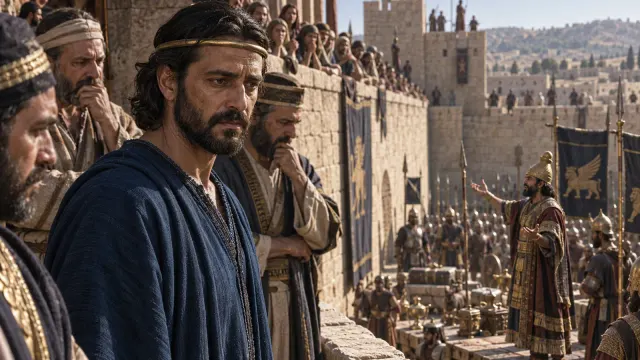
Trust on Trial Before Jerusalem's Wall
Hezekiah begins with reforms so thorough that even the bronze serpent made by Moses is broken once incense is being offered to it. The book praises his trust in the LORD with exceptional language, then immediately places that trust under pressure. Samaria's fall is recalled, Judah's fortified cities are taken, and Hezekiah pays Sennacherib with temple and palace treasure, even stripping gold he had placed on the temple himself. The Assyrian force then turns the conflict into a public argument outside Jerusalem. Rabshakeh mocks Judah's military capacity, misreads the removal of the high places as an offense against the LORD, claims divine authorization, and offers food and life with deportation attached. The people answer none of it. Their commanded silence leaves the threat hanging for the next chapter.
One complete chapter pageOpen chapter →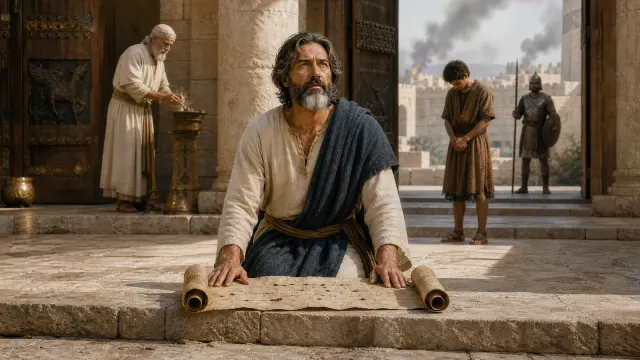
The Letter Is Spread Before the LORD
The public challenge at Jerusalem's wall becomes a private and prophetic response. Hezekiah tears his clothes, enters the LORD's house, and asks Isaiah to pray for the remnant. A second Assyrian message escalates the claim by warning the king that his God may deceive him. Hezekiah carries the letter into the temple, spreads it before the LORD, and prays without denying Assyria's actual victories. Isaiah's answer reframes those victories: the conqueror is powerful, but not the author of his own reach. The promise to Jerusalem is precise, including renewed cultivation and an Assyrian assault that will not enter the city. The angel of the LORD then strikes the camp. Sennacherib returns to Nineveh and later dies in his own god's house, ending the boast very differently from how it began.
One complete chapter pageOpen chapter →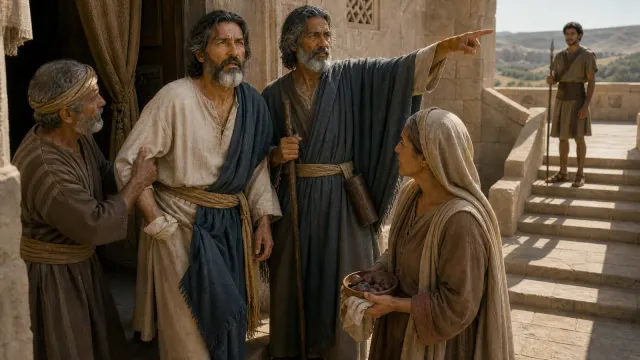
Added Years and an Exposed Treasury
Hezekiah's crisis moves from the city to his body. Isaiah announces death, Hezekiah prays and weeps, and before the prophet has even cleared the court the word sends him back with fifteen added years and a promise of healing. A reversed shadow confirms the promise. Then Babylon enters the chapter quietly, not with soldiers but with letters and a gift after hearing of the king's illness. Hezekiah shows the visitors everything in his stores, and Isaiah answers the comprehensive display with a comprehensive future loss. The treasures will go to Babylon, and royal descendants will serve there. Hezekiah accepts the word while speaking of peace in his own days. The reign closes with a king rescued in the present and a future judgment now attached to the wealth behind him.
One complete chapter pageOpen chapter →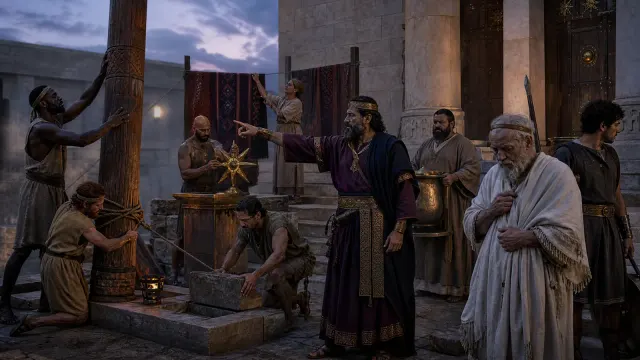
What Hezekiah Removed, Manasseh Restores
Manasseh's fifty-five years reverse Hezekiah's reforms with startling thoroughness. High places return, rival altars enter the LORD's house, the heavenly host is worshiped in the temple courts, and a carved image stands inside the sanctuary where the LORD had placed his name. Prophets answer by measuring Jerusalem with the same line used for Samaria and Ahab's house. The judgment is pictured with both construction tools and a wiped, overturned dish. The chapter then adds innocent blood to the indictment, making clear that Manasseh's legacy is not confined to religious objects. Amon continues his father's course but lasts only two years before servants kill him. The people execute the conspirators and preserve the Davidic succession by placing Josiah on the throne, though reform has not yet begun.
One complete chapter pageOpen chapter →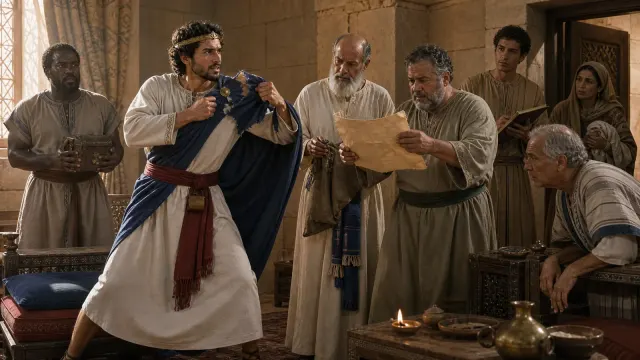
The Repair Work Uncovers a Greater Breach
Josiah begins with a familiar problem: the temple needs repair. Money is gathered, trustworthy workers are paid, and carpenters, builders, and masons address the building's breaches. Then Hilkiah finds the book of the law, and the chapter's center of gravity shifts. Shaphan reads it to the king, Josiah tears his clothes, and what looked like a maintenance project becomes a covenant crisis. The delegation goes to Huldah, whose authority is accepted without hesitation in the account. Her first message confirms judgment on Jerusalem for abandonment of the LORD. Her second distinguishes Josiah's tender response, tears, and humility. He will not see the coming disaster, though the sentence itself remains. The reform to come therefore begins under a word that is both personally merciful and nationally unresolved.
One complete chapter pageOpen chapter →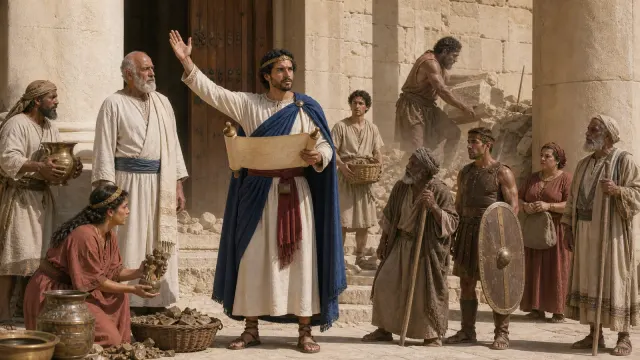
A Covenant Renewed Before the Judgment Falls
Josiah takes the book out of the palace and makes its words public. King, priests, prophets, elders, and people hear the covenant, and the response becomes visible across the land. Temple vessels for rival worship are burned, high places are defiled, Topheth is disabled, solar objects and old royal altars are removed, and the reform reaches Bethel, where an oracle from 1 Kings 13 is fulfilled. Passover then shows the positive side of the covenant response, not merely the destruction of forbidden things. Josiah receives exceptional praise for turning to the LORD with heart, soul, and might. Then comes the chapter's terrible hinge: “Notwithstanding.” Judgment on Judah remains. Josiah dies at Megiddo, and his sons quickly fall under Egyptian control, ending the chapter with tribute, renaming, and a return to adverse royal assessments.
One complete chapter pageOpen chapter →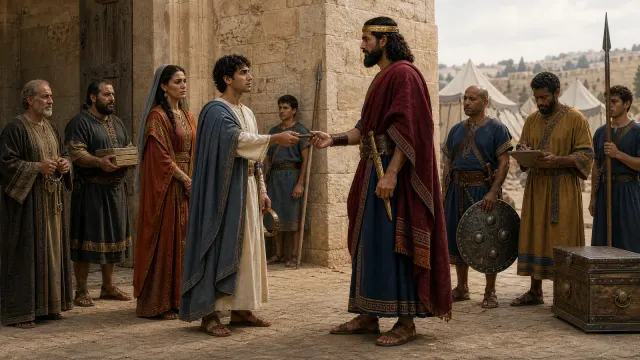
The Treasures Leave, and Another King Is Renamed
Babylon takes Egypt's place as the power controlling Judah's political horizon. Jehoiakim serves Nebuchadnezzar, rebels, and faces destructive pressure that the Book of 2 Kings explicitly connects to earlier prophetic judgment and Manasseh's innocent blood. Jehoiachin inherits the throne for only three months before Jerusalem is surrounded and he surrenders with the royal household. This capture does not yet burn the city, but it empties it of treasure, soldiers, craftsmen, officials, and much of its governing capacity. Babylon installs Jehoiachin's uncle, changes his name to Zedekiah, and leaves a reduced kingdom in place. Zedekiah receives the same adverse moral assessment and eventually rebels too. The chapter ends at the edge of the final siege, with royal succession still visible but meaningful independence almost gone.
One complete chapter pageOpen chapter →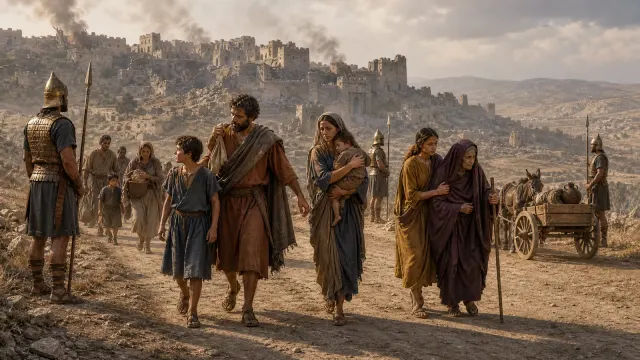
The City Burns, but the Final King Is Fed
Jerusalem's final siege is measured in dates, hunger, breached defenses, and failed escape. Zedekiah is captured, his sons are killed before him, his eyes are put out, and he is taken to Babylon. The destruction then becomes systematic: the temple, palace, and major houses burn, the walls are broken, people are deported, temple furnishings are dismantled for metal, and leading priests, military officers, and court figures are executed at Riblah. A poor remnant remains under Gedaliah, but even that fragile settlement fractures when Ishmael assassinates him and fear drives the people toward Egypt. Then the book jumps thirty-seven years forward. Jehoiachin is released from prison, given new garments, honored at the Babylonian table, and fed continually. The city is gone, but the final image is bread for a living Davidic king.
One complete chapter pageOpen chapter →Source: eBible.org · eng-kjv2006