The big picture
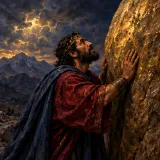
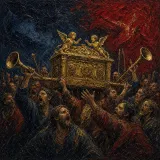
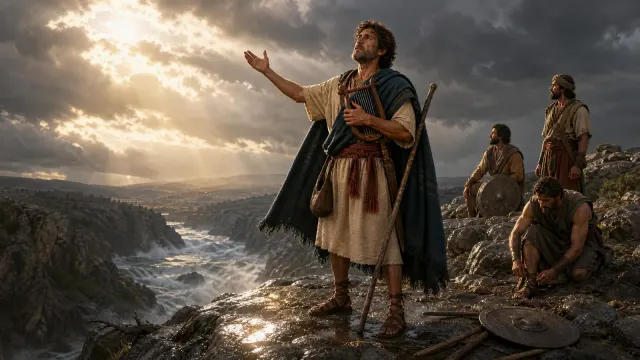
Rescued from danger, David, Israel's king and singer, looks back on his enemies. They include Saul, the former king who sought him. He calls God a rock, shield and safe tower. Storms, deep water and battle fill his song as he describes danger and deliverance. He praises God's justice and the strength given to his hands. The ending reaches past one escape to his rule over nations and God's mercy toward his descendants. These are words of worship from a rescued warrior king.
In this chapter
- A Cry Reaches the Place of Safety 2 Samuel 22:1-7
David begins by naming God as rock, fortress, rescuer and shield.
- The World Shakes at God’s Coming 2 Samuel 22:8-16
The song pictures the earth and heavens shaking as God comes in anger.
- Rescue Brings David Into Open Space 2 Samuel 22:17-25
God reaches down and draws David out of deep waters.
- God Gives Light and Opposes Pride 2 Samuel 22:26-31
David says God shows mercy to the merciful and faithfulness to the upright.
- Strength for War Comes from God 2 Samuel 22:32-43
David asks who else can be God or a rock of safety.
- The Song Ends with Lasting Mercy 2 Samuel 22:44-51
David thanks God for rescue from conflict among his own people and for rule over other nations.
Central truth
David praises God as the source of his rescue, strength and royal future, describing both deliverance from danger and victory over enemies.

Scripture beside the summary
2 Samuel · King James Version · 512 Samuel 22:1-7
A Cry Reaches the Place of Safety
David begins by naming God as rock, fortress, rescuer and shield. Each image describes safety against forces that threaten him. He recalls death as waves surrounding him and traps lying in his path. In that distress he cries to God, and his voice is heard. The song does not picture him as calm or self-sufficient during danger. His praise comes from having needed help. God is worthy of praise because the threatened man has called and found someone able to save him.
In everyday life
A stranded sailor grips a rescue line after waves sweep her from a damaged boat. Later she describes the crew as her shelter in the storm. The images grow from danger she cannot master alone. Her gratitude names the help that reached her. David's song addresses God as the one who hears and rescues.
Notice
2 Samuel 22:7 David's cry enters God's ears from the place of distress. The song links rescue to a heard plea rather than to the king's self-sufficiency.
2 Samuel 22:1-7
King James Version1And David spake unto the LORD the words of this song in the day that the LORD had delivered him out of the hand of all his enemies, and out of the hand of Saul:
2And he said, The LORD is my rock, and my fortress, and my deliverer;
3The God of my rock; in him will I trust: he is my shield, and the horn of my salvation, my high tower, and my refuge, my saviour; thou savest me from violence.
4I will call on the LORD, who is worthy to be praised: so shall I be saved from mine enemies.
5When the waves of death compassed me, the floods of ungodly men made me afraid;
6The sorrows of hell compassed me about; the snares of death prevented me;
7In my distress I called upon the LORD, and cried to my God: and he did hear my voice out of his temple, and my cry did enter into his ears.
2 Samuel 22:8-16
The World Shakes at God’s Coming
The song pictures the earth and heavens shaking as God comes in anger. Smoke, fire, dark clouds and rushing wind surround him. He rides on a heavenly creature and thunders from above. Lightning scatters the enemy, and the sea's hidden channels are exposed. These vast images express how great the rescuer is compared with the danger. David describes his help as an act that shakes the world. The storm language belongs to the praise, not to a list of ordinary weather observations.
In everyday life
A composer writes a storm passage to express the force of rescue after danger. Drums and sudden light on stage make listeners feel small beside the scene. The work uses a scale larger than everyday speech can carry. David's song uses storm images to praise the real God who acts against his enemies.
Notice
2 Samuel 22:16 Even the sea's channels are laid bare at God's rebuke. The image makes hidden depths visible under the force of the rescuer's coming.
2 Samuel 22:8-16
King James Version8Then the earth shook and trembled; the foundations of heaven moved and shook, because he was wroth.
9There went up a smoke out of his nostrils, and fire out of his mouth devoured: coals were kindled by it.
10He bowed the heavens also, and came down; and darkness was under his feet.
11And he rode upon a cherub, and did fly: and he was seen upon the wings of the wind.
12And he made darkness pavilions round about him, dark waters, and thick clouds of the skies.
13Through the brightness before him were coals of fire kindled.
14The LORD thundered from heaven, and the most High uttered his voice.
15And he sent out arrows, and scattered them; lightning, and discomfited them.
16And the channels of the sea appeared, the foundations of the world were discovered, at the rebuking of the LORD, at the blast of the breath of his nostrils.
2 Samuel 22:17-25
Rescue Brings David Into Open Space
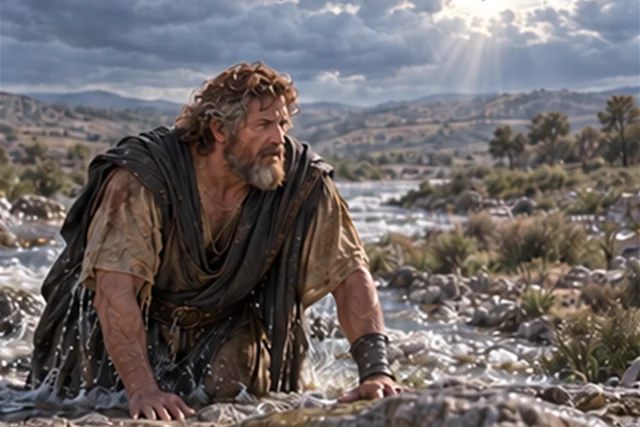
God reaches down and draws David out of deep waters. His enemies are stronger than he is, but God supports him and brings him into a wide place. David says God delights in him and rewards his clean hands. He speaks of keeping God's laws rather than turning away. These are claims of loyalty within his song of rescue. They do not cancel the wrongs recorded elsewhere in his life. Here he describes deliverance as God's response to the faithful cause he has kept before him.
In everyday life
A dismissed volunteer returns to an animal shelter after an appeal clears her conduct. She opens the kennel gates she was forbidden to touch and thanks the staff who defended her. The space feels wide again after weeks outside. David credits rescue to God and claims loyalty before him in a warrior king's song.
Notice
2 Samuel 22:18 The enemies exceeded David in strength, as he freely admits. His account of clean hands does not turn the rescue into a claim of sufficient personal strength.
2 Samuel 22:17-25
King James Version17He sent from above, he took me; he drew me out of many waters;
18He delivered me from my strong enemy, and from them that hated me: for they were too strong for me.
19They prevented me in the day of my calamity: but the LORD was my stay.
20He brought me forth also into a large place: he delivered me, because he delighted in me.
21The LORD rewarded me according to my righteousness: according to the cleanness of my hands hath he recompensed me.
22For I have kept the ways of the LORD, and have not wickedly departed from my God.
23For all his judgments were before me: and as for his statutes, I did not depart from them.
24I was also upright before him, and have kept myself from mine iniquity.
25Therefore the LORD hath recompensed me according to my righteousness; according to my cleanness in his eye sight.
2 Samuel 22:26-31
God Gives Light and Opposes Pride
David says God shows mercy to the merciful and faithfulness to the upright. Crooked people do not find him open to their schemes. He saves the afflicted and brings proud people down. David then calls God his lamp, the one who lights his darkness. With God's help he can cross barriers and face troops. God's way is whole and his words have been tested. The song joins moral judgement with practical help: the rescuer also opposes pride and gives a sure place of trust.
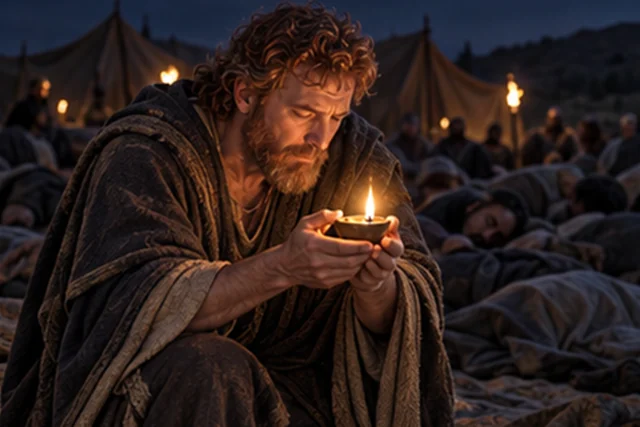
In everyday life
The mine foreman switches on a lamp and helps a lost worker find the shaft. She also stops a boastful miner from entering a weak tunnel. Help and correction belong to the same care. The group needs both to get home. David praises God as perfectly trustworthy and able to judge pride.
Notice
2 Samuel 22:29 The lamp image makes God's help personal and immediate. Darkness is not denied; David says it is lit by the one he trusts.
2 Samuel 22:26-31
King James Version26With the merciful thou wilt shew thyself merciful, and with the upright man thou wilt shew thyself upright.
27With the pure thou wilt shew thyself pure; and with the froward thou wilt shew thyself unsavoury.
28And the afflicted people thou wilt save: but thine eyes are upon the haughty, that thou mayest bring them down.
29For thou art my lamp, O LORD: and the LORD will lighten my darkness.
30For by thee I have run through a troop: by my God have I leaped over a wall.
31As for God, his way is perfect; the word of the LORD is tried: he is a buckler to all them that trust in him.
2 Samuel 22:32-43
Strength for War Comes from God
David asks who else can be God or a rock of safety. He credits God with firm footing, trained hands, a strong bow and a saving shield. Yet the song moves from protection to the destruction of enemies. David pursues, wounds and crushes them so they cannot rise. They cry for help, but none comes. His praise belongs to a warrior's world and includes the harsh defeat of others. He presents his strength as received from God, not as a skill gained apart from him.

In everyday life
A military archivist reads a veteran commander's tribute to those who equipped his unit. She preserves the thanks but also records the enemy deaths named in the same account. Praise for survival does not erase the violence of victory. David's song goes further by attributing both his strength and his enemies' defeat to God.
Notice
2 Samuel 22:36 David says God's gentleness has made him great. That phrase appears within praise for strength in war, joining help received with the king's rise.
2 Samuel 22:32-43
King James Version32For who is God, save the LORD? and who is a rock, save our God?
33God is my strength and power: and he maketh my way perfect.
34He maketh my feet like hinds’ feet: and setteth me upon my high places.
35He teacheth my hands to war; so that a bow of steel is broken by mine arms.
36Thou hast also given me the shield of thy salvation: and thy gentleness hath made me great.
37Thou hast enlarged my steps under me; so that my feet did not slip.
38I have pursued mine enemies, and destroyed them; and turned not again until I had consumed them.
39And I have consumed them, and wounded them, that they could not arise: yea, they are fallen under my feet.
40For thou hast girded me with strength to battle: them that rose up against me hast thou subdued under me.
41Thou hast also given me the necks of mine enemies, that I might destroy them that hate me.
42They looked, but there was none to save; even unto the LORD, but he answered them not.
43Then did I beat them as small as the dust of the earth, I did stamp them as the mire of the street, and did spread them abroad.
2 Samuel 22:44-51
The Song Ends with Lasting Mercy
David thanks God for rescue from conflict among his own people and for rule over other nations. Foreigners submit and leave their strongholds in fear. He praises the living God as his rock and the one who raises him above violent enemies. He will give thanks among the nations, not only at home. The last line names mercy for God's chosen king, David, and his descendants for ever. Personal rescue widens into a royal future that rests on God's continuing care.

In everyday life
The foundation chair thanks supporters at an international gathering after years of threats and internal disputes. She speaks of safety gained and hopes that the next generation will continue the work. Her gratitude reaches beyond her own survival. David's song includes the submission of nations and God's enduring mercy toward his royal descendants.
Notice
2 Samuel 22:51 The final promise reaches David's descendants as well as David himself. The song closes with continuing mercy, extending its view past the rescues already recalled.
2 Samuel 22:44-51
King James Version44Thou also hast delivered me from the strivings of my people, thou hast kept me to be head of the heathen: a people which I knew not shall serve me.
45Strangers shall submit themselves unto me: as soon as they hear, they shall be obedient unto me.
46Strangers shall fade away, and they shall be afraid out of their close places.
47The LORD liveth; and blessed be my rock; and exalted be the God of the rock of my salvation.
48It is God that avengeth me, and that bringeth down the people under me,
49And that bringeth me forth from mine enemies: thou also hast lifted me up on high above them that rose up against me: thou hast delivered me from the violent man.
50Therefore I will give thanks unto thee, O LORD, among the heathen, and I will sing praises unto thy name.
51He is the tower of salvation for his king: and sheweth mercy to his anointed, unto David, and to his seed for evermore.
Details worth noticing
The opening image
2 Samuel 22:1 begins with “And David spake unto the LORD the words of this song in the day that the LORD had delivered him out of the hand of all his enemies, and out of the hand of…”
Where the chapter turns
2 Samuel 22:25 forms a natural hinge: “Therefore the LORD hath recompensed me according to my righteousness; according to my cleanness in his eye sight.”
The final note
2 Samuel 22:51 leaves the reader with “He is the tower of salvation for his king: and sheweth mercy to his anointed, unto David, and to his seed for evermore.”
A word trail through the chapter
The words LORD, delivered, enemies, feet, rock, high help reveal the chapter’s repeated concerns.
KJV words made clear
- unto
- to
- thee
- you
- thou
- you
- thy
- your
- hath
- has
Music and video connected to the passage
Related media appears when its Scripture reference overlaps this study. Music and video can illuminate a theme while the biblical text remains the foundation.