The big picture
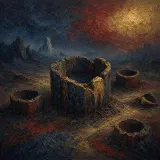
The warning against Jerusalem, Judah's capital, reaches even its graves. Judah is the southern kingdom of God's people. Bones will be exposed before the heavenly bodies once worshipped, while survivors face deep distress. Jeremiah then asks why people refuse the ordinary act of turning back after a wrong step. They claim to be wise but reject God's word. Their leaders speak of peace over wounds left open. Invasion brings bitter disappointment. The prophet ends in grief, asking why a people with access to healing remain unhealed.
In this chapter
- The Worshipped Heavens Cannot Guard the Graves Jeremiah 8:1-3
Bones will be taken from the tombs of rulers, priests, prophets, and residents, God says.
- Birds Know a Return the People Refuse Jeremiah 8:4-7
God asks whether someone who falls does not get up, or someone who takes a wrong turn does not come back.
- Rejected Teaching Makes the Wisdom Claim Empty Jeremiah 8:8-12
The people boast that they possess God's instruction and are wise.
- The Promised Calm Becomes a Bitter Retreat Jeremiah 8:13-17
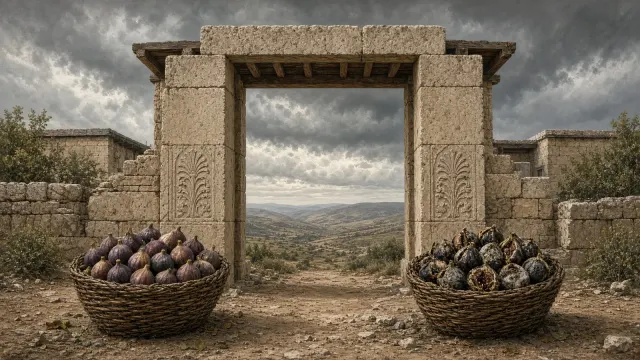
God announces failed vines, bare fig trees, and fading leaves.
- The Prophet Shares the Wound He Names Jeremiah 8:18-22
Jeremiah tries to find comfort, but his heart remains faint.
Central truth
The people refuse to return and their leaders deny the wound, so approaching judgement leaves Jeremiah grieving over healing that has not come.
Scripture beside the summary
Jeremiah · King James Version · 22Jeremiah 8:1-3
The Worshipped Heavens Cannot Guard the Graves
Bones will be taken from the tombs of rulers, priests, prophets, and residents, God says. They are spread before sun, moon, and stars, the powers these people had loved, sought, and worshipped. No one gathers or buries them again; they lie like waste on the ground. Survivors scattered elsewhere feel such distress that death seems preferable to life. The words describe deep distress under judgement. They do not tell suffering people what to do. The powers once worshipped do not guard the bones. Nor do they help the people still alive.
In everyday life
A burial-records volunteer helps families recover names after graves have been desecrated. She places dignity ahead of display and listens to the survivors' distress without repeating the perpetrators' contempt. The damage reaches memory as well as the present. God judges those whose bones lie exposed; the volunteer works to restore burial records.
Notice
Jeremiah 8:2 The bones lie before the very heavenly bodies once worshipped. Their helpless exposure reveals that those objects could not protect the people devoted to them.
Jeremiah 8:1-3
King James Version1At that time, saith the LORD, they shall bring out the bones of the kings of Judah, and the bones of his princes, and the bones of the priests, and the bones of the prophets, and the bones of the inhabitants of Jerusalem, out of their graves:
2And they shall spread them before the sun, and the moon, and all the host of heaven, whom they have loved, and whom they have served, and after whom they have walked, and whom they have sought, and whom they have worshipped: they shall not be gathered, nor be buried; they shall be for dung upon the face of the earth.
3And death shall be chosen rather than life by all the residue of them that remain of this evil family, which remain in all the places whither I have driven them, saith the LORD of hosts.
Jeremiah 8:4-7
Birds Know a Return the People Refuse
God asks whether someone who falls does not get up, or someone who takes a wrong turn does not come back. His people instead cling to deceit and refuse return. He listens but hears no one asking what wrong has been done. Each charges ahead like a horse into battle. Migrating birds know their appointed times and respond to the season. The people fail to recognise God's judgement. Their refusal is made strange by ordinary patterns of correction and creaturely knowledge that surround them every day.
In everyday life
A delivery cyclist notices every sign that he has taken the wrong route but keeps pedalling harder rather than turning around. Other riders stop, check the junction, and correct their course. Effort has become a way to avoid admission. The people refuse to return to God, while the cyclist ignores a wrong turn.
Notice
Jeremiah 8:7 The birds know when to return without possessing the people's religious teaching. Their contrast exposes a failure to respond, not a shortage of signs that a change is needed.
Jeremiah 8:4-7
King James Version4Moreover thou shalt say unto them, Thus saith the LORD; Shall they fall, and not arise? shall he turn away, and not return?
5Why then is this people of Jerusalem slidden back by a perpetual backsliding? they hold fast deceit, they refuse to return.
6I hearkened and heard, but they spake not aright: no man repented him of his wickedness, saying, What have I done? every one turned to his course, as the horse rusheth into the battle.
7Yea, the stork in the heaven knoweth her appointed times; and the turtle and the crane and the swallow observe the time of their coming; but my people know not the judgment of the LORD.
Jeremiah 8:8-12
Rejected Teaching Makes the Wisdom Claim Empty
The people boast that they possess God's instruction and are wise. Jeremiah challenges the use of the scribes' pen when the word itself is rejected. The supposed wise are shamed and trapped. Greed and false dealing reach from the least to the greatest, including priests and prophets. Homes, fields, and families will pass into others' hands. Leaders repeat peace over a wound they have not healed and feel no shame at the wrong. Their learning cannot save them. They have not used it to hear God and act on his word.
In everyday life
A compliance lecturer displays shelves of manuals while falsifying the inspection report that would expose his own building. When residents point to the defects, he repeats that everything is safe. Expertise has become a cover for refusal. God judges religious leaders who misuse his law; a lecturer addresses professional standards.
Notice
Jeremiah 8:9 The question asks what wisdom remains after God's word is rejected. Possession of the teaching and skill with a pen are not treated as obedience to its meaning.
Jeremiah 8:8-12
King James Version8How do ye say, We are wise, and the law of the LORD is with us? Lo, certainly in vain made he it; the pen of the scribes is in vain.
9The wise men are ashamed, they are dismayed and taken: lo, they have rejected the word of the LORD; and what wisdom is in them?
10Therefore will I give their wives unto others, and their fields to them that shall inherit them: for every one from the least even unto the greatest is given to covetousness, from the prophet even unto the priest every one dealeth falsely.
11For they have healed the hurt of the daughter of my people slightly, saying, Peace, peace; when there is no peace.
12Were they ashamed when they had committed abomination? nay, they were not at all ashamed, neither could they blush: therefore shall they fall among them that fall: in the time of their visitation they shall be cast down, saith the LORD.
Jeremiah 8:13-17
The Promised Calm Becomes a Bitter Retreat
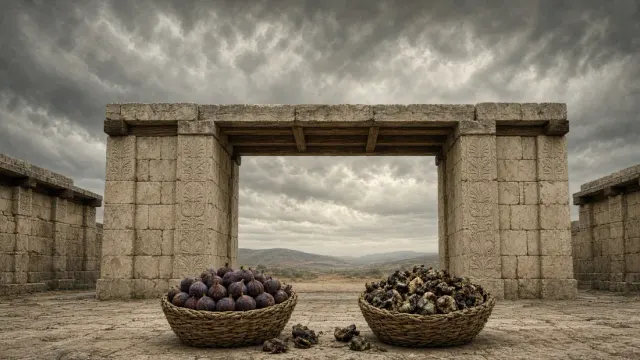
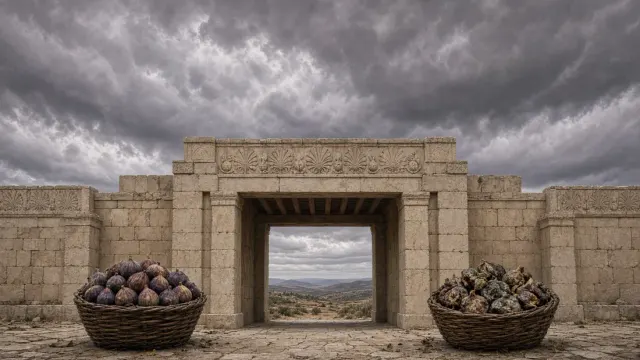
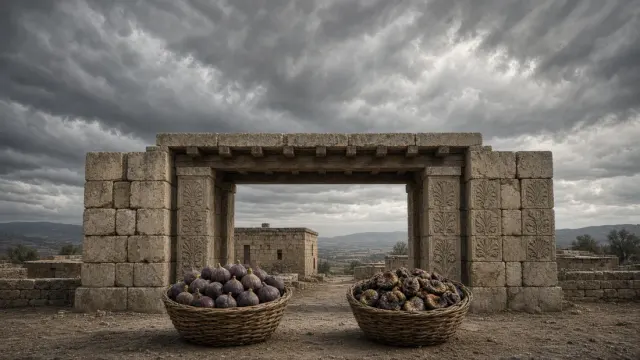
God announces failed vines, bare fig trees, and fading leaves. The people urge one another into fortified towns, recognising bitter suffering as an answer to their sin. They expected peace and healing, but trouble came instead. Horses are heard from Dan, a northern town, and the whole land trembles as invasion consumes city and country. God also pictures the threat as snakes no charm can control. Neither source of hope remains. The fields no longer feed them. Nor can clever charms stop the threat that has entered their land.
In everyday life
A harvest-relief planner opens the harvest reports expecting surplus stores and finds failed crops beside warnings that the main road is unsafe. Families move towards the nearest shelter with less food than planned. The hoped-for season has become a retreat. Jeremiah calls this crisis God's judgement; the planner tries to meet urgent food needs.
Notice
Jeremiah 8:15 Peace and healing are named as the expectations that failed. The people's own words expose the distance between earlier reassurance and the condition now arriving.
Jeremiah 8:13-17
King James Version13I will surely consume them, saith the LORD: there shall be no grapes on the vine, nor figs on the fig tree, and the leaf shall fade; and the things that I have given them shall pass away from them.
14Why do we sit still? assemble yourselves, and let us enter into the defenced cities, and let us be silent there: for the LORD our God hath put us to silence, and given us water of gall to drink, because we have sinned against the LORD.
15We looked for peace, but no good came; and for a time of health, and behold trouble!
16The snorting of his horses was heard from Dan: the whole land trembled at the sound of the neighing of his strong ones; for they are come, and have devoured the land, and all that is in it; the city, and those that dwell therein.
17For, behold, I will send serpents, cockatrices, among you, which will not be charmed, and they shall bite you, saith the LORD.
Jeremiah 8:18-22
The Prophet Shares the Wound He Names
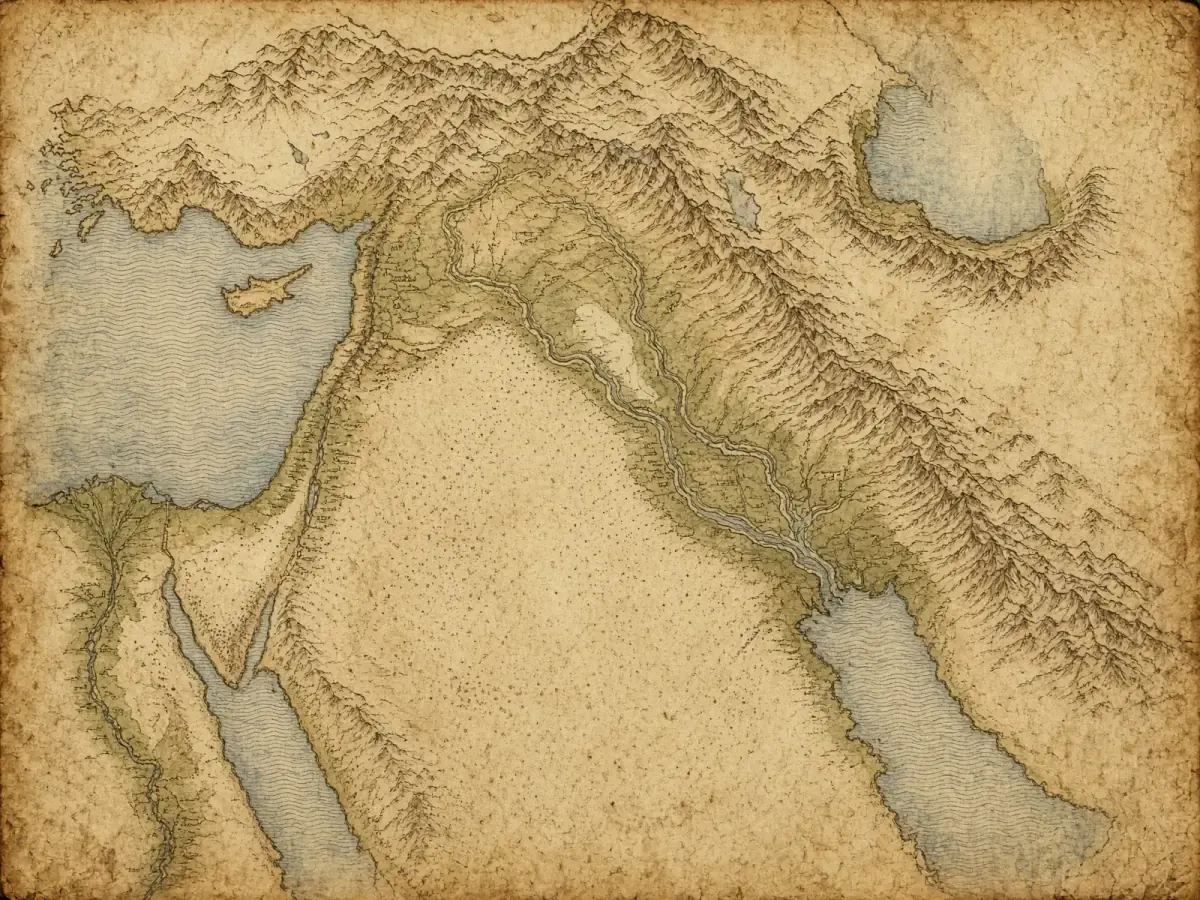
Jeremiah tries to find comfort, but his heart remains faint. He hears his people's cry from far away, asking whether God and their king are absent from the holy city. God answers by naming their provocation through idols. The people say harvest and summer have ended without rescue. Jeremiah is hurt with them, mourning and stunned. He asks whether Gilead, a region known for healing balm, has no medicine or physician. The question leaves the failure to heal painfully open, rather than ending with a detached explanation of their guilt.
In everyday life
A clinic interpreter sits after the last appointment, holding the file of a family whose treatment has still brought no relief. She knows the medicines exist and has heard each hopeful plan, yet the suffering continues before her. Knowledge does not make the grief distant. Jeremiah's lament concerns a nation's spiritual wound and divine judgement.
Notice
Jeremiah 8:21 The prophet says the people's wound wounds him. His message of judgement does not place him outside their suffering or make him indifferent to its cost.
Jeremiah 8:18-22
King James Version18When I would comfort myself against sorrow, my heart is faint in me.
19Behold the voice of the cry of the daughter of my people because of them that dwell in a far country: Is not the LORD in Zion? is not her king in her? Why have they provoked me to anger with their graven images, and with strange vanities?
20The harvest is past, the summer is ended, and we are not saved.
21For the hurt of the daughter of my people am I hurt; I am black; astonishment hath taken hold on me.
22Is there no balm in Gilead; is there no physician there? why then is not the health of the daughter of my people recovered?
Details worth noticing
The opening image
Jeremiah 8:1 begins with “At that time, saith the LORD, they shall bring out the bones of the kings of Judah, and the bones of his princes, and the bones of the priests, and the…”
Where the chapter turns
Jeremiah 8:10 forms a natural hinge: “Therefore will I give their wives unto others, and their fields to them that shall inherit them: for every one from the least even unto the greatest is…”
The final note
Jeremiah 8:22 leaves the reader with “Is there no balm in Gilead; is there no physician there? why then is not the health of the daughter of my people recovered?”
A word trail through the chapter
The words LORD, people, bones, daughter, peace, time help reveal the chapter’s repeated concerns.
KJV words made clear
- gall
- A bitter or poisonous substance used here in an image of suffering.
- balm
- A fragrant resin valued as a healing preparation.
- turtle
- A turtledove, a migratory bird, rather than the shelled reptile.
Music and video connected to the passage
Related media appears when its Scripture reference overlaps this study. Music and video can illuminate a theme while the biblical text remains the foundation.