
The big picture
Psalm 133 celebrates unity without explaining it through a program, hierarchy, or administrative arrangement. The Book of Psalms instead gives two images that move downward. First, precious anointing oil runs from Aaron’s head to his beard and onward over the garment. Then dew descends in the mountain imagery. Both comparisons picture a good that does not remain trapped at the highest point but spreads through the whole scene. Aaron gives the first image a priestly and consecrated setting, while the dew introduces refreshment and life. Hermon and Zion are geographically distinct, so the second image works poetically rather than as meteorological travel from one mountain to another. The final line explains the comparisons by naming the LORD as the one who commands blessing in Zion, “even life for evermore.” Unity is good and pleasant, but its fruitfulness is received as blessing rather than manufactured by togetherness itself.
In this chapter
- The Oil Does Not Remain at the Top Psalms 133:1-2
“How good and how pleasant” gives Psalm 133 its judgment before any explanation is offered.
- The Dew Makes the Shared Life Fruitful Psalms 133:3
The second comparison in Psalm 133 changes from oil to dew but keeps the downward movement.
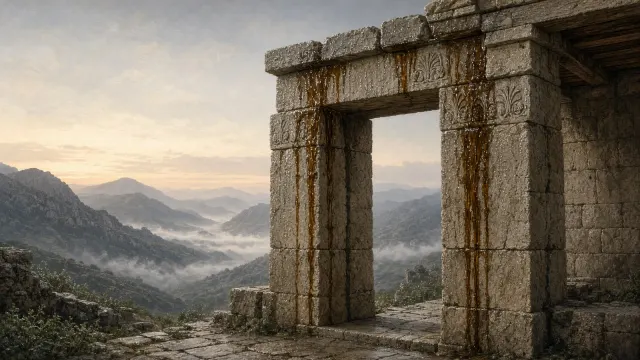

Scripture beside the summary
Psalms · King James Version · 3Psalms 133:1-2
The Oil Does Not Remain at the Top
“How good and how pleasant” gives Psalm 133 its judgment before any explanation is offered. Brethren dwelling together in unity are then compared with the precious ointment poured on Aaron. The Book of Psalms brings priestly consecration into the image, giving shared life a sacred association rather than reducing it to the practical convenience of fewer disputes. What makes the comparison vivid is the movement of the oil. It runs from the head to Aaron’s beard and then farther down upon the garment. The repeated descent creates a picture of abundance that refuses to stay at the top. The psalm does not assign every part of Aaron’s body to a separate social class or build a detailed institutional system from the metaphor. The flowing itself is enough. A blessing associated with consecration reaches beyond its first point of contact and spreads through the whole figure, making unity feel less like a negotiated truce and more like something richly poured out.
Deep dive
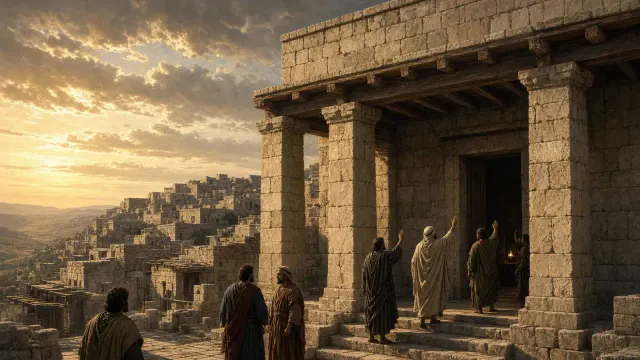
The opening praises brethren dwelling together in unity, not merely occupying adjacent space. The comparison immediately moves into priestly consecration through Aaron and the precious oil. It therefore gives shared life a sacred association, something richer than the convenience of avoiding arguments.
The oil runs from head to beard and onward to the garment. The repeated descent is the detail that animates the image. The blessing is not pictured as a carefully rationed drop that never reaches beyond its first point of contact. Its abundance spreads. The poem does not assign each part of Aaron's body a separate class of people or construct an institutional chart from the comparison. The visible flow is enough to express a good that extends through the whole scene rather than staying with one elevated point.
Words to trace: beard, Aaron’s, brethren, dwell, garments, good
Verse-by-verse path
- Psalms 133:1
The heading gives it to David. “Brethren to dwell together” is the phrase Deuteronomy 25:5 uses for brothers living on one undivided family estate. At the festivals it described the tribes gathered in one city. Mah tov umah na’im, how good and how pleasant, is two exclamations in five words.
- Psalms 133:2
The oil is the holy anointing oil of Exodus 30:22–33, compounded of myrrh, cinnamon, calamus and cassia in olive oil, poured on Aaron’s head at his ordination. The verb yarad, go down, occurs three times in two verses. “Skirts” is pi middotav, the mouth of his robes, which can mean the collar rather than the hem.
Psalms 133:1-2
King James Version1Behold, how good and how pleasant it is for brethren to dwell together in unity!
2It is like the precious ointment upon the head, that ran down upon the beard, even Aaron’s beard: that went down to the skirts of his garments;
Psalms 133:3
The Dew Makes the Shared Life Fruitful
The second comparison in Psalm 133 changes from oil to dew but keeps the downward movement. Hermon is known for abundant moisture, while Zion belongs to a different geographical setting, so the verse is not best read as a literal claim that dew physically travels from one mountain to the other. The KJV’s phrasing lets the abundant freshness associated with Hermon become a comparison for dew descending on Zion. The Book of Psalms thus shifts the effect of the image from consecration toward refreshment and life. Then the final clause names the decisive source: “there the LORD commanded the blessing, even life for evermore.” Unity is praised without being turned into an independent power that can compel divine favor. The blessing comes because the LORD commands it. In only three verses, the chapter moves from people dwelling together, to abundance running down, to life reaching beyond the immediate gathering. Shared life becomes fruitful because blessing descends into it.
Deep dive
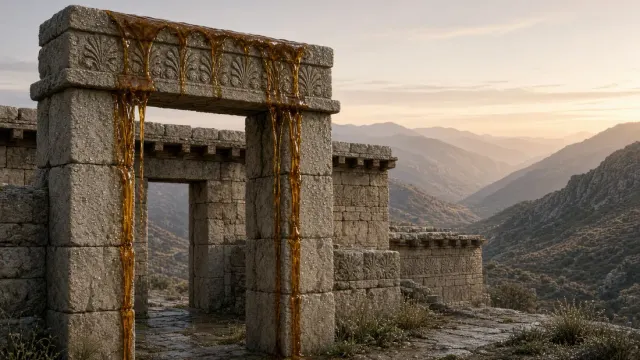
Hermon and Zion are geographically distinct, so the image is not best treated as a literal account of one mountain's dew traveling to the other. The KJV supplies a second comparison, "and as the dew," to make the connection readable. The abundant freshness associated with Hermon is imaginatively brought into the setting of Zion.
The downward movement answers the oil's descent in the preceding verse, while the effect shifts toward life and refreshment. The final explanation names the LORD as commanding the blessing. Unity is celebrated as good and pleasant, but it does not become a power that can compel God by itself. The poem closes with life extending beyond the immediate gathering. Its three verses move from people together to a blessing that reaches downward and endures.
Words to trace: blessing, commanded, descended, evermore, Hermon, life
Verse-by-verse path
- Psalms 133:3
Mount Hermon, over nine thousand feet high in the far north, is known for heavy dew. Its dew falling on Zion, far to the south, is a picture rather than a weather report. “Commanded the blessing” recalls Leviticus 25:21, “I will command my blessing upon you in the sixth year”.
Psalms 133:3
King James Version3As the dew of Hermon, and as the dew that descended upon the mountains of Zion: for there the LORD commanded the blessing, even life for evermore.
Questions to keep in mind while reading
- Follow the speaker, images, parallel lines, questions, and emotional movement.
- Notice where tension or suffering resists an easy answer.
- Read a saying as wisdom for faithful discernment, not as a mechanical promise detached from context.
Text first
Where readers differ
The chapter summary begins with what the passage says and how its parts fit together. It does not assume one denomination has already settled every question. Where a conclusion depends on a tradition, literary theory, or historical reconstruction, that dependence is named openly.
The KJV text is presented first. Interpretive conclusions are labeled, and differences are introduced only when they help a reader understand why serious communities do not always reach the same answer.
Comparative interpretive notes for this chapter are in preparation. Until reviewed notes are ready, this page separates the KJV text from summary and application without claiming that serious readers agree on every question.
Questions beneath the surface
- What account of God, human freedom, responsibility, and the good life emerges from Psalms 133?
- Which tension does the chapter refuse to resolve quickly?
- What changes when the chapter is read as part of the whole canon rather than as an isolated moral lesson?
- Where might a sincere reader confuse a familiar tradition with something the text states directly?
Questions for serious personal contemplation
These open-ended questions make room for tension, honest response, prayer, and conclusions that remain accountable to the chapter.
Observe without rushing
What part of Psalms 133 makes you stop, feel unsettled, or feel surprised, and why?
Which detail in the passage would be easiest to overlook? How does that detail change your understanding?
Where do you see tension between what happens and this focus: Psalms 133 develops its own movement around beard, Aaron’s, blessing, brethren, commanded?
What important question does the passage leave open instead of resolving quickly?
Examine your inner life honestly
Which person, response, fear, or desire in the passage feels most like your own life right now?
What assumption about God, other people, or yourself does this text challenge?
Which part would you rather soften, avoid, or explain away too quickly? What might that reaction reveal?
If this Scripture could ask you one direct question, what do you think it would ask?
Respond with wisdom and courage
What do you need to remember, confess, grieve, thank God for, or trust after reading this passage?
How might another faithful person read this situation differently without ignoring the text?
What obedient response would be costly, uncomfortable, or slow, yet still faithful to Scripture?
What question will you carry into prayer this week, and which verses will you keep in front of you?
Music and video connected to the passage
Related media appears when its Scripture reference overlaps this study. Music and video can illuminate a theme while the biblical text remains the foundation.