Places of the Bible

Zion and the City of David

A hilltop fort that became a word for everything, and the word kept moving uphill.

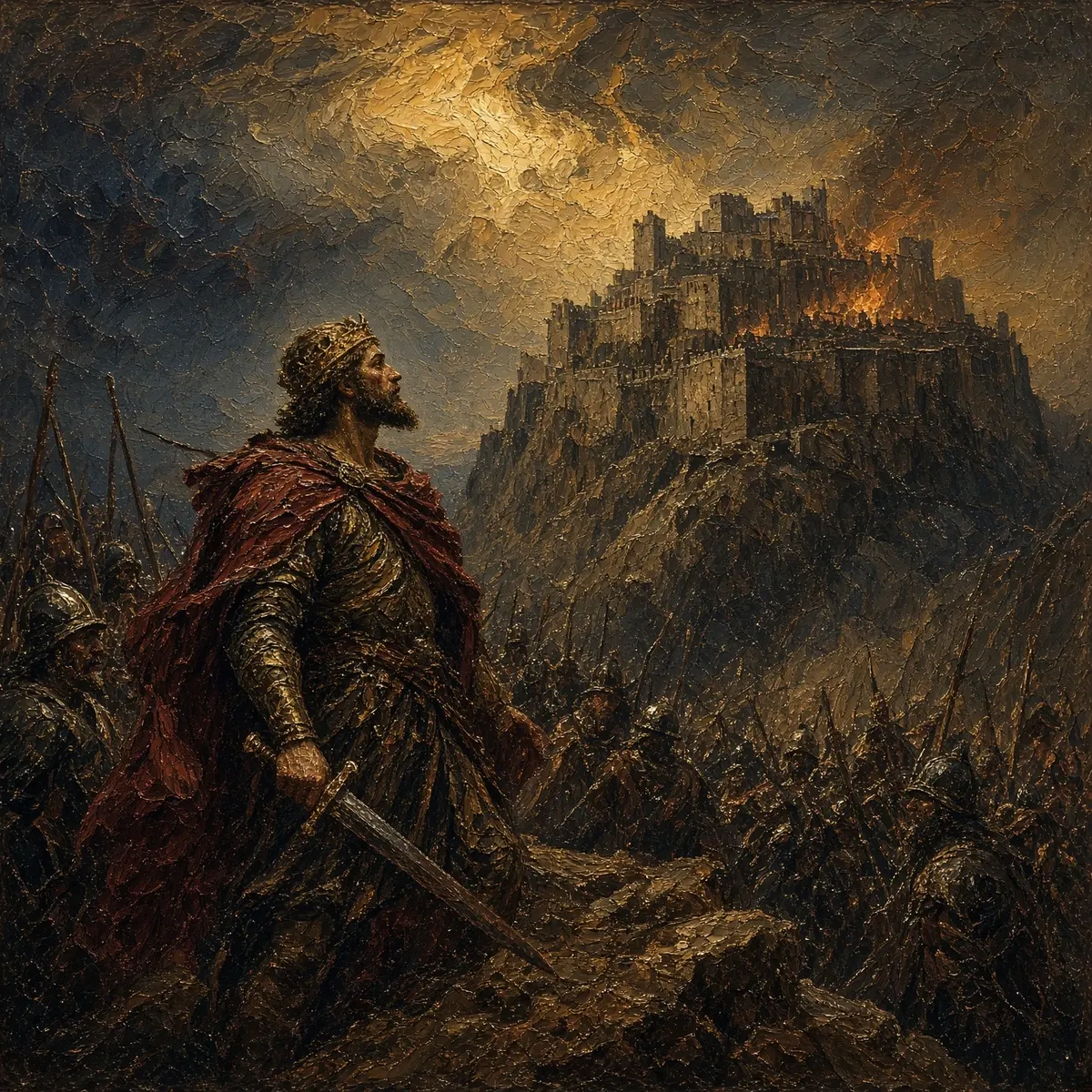
It starts as a specific piece of ground: David took the strong hold of Zion, the same is the city of David. A fortified spur with a water source, small enough to walk across. Then Solomon brings the ark up out of the city of David, which is Zion, to the temple on the higher hill, and from that day the name starts sliding. Zion means the fort, then the temple mount, then the whole city, then the people in it.

Where it appears2 Samuel 5 · 1 Kings 8 · Psalms 48 · Psalms 132

Scroll down to the account
Zion and the City of David

The movements, in the order the text gives them.

The Account of Zion and the City of David

  1. 01

    2 Samuel 5:7-9

    The same is the city of David

    The equation is made in a clause. A captured fort gets a personal name, and the account notes he built round about from Millo inward.

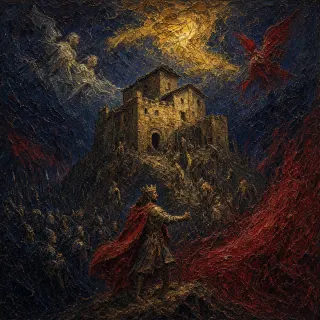
    Zion enters this account as something that can be captured. Before the name fills hymns and promises, it belongs to a defended place held by Jebusites. David takes it, lives in it, and gives it his name. The later weight of Zion should not make these first stones disappear.

    The same is the city of David is an identification, not a second conquest. Stronghold, fort, and city of David point to the place whose control has just changed. The geography is still compact enough for the account to speak of building from Millo and inward. A name that will acquire a vast reach begins with boundaries and construction work.

    The following verse, 5:10, supplies the explanation for David's increasing greatness: the LORD God of hosts was with him. It does not attribute everything to a clever entry route or an impressive new address. At this point royal residence and conquered fortress have come together. The temple has not yet been built. Zion's later meanings are not all present at once.

    Verse by verse

    1. 5:7

      Zion and city of David identify the same stronghold in this verse. Brown-Driver-Briggs distinguishes this early use from later references to Jerusalem more broadly.

    2. 5:8

      The gutter is the difficult Hebrew tsinnor, often understood as a water conduit. The details of the route remain disputed, while 1 Chronicles 11:6 names Joab as first in the assault.

    3. 5:9

      Millo is a named feature associated with the building work. This short notice does not provide enough detail to reconstruct its precise shape or the complete fortification plan.

    2 Samuel 5:7-9

    King James Version · 3 verses

    5:7Nevertheless David took the strong hold of Zion: the same is the city of David.

    5:8And David said on that day, Whosoever getteth up to the gutter, and smiteth the Jebusites, and the lame and the blind, that are hated of David’s soul, he shall be chief and captain. Wherefore they said, The blind and the lame shall not come into the house.

    5:9So David dwelt in the fort, and called it the city of David. And David built round about from Millo and inward.

    2 Samuel 5:7-9: The same is the city of David
  2. 02

    1 Kings 8:1-11

    Out of the city of David, which is Zion

    The ark is carried uphill to the new house, and the cloud fills it so that the priests cannot stand to minister.

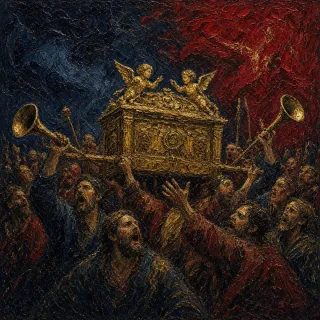
    The ark comes out of Zion and goes up to the temple. That small geographical movement is easy to miss once Zion becomes a name for the whole sacred city. Here the city of David and the temple site are distinguishable places. The procession joins them without making them identical.

    Solomon assembles the nation, but the priests carry the ark. Royal authority organizes the occasion; it does not erase the distinction of priestly service. Inside the chest are not trophies of Solomon's achievements but the two stone tables associated with Moses and the covenant at Horeb. The new building receives something older than the monarchy.

    Then the ceremony reaches the point at which its ministers cannot continue. The cloud fills the house, and the priests cannot stand to minister. The interruption is not described as failed preparation. The glory has filled the place they prepared. After so much carrying, placing, sacrificing, and arranging, the decisive presence is not another human accomplishment. The king can bring the assembly together. He cannot manufacture the cloud.

    Verse by verse

    1. 8:1

      Out of the city of David, which is Zion distinguishes the ark's starting point from the temple to which it is carried up.

    2. 8:3

      The priests, not Solomon personally, carry the ark. The account carefully assigns different actions to king, congregation, and ministers.

    3. 8:6

      Oracle here means the temple's inner sanctuary, identified immediately as the most holy place. It does not mean a spoken prediction.

    4. 8:9

      The contents are explicitly the two stone tables at this moment. The verse names Moses, Horeb, and the exodus as their historical setting.

    5. 8:11

      The stated reason that service cannot continue is the cloud and the LORD's glory. The verse does not describe priestly negligence or a defective building.

    1 Kings 8:1-11

    King James Version · 11 verses

    8:1Then Solomon assembled the elders of Israel, and all the heads of the tribes, the chief of the fathers of the children of Israel, unto king Solomon in Jerusalem, that they might bring up the ark of the covenant of the LORD out of the city of David, which is Zion.

    8:2And all the men of Israel assembled themselves unto king Solomon at the feast in the month Ethanim, which is the seventh month.

    8:3And all the elders of Israel came, and the priests took up the ark.

    8:4And they brought up the ark of the LORD, and the tabernacle of the congregation, and all the holy vessels that were in the tabernacle, even those did the priests and the Levites bring up.

    8:5And king Solomon, and all the congregation of Israel, that were assembled unto him, were with him before the ark, sacrificing sheep and oxen, that could not be told nor numbered for multitude.

    8:6And the priests brought in the ark of the covenant of the LORD unto his place, into the oracle of the house, to the most holy place, even under the wings of the cherubims.

    8:7For the cherubims spread forth their two wings over the place of the ark, and the cherubims covered the ark and the staves thereof above.

    8:8And they drew out the staves, that the ends of the staves were seen out in the holy place before the oracle, and they were not seen without: and there they are unto this day.

    8:9There was nothing in the ark save the two tables of stone, which Moses put there at Horeb, when the LORD made a covenant with the children of Israel, when they came out of the land of Egypt.

    8:10And it came to pass, when the priests were come out of the holy place, that the cloud filled the house of the LORD,

    8:11So that the priests could not stand to minister because of the cloud: for the glory of the LORD had filled the house of the LORD.


  3. 03

    Psalm 48:12-13

    Walk about Zion, and tell the towers

    The psalm asks for an inspection: count the towers, consider the ramparts, and pass the count on to the generation following.

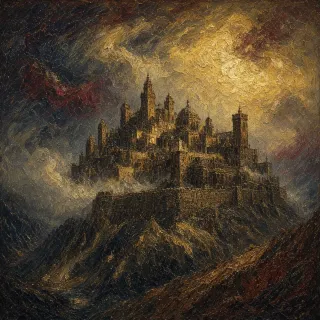
    The tour has an audience that is not yet taking it. Towers are counted and defenses examined so that the generation following can hear about them. The walkers are not merely visitors admiring the skyline. They are being made witnesses for people who will come after them.

    That purpose keeps the physical detail from becoming an inventory of national vanity. Earlier in the psalm, God is known in the city's palaces for a refuge, and the worshippers have considered his lovingkindness in the temple. The buildings belong to that account of protection and worship. Their stones are to carry a remembered meaning.

    Tell the towers first means count them. Tell it to the next generation then means recount what has been seen. The movement is wonderfully practical: attention before transmission. The city's defenses must be noticed closely enough to be spoken of accurately. A vague admiration of Zion would not do the work this psalm gives its walkers. The next generation needs more than a favorable impression.

    Verse by verse

    1. 48:12

      Tell the towers means count them in the older English sense of tell. It does not mean address the towers as though they were listeners.

    2. 48:13

      Mark ye well translates an expression involving setting the heart upon something. The instruction concerns deliberate attention, not a passing glance.

    3. 48:13

      The generation following is the stated beneficiary of the inspection. The walk is directed toward the preservation and transmission of memory.

    Psalm 48:12-13

    King James Version · 2 verses

    48:12Walk about Zion, and go round about her: tell the towers thereof.

    48:13Mark ye well her bulwarks, consider her palaces; that ye may tell it to the generation following.

    Psalm 48:12-13: Walk about Zion, and tell the towers
  4. 04

    Psalm 132:13-14

    This is my rest for ever

    The choosing is stated in the first person, and the reason given is desire rather than strategy.

    The reason is desire. The psalm does not say that Zion outbid the other hills, built the tallest walls, or offered the most convenient residence. It says the LORD chose it and desired it. The second verse gives the same reason again, now in God's own declaration.

    That changes the emphasis from David's effort to God's choice. The opening of the psalm remembers David refusing rest until he finds a place for the LORD. Here the LORD names the place of his own rest. Human searching is answered by divine designation; the city is not made holy by the king's exhaustion alone.

    Rest is not inactivity. The next verses promise food for the poor, salvation for the priests, joy for the saints, and the flourishing of David's horn. The chosen dwelling is described through what God does there. Neither does this pair of verses erase the covenant condition stated for David's descendants in verse 12. The psalm holds chosen Zion and accountable kings together. It does not make them interchangeable.

    Verse by verse

    1. 132:13

      Chosen and desired identify the initiative as the LORD's. The verse supplies no competition of locations or list of advantages that compelled his choice.

    2. 132:14

      The declaration answers the prayer about rest in verse 8. It is not a comment about God needing recovery from physical tiredness.

    3. 132:14

      For ever belongs beside the psalm's covenant language. Verse 12 expressly conditions the continuing rule of David's descendants on keeping the covenant and testimony.

    Psalm 132:13-14

    King James Version · 2 verses

    132:13For the LORD hath chosen Zion; he hath desired it for his habitation.

    132:14This is my rest for ever: here will I dwell; for I have desired it.

    Psalm 132:13-14: This is my rest for ever
  5. 05

    Hebrews 12:22

    Ye are come unto mount Sion

    The word has travelled all the way off the map by now. It names a city, an innumerable company of angels, and a general assembly.

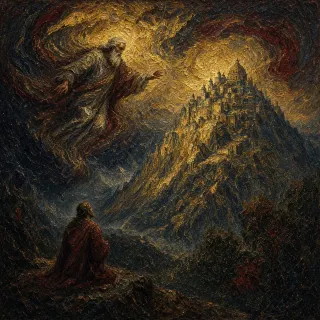
    The startling word is come. Hebrews does not tell its hearers merely that a city exists somewhere beyond them. It addresses them as people who have approached it. The KJV's ye are come expresses arrival, not an instruction to arrange a future journey to a hill in Judah.

    The contrast begins in verse 18 with the mountain of fire, darkness, and fear. Here the names unfold differently: mount Sion, the city of the living God, the heavenly Jerusalem, innumerable angels. The place first encountered as David's captured stronghold now names access to a heavenly assembly. The geographical word has not been discarded. Its reach has widened beyond earthly fortifications.

    The sentence continues past the verse boundary to God the Judge, the perfected righteous, and Jesus the mediator of the new covenant. That continuation prevents the angels from becoming the center of the picture. It also prevents heavenly from meaning harmless. The chapter ends with reverence and consuming fire. The approach is real, and the holiness has not been reduced.

    Verse by verse

    1. 12:22

      The Greek verb is a perfect form of proserchomai, to approach or come near. The wording presents an approach already made with present significance.

    2. 12:22

      Sion is the KJV spelling here of Zion. Heavenly Jerusalem identifies the city in this passage and rules out treating the statement as ordinary travel directions.

    3. 12:22

      The list continues in verses 23-24 and culminates in Jesus as mediator of the new covenant. The verse should not be isolated as though it ended with the angels.

    Hebrews 12:22

    King James Version · 1 verse

    12:22But ye are come unto mount Sion, and unto the city of the living God, the heavenly Jerusalem, and to an innumerable company of angels,

    Hebrews 12:22: Ye are come unto mount Sion

Why it matters

The Psalms do most of that work and they do it deliberately. Beautiful for situation, the joy of the whole earth, is mount Zion, on the sides of the north, the city of the great King. Walk about Zion, go round about her, tell the towers thereof, mark ye well her bulwarks, that ye may tell it to the generation following. The instruction is to survey a fortification and report it to children. By the time the prophets and the letter to the Hebrews use the word, it has left the map entirely and means an assembly.

5 songs

The music

Every song in the catalogue whose passage falls inside these chapters.

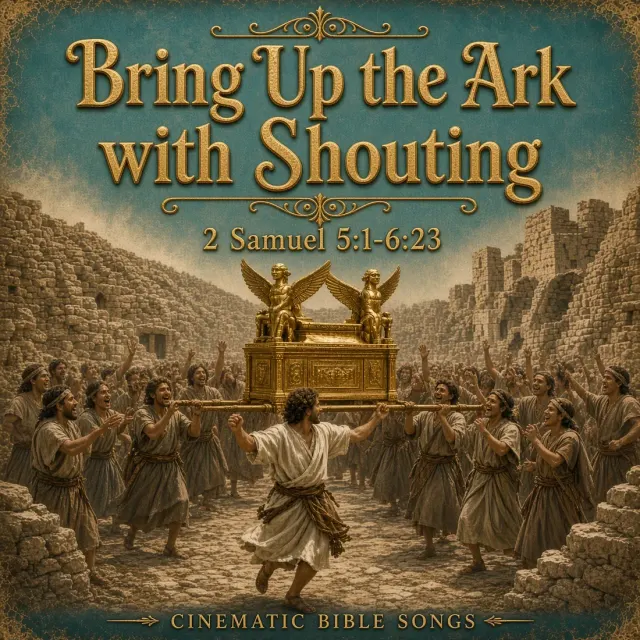
  1. 2 Samuel 5:1-6:23

    Bring Up the Ark with Shouting

  2. 2 Samuel 5

    Zion Taken

  3. 1 Kings 8:1-66

    Hear Thou in Heaven

  4. Psalm 48:1-14

    The City of the Great King

  5. Psalm 132:1-18

    The Lord Has Chosen Zion

The videos

The videos

Every release whose passage falls inside these chapters, playing here.

Nearby

All the places

Report an error on this page