The big picture
Chapter 2 begins with a congregation shaken by a claim about the day of Christ and ends by directing them back to what they had already been taught. Paul keeps Christ's coming and the believers' gathering to him in view, but he rejects the destabilizing message and the authority falsely attached to it. He then recalls rebellion, the man of sin, an unnamed restraint, the already working mystery of iniquity, deceptive signs, and judicial delusion. Some details remain obscure because the written letter assumes oral teaching the Thessalonians remembered. Yet the outcome is clear before the antagonist's activity is fully described: the Lord destroys him at his coming. The chapter then reverses its vocabulary. Against perishing, unrighteousness, and belief of a lie stand salvation, sanctification, and belief of the truth. The final emphasis is not fascination with the lawless figure, but steadfastness in received teaching, comfort, good words, and good work.
Central truth
Paul steadies believers unsettled by claims about Christ's day by exposing rebellion and deception, announcing the Lord's decisive victory, and recalling them to received teaching, grace, and good work.

The study notes have a page of their own
The movement by movement analysis, the words to trace, the verse by verse notes and where readers differ are written for someone studying alone. They are on the Deep Personal Reflections page for this chapter. This page is the lesson.
A chapter-specific teaching brief
These anchors come from this chapter itself. They help a teacher use the Level 1 overview, the Level 2 study, and the Scripture text as one lesson.
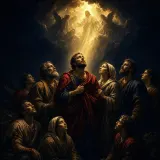
Open with the chapter’s first image
2 Thessalonians 2:1: “Now we beseech you, brethren, by the coming of our Lord Jesus Christ, and by our gathering together unto him,”
Slow down at the turning point
2 Thessalonians 2:7: “For the mystery of iniquity doth already work: only he who now letteth will let, until he be taken out of the way.”
Keep this word trail visible
Lord, Christ, brethren, coming, Jesus, revealed
What to explain, in order
Teach the passage in this order. Each step names the verses it rests on, so every point can be shown in the text before it is applied.
2 Thessalonians 2:1-2
Shaken by a claim
Start with the problem Paul is solving, not with the prophecy. Someone has told the church "that the day of Christ is at hand", meaning it has already come, and they are "shaken in mind". Explain that phrase as a boat torn from its mooring. The claim came by "spirit", "word" or "letter as from us", so a forged or misused letter is in view; link it with 3:17. Teach this first so that everything after it is heard as pastoral care for frightened people rather than material for a chart.
2 Thessalonians 2:3-4
What must come first
"Let no man deceive you by any means". Paul's answer is that the day cannot have come, because two things must happen first: "a falling away" and the revealing of "that man of sin". Explain the falling away as a rebellion or departure from God, and "son of perdition" as one marked for destruction; John 17:12 uses the same phrase of Judas. Read 2:4 and list what this figure does. The point here is reassurance: the signs have not appeared, so the church has not been left behind.
2 Thessalonians 2:5-7
What they knew and we do not
Read "Remember ye not" and stop. Paul had taught this face to face, and the letter assumes that teaching. Explain "letteth" as an old word for restrains. Then present, briefly and fairly, what Christians have proposed for the restraint: the Holy Spirit, the rule of law and government, an angel, the preaching of the gospel. The verses name none of them. Note also "the mystery of iniquity doth already work": the evil Paul describes was active in his own day. Teach this step to model honesty about what Scripture does not say.
2 Thessalonians 2:8-9
A breath against all his wonders
Paul uses the same word for both arrivals: the "brightness of his coming" and the one "whose coming is after the working of Satan". Set them side by side. The lawless one has "all power and signs and lying wonders"; the Lord has only to breathe. Explain "lying wonders" as real displays that serve a lie, and compare Deuteronomy 13:1-4, where a sign that comes to pass still does not authenticate a call to other gods. Teach it here so that the church learns not to be impressed by spectacle.
2 Thessalonians 2:10-12
Refusing the love of the truth
This is the soberest paragraph in the letter, and it needs a careful teacher. The deception works "in them that perish; because they received not the love of the truth". Point to the word "love": the issue is not lack of information but not wanting the truth. Then 2:11-12: God sends "strong delusion" to those who "had pleasure in unrighteousness". Compare Romans 1:24-28, where God gives people over to what they chose. Say plainly that a person anxious to know the truth is not the person described here.
2 Thessalonians 2:13-17
But we are bound to give thanks
The "But" of 2:13 turns the whole chapter. Against those who refuse the truth stand believers chosen "through sanctification of the Spirit and belief of the truth" and called "by our gospel". Then the instruction: "stand fast, and hold the traditions". Explain traditions here as the apostolic teaching handed over to them "by word, or our epistle", not later customs. Finish with the prayer of 2:16-17 for comfort and for "every good word and work". Teach it last because it is where Paul wants the frightened church to end up.
Where learners get stuck
The misreadings this passage tends to produce, and how to answer each from the text.
"Paul gives us a timeline so we can work out when Jesus will come."
Paul is correcting a claim that the day had already come, not supplying a date. He names events that must come first (2:3) and leans on teaching the church already had (2:5-6), but he gives no calendar. 1 Thessalonians 5:1-2 says the day comes as a thief in the night, and Acts 1:7 says the times are not ours to know. Use the chapter to steady people, as Paul does in 2:2, not to set them calculating.
"The man of sin is obviously [a current leader or public figure]."
The chapter gives marks, not a name: opposing God, exalting himself, claiming God's place (2:4), and coming with lying wonders (2:9). Paul says "the mystery of iniquity doth already work" (2:7), and 1 John 2:18 speaks of many antichrists. Every generation has had confident candidates and every one so far has been wrong. Teach learners to recognize the marks, and to refuse any teacher who claims to know more than 2:3-9 says.
"Strong delusion means God tricks people who honestly want the truth."
The verses describe people who "received not the love of the truth" (2:10) and "had pleasure in unrighteousness" (2:12). The delusion of 2:11 is a judgment that confirms a choice already made, as God gives people over in Romans 1:24-28. Against them, 2:13 sets those who come to "belief of the truth". Someone who is troubled and searching is being drawn toward the truth, not handed over to a lie.
"'Hold the traditions' means keep whatever customs our church has always followed."
In 2:15 the traditions are those "which ye have been taught, whether by word, or our epistle": the gospel and instruction the apostles delivered. In 3:6 the same word describes the pattern of life they taught. Paul is not endorsing every later custom, nor dismissing all of them. He is telling a shaken church to anchor itself to what the apostles actually handed over, which is now found in Scripture.
Learning objectives
- Identify the channels through which the disturbing claim arrives.
- Describe the self-exaltation of the man of sin.
- Distinguish the readers' remembered teaching from details unavailable in the letter.
- Identify who destroys the revealed wicked one.
- Trace the connection between rejected truth and judicial delusion.
- Explain the chapter's call to stand fast in received teaching.
Teacher preparation
- Compare 1:7–12 and 3:17: Christ's revelation and falsely attributed letters frame this chapter.
- Retain 2:2's KJV 'day of Christ'; distinguish claimed spirit, spoken word, and apostolic letter.
- Gloss 'letteth' (2:7) as restrains and 'perdition' (2:3) as destruction.
- Prepare columns for statements, proposed identifications, and unknowns, not a completed end-times chart.
- Read 2:15–17; distinguish received apostolic teaching from customs later called 'traditions'.
Evidence and interpretation checks
Explicit
Read 2:3–4, 8: rebellion and the man of sin's revelation precede the day; the Lord destroys him at his coming.
Scripture-supported
Compare 2:9–12 with 2:13–15: deceptive wonders and refusal of truth contrast with the Spirit's sanctifying work, belief, and adherence to the received gospel.
Strong inference
Infer from 2:5–6 that remembered oral teaching gave the first readers information not fully repeated here; do not fill the gap with certainty.
Possible or traditional reading
Present the Holy Spirit, restraining government, and an angelic restrainer as proposed identifications of 2:6–7; the verses themselves supply no explicit name.
Limit
State that 2:10–12 describes rejection of truth and pleasure in wrongdoing, not every sincere question; 2:3–8 gives no calendar date for fulfillment.
Discussion with answer guidance
1. What kinds of claim are unsettling the believers?
What a good answer contains
Paul lists three channels in 2:2: "neither by spirit, nor by word, nor by letter as from us". All three said "that the day of Christ is at hand", meaning it had already arrived. Notice "as from us": someone had borrowed Paul's authority, which is why 3:17 explains how his real letters are signed. A good answer sees that the source of a claim matters as well as its content. A weak answer assumes that anything which sounds spiritual must be from God.
Show teacher guidance
Read 2:1–2: spirit, word, or a letter supposedly from the senders concerns Christ's day. Claimed authority and genuine authority must not be equated.
2. What does the man of sin claim for himself?
What a good answer contains
He "opposeth and exalteth himself above all that is called God, or that is worshipped; so that he as God sitteth in the temple of God, shewing himself that he is God" (2:4). Paul calls him "that man of sin" and "the son of perdition" (2:3). A good answer keeps to the marks the verse gives: opposition to God, self-exaltation, and a claim to God's own place. A weak answer jumps straight to naming a modern figure, which the text never does.
Show teacher guidance
Use 2:3–4: he opposes and exalts himself, presenting himself as God. Keep the description distinct from guesses about a named person.
3. What do the Thessalonians know that this paragraph does not fully tell us?
What a good answer contains
They had been taught in person: "Remember ye not, that, when I was yet with you, I told you these things?" (2:5). So "now ye know what withholdeth" (2:6). We have the letter but not the conversation that came before it. A good answer says so plainly and leaves "he who now letteth will let, until he be taken out of the way" (2:7) without a confident name. A weak answer fills the gap with one interpreter's guess and calls it the text.
Show teacher guidance
Read 2:5–7: they recall prior instruction and know the restraint. Acknowledge this gap rather than filling it with confident invention.
4. How does the Lord end the wicked one's display of power?
What a good answer contains
With almost nothing: the Lord "shall consume with the spirit of his mouth, and shall destroy with the brightness of his coming" (2:8). The lawless one arrives "after the working of Satan with all power and signs and lying wonders" (2:9), yet the Lord ends him with a breath and his appearing. A good answer feels the imbalance and the comfort in it. A weak answer pictures a long, evenly matched battle whose outcome is in doubt.
Show teacher guidance
Compare 2:8–9: his mouth and appearing defeat the figure associated with satanic wonders. The loudest claimant is not the strongest.
5. What precedes the strong delusion in Paul's explanation?
What a good answer contains
A refusal comes first: "they received not the love of the truth, that they might be saved" (2:10). Then "for this cause God shall send them strong delusion, that they should believe a lie" (2:11), and 2:12 describes them as those "who believed not the truth, but had pleasure in unrighteousness". A good answer keeps the order: the delusion confirms a choice already made, as in Romans 1:24-28. A weak answer has God deceiving honest seekers at random.
Show teacher guidance
Follow 2:10–12: refusal to receive love of truth and pleasure in unrighteousness. Do not label confused but teachable learners as already condemned.
6. Where does Paul direct attention after describing deception?
What a good answer contains
To God's work in them: "But we are bound to give thanks alway to God for you" (2:13), because he chose them "to salvation through sanctification of the Spirit and belief of the truth". Then to what they must do, "stand fast, and hold the traditions which ye have been taught" (2:15), and to a prayer that God would "stablish you in every good word and work" (2:17). A weak answer ends the lesson on the man of sin, where Paul did not.
Show teacher guidance
Read 2:13–17: thanksgiving, Spirit, truth, gospel, received teaching, grace, and good work. The chapter's destination is steadiness, not endless speculation.
Responsible application
Heart and habits
Evaluate a fictional alarming religious message by its content and claimed source before forwarding it; keep uncertainty separate from proof.
Relationships and community
Draft a calm correction to an invented misattributed announcement, preserving concern for frightened readers rather than ridiculing them.
Live beyond the chart
Ask a fictional study group to translate 2:15–17 into commitments to received teaching and good work instead of another round of unsupported identifications.
Session plans
Two timings of the same lesson. The shorter keeps the reading, the central discussion and one response; the longer gives the confusions and the application their own time.
45 minutes
Hear the alarm
Read 2:1-2. Take question one and point ahead to the signature in 3:17.
What must come first
Read 2:3-5. Take question two, then confusions one and two, briefly.
What they knew
Read 2:6-7 and take question three. Name the proposed readings in one sentence each and say the text names none.
Breath and lying wonders
Read 2:8-12. Take questions four and five, and confusion three.
Stand fast
Read 2:13-17. Take question six and confusion four, and underline the turn at 2:13.
Handout and prayer
Read the key verse together, give out the sheet, and pray 2:16-17 over the group.
90 minutes
A message to test
Show an invented alarming message about the end times that claims a famous source. Ask how the group would test it before believing or forwarding it.
Shaken in mind
Read 2:1-2 and 3:17. Take question one and list the three channels on the board.
What must come first
Read 2:3-5. Take question two and confusion one with 1 Thessalonians 5:1-2 and Acts 1:7.
Three columns
Read 2:6-7. Take question three. Make three columns: what the verses say, what Christians have proposed, what we do not know. Take confusion two.
A breath against wonders
Read 2:8-9 with Deuteronomy 13:1-4. Take question four and ask what kinds of spectacle impress people today.
The love of the truth
Read 2:10-12 with Romans 1:24-28. Take question five and confusion three, gently.
Stand fast and hold
Read 2:13-17. Take question six and confusion four, then go back to the invented message and test it again.
Handout and prayer
Read the key verse together, point to the take-home line, and pray 2:16-17 for anyone in the group who has been frightened by end-times teaching.
Adapting the lesson
Children
Children can hear that Jesus will come back and that frightening rumors need not scare them. Play a whispering game to show how a message changes as it is passed on, then read 2:15 and show how Paul wanted them to hold to what was really taught. Read 2:8 and say that Jesus wins without even a fight. Leave out the restrainer and the strong delusion, and avoid frightening pictures of the man of sin.
Youth
Many have met end-times videos and posts that claim certainty. Use 2:2 and 3:17 to teach two tests: who actually said this, and does it match what the apostles taught. Talk about influencers and wonders that impress, with 2:9 in view. Refuse to name the man of sin even if they press you, and show them why. Close on 2:15 and 2:17, holding fast and doing good work.
Adults
Give time to the interpretive questions in 2:2, 2:3 and 2:6-7, and present the main views fairly and briefly. Compare Daniel 7:25 and 11:36, Matthew 24:15,24, and 1 John 2:18. Ask honestly how prophetic speculation has unsettled or divided churches the adults have known. Then spend real time in 2:13-17, which is the chapter's destination and the part most often skipped.
One to one
Ask whether teaching about the end has ever frightened them. Start with 2:1-2: Paul does not want believers shaken. If they fear they might be among the deluded, read 2:10 and show that the people described did not love the truth; their worry points the other way. Read 2:13-14 slowly as words about them, and pray 2:16-17 aloud for them.
Song and video learning lab
A song or video may interpret, compress, or dramatize the text. Its value becomes clearer when its choices are compared with Scripture.
- Before the media: the exact passage and its central movement.
- During the media: the words, people, events, and emotions the artist emphasizes.
- After the media: what it clarifies, what it leaves out, and what belongs back in the biblical text.
Handout
One page for learners to take home. The print button prints this section alone.
2 Thessalonians 2
The passage in brief
The believers in Thessalonica had been told that the day of the Lord had already come, and they were frightened. Paul tells them not to be shaken. That day will not come until a great rebellion happens and the man of sin, who sets himself up as God, is revealed. The Lord Jesus will destroy him by the breath of his mouth. Paul thanks God for choosing these believers, tells them to stand firm in what they were taught, and prays for comfort and good work.
A verse to keep
Therefore, brethren, stand fast, and hold the traditions which ye have been taught, whether by word, or our epistle.
2 Thessalonians 2:15 · King James Version
Questions to take home
What claim had shaken the believers in 2:2, and how had it reached them?
How does the Lord deal with the lawless one in 2:8?
What does Paul tell the church to do in 2:15?
This week
Before you believe or share any alarming claim about the end this week, ask who really said it and test it against 2 Thessalonians 2.
Music and video connected to the passage
Related media appears when its Scripture reference overlaps this study. Music and video can illuminate a theme while the biblical text remains the foundation.