The big picture
Chapter 5 keeps returning to the difference between self-giving and grasping. The Book of Ephesians begins with Christ walking in love and giving himself, then sets sexual wrongdoing, uncleanness, covetousness, and corrupt speech against that pattern. The light imagery moves the recipients from merely being in light to being "light in the Lord," while wisdom becomes careful use of opportunity and understanding of the Lord's will. Spirit-filled life then sounds communal: psalms, hymns, spiritual songs, thanksgiving, and mutual submission. The household material grows out of that setting. Wives and husbands are addressed through the relation of Christ and the church, with the longest emphasis falling on a husband's duty to love by giving himself for the other's good. The one-flesh language of Genesis then makes care for the wife incompatible with detached self-interest and opens into the "great mystery" of Christ and the church.
Central truth
Ephesians 5:1–21 calls beloved children to walk in Christ-shaped love, live as light, use time wisely, reject intoxication, and fill communal life with Spirit-shaped song and thanksgiving. Ephesians 5:22–6:9 places wives, husbands, children, fathers, servants, and masters under Christ, binding household authority to sacrificial love, nurture, sincere service, restraint, and God's impartial judgment.


The study notes have a page of their own
The movement by movement analysis, the words to trace, the verse by verse notes and where readers differ are written for someone studying alone. They are on the Deep Personal Reflections page for this chapter. This page is the lesson.
A chapter-specific teaching brief
These anchors come from this chapter itself. They help a teacher use the Level 1 overview, the Level 2 study, and the Scripture text as one lesson.
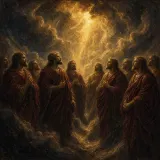
Open with the chapter’s first image
Ephesians 5:1: “Be ye therefore followers of God, as dear children;”
Slow down at the turning point
Ephesians 5:13: “But all things that are reproved are made manifest by the light: for whatsoever doth make manifest is light.”
Keep this word trail visible
Christ, Lord, church, light, wife, love
What to explain, in order
Teach the passage in this order. Each step names the verses it rests on, so every point can be shown in the text before it is applied.
Ephesians 5:1–21
Ephesians 5:1-2
Imitators of God, walking in costly love
Begin with the family picture. "Followers" means imitators, and children copy a father they love. Then let verse 2 define what is copied: love "as Christ also hath loved us", proved when he "hath given himself for us". Read Leviticus 1:9 so the class hears where "a sweetsmelling savour" comes from: Christ's death is the offering that pleased God. Teach this first because the whole passage is a walk in that love. Every prohibition that follows is a way love refuses to use people, and every command is a way it gives.
Ephesians 5:3-7
What must not even be named, and what replaces it
Paul names three sins, fornication, uncleanness and covetousness, and says they should not be "once named among you". Then he turns to speech: filthiness, foolish talking and jesting that are "not convenient", not fitting. Teach the replacement plainly: "but rather giving of thanks". Point out verse 5, where the covetous man is called "an idolater": wanting more is worship given to the wrong thing. Close with verses 6 and 7, the warning against "vain words" that make light of these things, and the call not to share in them.
Ephesians 5:8-14
Once darkness, now light
Read verse 8 slowly. They were darkness itself; now they are "light in the Lord". Then follow the light through the verses: it bears fruit in goodness, righteousness and truth; it tests what pleases the Lord; it exposes the "unfruitful works of darkness" rather than joining them; and whatever it shines on is made manifest. Explain "reprove" as bring to light. Verse 14 is a short call, "Awake thou that sleepest", whose source Ephesians does not name; read Isaiah 60:1 beside it. Teach this as the centre of the passage: light is who they are.
Ephesians 5:15-17
Walk carefully, buying up the time
Now the third walk: "circumspectly", which means with care, looking where you step. Set the fool and the wise side by side, and explain "Redeeming the time" as buying up every opportunity before it is gone. The reason is sober: "because the days are evil". Then show where wisdom points, "understanding what the will of the Lord is". Teach this short step on its own so the class does not confuse wisdom with busyness. A full diary is not the same as a wise walk; knowing the Lord's will is the measure.
Ephesians 5:18-21
Not drunk with wine but filled with the Spirit
Set the two kinds of filling side by side. Wine leads to "excess", a life out of control; the Spirit leads to speech, song, thanks and submission. Explain that "be filled" is an ongoing command, not a single event. Then list the four results and notice that they are communal: "Speaking to yourselves" means to one another. Psalms, hymns and spiritual songs are not defined precisely, so do not over-sort them. End on verse 21, "Submitting yourselves one to another in the fear of God", because it opens the household instructions that follow.
Ephesians 5:22–6:9
Ephesians 5:21-24
Under the fear of God: the setting of every household command
Start at 5:21, "Submitting yourselves one to another in the fear of God", because verse 22 continues that sentence. Every household command that follows sits under the Lord. Then teach the command to wives as Paul gives it: submission "as unto the Lord", grounded in the picture of Christ as head of the church and "the saviour of the body". Name honestly that Christians differ over what headship and submission mean in practice. Establish the actual wording first, then let the class see how the rest of the passage limits and shapes any reading of it.
Ephesians 5:25-30
Husbands: love as Christ loved the church
Point out that Paul gives husbands far more words than wives, and none of them tell husbands to enforce anything. Their command is to love, with Christ as the measure: he "gave himself" for the church, and his aim was her holiness and glory, "not having spot, or wrinkle". Then the body language: love her as your own body, nourish and cherish her as Christ does the church. Teach this immediately after verse 24 so that no one hears headship apart from sacrifice. In Ephesians the head is the one who gives himself for the body.
Ephesians 5:31-33
The great mystery: one flesh, Christ and the church
Read Genesis 2:24 and then verse 31, so the class hears that Paul goes back to creation. The union of a man and his wife is a real union, "one flesh", and it was always meant to point beyond itself: "I speak concerning Christ and the church". Explain mystery here as before, something hidden now made plain. Then let verse 33 bring the class home again: each husband to love his wife as himself, each wife to reverence her husband. Teach it before moving to children so the household is seen as one picture of the gospel.
Ephesians 6:1-4
Children and fathers in the Lord
Children are addressed directly, which means they were present when the letter was read. Their obedience is "in the Lord" and "right", and Paul cites the fifth commandment, "Honour thy father and mother", noting it is "the first commandment with promise". Then turn to fathers. Before telling them to train, Paul tells them not to provoke. Explain nurture as training and admonition as instruction in words. Teach this step as one pair: the child's command and the father's command belong together, and both answer to the Lord.
Ephesians 6:5-9
Servants and masters under one Master
Say plainly that this is ancient slavery, not modern employment, and that many in the Ephesian church were slaves. Paul does not endorse the institution; he speaks to slaves as people whose work matters to Christ, "as unto Christ", "from the heart", knowing the Lord repays "whether he be bond or free". Then read verse 9 slowly. Masters must "do the same things unto them", give up threats, and remember that "your Master also is in heaven". Read Philemon 15-16 so the class sees where the gospel was already pushing: a slave received as "a brother beloved".
Where learners get stuck
The misreadings this passage tends to produce, and how to answer each from the text.
Ephesians 5:1–21
"Verse 4 means Christians should never joke or laugh."
Paul targets "filthiness, nor foolish talking, nor jesting, which are not convenient" (5:4), speech that is coarse and does not fit saints. The context is sexual sin and greed (5:3, 5:5), so the jesting in view is humour that cheapens people and makes light of sin. Paul does not forbid joy; he replaces degrading talk with "giving of thanks". Teach the test of fittingness rather than a rule against laughter.
"'Have no fellowship with darkness' means Christians should avoid unbelievers."
Verse 11 says "have no fellowship with the unfruitful works of darkness, but rather reprove them". The object is works, not people. Reproving, bringing into the light, requires presence, not withdrawal. Verse 7 warns against being partakers "with them" in these things, that is, sharing the deeds. Paul says elsewhere that avoiding all such people would mean leaving the world (1 Corinthians 5:9-10).
"Being filled with the Spirit is a private emotional high."
Paul measures the Spirit's filling by what it produces among people: "Speaking to yourselves in psalms and hymns and spiritual songs", thanks to God, and "Submitting yourselves one to another" (5:19-21). The contrast with wine is about control: drunkenness leads to "excess", the Spirit to a life ordered toward God and others. Feelings may come, but the evidence Paul gives is song, gratitude and humility in the community.
"Giving thanks for all things means pretending evil is good."
The same passage calls the days "evil" (5:16) and tells believers to expose "the unfruitful works of darkness" (5:11), so Paul is not asking anyone to call evil good. The thanks in verse 20 is given "unto God and the Father in the name of our Lord Jesus Christ": it is thanks to the one who rules over all things and works through them for his people. Learners in hard places should hear that they may grieve and still give thanks.
Ephesians 5:22–6:9
"Wives have to submit to anything, even sin or abuse."
Paul's submission is "as unto the Lord" (5:22), and the Lord never commands sin. The same passage commands husbands to love as Christ loved, to nourish and cherish (5:29), and abuse breaks that command rather than claiming it. Nothing here gives anyone the right to harm another. When a learner's safety is at risk, the church's duty is to protect them and to involve those who can help, not to quote this verse at them. The apostles' own rule applies: "We ought to obey God rather than men" (Acts 5:29).
"Headship means the husband is the boss and gets his way."
Paul defines the head by Christ, who is "the saviour of the body" (5:23) and who "loved the church, and gave himself for it" (5:25). The husband's command is to love, not to rule, and Paul never tells husbands to make their wives submit. Christians hold different views on how headship works out in a marriage; present them fairly. But any view that turns headship into self-serving control has left the text.
"Because Paul tells slaves to obey, the Bible approves of slavery."
Paul addresses a cruel institution that already existed and speaks to slaves as moral persons whose service Christ sees. He then binds masters with the same Lord and the same impartial judgment: "neither is there respect of persons with him" (6:9). Elsewhere he lists "menstealers" among the lawless (1 Timothy 1:10), urges slaves to gain freedom if they can (1 Corinthians 7:21), and asks Philemon to receive Onesimus as "a brother beloved" (Philemon 16). Regulation is not approval.
"Children must obey their parents no matter what they are told to do."
Paul says "obey your parents in the Lord" (6:1). Obedience sits inside the Lord's authority, not above it. The same paragraph restrains fathers, "provoke not your children to wrath" (6:4), so parental authority is real and also limited. Children obey because it is "right" and pleasing to God, and a parent who commands evil is asking for what the Lord forbids. As children grow, obedience matures into honour that continues for life (6:2).
Learning objectives
- Explain how verses 1 and 2 define imitation through Christ's self-giving love.
- Identify conduct and speech verses 3 to 7 say do not fit the saints.
- Trace the change from darkness to light in verses 8 to 14.
- Explain 'walk circumspectly' and 'redeeming the time' from verses 15 and 16.
- Contrast drunkenness with being filled with the Spirit in verse 18.
- Describe the communal practices produced in verses 19 to 21.
- Identify the distinct commands addressed to wives and husbands in 5:22 to 33.
- Explain how Christ's love defines the husband's responsibility in verses 25 to 29.
- Trace Genesis one-flesh language through verses 31 and 32.
- State the responsibilities given to children and fathers in 6:1 to 4.
- Describe servant service in 6:5 to 8 using the passage's own terms.
- Explain how 6:9 limits masters under an impartial Master in heaven.
Teacher preparation
- Clarify KJV 'followers' in verse 1 as imitators, then let verse 2 define the imitation.
- Clarify 'convenient' as fitting and 'circumspectly' as carefully, not with modern everyday meanings.
- Do not turn verse 4 into a ban on humor; the passage targets degrading and unfitting speech.
- Mark the three walks: in love, as children of light, and circumspectly.
- Read verses 18 to 21 as connected actions, not four unrelated devotional topics.
- Read 5:21 before starting this unit because its mutual-submission call flows directly into verse 22.
- Name the ancient servant-master setting honestly; it included slavery and bonded service, not merely modern employment.
- Keep each command with the group actually addressed instead of borrowing one group's command for another.
- Avoid jokes about household roles; the passage already carries enough cultural weight.
- Mark the repeated Christ and Lord language so every household role remains under higher authority.
Evidence and interpretation checks
Explicit
Verse 2 defines love through Christ's self-giving; verse 8 names believers light; verses 18 to 21 connect the Spirit with song, gratitude, and submission. The text commands sacrificial love, non-provocation, sincere service, restrained mastery, and remembrance of the impartial Master in heaven.
Scripture-supported
The awake-and-rise language in verse 14 resonates with prophetic calls to rise into God's light. Verse 31 quotes Genesis one-flesh language, while 6:2 and 3 recall the command to honor father and mother.
Strong inference
Because thanksgiving replaces corrupt speech in verse 4 and reappears in verse 20, gratitude functions as disciplined counter-speech. Because every role answers to the Lord and masters face God's impartiality, no participant receives unlimited authority.
Possible or traditional reading
Verse 14 is often treated as an early hymn or scriptural adaptation, but Ephesians does not identify its source. Christians differ over marital submission and which household features are culturally particular or enduring; establish the passage's actual commands before debating models.
Limit
The passage does not define precise technical differences among psalms, hymns, and spiritual songs. This unit is not a complete theology of marriage, parenting, slavery, employment, civil law, or abuse response.
Discussion with answer guidance
1. How does verse 2 define 'walk in love'?
What a good answer contains
By pointing to the cross. Paul says "walk in love, as Christ also hath loved us, and hath given himself for us an offering and a sacrifice to God for a sweetsmelling savour" (5:2). Love is measured by what Christ gave, himself, and the language of a pleasing offering comes from the sacrifices of Leviticus 1:9. Verse 1 sets it up: "followers of God, as dear children", imitators who copy a Father they love. A good answer keeps love costly. A weak answer turns it into a warm feeling and leaves the sacrifice out.
Show teacher guidance
Christ loved us and gave himself as an offering and sacrifice; keep love costly.
2. What replacement does verse 4 give for corrupt speech?
What a good answer contains
Paul offers "but rather giving of thanks" (5:4). Against "filthiness, nor foolish talking, nor jesting, which are not convenient", Paul sets gratitude. "Convenient" means fitting: this kind of talk does not suit saints. A good answer hears the contrast: degrading speech treats people and pleasures cheaply, while thanksgiving receives them as gifts from God. A weak answer either misses the replacement and keeps only the ban, or turns the verse into a rule against all humour.
Show teacher guidance
The answer is giving of thanks; make the contrast audible.
3. What identity statement comes before 'walk as children of light'?
What a good answer contains
"For ye were sometimes darkness, but now are ye light in the Lord" (5:8). Paul does not say they were in darkness, but that they were darkness, and now they are light, "in the Lord". Identity comes first; the command "walk as children of light" follows from it. A good answer keeps that order. A weak answer turns the verse into an effort to become light, when Paul says they already are and must now live like it.
Show teacher guidance
They were darkness but are now light in the Lord.
4. What fruit is named in verse 9?
What a good answer contains
Paul writes that "the fruit of the Spirit is in all goodness and righteousness and truth" (5:9). Three words: goodness toward others, righteousness before God and people, and truth in word and life. The setting is light, so this is what light produces when it shines in a life. A good answer uses the verse's own three nouns. A weak answer imports the longer list from Galatians 5 instead of reading what Ephesians says here.
Show teacher guidance
Expect goodness, righteousness, and truth, using the verse's own nouns.
5. What makes wise walking urgent in verses 15 to 17?
What a good answer contains
Paul gives the reason: "because the days are evil" (5:16). Paul tells them to "walk circumspectly, not as fools, but as wise, Redeeming the time" (5:15-16), and to be "understanding what the will of the Lord is" (5:17). "Circumspectly" means carefully, looking around; "redeeming the time" means buying up each opportunity. A good answer links urgency to wisdom, not to busyness. A weak answer hears only a call to be busy and misses that the goal is to know the Lord's will.
Show teacher guidance
The days are evil, time must be redeemed, and the Lord's will understood.
6. What communal actions follow 'be filled with the Spirit'?
What a good answer contains
Paul follows "be filled with the Spirit" (5:18) with a chain: "Speaking to yourselves in psalms and hymns and spiritual songs, singing and making melody in your heart to the Lord" (5:19), "Giving thanks always for all things" (5:20), and "Submitting yourselves one to another in the fear of God" (5:21). Every result faces others or faces God. A good answer sees that the Spirit's fullness is shown in a community singing, thanking and yielding. A weak answer makes it a private experience measured by feeling.
Show teacher guidance
Look for speaking, singing, making melody, thanksgiving, and mutual submission.
7. What comparison controls the husband's command to love in verse 25?
What a good answer contains
Christ's love for the church. "Husbands, love your wives, even as Christ also loved the church, and gave himself for it" (5:25). The measure is self-giving, and the aim is the other's good: "That he might sanctify and cleanse it" (5:26) and "present it to himself a glorious church" (5:27). A good answer keeps the cross inside the command. A weak answer reduces love to a feeling or to providing, or talks about headship while leaving out the gave himself that defines it.
Show teacher guidance
Christ loved the church and gave himself for it; keep self-giving in the answer.
8. What body language appears in verses 28 to 30?
What a good answer contains
Paul says "So ought men to love their wives as their own bodies. He that loveth his wife loveth himself" (5:28). No one hates his own flesh, "but nourisheth and cherisheth it, even as the Lord the church" (5:29), "For we are members of his body, of his flesh, and of his bones" (5:30). A good answer notices the two bodies: the husband's care for his wife is to match Christ's care for his body, the church. A weak answer hears only self-interest and misses that the model is Christ's nourishing and cherishing.
Show teacher guidance
Husbands love wives as their own bodies, while believers are members of Christ's body.
9. What does Paul call the 'great mystery' in verses 31 and 32?
What a good answer contains
Verse 31 quotes Genesis 2:24, "they two shall be one flesh", and verse 32 says "This is a great mystery: but I speak concerning Christ and the church". Marriage was made from the beginning to picture Christ's union with his people. Then verse 33 brings it back home: love and reverence in each marriage. A good answer holds both levels, the picture and the reality. A weak answer drops one: only a lesson about marriage, or only a lesson about Christ.
Show teacher guidance
Verse 31 cites one flesh, and verse 32 says Paul speaks concerning Christ and the church.
10. What two instructions in 6:4 restrain and direct fathers?
What a good answer contains
Fathers are told to "provoke not your children to wrath: but bring them up in the nurture and admonition of the Lord" (6:4). One instruction restrains, the other directs. In a culture where a father held almost unlimited power, Paul limits it first. Nurture means training, admonition means instruction by word, and both are "of the Lord". A good answer keeps both halves. A weak answer keeps only discipline, or only gentleness, and loses the Lord as the source of both.
Show teacher guidance
Do not provoke children to wrath; bring them up in the Lord's nurture and admonition.
11. Which phrases in 6:5 to 8 move service beyond eyeservice?
What a good answer contains
Servants are to obey "in singleness of your heart, as unto Christ" (6:5), "Not with eyeservice, as menpleasers; but as the servants of Christ, doing the will of God from the heart" (6:6), "With good will doing service, as to the Lord, and not to men" (6:7), knowing the Lord will repay "whether he be bond or free" (6:8). A good answer sees that Paul speaks to slaves as moral persons whose work is seen by Christ. A weak answer reads the verses as approval of slavery, or skips the dignity Paul gives them.
Show teacher guidance
Look for singleness of heart, as unto Christ, from the heart, and as to the Lord.
12. What must masters remember in 6:9?
What a good answer contains
That they too are under authority: "knowing that your Master also is in heaven; neither is there respect of persons with him" (6:9). They must "do the same things unto them, forbearing threatening". A good answer notices that the master receives commands as real as the servant's, that threats are forbidden, and that God judges both without favouritism. A weak answer reads 6:5-8 alone and treats the master's power as unchecked.
Show teacher guidance
They also have a Master in heaven, and he shows no respect of persons.
Responsible application
Replace corrosive speech
Substitute thankful, fitting speech where humor or commentary has become degrading or cheap.
Make worship reciprocal
Treat congregational song as believers speaking to one another as well as singing to the Lord.
Redeem time toward wisdom
Evaluate one recurring commitment by whether it helps the community walk wisely rather than merely stay busy.
Put authority under the cross
Whenever teaching authority, include the command that limits, sacrifices, or disciplines the stronger party's power.
Make the Lord the audience
Ask how service and supervision change when both parties answer to the same Master.
Pair nurture with restraint
Build parenting guidance from both halves of 6:4 so correction never becomes provocation.
Session plans
Two timings of the same lesson. The shorter keeps the reading, the central discussion and one response; the longer gives the confusions and the application their own time.
Ephesians 5:1–21
45 minutes
Imitators
Read 5:1-2. Take question one and read Leviticus 1:9 for the sweet savour.
Not once named
Read 5:3-7. Take question two and confusion one, and explain why covetousness is called idolatry.
Children of light
Read 5:8-14. Take questions three and four, and confusion two.
Walk wisely
Read 5:15-17. Take question five and explain circumspectly and redeeming the time.
Filled with the Spirit
Read 5:18-21. Take question six and confusions three and four.
Sing and give thanks
Sing or read a psalm together, read the key verse, and give out the handout.
90 minutes
Three walks
Write walk in love, walk as children of light and walk circumspectly on the board. Read 5:1-21 aloud.
Love that costs
Read 5:1-2 with Leviticus 1:9 and John 13:34. Take question one.
Speech and thanks
Read 5:3-7 with Colossians 3:5. Take question two and confusion one.
Light
Read 5:8-14 with Isaiah 60:1 and John 3:20-21. Take questions three and four and confusion two.
Redeem the time
Read 5:15-17 and take question five. Let each person name one weekly commitment and ask whether it helps them walk wisely.
Wine and Spirit
Read 5:18-21. Take question six and confusions three and four, and show how 5:21 opens the next passage.
Speaking in song
Choose a psalm or hymn the group knows. Read or sing it, then ask what it says to one another, not only to God.
Thanks for all things
Let each person name one thing to thank God for. Pray, read the key verse and give out the handout.
Ephesians 5:22–6:9
45 minutes
Six voices
Read 5:21-6:9 aloud. Chart the six groups addressed on the board and circle every mention of Christ or the Lord.
Wives and husbands
Teach 5:21-30. Take questions one and two, then confusions one and two with care.
The great mystery
Read Genesis 2:24 and 5:31-33. Take question three.
Children and fathers
Read 6:1-4. Take question four and confusion four.
Servants and masters
Read 6:5-9. Take questions five and six and confusion three, naming the slavery setting honestly.
The same Lord
Ask what changes when every role answers to the Lord. Read the key verse, give out the handout and pray for households.
90 minutes
Six voices
Read 5:21-6:9. Chart the six groups and mark every mention of Christ or the Lord.
One to another
Teach 5:21-24 and work through confusions one and two carefully, leaving room for questions.
As Christ loved the church
Read 5:25-30 with John 13:1-15. Take questions one and two and ask what Christ's love did for the church.
One flesh
Read Genesis 2:24 and 5:31-33. Take question three.
Children and fathers
Read 6:1-4 with Exodus 20:12 and Colossians 3:21. Take question four and confusion four.
Servants and masters
Read 6:5-9 with Philemon 15-16. Take questions five and six and confusion three.
The Lord as audience
Let each person write one way the Lord as audience changes a role they hold at home or at work. Share in pairs.
Prayer for households
Read the key verse together, give out the handout and pray for the homes represented in the room.
Adapting the lesson
Ephesians 5:1–21
Children
Turn off the lights and light a torch or candle, then read 5:8. Show how the light makes everything in the room visible. Explain that God makes his children light, so they can be kind, good and truthful. Teach thankfulness by letting each child say one thing they thank God for. Leave the sins of verse 3 for older learners.
Youth
Talk honestly about speech, online and in person: what kind of joking cheapens people, and what thankful speech sounds like. Use verses 15 and 16 to ask how they spend their time and what redeeming it might mean. Discuss verse 18 plainly, then ask what being filled with the Spirit looks like in a youth group.
Adults
Give time to covetousness as idolatry in verse 5, which adults in a prosperous culture often skip. Discuss how a congregation's singing can be speaking to one another. Take the sexual sins of verse 3 seriously but pastorally, and look at how gratitude can change a household's speech and a workplace's habits.
One to one
Ask which of the three walks, in love, as light, or with care, is hardest right now. If someone feels stuck in darkness, read verse 8 and verse 14 and let them hear that God calls sleepers awake. If they are in grief, deal gently with "Giving thanks always" and show that thanks to God can sit beside tears.
Ephesians 5:22–6:9
Children
Centre the lesson on 6:1-4. Read the command to children and then the command to fathers, and show that both receive instructions from God. Play a short game where a child gives a kind instruction and another follows it. Be alert to children from hard or broken homes; do not assume every home is safe, and keep the focus on God's care for families.
Youth
Have them chart every group addressed and what each is told, then ask who is left without commands. None are. Let them discuss honestly what they have heard about submission and headship, and point them to the self-giving love of verse 25 as the controlling picture. Treat the slavery verses seriously rather than skipping them.
Adults
Give real time to the setting: Roman households, slavery, the power of fathers. Present the main Christian views on marriage roles fairly and require each to account for 5:21 and 5:25. Talk about how employers and workers today can apply the principle of the Lord as audience without pretending employment is the same as slavery.
One to one
Listen first to where the person is: married, single, a parent, an employee, a manager. Read the part of the passage that speaks to their role and ask what it would look like to do it "as unto the Lord". If anything suggests they are being harmed at home, put their safety first and help them find help.
Song and video learning lab
A song or video may interpret, compress, or dramatize the text. Its value becomes clearer when its choices are compared with Scripture.
- Before the media: the exact passage and its central movement.
- During the media: the words, people, events, and emotions the artist emphasizes.
- After the media: what it clarifies, what it leaves out, and what belongs back in the biblical text.
Handout
One page for learners to take home. The print button prints this section alone.
Ephesians 5:1–21
The passage in brief
Ephesians 5:1-21 tells God's children to imitate their Father by walking in love, the kind of love Christ showed when he gave himself for us. Sexual sin, greed and degrading talk do not belong among God's people; thanksgiving does. Believers were once darkness, but now they are light in the Lord, so they should live as children of light. They should walk wisely, make the most of their time, and be filled with the Spirit, singing, giving thanks and submitting to one another.
A verse to keep
And walk in love, as Christ also hath loved us, and hath given himself for us an offering and a sacrifice to God for a sweetsmelling savour.
Ephesians 5:2 · King James Version
Questions to take home
How does 5:2 describe the love we are to walk in?
What should replace coarse talk, according to 5:4?
What four things follow being filled with the Spirit in 5:19-21?
This week
Each evening this week, write down three things you thank God for, and say one of them aloud to someone else.
Ephesians 5:22–6:9
The passage in brief
Ephesians 5:22-6:9 shows how life in Christ shapes a household. Every instruction sits under the call to submit to one another in the fear of God. Wives are called to submit to their husbands as to the Lord, and husbands to love their wives as Christ loved the church and gave himself for it. Children obey their parents in the Lord, and fathers must not provoke them but bring them up in the Lord's training. Servants work as for Christ, and masters remember they have a Master in heaven.
A verse to keep
Husbands, love your wives, even as Christ also loved the church, and gave himself for it;
Ephesians 5:25 · King James Version
Questions to take home
How did Christ love the church, according to 5:25-27?
What two things are fathers told in 6:4?
What must masters remember in 6:9?
This week
Pick one role you hold at home or at work and do one task in it this week as for the Lord, not for people.
Music and video connected to the passage
Related media appears when its Scripture reference overlaps this study. Music and video can illuminate a theme while the biblical text remains the foundation.