Objects of the Bible

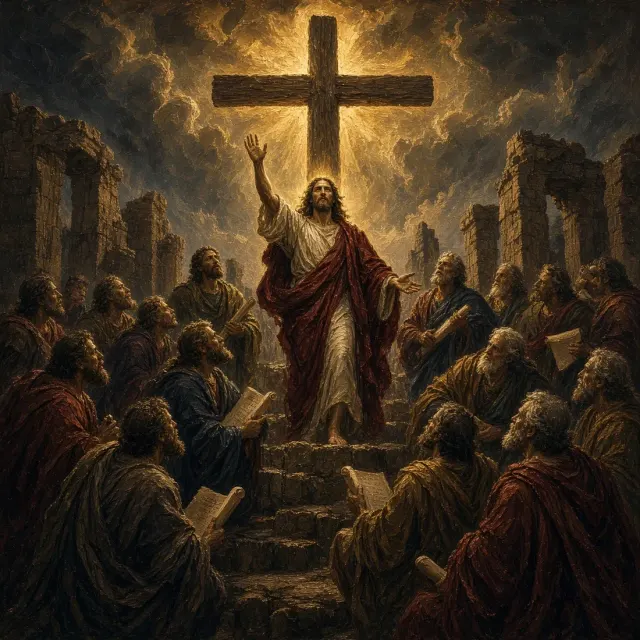
The cross

An execution device so degrading that Roman writers avoided the word, and within thirty years it was the name of a message.

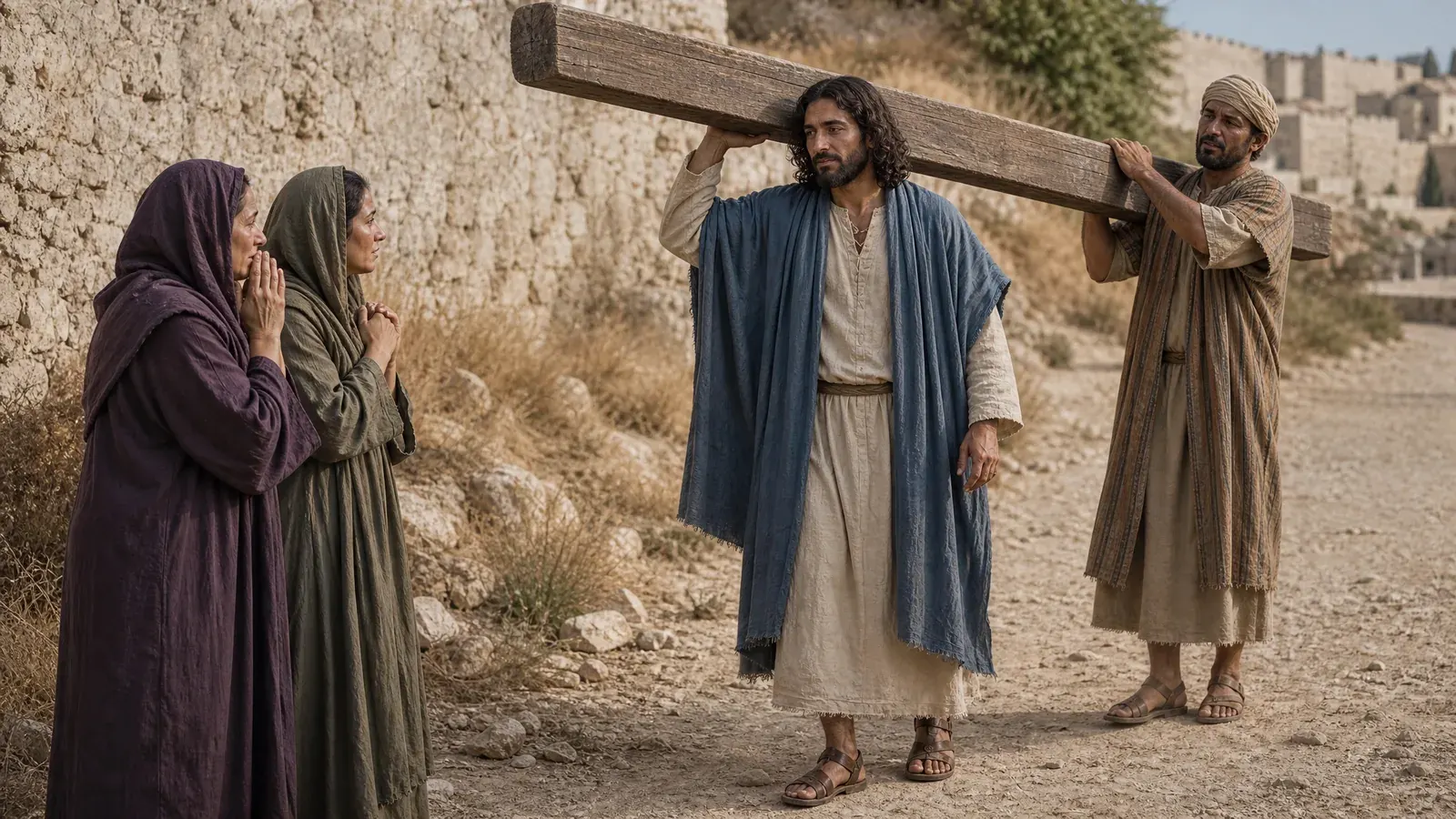
Crucifixion was reserved for slaves, rebels and non citizens, and Cicero wrote that the very word should be far removed not only from the body of a Roman citizen, but from his thoughts, his eyes and his ears. It was designed to humiliate as much as to kill, which is why the victim carried the crossbeam through the streets. Luke records that this part failed: they laid hold upon one Simon, a Cyrenian, and on him they laid the cross, that he might bear it after Jesus.

Where it appearsLuke 23 · Mark 8 · 1 Corinthians 1 · Colossians 2

Scroll down to the account
The cross

The movements, in the order the text gives them.

The Account of The cross

  1. 01

    Mark 8:34

    Let him take up his cross, and follow me

    The image is used before the event, to a crowd who had seen the procession and knew exactly what the phrase described.

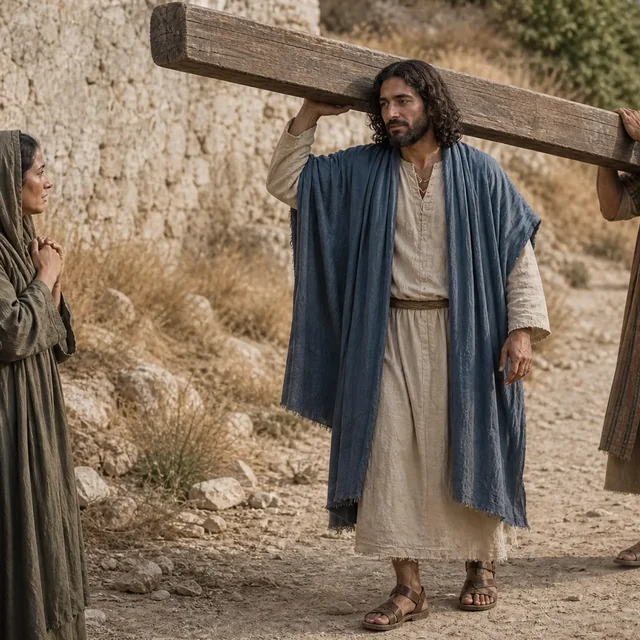
    The cross enters this instruction before it enters the execution procession. That timing matters. Jesus has just announced rejection, death, and resurrection, and Peter has tried to correct him. The answer is not a revised plan with the suffering removed. Jesus calls the crowd alongside the disciples and names the cost of following the Messiah Peter has just confessed. Whosoever makes the invitation broad; his cross makes the terms severe. This is not an advanced lesson reserved for an inner circle.

    A cross here is an instrument of execution, not a decorative name for an irritating afternoon. Yet suffering by itself is not the point either. The sentence ends with follow me, and the next verse specifies losing life for Jesus and the gospel. That gives self-denial its direction. Peter has attempted to lead Jesus away from the announced path; Jesus places the follower behind him on it. The teacher does not offer admiration at a safe distance.

    Verse by verse

    1. 8:34

      The crowd is summoned with the disciples. The saying is not addressed only to the Twelve.

    2. 8:34

      The following verse ties the loss of life specifically to Jesus and the gospel, rather than treating pain itself as a virtue.

    Mark 8:34

    King James Version · 1 verse

    8:34And when he had called the people unto him with his disciples also, he said unto them, Whosoever will come after me, let him deny himself, and take up his cross, and follow me.

    Mark 8:34: Let him take up his cross, and follow me
  2. 02

    Luke 23:26

    On him they laid the cross

    A man on his way into the city is conscripted, and Mark thinks his sons are known to the readers, which is why he names them.

    After Jesus is a small phrase carrying a large echo. Simon has been seized and placed under the cross, so that his physical position now resembles the instruction about following with a cross. The resemblance is real; a conversion account is not supplied. The Book of Luke gives no speech from Simon, no explanation of his convictions, and no permission to turn compulsion into a volunteered gesture. He is coming from the country when the procession takes possession of his day.

    The verbs preserve the imbalance of power. They laid hold upon him; they laid the cross on him. Simon is neither the official directing the execution nor the prisoner sentenced to die, yet the execution reaches him bodily. His name remains where the men who seize him remain unnamed. The verse does not describe a collapse by Jesus or identify the exact timber Simon carries. It fixes something less elaborate and more immediate: a named man bearing the burden behind the condemned.

    Verse by verse

    1. 23:26

      Coming out of the country describes Simon's approach. It does not say that he had just arrived from Cyrene that morning.

    2. 23:26

      Luke describes Simon bearing the cross after Jesus, but does not specify its weight, dimensions, or the part of the structure carried.

    Luke 23:26

    King James Version · 1 verse

    23:26And as they led him away, they laid hold upon one Simon, a Cyrenian, coming out of the country, and on him they laid the cross, that he might bear it after Jesus.

    Luke 23:26: On him they laid the cross
  3. 03

    Luke 23:28

    Weep not for me, but weep for yourselves

    The one recorded exchange on the road redirects the grief of the crowd rather than accepting it.

    The condemned man turns to warn the mourners. That reversal gives this sentence its force: the women see an immediate catastrophe in front of them, while Jesus speaks of a catastrophe approaching their own city. Daughters of Jerusalem identifies them with that city, not as members of his household. Their lament is not mocked. Its direction is changed. The cross procession has not stopped Jesus speaking with prophetic authority.

    The following verses make the warning painfully concrete. A time is coming when women without children will be called blessed, because having children will mean having more lives exposed to suffering. This is not a rejection of motherhood; it is the dreadful reversal produced by judgment. The appeal to mountains and hills belongs to that same language of disaster. Reading verse 28 alone can make Jesus sound merely dismissive of sympathy. Reading what follows reveals the weight of his reply. He speaks to people who are mourning one death about danger that will not stop at one household.

    Verse by verse

    1. 23:28

      Daughters of Jerusalem addresses women associated with the city. It is not a statement that Jesus had biological daughters.

    2. 23:28

      The warning is explained in verses 29-31. The command redirects this lament; it is not a universal prohibition against grieving a death.

    Luke 23:28

    King James Version · 1 verse

    23:28But Jesus turning unto them said, Daughters of Jerusalem, weep not for me, but weep for yourselves, and for your children.

    Luke 23:28: Weep not for me, but weep for yourselves
  4. 04

    1 Corinthians 1:22-24

    Unto the Jews a stumblingblock, and unto the Greeks foolishness

    Paul states both objections accurately before answering them, and neither objection is dismissed as ignorant.

    Paul puts the apparent liability in the announcement itself: Christ crucified. He does not introduce a triumphant Messiah and quietly leave the execution in the footnotes. The cross is precisely where familiar expectations stumble. A demand for impressive signs and a search for persuasive wisdom encounter a Messiah subjected to a degrading death. Paul names the collision rather than smoothing it over.

    But the next sentence prevents the contrast from becoming a division between two hopeless peoples and a third, superior people. Both Jews and Greeks also appear among those who are called. The distinction is not that one ethnicity has the right instincts. It is that the same Christ, received through God's calling, is recognized as God's power and wisdom. Nor does Paul simply condemn power or wisdom as such. He relocates both in the person the cross seemed to discredit. The argument overturns the standards of recognition without replacing thought with nonsense. What looked like the disqualification becomes the center of the claim.

    Verse by verse

    1. 1:23

      Stumblingblock describes an obstacle to acceptance, not merely something embarrassing or unfashionable.

    2. 1:24

      Both Jews and Greeks occur among the called. The passage cannot fairly be reduced to a claim that every member of either group rejects Christ.

    1 Corinthians 1:22-24

    King James Version · 3 verses

    1:22For the Jews require a sign, and the Greeks seek after wisdom:

    1:23But we preach Christ crucified, unto the Jews a stumblingblock, and unto the Greeks foolishness;

    1:24But unto them which are called, both Jews and Greeks, Christ the power of God, and the wisdom of God.

    1 Corinthians 1:22-24: Unto the Jews a stumblingblock, and unto the Greeks foolishness
  5. 05

    Colossians 2:14-15

    Nailing it to his cross

    The metaphor is legal and physical at once: a record of debt cancelled by being fixed to the instrument of execution.


    The object nailed to the cross in this sentence is a document. Paul changes the angle from the execution itself to the hostile claim being removed through it. Blotting out, taking away, and nailing describe a decisive cancellation, not a delay in collecting what is owed. The previous verse supplies the governing point: the forgiveness of all trespasses. The legal picture serves that declaration, not a theory about an actual sheet of paper beside Jesus.

    Then the imagery changes again, from canceled liability to defeated powers. Those powers are stripped and publicly exposed in a triumph. The cross, an instrument for displaying a condemned man's helplessness, becomes the place where hostile authority is itself displayed as overcome. The reversal is enormous, but it remains tied to Christ rather than to suffering in the abstract. Readers debate the precise relation between the handwriting and the ordinances. The central action is less obscure: the accusation no longer holds, and the powers do not get the final procession.

    Verse by verse

    1. 2:14

      Interpretations differ over how the document relates to the Mosaic ordinances, but the immediate context identifies forgiveness as the controlling concern.

    2. 2:15

      Spoiled here means stripped or despoiled, not morally corrupted. The powers appear as defeated opponents in the image of triumph.

    Colossians 2:14-15

    King James Version · 2 verses

    2:14Blotting out the handwriting of ordinances that was against us, which was contrary to us, and took it out of the way, nailing it to his cross;

    2:15And having spoiled principalities and powers, he made a shew of them openly, triumphing over them in it.

    Colossians 2:14-15: Nailing it to his cross

Why it matters

The strange thing is what happens to the word afterwards. Within a generation it is being used, in letters circulated among people who had seen crucifixions, as shorthand for something to boast about. The preaching of the cross is to them that perish foolishness, and Paul concedes the point before turning it: we preach Christ crucified, unto the Jews a stumblingblock, and unto the Greeks foolishness. Colossians puts it as an administrative act: blotting out the handwriting of ordinances that was against us, nailing it to his cross.

3 songs

The music

Every song in the catalogue whose passage falls inside these chapters.

  1. Luke 23:32-43

    Remember Me

    Play here
    Open song pageRead lyrics
  2. 1 Corinthians 1:1-2:16

    Christ the Power of God

  3. Colossians 2:1-23

    Buried and Risen with Him

Nearby

All the objects

Report an error on this page