Places of the Bible

Golgotha

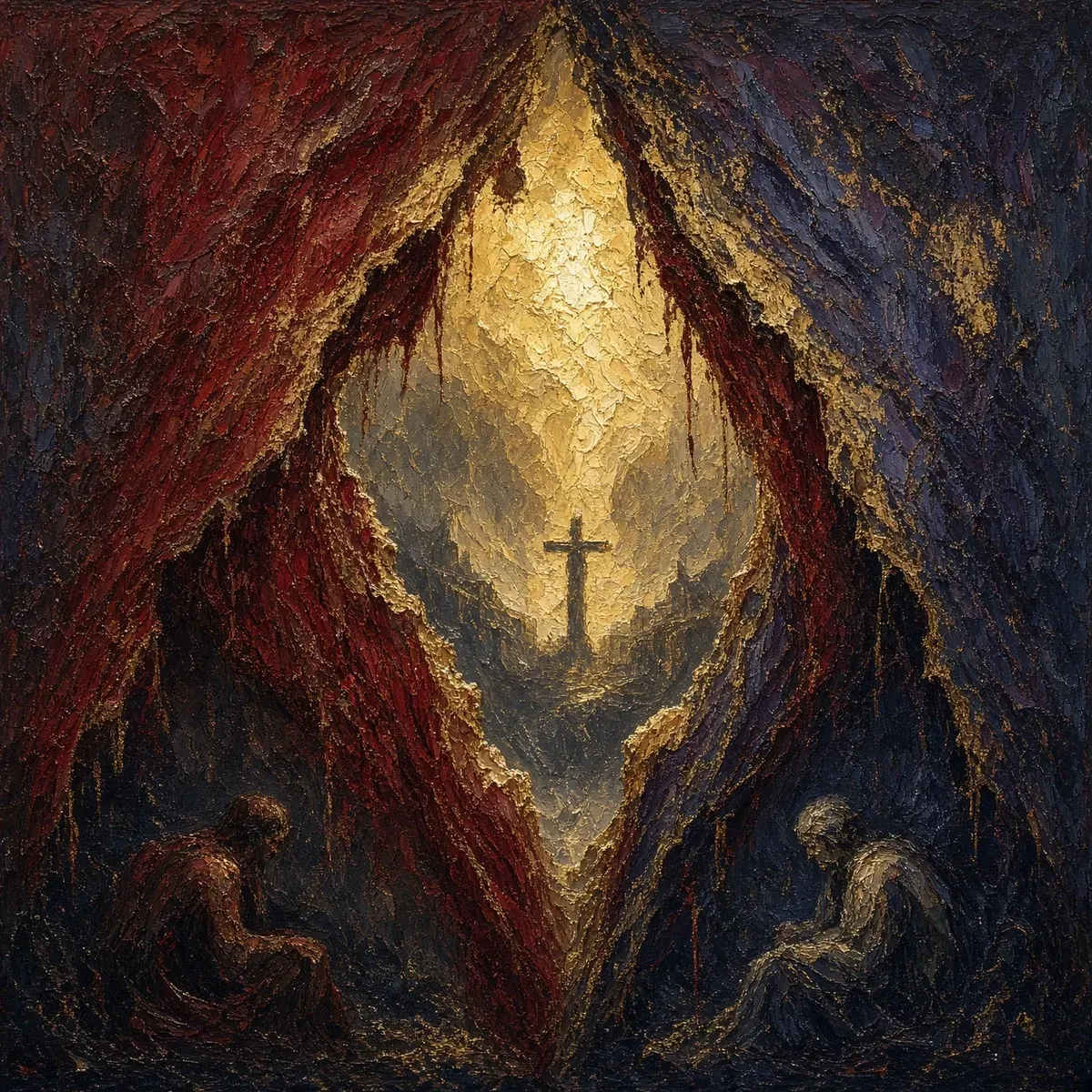
A place of execution beside a road, chosen because passers by would read the sign.

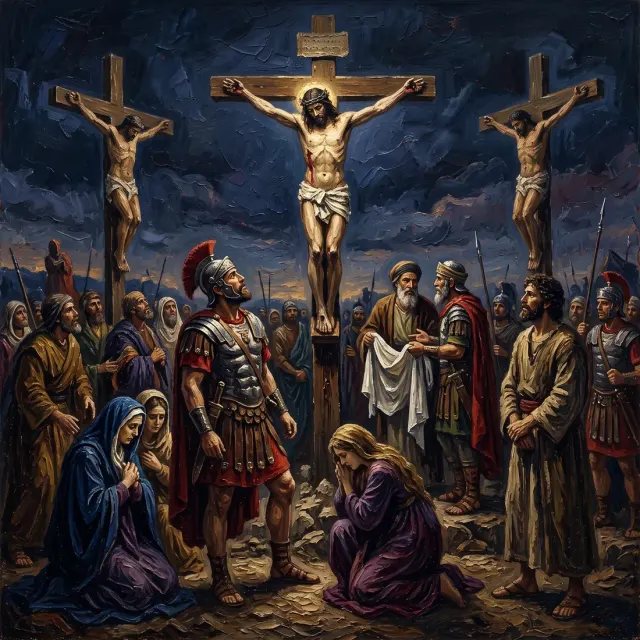
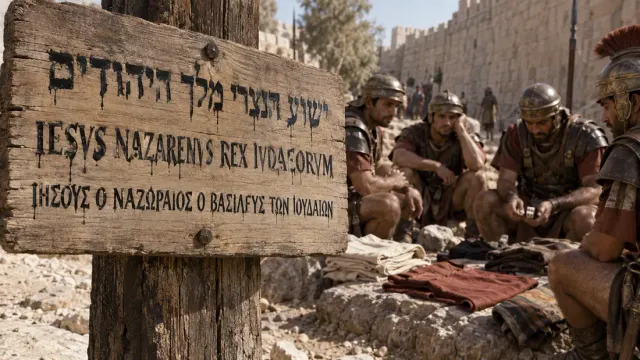
All four gospels name it and three of them translate it: the place of a skull. It is outside the city wall, which the law required, and beside a road, which the empire preferred, because a crucifixion was a public notice. John says the place was nigh to the city, and that the title was written in Hebrew, and Greek, and Latin, so that everyone on that road could read it. Roman execution was designed to be seen, and the gospels report the audience as carefully as they report the event.

Where it appearsMatthew 27 · Mark 15 · Luke 23 · John 19

Scroll down to the account

The movements, in the order the text gives them.

The Account of Golgotha

  1. 01

    Luke 23:33-34

    Father, forgive them; for they know not what they do

    The first sentence from the cross is about the people driving the nails, and it is a request rather than a statement.

    The prayer for forgiveness and the dividing of the clothes share a verse. The Book of Luke does not clear the scene of its ugliness before recording mercy. Jesus addresses the Father while the people carrying out the execution are treating his clothing as something to distribute. The contrast is not between an imagined peaceful prayer and a distant act of violence. Both belong to the same place and moment.

    They know not what they do does not say that nothing wrong is being done. Forgiveness would be a strange request if there were nothing to forgive. The words distinguish the deed from the full understanding of those involved, without turning ignorance into innocence. Jesus prays for mercy in the presence of an actual wrong, not an unfortunate misunderstanding with no victim.

    Luke has placed him between two condemned men. That arrangement makes him look like one more criminal, while the chapter repeatedly declares his innocence. The cross does not supply a new verdict about his character. It displays what is being done to him. His prayer is the startling answer within that display: not an explanation that makes the killing harmless, but an appeal to the Father for those taking part in it.

    Verse by verse

    1. 23:33

      Calvary comes through Latin calvaria, meaning skull; Luke's Greek word is kranion. John 19:17 identifies Golgotha as the place of a skull.

    2. 23:34

      Some early manuscripts omit the prayer for forgiveness, while others include it, as the NET Bible's textual note records. The King James retains it.

    3. 23:34

      The dividing of garments and casting of lots echo Psalm 22:18. John 19:24 makes that scriptural connection explicit.
    Luke 23:33-34

    King James Version · 2 verses

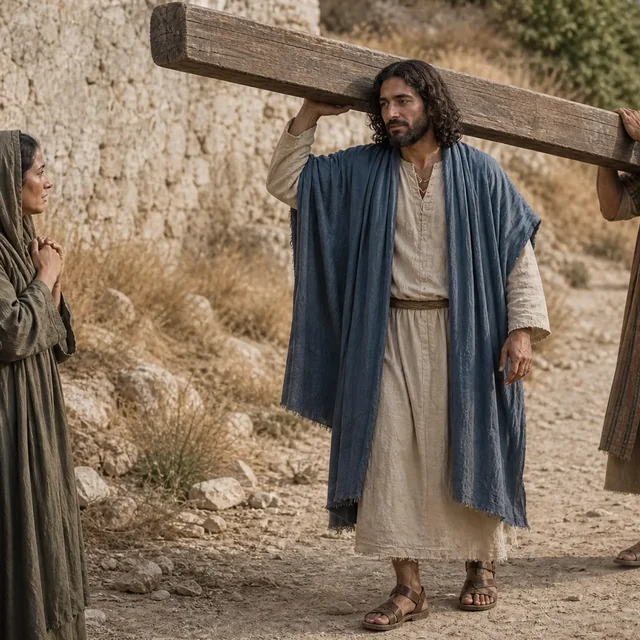
    23:33And when they were come to the place, which is called Calvary, there they crucified him, and the malefactors, one on the right hand, and the other on the left.

    23:34Then said Jesus, Father, forgive them; for they know not what they do. And they parted his raiment, and cast lots.

    Luke 23:33-34: Father, forgive them; for they know not what they do
  2. 02

    John 19:19-22

    What I have written I have written

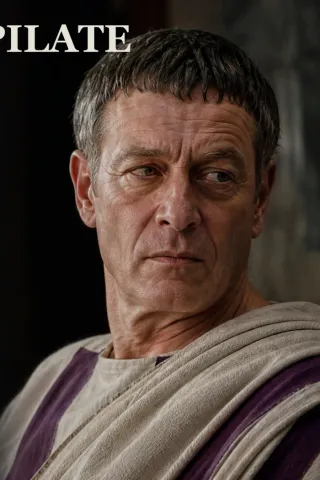
    The chief priests ask for one word to be changed and the governor who had just yielded on everything refuses on this.

    The proposed correction is only a few words long, but it changes everything the sign claims. The chief priests want he said inserted into the wording. As written, the title identifies Jesus as king. Their version would identify kingship as his allegation. It is the difference between a declaration and a quotation of a claim, and the objection shows that the difference has not escaped them.

    The Book of John makes the notice unusually public. The place is near the city, many read it, and the words appear in three languages. Nazareth, the town repeatedly attached to Jesus' name, is now joined to kingship on the instrument of execution. The notice belongs to the proceedings against him, yet its wording also expresses the identity the Gospel has been unfolding. That is the passage's irony, without any need to invent a confession of faith for Pilate.

    What I have written I have written ends the exchange. The sentence gives a refusal to alter the inscription, not an account of Pilate's inner conversion. His wording remains over the cross while the objection remains below it. The sign is not changed into he claimed to be. The king's title stays attached to the crucified man.

    Verse by verse

    1. 19:19

      Title here means the written notice attached to the cross, not the title of a book or a spoken form of address.

    2. 19:20

      John explicitly names Hebrew, Greek and Latin. The verse gives the languages and the public readership, not the precise arrangement of lines on the sign.

    3. 19:21-22

      The requested change concerns whether kingship is asserted or merely attributed to Jesus as a claim. Pilate refuses that change; the passage does not explain his motive for the refusal.

    John 19:19-22

    King James Version · 4 verses

    19:19And Pilate wrote a title, and put it on the cross. And the writing was, JESUS OF NAZARETH THE KING OF THE JEWS.

    19:20This title then read many of the Jews: for the place where Jesus was crucified was nigh to the city: and it was written in Hebrew, and Greek, and Latin.

    19:21Then said the chief priests of the Jews to Pilate, Write not, The King of the Jews; but that he said, I am King of the Jews.

    19:22Pilate answered, What I have written I have written.

    John 19:19-22: What I have written I have written
  3. 03

    Luke 23:39-43

    Today shalt thou be with me in paradise

    One of the two men dying beside him asks for nothing more than to be remembered, and is given a date.

    Jesus answers the man's when with today, and his request to be remembered with the promise of being with him. The reply is not merely a warmer version of the petition. It changes both its horizon and its intimacy. The man asks for remembrance when kingship becomes evident. Jesus promises company in paradise while the execution is still taking place.

    The contrast between the two condemned men is not a contrast between a criminal and someone secretly innocent. The second man expressly accepts the justice of his own sentence. What changes is his judgment about Jesus: this man hath done nothing amiss. He separates their guilt from Jesus' innocence even though all three occupy crosses. The same punishment does not prove the same character.

    The first speaker makes rescue from the cross the test of messianic identity. The other addresses a crucified man as one who still has a kingdom. The Book of Luke lets that difference stand without supplying a lost biography to explain it. No name, earlier encounter or detailed criminal record is given. The weight falls on the exchange itself. Jesus does not promise to undo the execution. He speaks as someone whose authority extends beyond it.

    Verse by verse

    1. 23:40-41

      The second man distinguishes their deserved punishment from Jesus' innocence. Sharing a sentence is not presented as sharing guilt.

    2. 23:42

      Luke gives neither criminal a name. The request asks Jesus for remembrance in his kingdom, not for a claim of innocence to replace the man's confession.

    3. 23:43

      The King James attaches To day to the promised presence with Jesus. The emphasis includes both when the promise applies and whose company is promised.

    Luke 23:39-43

    King James Version · 5 verses

    23:39And one of the malefactors which were hanged railed on him, saying, If thou be Christ, save thyself and us.

    23:40But the other answering rebuked him, saying, Dost not thou fear God, seeing thou art in the same condemnation?

    23:41And we indeed justly; for we receive the due reward of our deeds: but this man hath done nothing amiss.

    23:42And he said unto Jesus, Lord, remember me when thou comest into thy kingdom.

    23:43And Jesus said unto him, Verily I say unto thee, To day shalt thou be with me in paradise.

    Luke 23:39-43: Today shalt thou be with me in paradise
  4. 04

    John 19:26-27

    Behold thy mother

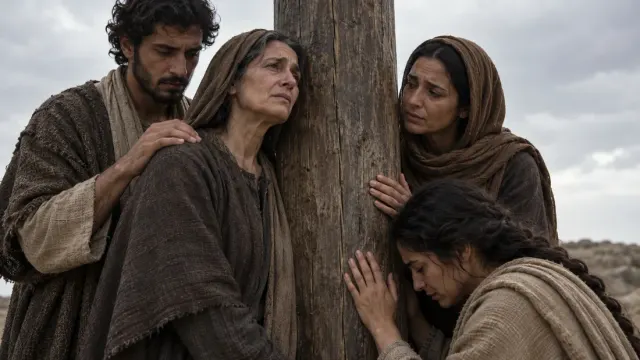
    In the middle of it he arranges his mother’s housing, and from that hour that disciple took her unto his own home.

    From that hour is the phrase that prevents this scene from becoming only a beautiful saying. The disciple receives Jesus' mother into his own home. The words have an immediate consequence: a relationship is named, and a household makes room for it. At the place where Jesus is being stripped of his life, he provides for someone whose life will continue without his bodily presence.

    The two addresses belong together. His mother is not simply instructed to look at a disciple, nor the disciple simply to notice a grieving woman. Son and mother establish a responsibility between them. The Book of John records no reply from either person. It records what the disciple does. The action is the answer.

    The scene can also suggest a larger picture of spiritual family, but that reading need not make the actual mother and actual care disappear. The text is remarkably concrete about the result. It does not explain Joseph's absence or provide a discussion of why this disciple rather than Jesus' brothers receives the charge. Its attention stays on the people before the cross and the provision made there. The saying reaches beyond the hour of death into a home.

    Verse by verse

    1. 19:26

      The disciple is described as the one Jesus loved, but is not named in these verses. Identifying him as John follows the traditional identification, not an explicit name here.

    2. 19:26

      Woman is also the address used at Cana in John 2:4. The practical provision in this passage gives no basis for reading it as an expression of contempt.

    3. 19:27

      From that hour marks the beginning of the disciple's care. The verse states that he took her into his own home, not merely that he agreed to do so later.

    John 19:26-27

    King James Version · 2 verses

    19:26When Jesus therefore saw his mother, and the disciple standing by, whom he loved, he saith unto his mother, Woman, behold thy son!

    19:27Then saith he to the disciple, Behold thy mother! And from that hour that disciple took her unto his own home.

    John 19:26-27: Behold thy mother
  5. 05

    Mark 15:37-39

    Truly this man was the Son of God

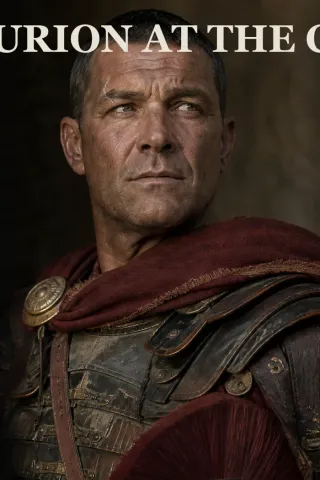
    The verdict comes from the officer in charge of the execution, and what convinces him is the way the death happened.

    The centurion speaks after Jesus dies, not after Jesus comes down from the cross. Earlier, the chief priests and scribes demanded a descent that would make them see and believe. This man sees the manner of his death and gives the declaration. The Book of Mark places recognition at the very point that the mockers treated as disproof.

    Between the death and the centurion's words, the temple veil tears from top to bottom. Mark joins events at the cross and the sanctuary without saying that the soldier can see into the temple. His stated evidence is the man opposite him. The torn veil gives the death a significance larger than the execution ground, while the centurion's voice fixes attention on this man. Neither the fabric nor the confession is allowed to make the actual death disappear.

    Son of God is not a new title invented here. It stands at the Gospel's opening in the King James, and the Father's voice names the Son at the baptism and the mountain. Now a centurion says it beside the cross. The passage does not provide his complete theology or his later life. It provides the declaration, its witness and its setting. Recognition arrives without the demanded rescue.

    Verse by verse

    1. 15:37

      Gave up the ghost means died. The passage records a loud cry but does not supply its words in this verse.

    2. 15:38

      The veil is often understood as the inner sanctuary curtain, though the outer curtain is also proposed. Hebrews 10:19-20 explicitly connects access through the veil with Jesus' flesh and blood.

    3. 15:39

      The centurion stands opposite Jesus and responds to his death. Mark does not say that he sees the temple curtain tear from that position.

    Mark 15:37-39

    King James Version · 3 verses

    15:37And Jesus cried with a loud voice, and gave up the ghost.

    15:38And the veil of the temple was rent in twain from the top to the bottom.

    15:39And when the centurion, which stood over against him, saw that he so cried out, and gave up the ghost, he said, Truly this man was the Son of God.

    Mark 15:37-39: Truly this man was the Son of God

Why it matters

The accounts are restrained to a degree that is hard to notice until you look for what is missing. There is no description of the nails, no dwelling on the wounds, no adjectives. The sentence is four words in Greek and three in English: and they crucified him. What the writers do record is speech. Seven sentences from the cross across the four books, a placard the chief priests wanted reworded and Pilate refused to change, soldiers dividing clothing by lot, a criminal asking for remembrance, and a centurion who had seen many of these and said something about this one.

5 songs

The music

Every song in the catalogue whose passage falls inside these chapters.

  1. Matthew 27:32-56; Mark 15:21-41; Luke 23:26-49; John 19:16-37

    It Is Finished

  2. Matthew 27:27-56

    The Veil Was Torn

  3. Mark 15:21-47

    Truly This Man Was the Son of God

  4. Luke 23:32-43

    Remember Me

    Play here
    Open song pageRead lyrics
  5. John 19:1-37

    It is Finished

    Play here
    Open song pageRead lyrics

Nearby

All the places

Report an error on this page