The big picture
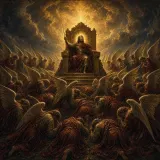
The Book of Hebrews brings the sacrificial argument to its sharpest point. Repetition itself becomes evidence that the former offerings could not finally remove sin: year after year remembers what has not yet been completed. Christ's coming is then read through Psalm 40 as obedient bodily self-offering, and one sacrifice does what repetition could not. The contrast becomes visible in posture. Priests stand daily because their work recurs; Christ sits after offering once. From that completed work come confidence to enter, a call to hold fast, and responsibility for one another in the gathered community. The same sufficiency that opens access also makes repudiation severe. If the only effective sacrifice is rejected, there is no second one waiting behind it. Yet the chapter does not treat the hearers as already lost. It recalls their earlier endurance under public shame, imprisonment, and material loss, then points them toward the same patient faith. Warning and confidence continue side by side rather than canceling each other.
Central truth
Christ's single sufficient offering opens confident access to God and calls believers to hold fast together, reject repudiation of his sacrifice, and endure loss in hope of the promised future.
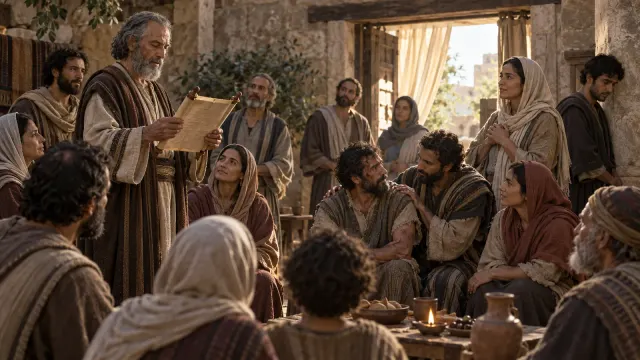

The study notes have a page of their own
The movement by movement analysis, the words to trace, the verse by verse notes and where readers differ are written for someone studying alone. They are on the Deep Personal Reflections page for this chapter. This page is the lesson.
A chapter-specific teaching brief
These anchors come from this chapter itself. They help a teacher use the Level 1 overview, the Level 2 study, and the Scripture text as one lesson.
Open with the chapter’s first image
Hebrews 10:1: “For the law having a shadow of good things to come, and not the very image of the things, can never with those sacrifices which they offered year by year…”
Slow down at the turning point
Hebrews 10:18: “Now where remission of these is, there is no more offering for sin.”
Keep this word trail visible
offering, sins, offered, sacrifice, sacrifices, blood
What to explain, in order
Teach the passage in this order. Each step names the verses it rests on, so every point can be shown in the text before it is applied.
Hebrews 10:1-4
What the yearly repetition revealed
Start with the law as “a shadow of good things to come, and not the very image of the things”. Explain the difference: a shadow outlines a shape; the image is the thing itself. Then work through the logic of 10:2-3. If the sacrifices had cleansed for good, people would have stopped offering them; instead the Day of Atonement came round every year as a reminder. Read 10:4 plainly. Teach this first so the class sees the problem that Psalm 40 and the cross answer.
Hebrews 10:5-10
A body prepared, to do God's will
Read Psalm 40:6-8 and then 10:5-7. Hebrews hears the Son speaking the psalm as he comes into the world. Point out “a body hast thou prepared me”: what God wanted was not more animals but a willing, obedient life offered in a human body. Explain 10:9, “He taketh away the first, that he may establish the second”, as the replacement of the repeated offerings with the one obedient offering. Close the step on 10:10, “sanctified through the offering of the body of Jesus Christ once for all”.
Hebrews 10:11-18
The priest who sat down
Ask the class to picture the priests on their feet day after day. Then read 10:12 and let them see Christ seated. Connect “From henceforth expecting till his enemies be made his footstool” with Psalm 110:1, quoted in chapter 1. Explain 10:14, “perfected for ever them that are sanctified”, noting that the perfecting is complete while the sanctifying continues. Then show that Hebrews quotes Jeremiah 31 again, this time to prove its point: where sins are forgiven “there is no more offering for sin”.
Hebrews 10:19-25
Therefore draw near, hold fast, consider one another
This is where the long teaching turns into a call. Read 10:19-21 and list what believers have: boldness, a new and living way, a great priest. Explain “through the veil, that is to say, his flesh”: his body given is the opened curtain. Then the three “let us” commands. Explain “provoke unto love” as stir one another up. Read 10:25 and explain that meeting together is commanded for the sake of encouragement, as “the day” draws near. Teach this before the warning, because the warning is about abandoning exactly this.
Hebrews 10:26-31
The warning against wilful sin
Read Numbers 15:27-31 first, where the law distinguishes sins of ignorance from sin done presumptuously, in open defiance. Then read 10:26-31 slowly. Show that 10:29 explains the wilful sin as trampling the Son, treating the covenant blood as common and insulting the Spirit. Set the readings out without choosing: some hold that genuine believers can turn away and be lost; some that these were within the covenant community but never truly regenerate; some that the warning is a real danger God uses to keep his people. Read Deuteronomy 32:35-36 behind 10:30.
Hebrews 10:32-39
Remember the former days
Change the tone with “But call to remembrance”. Hebrews reminds the hearers of their courage just after they first believed: public insults, standing with prisoners, property seized. Ask the class to notice the word “joyfully”. Then read 10:35-36: do not throw away confidence, keep enduring. Read Habakkuk 2:3-4 and show how Hebrews uses it. End on 10:39, “we are not of them who draw back”, because Hebrews means its hearers to finish this unit with confidence, and it opens the door to chapter 11's examples of faith.
Where learners get stuck
The misreadings this passage tends to produce, and how to answer each from the text.
“If I sin knowingly after I have believed, there is no forgiveness left for me.”
Verse 29 defines the sin of 10:26: trampling the Son of God, counting his blood unholy and insulting the Spirit of grace. That is a turning away from Christ himself, not the struggle of a believer who falls and grieves. The law already distinguished sins of weakness from defiant rejection (Numbers 15:27-31). The same letter calls believers to “draw near” (10:22) and to the throne of grace (4:16). A troubled conscience is a reason to come, not to stay away.
“Hebrews 10:26-31 proves that a Christian can lose salvation,” or “it proves these people were never Christians.”
Traditions read the passage differently and each must account for its words. Some take “wherewith he was sanctified” (10:29) as describing a real believer who falls away. Others read it as the outward setting apart of someone within the covenant community, and stress 10:39. Others see the warning as a real danger God uses to keep his people from it. Set them out fairly and let the passage keep both its severity and its confidence.
“Not forsaking the assembling just means keeping up my attendance record.”
The command in 10:25 serves the one before it: “let us consider one another to provoke unto love and to good works” (10:24). The point of gathering is “exhorting one another”, and the urgency is “the day approaching”. Attendance without attention to one another misses the purpose. So does staying home and calling it freedom. Hebrews wants a people who meet in order to notice and stir one another up.
“Since Christ's work is finished, it does not matter whether I keep going.”
Hebrews says both that Christ “hath perfected for ever them that are sanctified” (10:14) and that “ye have need of patience” (10:36). The finished offering is the reason to keep going, not a reason to stop. The quotation from Habakkuk sets living by faith against drawing back (10:38). The writer's confidence is that the hearers are “of them that believe to the saving of the soul” (10:39), which is a faith that continues.
Learning objectives
- Contrast repeated sacrifices with Christ's single offering.
- Explain the standing-and-seated contrast in Hebrews 10:11-12.
- Identify the three communal exhortations in 10:22-24.
- Describe the rejection condemned in 10:26-31.
- Connect remembered suffering with the call to endurance.
- Distinguish finished sacrifice from unfinished perseverance.
Teacher preparation
- Read Hebrews 10 as a whole; mark the transition at verse 19 so the commands rest on the completed offering.
- Compare Psalm 40:6-8 with Hebrews 10:5-9; preserve each KJV wording rather than quietly rewriting one to match the other.
- Gloss 'gazingstock' in 10:33 as public spectacle, 'spoiling' in 10:34 as plundering, and 'substance' there as possession.
- Read 10:26 with 10:29; prepare the described contempt for the Son, covenant blood, and Spirit before discussing willful sin.
- Plan a fictional congregation exercise; do not turn 10:25 into an attendance interrogation or request accounts of persecution.
Evidence and interpretation checks
Explicit
Establish from Hebrews 10:10-18 that one offering sanctifies and perfects, and that remission means no further offering for sin.
Scripture-supported
Compare Jeremiah 31:33-34 with Hebrews 10:15-18; the new covenant's promised forgiveness supports the conclusion about sacrifice.
Strong inference
Infer from Hebrews 10:24-25 that gathering serves deliberate encouragement toward love and good works, not attendance as an isolated achievement.
Possible or traditional reading
Compare readings of the sanctified person in Hebrews 10:29 as genuinely saved or covenantally associated; do not allow that dispute to erase the repudiation described.
Limit
Do not equate every knowingly committed sin with the full rejection in Hebrews 10:29, or promise that 10:34 guarantees replacement of stolen possessions now.
Discussion with answer guidance
1. What does annual remembrance in Hebrews 10:1-4 reveal about the repeated offerings?
What a good answer contains
That they could not finish the job. If they had perfected the worshippers, “would they not have ceased to be offered?” (10:2). Instead “there is a remembrance again made of sins every year” (10:3), “For it is not possible that the blood of bulls and of goats should take away sins” (10:4). A good answer says the repetition itself showed the need was still there. A weak answer calls the sacrifices meaningless, when God commanded them as “a shadow of good things to come” (10:1).
Show teacher guidance
Identify their inability to take away sins finally; do not call divinely commanded sacrifices meaningless.
2. Why do standing priests in verse 11 contrast with the seated Christ in verse 12?
What a good answer contains
Because standing means the work is never done, and sitting means it is: “every priest standeth daily ministering and offering oftentimes the same sacrifices, which can never take away sins” (10:11). “But this man, after he had offered one sacrifice for sins for ever, sat down on the right hand of God” (10:12). There was no chair in the tabernacle. A good answer connects his sitting with “one sacrifice” and “for ever”. A weak answer treats the detail as a point of etiquette.
Show teacher guidance
Connect repeated work with the one completed offering; the difference is not seating etiquette.
3. What do the 'let us' commands in verses 22-24 ask this community to do?
What a good answer contains
Three things. “Let us draw near with a true heart in full assurance of faith” (10:22). “Let us hold fast the profession of our faith without wavering” (10:23). “And let us consider one another to provoke unto love and to good works” (10:24). Each rests on what has been given in 10:19-21: boldness to enter, a new and living way, and a high priest over the house of God. A strong answer ties every command to that access. A weak answer lists duties without their ground.
Show teacher guidance
Name drawing near, holding fast, and considering one another; tie each to the access established in verses 19-21.
4. What does verse 29 add to the warning about sinning willfully in verse 26?
What a good answer contains
Verse 26 speaks of sinning “wilfully after that we have received the knowledge of the truth”. Verse 29 describes what that wilful sin is: one who “hath trodden under foot the Son of God, and hath counted the blood of the covenant, wherewith he was sanctified, an unholy thing, and hath done despite unto the Spirit of grace”. A good answer names the threefold contempt for Son, blood and Spirit. It neither softens the warning nor applies it to every sin a believer commits knowingly.
Show teacher guidance
Require the threefold contempt for the Son, covenant blood, and Spirit; neither soften the warning nor detach it from that description.
5. What forms of solidarity and loss appear in verses 32-34?
What a good answer contains
They were made “a gazingstock both by reproaches and afflictions” (10:33). They “became companions of them that were so used”. They “had compassion of me in my bonds” and “took joyfully the spoiling of your goods” (10:34), because they knew they had “in heaven a better and an enduring substance”. A good answer lists public shame, standing with prisoners, and the loss of property, and notices the joy. A weak answer makes the passage only about personal suffering and misses the solidarity.
Show teacher guidance
Identify public shame, companionship with sufferers, compassion in bonds, and plundered goods; retain the KJV's personal wording about bonds.
6. Why does a completed offering not make endurance unnecessary in verses 35-39?
What a good answer contains
Because Christ's work is finished but the hearers' race is not. “For ye have need of patience, that, after ye have done the will of God, ye might receive the promise” (10:36). Habakkuk is quoted, “the just shall live by faith: but if any man draw back, my soul shall have no pleasure in him” (10:38). Then the confidence: “we are not of them who draw back unto perdition” (10:39). A good answer holds both: the offering is complete and trust must keep going.
Show teacher guidance
Distinguish Christ's finished sacrificial work from the hearers' continuing trust; the passage itself teaches both.
Responsible application
Heart and habits
Ask learners to revise a fictional believer's attempt to add self-imposed penalties to Christ's offering; distinguish repentance from additional atonement.
Relationships and community
Have groups design one gathering practice that specifically encourages love and good works under 10:24-25, including participation for someone unable to attend physically.
Solidarity that costs
Ask a hypothetical congregation to identify practical support for a member facing unjust loss; forbid promises of guaranteed financial recovery.
Session plans
Two timings of the same lesson. The shorter keeps the reading, the central discussion and one response; the longer gives the confusions and the application their own time.
45 minutes
What repetition reveals
Read 10:1-4 and take question one.
Watch the priest sit down
Read 10:5-14 with Psalm 40:6-8. Take question two.
Three let us commands
Read 10:19-25. Take question three and confusion three.
The warning, with care
Read Numbers 15:30-31 and Hebrews 10:26-31. Take question four, set out the readings in confusion two, and read confusion one aloud.
Remember and endure
Read 10:32-39. Take questions five and six and confusion four. Hand out the sheet, read the key verse together and pray.
90 minutes
Jobs that are never done
Ask what chores are never finished. Then read 10:1-4 and take question one.
A body prepared
Read Psalm 40:6-8 and Hebrews 10:5-10. Explain doing God's will and once for all.
Standing and seated
Read 10:11-18 with Psalm 110:1 and Jeremiah 31:34. Take question two and confusion four.
Draw near together
Read 10:19-25. Take question three and confusion three. Ask whom the group could stir up to love this week.
The warning against wilful sin
Read Numbers 15:27-31 and Deuteronomy 32:35-36, then Hebrews 10:26-31. Take question four. Give groups one reading each from confusion two to present fairly.
Pastoral care
Read confusion one aloud with 10:22. Offer to speak afterwards with anyone troubled by this passage.
The former days
Read 10:32-39 with Habakkuk 2:3-4. Take questions five and six. Ask where believers today stand with prisoners and the persecuted.
Handout and prayer
Read the key verse together, point to the take-home line, and pray for one absent member by name.
Adapting the lesson
Children
Use two cards, one saying again and again, one saying once. Explain that the priests offered animals again and again, but Jesus gave himself once and it was enough. Then talk about church as a place where we help each other. Do not teach the warning of 10:26-31 to young children, and do not act out punishment.
Youth
Ask what friends who “provoke unto love” would look like, compared with friends who provoke the other way. Read 10:24-25. Many young people fear 10:26, so read 10:29 and Numbers 15 to show what wilful sin means, set out the readings fairly, and make yourself available afterwards.
Adults
Give time to the Old Testament behind the chapter: Psalm 40, Jeremiah 31, Numbers 15, Deuteronomy 32 and Habakkuk 2. Present the readings of 10:26-31 fairly and let people in the room hold different views. Then spend real time on 10:32-34: whom does this congregation stand beside when it costs something.
One to one
Ask whether this chapter frightens or steadies them. If they fear they have sinned beyond forgiveness, read 10:29 and 10:22 together and listen carefully before speaking. If they have stopped meeting with other believers, ask gently why, and read 10:24-25 as an invitation rather than a rebuke.
Song and video learning lab
A song or video may interpret, compress, or dramatize the text. Its value becomes clearer when its choices are compared with Scripture.
- Before the media: the exact passage and its central movement.
- During the media: the words, people, events, and emotions the artist emphasizes.
- After the media: what it clarifies, what it leaves out, and what belongs back in the biblical text.
Handout
One page for learners to take home. The print button prints this section alone.
Hebrews 10
The passage in brief
The animal sacrifices of the law had to be repeated every year, which showed they could not take sins away. Jesus came to do God's will and offered his own body once for all. The priests stood day after day, but Jesus sat down beside God, because his work was finished. So we can come near to God with confidence, hold on to our hope, and meet together to encourage one another. Hebrews warns seriously against turning away from Christ, and reminds the hearers how bravely they once suffered. It calls them to keep trusting until Christ comes.
A verse to keep
Let us hold fast the profession of our faith without wavering; (for he is faithful that promised;)
Hebrews 10:23 · King James Version
Questions to take home
Why did the priests stand, and why did Jesus sit down, according to 10:11-12?
What three things does Hebrews call us to do in 10:22-24?
What did the hearers go through in the former days, according to 10:32-34?
This week
Contact one believer you have not seen at church for a while and encourage them by name this week.
Music and video connected to the passage
Related media appears when its Scripture reference overlaps this study. Music and video can illuminate a theme while the biblical text remains the foundation.