The big picture
Psalm 119 takes the Hebrew alphabet and turns it into a sustained examination of life before God. Twenty-two stanzas move through law, testimony, precept, commandment, judgment, promise, word, and way, yet the vocabulary never becomes mechanical because each stanza places the same divine instruction inside a different human condition. The speaker delights, studies, remembers, waits, suffers, fears, speaks before kings, rises at midnight, faces lies and persecution, and repeatedly asks to be taught. The Book of Psalms lets confidence and dependence remain together throughout the chapter. The servant can claim that he has kept the word and, in the next breath, ask to be upheld, revived, protected, or given understanding. Affliction does not cancel delight, and delight does not cancel danger. The closing stanza finally reveals the deepest pattern of the whole alphabet: after all the vows of fidelity, the servant still says that he has gone astray like a lost sheep and asks God to seek him.
Central truth
Psalm 119 presents life with God’s word as a disciplined cycle of learning, remembering, obeying, suffering, praying, delighting, and returning when the learner wanders.

The study notes have a page of their own
The movement by movement analysis, the words to trace, the verse by verse notes and where readers differ are written for someone studying alone. They are on the Deep Personal Reflections page for this chapter. This page is the lesson.
A chapter-specific teaching brief
These anchors come from this chapter itself. They help a teacher use the Level 1 overview, the Level 2 study, and the Scripture text as one lesson.
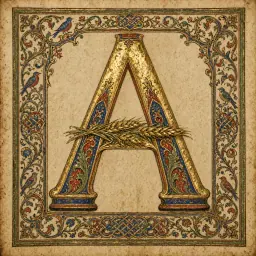
Open with the chapter’s first image
Psalms 119:1: “Blessed are the undefiled in the way, who walk in the law of the LORD.”
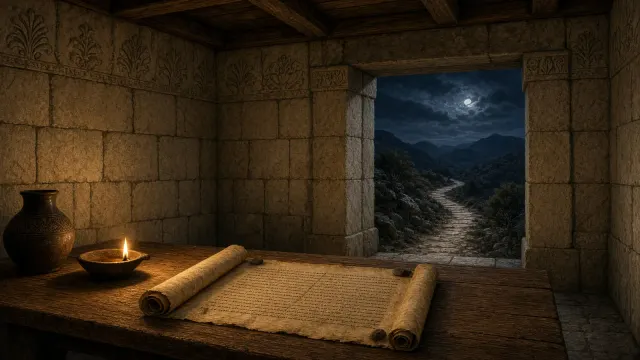
Slow down at the turning point
Psalms 119:84: “How many are the days of thy servant? when wilt thou execute judgment on them that persecute me?”
Keep this word trail visible
word, LORD, keep, statutes, testimonies, commandments
What to explain, in order
Teach the passage in this order. Each step names the verses it rests on, so every point can be shown in the text before it is applied.
Psalm 119
Twenty-two rooms
Begin by showing the structure. Psalm 119 is the longest chapter in the Bible, an acrostic in twenty-two sections of eight verses, one for each letter of the Hebrew alphabet, and every verse in a section begins with that letter. Many Bibles print the letter names, Aleph, Beth, and so on. Explain that the effect is a complete, ordered meditation on God's word from A to Z. Teach this first so learners are not overwhelmed. Tell them the lesson will walk through a handful of rooms and follow a few threads that run through the whole house.
Psalm 119:1-16
The word in many names
Read verses 1-16. Show that nearly every verse names God's word with a different term: law, testimonies, ways, precepts, statutes, commandments, judgments, word. Explain each briefly: law as instruction, testimonies as God's witness, precepts as charges, statutes as engraved decrees, judgments as rulings. Then teach the cluster of verses 9-16 around hiding the word in the heart. Point out that the psalm is addressed to God almost throughout; it is a prayer about the word, not a lecture. Teach that the word leads to God himself.
Psalm 119:25-32, 65-72
Affliction becomes a classroom
Read 119:25 and 119:28: my soul cleaveth to the dust, my soul melteth for heaviness. Explain quicken as give life, revive. Then read verses 65-72. Teach verses 67 and 71 carefully. The psalmist does not say suffering is good in itself; he says God used it to turn him back and to teach him. Then read verse 72 and verse 75. Speak gently to sufferers here, and do not tell anyone why God allowed their particular affliction. Let the psalmist's testimony be his, not a formula imposed on others.
Psalm 119:55, 62, 97, 147-148, 164
Midnight, dawn and all day
Now follow the clock through the psalm. Read each verse in turn and draw a clock on the board, marking night, midnight, before dawn, the night watches, all day, seven times a day. Explain that seven is a number of completeness. Teach that the psalmist's relationship with the word is not confined to one devotional slot; it runs through the whole day and into sleepless nights. Ask the class which times of day they already give to God and which they could. Keep it realistic for people with work and children.
Psalm 119:103, 105, 111, 162
Honey, lamp, heritage, spoil
Read the four image verses and treat each one separately. Honey for sweetness, connecting to Psalm 19:10. A lamp for the feet, an oil lamp lighting only the next few steps on a dark road, not the whole journey. An inheritance, the family land that could not be sold for ever. Great spoil, the plunder found after a victory, unexpected wealth. Explain that each image shows a different way the word serves us. Then read 119:89-91 to show that the word is settled in heaven and as reliable as creation itself.
Psalm 119:161-176
End with the wandering sheep
Read the last two sections. Show that enemies, princes and persecution are still present in verse 161, and that the psalmist responds with awe, joy, love, praise and great peace. Then read verses 174-176 and stop on the last verse. Explain that the psalm which began with blessed are the undefiled ends with I have gone astray. Read Luke 15:4-7 and Isaiah 53:6. Teach that the right end of devotion to God's word is not pride but a humble plea, seek thy servant, from someone who still remembers the commandments.
Where learners get stuck
The misreadings this passage tends to produce, and how to answer each from the text.
"Psalm 119 is about loving the Bible as a book."
The psalm's terms, law, testimonies, statutes, precepts, are God's own words, and the psalm is addressed to God: "With my whole heart have I sought thee" (119:10), "teach me thy statutes" (119:12). Love for the word is love for the God who speaks it. Jesus warned against searching the Scriptures without coming to him (John 5:39-40). Teach learners to read in order to meet God.
"If I memorise enough verses, I won't sin."
Hiding the word in the heart (119:11) is one of many actions in 119:9-16: seeking God with the whole heart, declaring, rejoicing, meditating, delighting. And the psalm ends with "I have gone astray like a lost sheep" (119:176). Memory is a gift and a help, but holiness is a life lived with God, dependent on his grace. Do not shame those who find memorising hard.
"Psalm 119:71 means God sends suffering to teach me lessons, so I should work out what I did wrong."
Verse 71 is the psalmist's testimony about his own affliction, "It is good for me that I have been afflicted", after God used it to turn him back (119:67). It does not tell us why any other person suffers, and Job and John 9 warn against that reasoning. The psalm also prays for relief from affliction (119:153). Let God use hardship for good without assuming every hardship is punishment.
"The lamp of 119:105 means God will show me my whole future."
An ancient oil lamp lit only the next step or two. "Thy word is a lamp unto my feet" (119:105) promises enough light for faithful steps, not a map of the whole road. The same psalm cries "When wilt thou comfort me?" (119:82) and waits in the dark. Trust God's word for today's steps, and leave the future in his hands.
Learning objectives
- Trace the psalm’s repeated vocabulary for God’s revealed instruction.
- Identify how obedience, understanding, prayer, and delight reinforce one another.
- Compare the psalmist’s responses to affliction, ridicule, delay, and danger.
- Explain how time of day becomes part of the psalmist’s practice.
- Distinguish the psalm’s confidence in God’s word from confidence in personal performance.
- Explain why verse 176 is a fitting, unsettled ending rather than a contradiction.
Teacher preparation
- Mark the twenty-two eight-verse sections and explain the Hebrew alphabetic acrostic, which the English text cannot reproduce.
- List the recurring terms law, testimonies, precepts, statutes, commandments, judgments, word, and ways; do not flatten every term into one technical definition.
- Read verses 25–32, 65–72, 81–88, 97–112, 145–152, and 169–176 aloud beforehand so the movement through trouble, learning, and prayer is fresh.
- Prepare the older KJV senses of quicken as give life, prevent in verses 147–148 as go before, and offend in verse 165 as stumble.
- Plan enough room for the final verse. After 175 verses of devotion, the psalmist still says, 'I have gone astray like a lost sheep,' which keeps the lesson wonderfully honest.
Evidence and interpretation checks
Explicit
Verses 9–16 join cleansing one’s way with taking heed to the word, hiding it in the heart, speaking it, rejoicing in it, meditating on it, and refusing to forget it.
Scripture-supported
Verses 67 and 71 explicitly connect affliction with learning: the psalmist says he went astray before affliction and later calls affliction good because through it he learned God’s statutes.
Strong inference
Because the psalm repeatedly asks God to teach, give understanding, incline the heart, order the steps, and give life, devotion here is best read as dependent obedience rather than self-made moral mastery.
Possible or traditional reading
Traditionally Psalm 119 is read as an alphabetic celebration of Torah, with each eight-verse stanza corresponding to a Hebrew letter. That structure is well established, but the KJV page itself does not display the Hebrew letters.
Limit
Psalm 119 does not identify the psalmist, date the persecutions, or promise that faithful readers escape pain. Verses 81–88 and 107 plainly place intense suffering inside a life devoted to God’s word.
Discussion with answer guidance
1. In verses 9–16, what actions surround the statement about hiding God’s word in the heart?
What a good answer contains
A whole cluster of actions. The section asks, "Wherewithal shall a young man cleanse his way? by taking heed thereto according to thy word" (119:9), then says, "With my whole heart have I sought thee" (119:10), and "Thy word have I hid in mine heart, that I might not sin against thee" (119:11). It continues: "With my lips have I declared" (119:13), "I have rejoiced" (119:14), "I will meditate" and "have respect unto thy ways" (119:15), "I will delight myself" and "I will not forget thy word" (119:16). A good answer sees that memorising is one part of a life of seeking, speaking, rejoicing and remembering. A weak answer reduces verse 11 to a slogan about memory verses.
Show teacher guidance
Expect a cluster, not a slogan: taking heed, seeking, storing the word, declaring judgments, rejoicing, meditating, respecting God’s ways, delighting, and remembering.
2. What changes between verses 67 and 71 in the psalmist’s understanding of affliction?
What a good answer contains
Verse 67 looks back: "Before I was afflicted I went astray: but now have I kept thy word." Verse 71 interprets: "It is good for me that I have been afflicted; that I might learn thy statutes." Between them, verse 68 says, "Thou art good, and doest good", and later 119:75 adds "thou in faithfulness hast afflicted me." A strong answer sees that affliction was used by God to bring him back and to teach him, without calling suffering itself good. It should be careful with sufferers. A weak answer says all suffering is a lesson, or ignores verse 71 entirely.
Show teacher guidance
Verse 67 looks backward to wandering before affliction; verse 71 interprets affliction as a setting in which the statutes were learned. Keep both claims together.
3. How does the psalm use the clock in verses 55, 62, 97, 147–148, and 164?
What a good answer contains
The word fills the clock. "I have remembered thy name, O LORD, in the night" (119:55); "At midnight I will rise to give thanks unto thee" (119:62); the law is "my meditation all the day" (119:97); "I prevented the dawning of the morning, and cried" and "Mine eyes prevent the night watches, that I might meditate in thy word" (119:147-148), prevent meaning to come before; "Seven times a day do I praise thee" (119:164). A good answer sees that the word shapes night, midnight, dawn and the whole day. A weak answer reads one time of day and misses the rhythm.
Show teacher guidance
Notice night remembrance, midnight thanksgiving, all-day meditation, prayer before dawn, meditation before the night watches, and praise seven times a day.
4. What do the images of honey, a lamp, an inheritance, and great spoil add in verses 103, 105, 111, and 162?
What a good answer contains
Each picture does its own work. "How sweet are thy words unto my taste" (119:103), sweetness and delight; "Thy word is a lamp unto my feet, and a light unto my path" (119:105), guidance for the next step in the dark; "Thy testimonies have I taken as an heritage for ever" (119:111), a lasting family possession; "I rejoice at thy word, as one that findeth great spoil" (119:162), the joy of discovering treasure after battle. A strong answer keeps them distinct: taste, light, inheritance, spoil. A weak answer flattens all four into the Bible is valuable.
Show teacher guidance
Let each image do its own work: sweetness, guidance, lasting possession, and delighted discovery. Do not reduce all four to 'the Bible is valuable.'
5. When enemies appear in verses 23, 51, 61, 85–87, 95, and 161, what does the psalmist repeatedly do instead of abandoning the word?
What a good answer contains
He keeps returning to the word. "Princes also did sit and speak against me: but thy servant did meditate in thy statutes" (119:23); "The proud have had me greatly in derision: yet have I not declined from thy law" (119:51); "The bands of the wicked have robbed me: but I have not forgotten thy law" (119:61); "They had almost consumed me upon earth; but I forsook not thy precepts" (119:87); "The wicked have waited for me to destroy me: but I will consider thy testimonies" (119:95); "my heart standeth in awe of thy word" (119:161). A good answer sees the repeated but. A weak answer misses that the word is his refuge under pressure.
Show teacher guidance
Track meditation, remembrance, consideration, continued obedience, awe, and prayer. The repeated pressure makes the repeated return visible.
6. Why does verse 176 end with a lost sheep after so many declarations of obedience?
What a good answer contains
Because even the most devoted heart still wanders and still needs God to come looking. "I have gone astray like a lost sheep; seek thy servant; for I do not forget thy commandments" (119:176). After 175 verses of love for God's word, the psalm ends with confession and a plea for the shepherd to seek him, as in Luke 15:4-7. A strong answer sees that devotion does not make us independent of grace; it makes us aware of our need. A weak answer finds the ending a contradiction, or skips it to end on a confident note.
Show teacher guidance
Require the final verse itself. The psalmist admits wandering, asks God to seek him, and still says he has not forgotten the commandments; mature devotion remains dependent.
Responsible application
Build a word-shaped day
Use the time markers in verses 55, 62, 97, 147–148, and 164 to design a daily pattern of reading, recall, prayer, and praise without turning the pattern into a merit score.
Let counsel come from the text
Use verse 24 as the model for a group decision: identify which command, testimony, or principle in the passage actually bears on the decision before opinions take over.
Leave room to be found
Use verse 176 to keep correction humble. When someone wanders, make restoration and renewed attention to God’s commands the goal rather than public embarrassment.
Session plans
Two timings of the same lesson. The shorter keeps the reading, the central discussion and one response; the longer gives the confusions and the application their own time.
45 minutes
Twenty-two rooms
Show the acrostic structure in a Bible that prints the Hebrew letters. Read 119:1-2.
Hidden in the heart
Read 119:9-16 and take question one. Address confusions one and two.
Affliction
Read 119:67-72 and take question two. Address confusion three with care.
The clock
Read the clock verses and take question three. Draw the clock on the board.
Images and enemies
Read 119:103, 105, 111 and 162 and take question four. Then read 119:23, 51, 87 and take question five. Address confusion four.
The lost sheep
Read 119:176 and take question six. Read the key verse together and pray verse 176.
90 minutes
The longest chapter
Show the structure of Psalm 119. Have different people read the first verse of several sections.
Many names
Read 119:1-16. List the names for God's word. Take question one and confusions one and two.
Dust and affliction
Read 119:25-32 and 119:65-75. Take question two and confusion three. Allow time for testimony if anyone wishes.
The clock
Read the clock verses and take question three. Ask what times of day they could give to the word.
Honey, lamp, heritage, spoil
Read the four image verses and 119:89-91. Take question four and confusion four.
Under pressure
Read 119:23, 51, 61, 85-87, 95 and 161-165. Take question five.
Seek thy servant
Read 119:169-176 and Luke 15:4-7. Take question six.
Handout and prayer
Read the key verse together and pray 119:18 for open eyes.
Adapting the lesson
Children
Use one section only, 119:9-16 or 119:105-112. Bring a torch and turn off the lights; walk a few steps with the torch while reading 119:105. Let children taste honey for 119:103 if allergies allow. Teach 119:11 or 119:105 by heart. End with 119:176 and a toy sheep: when we wander, God comes to find us.
Youth
Start with 119:9: how can a young person keep their way pure. Talk honestly about temptation and the help of God's word. Use the clock verses to plan realistic times with Scripture. Spend time on 119:67 and 71 for those who have been through hard times. End with 119:176 and grace for those who have wandered.
Adults
Give time to the structure and the many terms for God's word. Discuss how adults keep Scripture in a busy life, and how affliction has taught them. Use 119:89-96 to discuss the reliability of God's word in a changing world. Read 119:136 and ask whether they weep over the world's disobedience. End with 119:176 and humility.
One to one
Ask how they are relating to God's word right now: sweet, a duty, or neglected. Read the section that fits. If they are suffering, read 119:25-28 and 119:50 slowly. If they have wandered, read 119:176 and pray it together. Help them choose one verse to carry this week.
Song and video learning lab
A song or video may interpret, compress, or dramatize the text. Its value becomes clearer when its choices are compared with Scripture.
- Before the media: the exact passage and its central movement.
- During the media: the words, people, events, and emotions the artist emphasizes.
- After the media: what it clarifies, what it leaves out, and what belongs back in the biblical text.
Handout
One page for learners to take home. The print button prints this section alone.
Psalm 119
The passage in brief
Psalm 119 is the longest chapter in the Bible, a prayer in twenty-two sections, one for each letter of the Hebrew alphabet, all about God's word. The psalmist seeks God with his whole heart, hides God's word in his heart, learns from affliction, meditates at night, at dawn and all day, and finds the word sweet as honey, a lamp for his feet, a lasting inheritance and great treasure. Under pressure from enemies he keeps returning to it, and he ends by asking God to seek him like a lost sheep.
A verse to keep
Thy word is a lamp unto my feet, and a light unto my path.
Psalms 119:105 · King James Version
Questions to take home
Which of the four images in 119:103, 105, 111 and 162 best describes what God's word is to you?
When during the day could you make room for God's word, as the psalmist does?
Why do you think the psalm ends with a lost sheep asking God to seek him?
This week
Read one eight-verse section of Psalm 119 each day this week and pray one verse from it.
Music and video connected to the passage
Related media appears when its Scripture reference overlaps this study. Music and video can illuminate a theme while the biblical text remains the foundation.