
The big picture
Psalm 119 takes the Hebrew alphabet and turns it into a sustained examination of life before God. Twenty-two stanzas move through law, testimony, precept, commandment, judgment, promise, word, and way, yet the vocabulary never becomes mechanical because each stanza places the same divine instruction inside a different human condition. The speaker delights, studies, remembers, waits, suffers, fears, speaks before kings, rises at midnight, faces lies and persecution, and repeatedly asks to be taught. The Book of Psalms lets confidence and dependence remain together throughout the chapter. The servant can claim that he has kept the word and, in the next breath, ask to be upheld, revived, protected, or given understanding. Affliction does not cancel delight, and delight does not cancel danger. The closing stanza finally reveals the deepest pattern of the whole alphabet: after all the vows of fidelity, the servant still says that he has gone astray like a lost sheep and asks God to seek him.
In this chapter
- Aleph: The Ideal Becomes a Prayer Psalms 119:1-8
Psalm 119 opens with an ideal life described from the outside: the undefiled walk in the law, keep the testimonies, seek God with the whole heart, and avoid iniquity.
- Beth: What Is Hidden in the Heart Reaches the Lips Psalms 119:9-16
The question concerns a person’s “way,” so Psalm 119 does not treat purity as the mere possession of correct information.
- Gimel: A Stranger Receives Counselors Psalms 119:17-24
A vulnerable servant asks for life, opened eyes, and understanding.
- Daleth: From the Dust to a Running Path Psalms 119:25-32
The stanza begins almost on the ground.
- He: Understanding Must Reach Desire and Attention Psalms 119:33-40
A chain of imperatives gives this stanza its shape: teach, give understanding, make me go, incline my heart, turn away my eyes, establish the word, turn away reproach, and revive me.
- Vau: The Commandments Open Room to Speak Psalms 119:41-48
The answer to a reproaching person begins, surprisingly, with a prayer for mercy and salvation.
- Zain: The Remembered Word Becomes a Song in the Night Psalms 119:49-56
Memory carries this stanza from beginning to end.
- Cheth: A Chosen Portion Creates a Chosen Company Psalms 119:57-64
“Thou art my portion” is spoken before Psalm 119 mentions that the wicked have robbed the servant.
- Teth: Goodness Is Examined Through Affliction Psalms 119:65-72
Goodness is tested against affliction rather than discussed in isolation.
- Jod: The Maker Is Asked to Keep Teaching Psalms 119:73-80
The servant looks back to creation at the scale of his own body: “thy hands have made me and fashioned me.” Psalm 119 then turns that fact into a reason to ask for understanding.
- Caph: Hope Speaks While Strength Is Nearly Spent Psalms 119:81-88
Hope in this stanza does not look strong.
- Lamed: The Threatened Life Belongs Within an Enduring Order Psalms 119:89-96
After a stanza of failing strength, Psalm 119 lifts its view to what does not fail.
- Mem: The Student Names the Source of His Understanding Psalms 119:97-104
The claims are deliberately bold: the servant is wiser than enemies, understands more than teachers, and has more understanding than the ancients.
- Nun: The Lamp Illuminates a Dangerous Path Psalms 119:105-112
“A lamp unto my feet” is often remembered without the conditions that make the lamp necessary.
- Samech: The Shield Does Not Make the Speaker Self-Sustaining Psalms 119:113-120
The stanza begins with a sharp moral preference: vain thoughts are hated, and the law is loved.
- Ain: The Servant Asks God to Stand Behind His Cause Psalms 119:121-128
A claim about the servant’s conduct opens the stanza: he has practiced judgment and justice.
- Pe: Opened Words, an Open Mouth, and Overflowing Eyes Psalms 119:129-136
The stanza is full of openings and movement.
- Tzaddi: A Small Person Appeals to Enduring Righteousness Psalms 119:137-144
Righteousness is the fixed center of this stanza.
- Koph: The Enemies Draw Near, but They Are Not the Nearest Presence Psalms 119:145-152
Prayer stretches across the clock in this stanza.
- Resh: The Plea for Life Is Made Three Times Psalms 119:153-160
“Plead my cause” gives this stanza the language of advocacy.
- Schin: Princes Do Not Receive the Deepest Awe Psalms 119:161-168
Princes have enough power to persecute the servant without cause, yet Psalm 119 says that his deepest awe is directed elsewhere: his heart stands in awe of God’s word.
- Tau: The Alphabet Ends with a Request to Be Found Psalms 119:169-176
The final stanza sounds familiar because Psalm 119 never graduates beyond the need expressed in its earlier prayers.


Scripture beside the summary
Psalms · King James Version · 176Psalms 119:1-8
Aleph: The Ideal Becomes a Prayer
Psalm 119 opens with an ideal life described from the outside: the undefiled walk in the law, keep the testimonies, seek God with the whole heart, and avoid iniquity. Then the grammar changes. Admiration becomes address, and the speaker moves from describing the blessed to asking that his own ways be directed toward the statutes. That turn keeps the first stanza from sounding like a certificate already earned. The Book of Psalms presents torah here as instruction, surrounded by overlapping words such as testimonies, precepts, commandments, and judgments. Together they give God’s communicated will a range larger than one legal category. The speaker wants to learn, keep, and praise, but the last line prevents resolve from becoming self-confidence: “O forsake me not utterly.” The chapter’s basic pattern is already complete. Commitment is genuine, yet it is spoken beside a need for help that only God can supply.

Deep dive
The psalm's form is unusually expansive: twenty-two stanzas follow the Hebrew alphabet, and each of a stanza's eight verses begins with its assigned letter. The arrangement gives the exploration a deliberate completeness without making its experiences uniform. The same vocabulary will meet very different conditions as the poem advances.
The Hebrew torah, translated "law," includes the sense of instruction. Here it belongs beside testimonies, precepts, commandments, and judgments as language for God's communicated will. These words overlap, but their variety prevents the chapter from reducing that communication to one narrow function. It directs, promises, witnesses, and judges.
The first decisive movement is grammatical. Statements about the blessed become an address to God and then a plea concerning the speaker's own ways. He admires the life described before claiming to have arrived at it. Even his promise to keep the statutes is joined to a request not to be utterly forsaken. That pairing establishes the pattern for the entire chapter: declared commitment is repeatedly accompanied by a need for help.
Words to trace: keep, Blessed, heart, statutes, walk, ways
Verse-by-verse path
- Psalms 119:1
The first word, ashrei, is the word that opens the whole Psalter (Psalm 1:1), and the longest chapter in the Bible begins with it: twenty two stanzas, one for each Hebrew letter, eight lines to a stanza, every line opening with that stanza’s letter. “Undefiled” is tamim, whole, the word for Noah (Genesis 6:9) and for an unblemished sacrifice.
- Psalms 119:2
“Testimonies” is edot, witness terms, from the same family as “the ark of the testimony” (Exodus 25:22) where the tablets were kept. “With the whole heart” appears six times in the psalm (verses 2, 10, 34, 58, 69, 145), and the first time it is attached to seeking God himself, not the rules.
- Psalms 119:3
“Iniquity” is avlah, crookedness, the natural opposite of a way that runs straight. This is the last line of the psalm spoken about other people in the third person. From the next verse the speaker turns to God as “thou” and almost never turns away again.
- Psalms 119:4
“Thou” begins the line and the conversation. “Precepts” is piqqudim, from paqad, to appoint or oversee: charges given by someone who checks on them. The word occurs only in the Psalms, twenty four times, and twenty one of those are in this psalm.
- Psalms 119:5
“O that” renders achalai, a wishing cry found in only one other place, 2 Kings 5:3, where the captive Israelite girl says “Would God my lord were with the prophet”. “Statutes” is chuqqim, from a root meaning to engrave: decrees cut into stone.
- Psalms 119:6
“Have respect unto” means to look closely at, as the Hebrew nabat does. “Ashamed” is the fear that runs underneath the whole psalm, returning at verses 31, 46, 78, 80 and 116. “Commandments” is mitsvot, the orders of someone with the right to give them.
- Psalms 119:7
“Righteous judgments” is literally “judgments of thy righteousness”, mishpatim, the rulings of a judge. Praise is promised for a future day, once the learning is done, and the verb lamad, learn, marks this as a student’s psalm from its first stanza.
- Psalms 119:8
The Hebrew puts the object first, “thy statutes I will keep”, so the stanza’s last line can still open on its letter. Then comes a fear that the first seven lines never hinted at: “forsake me not utterly”, ad me’od, to the uttermost. The blessed man of verse 1 has become a man afraid of being left.
Psalms 119:1-8
King James Version1Blessed are the undefiled in the way, who walk in the law of the LORD.
2Blessed are they that keep his testimonies, and that seek him with the whole heart.
3They also do no iniquity: they walk in his ways.
4Thou hast commanded us to keep thy precepts diligently.
5O that my ways were directed to keep thy statutes!
6Then shall I not be ashamed, when I have respect unto all thy commandments.
7I will praise thee with uprightness of heart, when I shall have learned thy righteous judgments.
8I will keep thy statutes: O forsake me not utterly.
Psalms 119:9-16
Beth: What Is Hidden in the Heart Reaches the Lips
The question concerns a person’s “way,” so Psalm 119 does not treat purity as the mere possession of correct information. Attention to the word is joined to seeking God with the whole heart, and even that wholehearted search is followed by a request not to wander. The speaker knows that sincerity does not make losing direction impossible. What is hidden in the heart also refuses to remain hidden there. The word retained inwardly reaches the lips as the judgments from God’s mouth are declared. Memory, speech, meditation, attention, delight, and refusal to forget all belong to the same movement. The comparison with riches gives the testimonies a measure of value without turning the stanza into an attack on possessions. The Book of Psalms presents devotion here as active and affectionate. The word is treasured, spoken, considered, and enjoyed, not merely stored like information that never enters conduct or praise.

Deep dive
The concern is a person's "way," not merely the possession of correct information. The answer joins careful attention to God's word with a whole-hearted search for God himself. The speaker can therefore say that he has sought with his whole heart and immediately ask not to wander. Sincerity of desire does not remove the possibility of losing direction.
The word hidden in the heart is not hidden in order to remain unspoken. The lips declare the judgments that came from God's mouth. Reception becomes recollection and then utterance, giving the passage a movement through the whole person. The comparison with riches adds a question of value without turning the verses into an argument against owning anything. The testimonies are a source of joy comparable to great treasure. Meditation, attention, delight, and refusal to forget finish the stanza as connected activities. Its picture of fidelity is active and affectionate, far larger than an ability to repeat words from memory.
Words to trace: word, heart, statutes, Blessed, cleanse, commandments
Verse-by-verse path
- Psalms 119:9
The second stanza opens with a question, bammeh, “by what?” Na’ar can mean a boy or a young man of marrying age. “Cleanse” is zakah, to make clean or pure. “Taking heed” is shamar, to guard, the verb the whole psalm uses for keeping the law.
- Psalms 119:10
“Wander” is shagah, the verb of unintended sin, straying by mistake, which the sacrificial law treats in Leviticus 4:13 and Numbers 15:22. The fear is not of open rebellion but of drifting without noticing, which is why the whole heart is invoked.
- Psalms 119:11
“Hid” is tsafan, to store up as treasure is hidden, the verb of Proverbs 2:1, “hide my commandments with thee”. “Thy word” here is imrah, a saying, the second of the psalm’s two words for word, alongside davar. The stored saying works as a guard at the door.
- Psalms 119:12
Two different Hebrew words are both rendered “blessed” in the King James. Verse 1 used ashrei, the happiness of a person; here it is barukh, the word used when God himself is blessed. “Blessed art thou, O LORD” became the opening formula of Jewish prayer, and it is the only such benediction in the psalm.
- Psalms 119:13
“Declared” is sippar, to recount, to tell over in order, a word related to counting. The “judgments of thy mouth” are rulings God has spoken, and the speaker’s lips repeat them aloud. The law passes from one mouth to another.
- Psalms 119:14
This is the first of the psalm’s comparisons with wealth, which return at verses 72, 127 and 162. “Rejoiced” is sas, the glad excitement of someone who has come into money. The comparison is not that the testimonies are like riches, but that the joy is.
- Psalms 119:15
“Meditate” is siach, to muse, rehearse, talk under one’s breath. The verb and its noun turn up eight times in this psalm, more than in any other single chapter. “Have respect unto thy ways” is again nabat, look closely, and “ways” here is orchot, trodden paths.
- Psalms 119:16
“Delight myself” is sha’ashua, the delight of play; Isaiah 11:8 uses the verb for a nursing child playing over the cobra’s hole. “I will not forget” is the first of a refrain that returns at verses 61, 83, 93, 109, 141, 153 and in the very last line of the psalm.
Psalms 119:9-16
King James Version9Wherewithal shall a young man cleanse his way? by taking heed thereto according to thy word.
10With my whole heart have I sought thee: O let me not wander from thy commandments.
11Thy word have I hid in mine heart, that I might not sin against thee.
12Blessed art thou, O LORD: teach me thy statutes.
13With my lips have I declared all the judgments of thy mouth.
14I have rejoiced in the way of thy testimonies, as much as in all riches.
15I will meditate in thy precepts, and have respect unto thy ways.
16I will delight myself in thy statutes: I will not forget thy word.
Psalms 119:17-24
Gimel: A Stranger Receives Counselors
A vulnerable servant asks for life, opened eyes, and understanding. Psalm 119 says the wondrous things are already present in the law, yet seeing them still requires a gift of perception. The speaker calls himself a stranger in the earth, language that removes any easy assumption that his surroundings are secure possession. That insecurity becomes social when princes sit and speak against him. The imbalance is obvious: powerful people are discussing the servant, and the servant answers not by acquiring equal rank but by meditating in the statutes. Then the testimonies are called his “counsellors.” The Book of Psalms gives divine instruction the role normally occupied by trusted advisers. While princes speak against him, the words of God speak into his judgment. Reproach and contempt remain real, but they do not decide where counsel comes from. The stranger without worldly standing is not left without guidance.

Deep dive
The request for generous treatment names a purpose: life continued in obedience. The appeal to open the eyes then makes understanding something received, not simply something guaranteed by having the words available. The wonders are already in the law; the speaker asks for the capacity to see them. Calling himself a stranger on the earth adds the vulnerability of someone who cannot treat his surroundings as a secure possession.
That insecurity becomes social when princes sit and speak against him. The psalm does not identify a court case or name the rulers, but it makes the imbalance of standing clear. The servant's answer is meditation, followed by the striking description of the testimonies as his counselors. While powerful people speak against him, God's words speak into his deliberation. The stanza thus gives instruction a role usually associated with trusted advisers. What the stranger lacks in worldly standing is answered by a source of counsel his opponents do not control.
Words to trace: commandments, servant, testimonies, bountifully, breaketh, contempt
Verse-by-verse path
- Psalms 119:17
“Deal bountifully” is gemol, the gimel word that opens this stanza, the same verb as Psalm 116:7. Life is asked for with a purpose attached: that I may live, and keep. The prayer for life will be repeated through the psalm, often in the old word “quicken”.
- Psalms 119:18
“Open” is gal, uncover, as a veil is lifted. “Wondrous things” is niphla’ot, the word for the wonders in Egypt (Exodus 3:20). The speaker assumes the law already holds marvels and that the problem is his sight, not the text.
- Psalms 119:19
“Stranger” is ger, a resident foreigner with no land of his own, as Abraham called himself at Hebron (Genesis 23:4) and David in Psalm 39:12. An alien depends on knowing the local law, and he has no claim on anyone to tell him it. Hence: hide not.
- Psalms 119:20
“Breaketh” is garas, a rare verb for being crushed or ground; Lamentations 3:16 uses it for teeth broken on gravel. The longing is described as grinding the soul down, and “at all times” gives it no rest.
- Psalms 119:21
“Rebuked” is ga’ar, the verb for God rebuking the Red Sea in Psalm 106:9. “The proud” are the zedim, the insolent and presumptuous, who appear six times as the psalm’s chief opponents. The King James links “cursed” to the proud; others divide the line “cursed are they which do err”.
- Psalms 119:22
“Remove” is gal again, the very syllable that opened verse 18, but from a different root: galal, to roll away, as at Gilgal where God “rolled away the reproach of Egypt” (Joshua 5:9). The veil was rolled off his eyes; now he asks for the disgrace to be rolled off his back.
- Psalms 119:23
Princes, sarim, are court officials, and they “sit” as a council sits to deliberate. The one accused sits too, meditating. The contrast recalls Psalm 1:1 and its “seat of the scornful”: two ways of sitting, and the servant has chosen his.
- Psalms 119:24
“My counsellors” is literally “men of my counsel”, the advisers a king keeps at court. Against the council of princes in the previous verse, he has his own: the testimonies. “Delight” is the plural of sha’ashua, the play word of verse 16.
Psalms 119:17-24
King James Version17Deal bountifully with thy servant, that I may live, and keep thy word.
18Open thou mine eyes, that I may behold wondrous things out of thy law.
19I am a stranger in the earth: hide not thy commandments from me.
20My soul breaketh for the longing that it hath unto thy judgments at all times.
21Thou hast rebuked the proud that are cursed, which do err from thy commandments.
22Remove from me reproach and contempt; for I have kept thy testimonies.
23Princes also did sit and speak against me: but thy servant did meditate in thy statutes.
24Thy testimonies also are my delight and my counsellors.
Psalms 119:25-32
Daleth: From the Dust to a Running Path
The stanza begins almost on the ground. The speaker’s soul cleaves to the dust and then “melteth for heaviness,” images of a person whose vitality and shape seem close to giving way. Psalm 119 does not postpone teaching until sorrow has passed. In the middle of that condition, the servant asks to be revived, taught, made to understand, and strengthened according to the word. The language of attachment then changes its object. The person who clung to dust says that he has stuck to the testimonies. Lying is to be removed, truth is chosen, and the law is requested as a gracious gift. The final image makes the contrast bodily. Instead of lying in dust, the speaker expects to run in the way of the commandments when God enlarges his heart. The Book of Psalms turns inward renewal into room for movement. The path has not disappeared, but the person can move freely upon it.

Deep dive
The stanza begins almost at ground level. The soul clings to dust, and the plea to be "quickened" asks to be given life or renewed vitality. Later, the soul melts under heaviness. These are not images of mild distraction; they describe a person whose strength and shape seem to be failing. Teaching and understanding are requested within that condition, not postponed until distress has ended.
The language of attachment changes its object. The speaker who clings to dust says that he has stuck to the testimonies, and the one weighed down by sorrow anticipates running. Between those positions come the removal of the lying way, the choice of truth, and a plea for the law to be graciously granted. The final enlarged heart is the capacity for willing movement, not a medical description. The commandments are presented as a path on which renewed life can move freely. The change from dust to running is the stanza's argument in bodily form.
Words to trace: soul, word, chosen, cleaveth, commandments, declared
Verse-by-verse path
- Psalms 119:25
“Cleaveth” is davaq, the verb of Genesis 2:24, where a man cleaves to his wife; here the soul cleaves to dust, the stuff of the grave (Genesis 3:19). “Quicken” meant make alive in 1611, as in “the quick and the dead” (Acts 10:42). The psalm uses the word eleven times.
- Psalms 119:26
“I have declared my ways” uses sippar again, to recount: he has given God an account of his life, and been answered. The request that follows is not for anything new but for the same lesson as verse 12, teach me thy statutes.
- Psalms 119:27
“Make me to understand” is a causative verb from bin, to discern between things. “Talk” is siach, the meditation word of verse 15, now turned outward. The wondrous works are the niphla’ot of verse 18, the things he asked to have his eyes opened to.
- Psalms 119:28
“Melteth” is dalaf, to drip or leak, the word for a roof letting in water (Ecclesiastes 10:18). The soul is draining away drop by drop with grief. “Strengthen” is qum, make me stand, the reverse of lying in the dust of verse 25.
- Psalms 119:29
“The way of lying” could be his own tendency or the pressure of liars around him; the Hebrew does not say which. “Grant me thy law graciously” is literally “be gracious to me with thy law”: torah is asked for as a gift of favour, not a yoke.
- Psalms 119:30
“The way of truth” is derekh emunah, the way of faithfulness, a road chosen. “Laid before me” is shivviti, the verb of Psalm 16:8, “I have set the LORD always before me”: a reference point kept in view, as a builder keeps his line.
- Psalms 119:31
“Stuck” is davaq, the same verb as “cleaveth” in verse 25. The stanza has turned around: the soul that clung to the dust now clings to the testimonies. The fear of shame from verse 6 is back, spoken as a prayer.
- Psalms 119:32
The stanza that began lying in the dust ends running. “Enlarge my heart” is from rachav, to make broad, the opposite of a narrow strait; 1 Kings 4:29 speaks of Solomon’s “largeness of heart”. Room inside is what lets the feet move.
Psalms 119:25-32
King James Version25My soul cleaveth unto the dust: quicken thou me according to thy word.
26I have declared my ways, and thou heardest me: teach me thy statutes.
27Make me to understand the way of thy precepts: so shall I talk of thy wondrous works.
28My soul melteth for heaviness: strengthen thou me according unto thy word.
29Remove from me the way of lying: and grant me thy law graciously.
30I have chosen the way of truth: thy judgments have I laid before me.
31I have stuck unto thy testimonies: O LORD, put me not to shame.
32I will run the way of thy commandments, when thou shalt enlarge my heart.
Psalms 119:33-40
He: Understanding Must Reach Desire and Attention
A chain of imperatives gives this stanza its shape: teach, give understanding, make me go, incline my heart, turn away my eyes, establish the word, turn away reproach, and revive me. Psalm 119 therefore refuses to isolate knowledge from desire, attention, and movement. The servant can delight in the commandments and still ask God to bend his heart toward the testimonies rather than covetousness. He can know that vanity is empty and still ask that his eyes be redirected from it. The problem is not a shortage of available instruction. Competing desires and objects of attention can pull the person elsewhere. Even feared reproach enters the appeal from outside. The Book of Psalms answers all of this with a vision of formation involving the whole person. Understanding must become walking, longing must be sustained, sight must be governed, and reverence must reach conduct. No single faculty is asked to carry the entire work.

Deep dive
The succession of verbs gives this stanza the shape of an extended appeal for formation. Teaching is followed by understanding, walking, an inclined heart, and redirected eyes. The speaker does not divide the problem neatly between an informed mind and an automatically obedient body. The whole person requires direction, and the repeated requests keep that dependence audible even while delight is explicitly affirmed.
Covetousness appears as a rival inclination of the heart, while vanity is something the eyes may continue to attend to. The problem is therefore not only a lack of available instruction. Attention and desire can move toward something else. The petition concerning feared reproach adds pressure from outside, but the final return to longing and renewed life brings the focus back to God's righteousness. The stanza treats understanding as a living relationship between knowledge, appetite, sight, movement, and reverence. No single faculty is asked to carry the whole work alone.
Words to trace: fear, heart, keep, quicken, Turn, beholding
Verse-by-verse path
- Psalms 119:33
“Teach me” is horeni, from yarah, the verb from which torah takes its name: torah is instruction before it is legislation. “Unto the end” translates eqev, which can also mean reward or consequence; some read “I will keep it as its reward”.
- Psalms 119:34
Almost every line of this stanza opens with a causative verb, because the letter he is how Hebrew forms them: teach me, make me understand, make me go, incline, turn away. “Observe” is shamar once more, and the whole heart makes its third appearance.
- Psalms 119:35
“Path” is netiv, a narrow footpath rather than a highway. “Make me to go” is literally “make me tread”. The second half is telling: “therein do I delight”. The desire is already there; what he asks for is the legs.
- Psalms 119:36
“Covetousness” is betsa, profit made by cutting a corner or cutting a throat; Judah uses the word when he asks “What profit is it if we slay our brother?” (Genesis 37:26). The heart is pictured as something that leans, and he asks God to bend it the other way.
- Psalms 119:37
“Vanity” is shav, emptiness, the word in the commandment against taking God’s name “in vain” (Exodus 20:7). Numbers 15:39 warns against going “after your own eyes”. The eyes are asked to be made to pass over worthless sights, and life is asked for in their place.
- Psalms 119:38
“Stablish” is haqem, make stand, the verb for God confirming a covenant or promise. The last clause is ambiguous in Hebrew: “which is for thy fear” can describe the word that produces reverence, as many modern versions take it, or the servant, as the King James does.
- Psalms 119:39
Two fears sit side by side: the fear of God in the previous line and the fear of disgrace in this one. What reproach he dreads is not specified; it may be the shame of failing, or the taunts of verse 42. The reason offered is simple: thy judgments are good.
- Psalms 119:40
“Behold” is hinneh, the he word, and it presents his longing as evidence. “Longed” is ta’av, a rare verb that returns in the last stanza (verse 174). The plea for life is now grounded in God’s righteousness rather than in the speaker’s record.
Psalms 119:33-40
King James Version33Teach me, O LORD, the way of thy statutes; and I shall keep it unto the end.
34Give me understanding, and I shall keep thy law; yea, I shall observe it with my whole heart.
35Make me to go in the path of thy commandments; for therein do I delight.
36Incline my heart unto thy testimonies, and not to covetousness.
37Turn away mine eyes from beholding vanity; and quicken thou me in thy way.
38Stablish thy word unto thy servant, who is devoted to thy fear.
39Turn away my reproach which I fear: for thy judgments are good.
40Behold, I have longed after thy precepts: quicken me in thy righteousness.
Psalms 119:41-48
Vau: The Commandments Open Room to Speak
The answer to a reproaching person begins, surprisingly, with a prayer for mercy and salvation. Psalm 119 does not first ask for a sharper argument. The servant wants God’s promised rescue to give him something substantial to say. He also asks that the word of truth not be taken utterly from his mouth, so speech itself remains dependent on divine help. Then the stanza makes its most striking connection: seeking the precepts is associated with walking “at liberty.” In the Book of Psalms, the commandments are not the prison from which freedom must escape. They create room for confident movement and for testimony before kings without shame. The kings are not reported to become friendly; the change is in the servant’s footing before them. Love, lifted hands, meditation, and speech close the stanza. Devotion here involves the body as well as the mind, and freedom appears as the capacity to live openly within the instruction the servant loves.

Deep dive
The desired answer to the reproaching person begins with God's mercy arriving, not with the speaker devising a better retort. Salvation according to the word will give him something substantial to say. His next request concerns the word of truth remaining in his mouth. Speech is both the hoped-for result of deliverance and something for which he still needs help.
The declaration of walking "at liberty" creates a productive contrast with keeping the law. In this stanza, the precepts are not the confinement from which freedom must escape. Seeking them is associated with room to walk and the capacity to speak before kings without shame. That does not mean the kings have become friendly; their response is not reported. The change concerns the speaker's footing before them. The lifted hands at the close add a visible gesture to meditation and love. The devotion described is neither silent assent nor merely outward compliance; mouth, movement, affection, and hands participate together.
Words to trace: word, commandments, loved, answer, ashamed, continually
Verse-by-verse path
- Psalms 119:41
Very few Hebrew words begin with vav, the stanza’s letter, so nearly every line begins with vav as “and”. “Mercies” is plural, chasadim, and “even thy salvation” explains what those mercies would look like in practice: rescue, according to the promise.
- Psalms 119:42
“Reproacheth” is charaf, to taunt or defy, the verb for Goliath defying the ranks of Israel (1 Samuel 17:10). The speaker wants an answer to throw back, and he wants it to be a word, davar, borrowed from God’s own, since his own would not hold.
- Psalms 119:43
Ad me’od, “utterly”, returns from verse 8. The fear this time is of being struck dumb: of having the word of truth taken out of his mouth when he needs to answer. The mouth is where the word lives for this speaker; losing it there would be losing it.
- Psalms 119:44
Three words for time are stacked in a row: tamid, continually; le’olam, for ever; va’ed, and ever. The Hebrew piles them up because one would not be enough. The verse is a promise with no end date, spoken by someone who has just admitted his fear of failing.
- Psalms 119:45
“At liberty” is barchavah, in a broad place, from the same root as “enlarge” in verse 32. Freedom is imagined as room to walk. The surprise is the reason given: he walks freely because he seeks the precepts, the charges, of verse 4.
- Psalms 119:46
The Augsburg Confession, read before the Emperor Charles V in 1530, carried this verse on its title page. “Before kings” gives the courage of the Vav stanza a setting: the testimonies spoken aloud in a royal court, without shame, which verse 6 had feared.
- Psalms 119:47
The first time in the psalm that the speaker says he loves the commandments. Love for the law returns again and again, as at verses 97, 113, 127 and 167. “Delight myself” is sha’asha again, the verb of a child’s play.
- Psalms 119:48
Lifted hands were the posture of prayer and of oath (Psalm 28:2, Genesis 14:22). Here the hands are raised toward the commandments themselves, an image with no exact parallel. “Which I have loved” is repeated from the previous line, and the stanza ends in meditation.
Psalms 119:41-48
King James Version41Let thy mercies come also unto me, O LORD, even thy salvation, according to thy word.
42So shall I have wherewith to answer him that reproacheth me: for I trust in thy word.
43And take not the word of truth utterly out of my mouth; for I have hoped in thy judgments.
44So shall I keep thy law continually for ever and ever.
45And I will walk at liberty: for I seek thy precepts.
46I will speak of thy testimonies also before kings, and will not be ashamed.
47And I will delight myself in thy commandments, which I have loved.
48My hands also will I lift up unto thy commandments, which I have loved; and I will meditate in thy statutes.
Psalms 119:49-56
Zain: The Remembered Word Becomes a Song in the Night
Memory carries this stanza from beginning to end. The servant first asks God to remember the word that caused him to hope, meaning that the promise must become effective in the present. Then the servant himself remembers earlier judgments and the LORD’s name in the night. Psalm 119 places divine remembrance and human recollection across from each other while the setting remains difficult. Affliction, ridicule from the proud, and horror at those who abandon the law are not edited out of the scene. The word has given life within those conditions, not by pretending they are gone. The most vivid line calls the statutes songs “in the house of my pilgrimage.” The Book of Psalms takes what could sound like formal instruction and makes it singable in a temporary dwelling. At night, when the surrounding pressure has not lifted, remembered words and remembered name become companionship. The stanza makes memory an active shelter rather than a backward glance.

Deep dive
The stanza's first request asks God to remember the word on which he has caused the servant to hope. This is an appeal for the promise to become effective in the present, not an explanation that God has misplaced information. The speaker then remembers God's earlier judgments and his name in the night. Divine remembrance and human recollection face each other across the stanza.
The setting remains difficult: affliction, derision from the proud, and horror at the abandonment of the law. Comfort does not depend on pretending those circumstances have changed. The word has given life within them. Calling the statutes his songs in the house of his pilgrimage is therefore especially vivid. Instruction has become something singable in a temporary dwelling, and the remembered name occupies the night. The language refuses the assumption that statutes belong only to formal pronouncements. Here they have rhythm, companionship, and a place in the hours when the surrounding pressure has not yet lifted.
Words to trace: kept, LORD, remembered, word, affliction, caused
Verse-by-verse path
- Psalms 119:49
Zekhor, “remember”, opens the zayin stanza, and remembering runs through it (verses 49, 52, 55): God is asked to remember as the speaker does. “Caused me to hope” puts the hope to God’s account. The promise was his idea in the first place.
- Psalms 119:50
“Comfort” is nechamah, a word found only here and in Job 6:10, where Job says his one consolation is that he has not denied the words of the Holy One. “Affliction” is oni, the psalm’s word for being brought low. The word has already given life; the verb is past.
- Psalms 119:51
“Had me in derision” is from lits, the verb behind the scorner of Psalm 1:1 and of Proverbs, who mocks what he will not learn. “Declined” is natah, to turn aside or swerve off the road, a picture the psalm keeps using for faithfulness as a straight line.
- Psalms 119:52
“Thy judgments of old” are rulings from long ago, me’olam, the cases on record. The speaker finds comfort in precedent: what God has judged before, he will judge again. The reflexive “comforted myself” shares its root with the nechamah of verse 50.
- Psalms 119:53
“Horror” is zal’afah, a burning, scorching heat. Psalm 11:6 uses the same root for the “horrible tempest”, a burning wind, and Lamentations 5:10 for the fever of famine. The feeling described is less like fear than like a flush of hot indignation.
- Psalms 119:54
“Songs” is zemirot, songs sung to strings. “The house of my pilgrimage” is the house where he lodges as a sojourner; Jacob uses the same word for the whole of his life before Pharaoh, “the days of the years of my pilgrimage” (Genesis 47:9). The statutes have been set to music, as this psalm sets them.
- Psalms 119:55
Remembering the name in the night is remembering in the dark, when there is nothing to read and no one to hear. The name stands in for the person. The second half ties the memory to practice: he remembered, and he kept.
- Psalms 119:56
“This I had” is zot hayetah li, “this has been mine”. What “this” is the Hebrew leaves open. It echoes the zot of verse 50, “this is my comfort”, so the stanza is framed by the word, and the comfort of the night appears to be the possession he means.
Psalms 119:49-56
King James Version49Remember the word unto thy servant, upon which thou hast caused me to hope.
50This is my comfort in my affliction: for thy word hath quickened me.
51The proud have had me greatly in derision: yet have I not declined from thy law.
52I remembered thy judgments of old, O LORD; and have comforted myself.
53Horror hath taken hold upon me because of the wicked that forsake thy law.
54Thy statutes have been my songs in the house of my pilgrimage.
55I have remembered thy name, O LORD, in the night, and have kept thy law.
56This I had, because I kept thy precepts.
Psalms 119:57-64
Cheth: A Chosen Portion Creates a Chosen Company
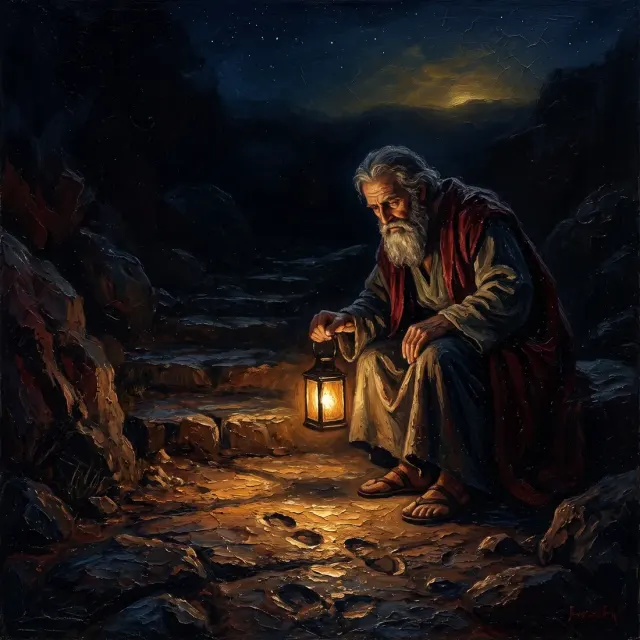
“Thou art my portion” is spoken before Psalm 119 mentions that the wicked have robbed the servant. That ordering matters. Loss is real, but it cannot exhaust the account of what belongs to him. The LORD is named as the deepest possession, even while the servant still asks for favor and mercy according to the word. The language never turns God into property that can be controlled. Reflection also precedes movement: the speaker thinks on his ways and then turns his feet toward the testimonies. Haste follows that considered decision, so prompt obedience is distinguished from thoughtlessness. Midnight thanksgiving carries the choice into an unlikely hour, and companionship with all who fear God gives it a social world. The Book of Psalms finally widens the scene to an earth full of divine mercy. Yet the stanza ends, not with self-congratulation, but with “teach me thy statutes.” A large claim about the world produces a fresh request for instruction.
Deep dive
Calling the LORD his "portion" identifies the speaker's deepest possession before the stanza mentions being robbed. The loss inflicted by the wicked is not denied, but it does not exhaust the account of what belongs to him. His appeal for favor remains whole-hearted and rests on mercy according to the word, so the language of possession never becomes ownership of God as a controllable resource.
The movement of the feet is preceded by reflection: he thinks on his ways and turns toward the testimonies. Haste follows that considered change, distinguishing prompt action from thoughtlessness. Midnight thanksgiving then brings the decision into an unlikely hour, while companionship broadens it into a shared life with all who fear God. The final view of an earth full of mercy opens the stanza beyond the threatened individual's circumstances. It closes by asking to be taught, joining a large claim about the world to an immediate need for further instruction.
Words to trace: keep, LORD, bands, commandments, companion, delayed
Verse-by-verse path
- Psalms 119:57
“Portion” is chelek, a share of land. The Levites received no territory because “the LORD is their inheritance” (Deuteronomy 10:9, Numbers 18:20). The Hebrew line is compressed and can be read “My portion is the LORD; I have said I will keep thy words”.
- Psalms 119:58
“I intreated thy favour” is literally “I have made thy face sweet” or stroked thy face, an idiom for pleading with a superior. Moses does it on the mountain after the golden calf (Exodus 32:11), and Saul claims to have done it at Gilgal (1 Samuel 13:12).
- Psalms 119:59
“I thought on” is chishavti, I reckoned it up, as a man adds his accounts. The reckoning produces a movement of the feet: he turned them. Taking stock and changing direction are two halves of one sentence.
- Psalms 119:60
The second verb, hitmahmah, is the word for dithering. It describes Lot lingering in Sodom while the angels dragged him out (Genesis 19:16) and the Levite dawdling at his father-in-law’s house (Judges 19:8). The speaker claims the opposite of Lot.
- Psalms 119:61
“Bands” is chevlei, which can mean ropes or a company of people; 1 Samuel 10:5 uses it for a “company of prophets”. Either the gangs of the wicked have closed round him or their cords have. The King James “robbed” follows one reading of an uncertain verb.
- Psalms 119:62
Midnight was the hour of the last plague in Egypt (Exodus 12:29) and the hour Paul and Silas sang in prison (Acts 16:25). The Talmud (Berakhot 3b) says a harp hung over David’s bed and the north wind played it at midnight, waking him to study, and later Jewish midnight prayer grew out of this verse.
- Psalms 119:63
“Companion” is chaver, an associate or fellow, the word later taken up by the Pharisaic fellowships for their members. The company is defined by what its members share, fear of God and the keeping of the precepts, and not by family or tribe.
- Psalms 119:64
Psalm 33:5 says the earth is full of the goodness of the LORD; here it is full of his chesed, loyal love. A world that full still leaves the speaker asking for lessons: “teach me thy statutes” is a refrain of this psalm, heard at verses 12, 26, 64, 68, 124 and 135.
Psalms 119:57-64
King James Version57Thou art my portion, O LORD: I have said that I would keep thy words.
58I intreated thy favour with my whole heart: be merciful unto me according to thy word.
59I thought on my ways, and turned my feet unto thy testimonies.
60I made haste, and delayed not to keep thy commandments.
61The bands of the wicked have robbed me: but I have not forgotten thy law.
62At midnight I will rise to give thanks unto thee because of thy righteous judgments.
63I am a companion of all them that fear thee, and of them that keep thy precepts.
64The earth, O LORD, is full of thy mercy: teach me thy statutes.
Psalms 119:65-72
Teth: Goodness Is Examined Through Affliction
Goodness is tested against affliction rather than discussed in isolation. Psalm 119 says that God has dealt well, asks for good judgment, declares that God is good and does good, and then makes the difficult claim that affliction has been good for the servant because it taught him the statutes. The statement is personal and retrospective. It does not give a universal explanation for every person’s suffering. The speaker describes a change in his own course: before affliction he went astray, while afterward he kept the word. Meanwhile, the proud manufacture a lie, and their hearts are pictured as heavy and insensitive. Against their falsehood stands the servant’s delight. The final comparison with thousands of gold and silver measures what the law has come to be worth because of what it has taught him. The Book of Psalms traces goodness through changed conduct, learning, and valuation, giving the word substance instead of leaving “good” as a vague compliment.

Deep dive
Forms of goodness recur through the stanza: God has dealt well, good judgment is sought, God is good and does good, and affliction has proved good for the speaker's learning. The repetition does not turn suffering into something pleasant. It gives a particular account of its effect: before affliction he went astray, whereas afterward he kept the word. His statement concerns the course he describes, not a complete explanation for every person's suffering.
The proud manufacture a lie, and their hearts are compared to grease in an image of dull insensibility. Against that heaviness stands the speaker's delight in the law. The final comparison with thousands of gold and silver measures value through what instruction has accomplished in his life. Wealth is not mentioned because he has forgotten his practical troubles. It provides a scale large enough to make his changed judgment visible. The stanza traces goodness through conduct, learning, and valuation rather than leaving the word as an unexplained compliment.
Words to trace: good, afflicted, heart, statutes, teach, word
Verse-by-verse path
- Psalms 119:65
“Thou hast dealt well” is literally “good thou hast done”. The teth stanza leans on the word tov, good, which opens five of its eight lines. It begins with thanks for a promise already kept, before the stanza explains what that good involved.
- Psalms 119:66
“Good judgment” is tuv ta’am, literally goodness of taste: a sense of discernment, like a palate. Abigail’s “advice” is praised with the same word ta’am (1 Samuel 25:33), and David’s feigned madness is a change of it (1 Samuel 21:13).
- Psalms 119:67
“Went astray” is from shagag, the drifting of unintentional sin, cousin of the verb in verse 10. The confession is that ease led him off the road and hardship brought him back. The word “before”, terem, gives the stanza its letter.
- Psalms 119:68
“Thou art good, and doest good” is tov attah umetiv: character, then action, in three words. The second half is the refrain again, teach me thy statutes. The verse sits at the centre of the stanza devoted to goodness and names its source.
- Psalms 119:69
“Forged a lie” is tafelu sheqer, smeared a lie over me, from tafal, to plaster or whitewash. Job uses the same phrase of his friends: “ye are forgers of lies” (Job 13:4). The slander is painted on, and the speaker’s answer is his whole heart, the fifth use of the phrase.
- Psalms 119:70
A heart “as fat as grease” is a heart sealed in fat, dull and unfeeling. Isaiah 6:10 speaks of making “the heart of this people fat” so that it cannot understand. The proud are not only hostile; they have lost the capacity to be moved.
- Psalms 119:71
Tov again, and the affliction of verse 67 is revisited as a benefit. The verb for affliction, anah, means to be bowed down or humbled. The purpose clause states the gain precisely: that I might learn, the student’s verb of verse 7.
- Psalms 119:72
“Thousands of gold and silver” are thousands of pieces, a fortune counted in coin or weight. The idols of Psalm 115:4 were made of exactly these metals. The law is called “of thy mouth”, spoken law, and the stanza of goodness closes on the word “better”, tov once more.
Psalms 119:65-72
King James Version65Thou hast dealt well with thy servant, O LORD, according unto thy word.
66Teach me good judgment and knowledge: for I have believed thy commandments.
67Before I was afflicted I went astray: but now have I kept thy word.
68Thou art good, and doest good; teach me thy statutes.
69The proud have forged a lie against me: but I will keep thy precepts with my whole heart.
70Their heart is as fat as grease; but I delight in thy law.
71It is good for me that I have been afflicted; that I might learn thy statutes.
72The law of thy mouth is better unto me than thousands of gold and silver.
Psalms 119:73-80
Jod: The Maker Is Asked to Keep Teaching
The servant looks back to creation at the scale of his own body: “thy hands have made me and fashioned me.” Psalm 119 then turns that fact into a reason to ask for understanding. Being formed by God has not ended dependence on the maker. The one who gave existence is asked to keep giving the capacity to learn. Affliction is acknowledged as occurring in faithfulness, yet the speaker immediately asks for merciful kindness and tender mercies. Acceptance of purpose does not silence the desire for comfort. Other people enter the stanza in a constructive way as well. Those who fear God will be glad to see the servant, and he asks that they turn toward him. The Book of Psalms gives restoration a communal dimension without inventing a detailed conflict that the passage does not supply. The ending turns on shame: the proud who dealt perversely should be ashamed, while the servant asks for a sound heart so that his own life does not end there.
Deep dive
The appeal begins with creation at the scale of one human life. God's hands made and fashioned the speaker; he now asks for understanding from the same source. Being formed is not treated as the end of dependence on the maker. The one who gave existence is asked to continue giving the capacity to learn.
The speaker affirms that his affliction has occurred in faithfulness, then immediately asks for merciful comfort and tender care. Acceptance of a divine purpose does not silence the request for relief. Other people also enter the stanza twice: those who fear God will be glad to see him, and he asks that they turn toward him. The restoration sought has a communal dimension without a supplied account of estrangement or reconciliation. The final contrast concerns shame. The proud who dealt perversely should be ashamed, while the servant asks for a sound heart so that his own life does not end in disgrace.
Words to trace: ashamed, fear, word, afflicted, cause, comfort
Verse-by-verse path
- Psalms 119:73
Job says nearly the same: “Thine hands have made me and fashioned me” (Job 10:8), and Deuteronomy 32:6 asks “hath he not made thee, and established thee?” The craftsman is asked to finish the work: a made thing needs understanding before it can learn.
- Psalms 119:74
His survival will cheer others who fear God. The speaker thinks of himself as evidence: when they see him still standing, they will know hoping in the word was not foolish. The fearers are the company of verse 63.
- Psalms 119:75
The confession goes further than verse 71. Affliction was not only useful; God sent it “in faithfulness”, emunah, the same word used for God’s reliability. The speaker calls God right in what hurt him.
- Psalms 119:76
“Let, I pray thee” is yehi na. Hebrew builds its wishes with a verb form that begins with yod, the stanza’s letter, and five of these eight lines start with “let”. “Merciful kindness” is chesed, and “comfort” takes up the nechamah of verses 50 and 52.
- Psalms 119:77
“Tender mercies” is rachamim, from rechem, the womb: the love of a mother for the child she carried. Isaiah 49:15 asks whether a woman can forget her nursing child. “That I may live” is the simplest statement of what he needs from those mercies.
- Psalms 119:78
“Dealt perversely” is ivvetuni, they twisted me, a verb used for bending justice; Lamentations 3:36 speaks of subverting “a man in his cause”. “Without a cause” is literally “with falsehood”. The case against him was bent, and he retreats into meditation.
- Psalms 119:79
“Turn unto me” may imply that the God-fearers had kept away during his disgrace; that is an inference, not stated. The written Hebrew reads “and they shall know thy testimonies”; the scribes’ marginal reading, which the King James follows, is “those that have known”.
- Psalms 119:80
“Sound” is tamim, the same word as “undefiled” in verse 1. The speaker asks to become what the opening beatitude describes. The fear of shame, from verse 6, rounds off the stanza.
Psalms 119:73-80
King James Version73Thy hands have made me and fashioned me: give me understanding, that I may learn thy commandments.
74They that fear thee will be glad when they see me; because I have hoped in thy word.
75I know, O LORD, that thy judgments are right, and that thou in faithfulness hast afflicted me.
76Let, I pray thee, thy merciful kindness be for my comfort, according to thy word unto thy servant.
77Let thy tender mercies come unto me, that I may live: for thy law is my delight.
78Let the proud be ashamed; for they dealt perversely with me without a cause: but I will meditate in thy precepts.
79Let those that fear thee turn unto me, and those that have known thy testimonies.
80Let my heart be sound in thy statutes; that I be not ashamed.
Psalms 119:81-88
Caph: Hope Speaks While Strength Is Nearly Spent
Hope in this stanza does not look strong. The soul faints for salvation, the eyes fail while searching for the promised comfort, and the servant compares himself to a skin bottle darkened and shriveled in smoke. Psalm 119 allows expectation and exhaustion to occupy the same sentence. The old image is material and vulnerable, not a glass container remaining unchanged near a fire. The servant then asks how many days remain, because a mortal person cannot wait as though his time were unlimited. The proud dig pits and persecute him wrongfully, behavior set against the faithfulness of God’s commandments. They have almost consumed him on the earth, yet he has not abandoned the precepts. The Book of Psalms does not turn that fidelity into proof that danger cannot become severe. The final cry is still “quicken me,” and its ground is lovingkindness. Continued faithfulness is spoken from near depletion, not from an untouched life.
Deep dive
This stanza refuses to confuse hope with abundant remaining strength. The soul faints while hoping in the word, and the eyes fail while waiting for comfort. Both conditions occupy the same appeal. The familiar image of a "bottle in the smoke" concerns a skin vessel, liable to become shriveled and darkened, rather than a glass bottle sitting unchanged. It gives the prolonged affliction a material likeness without requiring a detailed reconstruction of the speaker's lodging.
The question about his remaining days intensifies the demand for judgment. A mortal servant cannot wait as though his time were unlimited. Meanwhile, the proud dig pits and persecute him wrongfully, directly contradicting the faithfulness ascribed to God's commandments. Their effort has nearly consumed him, but he distinguishes that near-destruction from abandoning the precepts. The final request for life is grounded in lovingkindness. Continued fidelity is presented alongside endangered existence, not as proof that the danger cannot become serious.
Words to trace: persecute, word, become, bottle, comfort, commandments
Verse-by-verse path
- Psalms 119:81
“Fainteth” is kaltah, is spent, used up, finished. The kaph stanza opens in exhaustion and the root kalah returns twice more (verses 82 and 87). Hope still holds, but the speaker is at the end of his reserves.
- Psalms 119:82
Eyes “fail” from watching for something that does not arrive, like a lookout staring down a road. The question “When wilt thou comfort me?” is the first time the psalm asks God how long. The comfort of verse 50 has become a thing waited for.
- Psalms 119:83
A wineskin hung in a tent with no chimney would blacken, dry and crack in the smoke. The speaker feels shrivelled and useless, like an old skin no one would pour new wine into. Even so, he has not forgotten the statutes, the refrain of verse 16.
- Psalms 119:84
“How many are the days of thy servant?” means “how few”: he has not long to wait. “Judgment” here is mishpat, but as a verdict carried out on his persecutors, not as one of God’s ordinances, which is why some counts treat this as a verse without a word for the law.
- Psalms 119:85
Pits were dug to trap game. “Which are not after thy law” is pointed: the law made a man liable for an uncovered pit that an animal fell into (Exodus 21:33). The proud dig pits for a person, flouting the very law the speaker keeps.
- Psalms 119:86
“Faithful” is emunah again: every commandment can be relied on, while the persecutors pursue him “wrongfully”, with falsehood, sheqer. The cry at the end, “help thou me”, is one Hebrew word, azreni.
- Psalms 119:87
“They had almost consumed me” is kim’at killuni, they had nearly finished me, the third use of kalah in the stanza. “Upon earth” can also be “in the land”. The line records how close it came and what he did not let go of.
- Psalms 119:88
The stanza of exhaustion ends asking for life according to chesed. “The testimony of thy mouth” is singular here, edut, a rare form in the psalm, as though the whole body of testimonies were one statement spoken aloud.
Psalms 119:81-88
King James Version81My soul fainteth for thy salvation: but I hope in thy word.
82Mine eyes fail for thy word, saying, When wilt thou comfort me?
83For I am become like a bottle in the smoke; yet do I not forget thy statutes.
84How many are the days of thy servant? when wilt thou execute judgment on them that persecute me?
85The proud have digged pits for me, which are not after thy law.
86All thy commandments are faithful: they persecute me wrongfully; help thou me.
87They had almost consumed me upon earth; but I forsook not thy precepts.
88Quicken me after thy lovingkindness; so shall I keep the testimony of thy mouth.
Psalms 119:89-96
Lamed: The Threatened Life Belongs Within an Enduring Order
After a stanza of failing strength, Psalm 119 lifts its view to what does not fail. The word is settled in heaven, divine faithfulness extends through generations, and the established earth continues according to God’s ordinances. The change of scale does not abandon the endangered servant. It locates his threatened life inside an order whose stability is not measured by the length of his present affliction. Then the servant says, “I am thine,” giving personal form to the broader statement that all created things serve God. Belonging becomes the basis of a request for salvation. Delight in the law is named as what kept him from perishing, while the wicked are still waiting to destroy him. The Book of Psalms refuses to invent their disappearance just because the horizon has widened. The final line has seen an end to every observed perfection, yet finds the commandment “exceeding broad.” Even this immense chapter does not claim to exhaust what it loves.
Deep dive
After the near-exhaustion of the preceding stanza, the view lifts toward heaven and the established earth. God's word is settled, his faithfulness extends through generations, and created things continue as his servants. The change of scale does not abandon the threatened speaker. It places him within an order whose endurance is not measured by the duration of his present danger.
His declaration "I am thine" then gives personal form to the larger claim that all things serve God. Belonging becomes the basis of a request for rescue, while delight in the law is identified as what kept him from perishing in affliction. The wicked are still waiting to destroy him, so the wider view has not supplied an invented report of their disappearance. The final contrast moves from the limits of everything he has seen to the extraordinary breadth of the commandment. Even this very long poem does not present itself as having exhausted the instruction it loves.
Words to trace: precepts, abideth, affliction, broad, commandment, consider
Verse-by-verse path
- Psalms 119:89
The lamed stanza lifts its eyes from the persecutors to the heavens. “Settled” is nitsav, stationed, standing firm like a pillar or an officer at his post. After the question about how few his days are (verse 84), the first word here is le’olam, for ever.
- Psalms 119:90
“Unto all generations” is ledor vador, generation after generation. The earth “abideth”, literally stands, because it was established. Some counts treat this as one of the few verses without one of the psalm’s words for the law, since “faithfulness” is not among them.
- Psalms 119:91
Heaven and earth stand “according to thine ordinances”, mishpatim, the same word as “judgments” elsewhere in the psalm. “All are thy servants” sets the whole of creation in the same household as the speaker, who calls himself “thy servant” again and again.
- Psalms 119:92
“Unless” is lulei, “had it not been”. The verse imagines a past that did not happen: without the law’s delight, he would have died in the affliction. “Delights” is the plural sha’ashuim again, the playful delight of verse 24.
- Psalms 119:93
“I will never forget” is le’olam lo eshkach, the for ever of verse 89 applied to his own memory. The reason is historical: the precepts have already given him life once, and he is not about to forget what saved him.
- Psalms 119:94
“I am thine, save me” is two Hebrew words and a verb: lekha ani, hoshi’eni. Ownership is offered as the grounds for rescue, as a servant belongs to a house and the house is bound to protect him.
- Psalms 119:95
“Waited for me” is qivvu, the same verb as waiting on the LORD in Psalm 27:14, turned to ambush. The wicked are patient too. “Consider” is etbonan, to give close attention; while they watch him, he studies.
- Psalms 119:96
“Perfection” is tikhlah, a word found only here, meaning completeness or finish. Everything complete has a limit; the speaker has seen the edge of every perfect thing. The commandment alone is “exceeding broad”, and he finds no edge to it.
Psalms 119:89-96
King James Version89For ever, O LORD, thy word is settled in heaven.
90Thy faithfulness is unto all generations: thou hast established the earth, and it abideth.
91They continue this day according to thine ordinances: for all are thy servants.
92Unless thy law had been my delights, I should then have perished in mine affliction.
93I will never forget thy precepts: for with them thou hast quickened me.
94I am thine, save me; for I have sought thy precepts.
95The wicked have waited for me to destroy me: but I will consider thy testimonies.
96I have seen an end of all perfection: but thy commandment is exceeding broad.
Psalms 119:97-104
Mem: The Student Names the Source of His Understanding
The claims are deliberately bold: the servant is wiser than enemies, understands more than teachers, and has more understanding than the ancients. Psalm 119 immediately gives the reasons, preventing the lines from becoming a celebration of personal brilliance. The commandments remain with him, the testimonies occupy his meditation, and the precepts are kept. Most importantly, the servant tells God, “thou hast taught me.” The source of understanding is divine instruction received and practiced, not youth defeating age or a pupil proving that teachers are unnecessary. The stanza also joins thought to conduct. Feet are restrained from evil ways, judgments are not abandoned, and understanding produces rejection of false paths. Then the word becomes sweeter than honey in the mouth. The Book of Psalms combines discernment with pleasure. What tastes sweet also clarifies where not to walk. Love, meditation, obedience, and learning belong to one sustained engagement rather than to separate compartments of devotion.
Deep dive
The claims to surpass enemies, teachers, and the ancients are bold, but the stanza repeatedly supplies their reason. The commandments remain with the speaker, the testimonies occupy his meditation, and the precepts are kept. The point is not that youth automatically outclasses age or that teachers are unnecessary. The decisive statement arrives in the address to God: "thou hast taught me." Understanding is attributed to the source and reception of instruction rather than to status alone.
The movement also joins thought to conduct. Feet are restrained from evil ways, judgments are not abandoned, and understanding results in hatred of the false way. Then the mouth tastes words sweeter than honey. The image adds pleasure to discernment without replacing it. What is sweet is also what clarifies the difference between paths. The stanza's delight is intellectually and ethically active: the speaker loves the words, considers them, follows them, and learns through that continuing engagement.
Words to trace: keep, meditation, precepts, understanding, ancients, commandments
Verse-by-verse path
- Psalms 119:97
Mah ahavti, “how I love”, opens the mem stanza with an exclamation rather than a statement. “Meditation” is sichah, the noun of the siach of verse 15, and “all the day” makes it the running content of his thoughts, not an hour set aside.
- Psalms 119:98
Wisdom here is practical and even strategic: wiser than enemies, able to see what they are about. The Hebrew uses a singular, “for it is ever with me”, treating the commandments as one companion he carries everywhere.
- Psalms 119:99
Hebrew makes its comparisons with the little word min, “from”, which begins with mem, and this stanza leans on it: than my enemies, than my teachers, than the ancients, from every evil way. The teachers presumably had the same testimonies; the difference claimed is that he meditates on them.
- Psalms 119:100
“The ancients” are zeqenim, the elders, whose age was supposed to give them wisdom. Job 12:12 states the common view, “With the ancient is wisdom”, and Elihu disputes it in Job 32:9. Here understanding comes from keeping the precepts, not from years.
- Psalms 119:101
“Refrained” is kala, to hold back or restrain, the verb Genesis 8:2 uses when the rain from heaven was restrained after the flood. His feet are held in, as a gate holds in a flock, so that they go only where the word goes.
- Psalms 119:102
The Hebrew makes “thou” emphatic: for thou, thou hast taught me. After the human teachers of verse 99 and the elders of verse 100, the speaker names the teacher who matters. Horetani is from yarah, the root of torah itself.
- Psalms 119:103
The palate is the organ of judgment in this psalm; verse 66 asked for “good taste”. Psalm 19:10 also calls God’s judgments sweeter than honey, and Ezekiel eats a scroll that is “as honey for sweetness” (Ezekiel 3:3). Words here are imrah, sayings.
- Psalms 119:104
Understanding comes from the precepts, and hatred of false ways comes from understanding: the order is deliberate. “False way” is orach sheqer, a path that lies about where it goes. The same line closes the ayin stanza at verse 128.
Psalms 119:97-104
King James Version97O how love I thy law! it is my meditation all the day.
98Thou through thy commandments hast made me wiser than mine enemies: for they are ever with me.
99I have more understanding than all my teachers: for thy testimonies are my meditation.
100I understand more than the ancients, because I keep thy precepts.
101I have refrained my feet from every evil way, that I might keep thy word.
102I have not departed from thy judgments: for thou hast taught me.
103How sweet are thy words unto my taste! yea, sweeter than honey to my mouth!
104Through thy precepts I get understanding: therefore I hate every false way.
Psalms 119:105-112
Nun: The Lamp Illuminates a Dangerous Path
“A lamp unto my feet” is often remembered without the conditions that make the lamp necessary. Psalm 119 immediately places severe affliction, a life continually in the hand, and a snare laid by the wicked on that illuminated path. Light matters because the traveler still has somewhere dangerous to walk. The image does not promise a map of every future detail or removal from all risk. The servant has sworn to keep the judgments, yet the oath is followed by requests for renewed life, acceptance of the mouth’s freewill offerings, and further teaching. Resolve has not made petition obsolete. The testimonies become an inheritance and the rejoicing of the heart, giving the endangered person something more lasting than the security of the next step. The Book of Psalms closes the stanza by joining outward and inward direction. The word lights the path, and the heart must be inclined to keep walking it to the end.
Deep dive
The lamp and path are not ornaments placed around an otherwise effortless journey. The verses that follow contain severe affliction, a life continually in the hand, and a snare laid by the wicked. Illumination matters because there is somewhere to walk and something that can cause a fall. The image does not claim that the traveler has been shown every detail of the future or removed from the need to proceed carefully.
The sworn commitment is immediately followed by requests for renewed life and the acceptance of the mouth's freewill offerings. Resolve and petition again share the stanza. Having sworn does not mean having ceased to need teaching. The testimonies then become an enduring inheritance and a cause of joy, giving the endangered traveler something more lasting than the security of his immediate route. The final inclination of the heart answers the outward light: direction is needed in the path, and willingness is needed in the person taking it.
Words to trace: heart, judgments, LORD, perform, word, Accept
Verse-by-verse path
- Psalms 119:105
A ner was a small clay oil lamp, light enough to see the next step or two on a dark path, not the whole road. Proverbs 6:23 uses the same pair: “the commandment is a lamp; and the law is light.” It lights the feet, not the horizon.
- Psalms 119:106
“Sworn” is an oath, nishba’ti, and “perform it” is qiyyamti, I have made it stand, confirmed it. This is the vow language of Psalm 116:14 applied to obedience itself. The righteous judgments are the thing sworn to.
- Psalms 119:107
After the oath comes collapse: “afflicted very much”, ad me’od, the “utterly” of verses 8 and 43. A man who has just sworn to keep God’s judgments admits the next line that he is barely alive, and asks for life on the strength of the promise.
- Psalms 119:108
“Freewill offerings” are nedavot, the voluntary sacrifices given beyond what the law required (Leviticus 22:18). Here they are offerings of the mouth, praise given freely. Hosea 14:2 speaks the same way of rendering “the calves of our lips”.
- Psalms 119:109
To have one’s soul in one’s hand is to carry one’s life where it can easily be lost. Jephthah uses the idiom when he risked battle alone (Judges 12:3), and the medium of Endor when she risked death for Saul (1 Samuel 28:21). “Continually” makes the danger a way of life.
- Psalms 119:110
A pach is a bird trap, the snare of Psalm 124:7. “I erred not” is ta’iti, the same verb as the last verse of the psalm, “I have gone astray like a lost sheep”. The speaker who here claims not to have strayed will confess at the end that he has.
- Psalms 119:111
“Taken as an heritage” is nachalti, the verb for inheriting family land. The stranger of verse 19, with no land of his own, holds the testimonies as his estate, and holds them for ever, which is more than any inherited field could promise.
- Psalms 119:112
“I have inclined mine heart” answers verse 36, where he asked God to incline it. The same verb, natah, is used both times. “Unto the end” is eqev again, as in verse 33, where it may also mean “for the reward”.
Psalms 119:105-112
King James Version105Thy word is a lamp unto my feet, and a light unto my path.
106I have sworn, and I will perform it, that I will keep thy righteous judgments.
107I am afflicted very much: quicken me, O LORD, according unto thy word.
108Accept, I beseech thee, the freewill offerings of my mouth, O LORD, and teach me thy judgments.
109My soul is continually in my hand: yet do I not forget thy law.
110The wicked have laid a snare for me: yet I erred not from thy precepts.
111Thy testimonies have I taken as an heritage for ever: for they are the rejoicing of my heart.
112I have inclined mine heart to perform thy statutes alway, even unto the end.
Psalms 119:113-120
Samech: The Shield Does Not Make the Speaker Self-Sustaining
The stanza begins with a sharp moral preference: vain thoughts are hated, and the law is loved. Psalm 119 then gives the servant a positive refuge by naming God as hiding place and shield. Even when he tells evildoers to depart, his confidence does not become self-sufficiency. Twice he asks to be upheld, because the person drawing a boundary still needs sustaining and does not want his hope to end in shame. Judgment on the wicked is pictured through trampling and the removal of dross, images of falsehood that cannot survive within the final order. Yet the response is not casual pleasure at other people’s removal. The servant’s own flesh trembles in fear of God’s judgments. The Book of Psalms lets love, delight, refuge, and awe remain together. Familiarity with the commandments has not made divine judgment small or harmless. The shielded person is still a person who trembles before the one who shields him.
Deep dive
The stanza opens with a sharp opposition between what the speaker hates and what he loves. That refusal is then given a positive place of refuge: God is his hiding place and shield. When he addresses evildoers and tells them to depart, the declaration is tied to his intention to keep the commandments, not to a supplied account of how he will force them away.
The repeated requests to be upheld are essential to the portrait. The person drawing a boundary still needs sustaining; his hope must not become shame. Judgment on the wicked is pictured through trampling and the removal of dross, treating falsehood as something that cannot remain within the final order. Yet the response is not casual satisfaction at other people's removal. His own flesh trembles before God. The closing bodily fear prevents the chapter's language of love and delight from being flattened into familiarity without awe. Refuge and reverence remain together.
Words to trace: hope, love, statutes, word, afraid, ashamed
Verse-by-verse path
- Psalms 119:113
“Vain thoughts” is se’afim, the divided or double-minded, people who waver between two positions. It is from the same root as Elijah’s question at Carmel, “How long halt ye between two opinions?” (1 Kings 18:21). The samech stanza begins by refusing the split mind.
- Psalms 119:114
“Hiding place” is seter, a covert or secret place, the word of Psalm 32:7 and of “the secret place of the most High” (Psalm 91:1). The magen, shield, recalls Psalm 115:9–11. Concealment and armour together describe a refuge that hides and defends at once.
- Psalms 119:115
The words recall Psalm 6:8, “Depart from me, all ye workers of iniquity”, which Jesus quotes in Matthew 7:23. “My God” here is Elohai, the only time the psalm uses Elohim; everywhere else it addresses God by the covenant name.
- Psalms 119:116
“Uphold me” is samkheni, prop me up, support me: samakh is also the verb for leaning one’s hand on the head of an offering (Leviticus 1:4). “Ashamed of my hope” means disappointed in it, left looking foolish for having waited.
- Psalms 119:117
“Hold thou me up” is sa’adeni, sustain me, the verb for bread strengthening the heart (Genesis 18:5, Psalm 104:15). He asks to be propped up as a meal props up a traveller. “Have respect unto” is the careful looking of verse 6.
- Psalms 119:118
“Trodden down” is salita, made light of, spurned, the verb Lamentations 1:15 uses of the Lord treading down Judah’s warriors. “Their deceit is falsehood” is a pointed tautology: all their cunning comes to nothing but a lie.
- Psalms 119:119
“Dross” is sigim, the scum skimmed from the top of molten silver in the refiner’s pot (Isaiah 1:22, Ezekiel 22:18). The wicked are the impurity removed. The verse draws love out of judgment: because God purges, the speaker loves his testimonies.
- Psalms 119:120
“Trembleth” is samar, to bristle, the hair standing up. Eliphaz uses it of the spirit that passed before his face: “the hair of my flesh stood up” (Job 4:15). The stanza that began with love and refuge ends with the body’s involuntary fear.
Psalms 119:113-120
King James Version113I hate vain thoughts: but thy law do I love.
114Thou art my hiding place and my shield: I hope in thy word.
115Depart from me, ye evildoers: for I will keep the commandments of my God.
116Uphold me according unto thy word, that I may live: and let me not be ashamed of my hope.
117Hold thou me up, and I shall be safe: and I will have respect unto thy statutes continually.
118Thou hast trodden down all them that err from thy statutes: for their deceit is falsehood.
119Thou puttest away all the wicked of the earth like dross: therefore I love thy testimonies.
120My flesh trembleth for fear of thee; and I am afraid of thy judgments.
Psalms 119:121-128
Ain: The Servant Asks God to Stand Behind His Cause
A claim about the servant’s conduct opens the stanza: he has practiced judgment and justice. Psalm 119 turns that claim immediately into a plea not to be left to oppressors and asks God to be “surety” for him, someone who stands behind his cause with effective backing. Repeatedly calling himself a servant keeps the relationship clear. He is not presenting his justice as leverage between equals. His eyes fail while waiting for salvation, and mercy is again joined to teaching and understanding. Then urgency rises: “It is time for thee, LORD, to work,” because others have made void the law by treating it as though it carried no authority. Their contempt produces the opposite valuation in the servant. The commandments are loved above fine gold, and the precepts are judged right. The Book of Psalms refuses to let public disregard determine the worth of the word. Opponents may despise it, but their behavior does not establish its value.
Deep dive
The opening claim concerns the speaker's conduct in judgment and justice. He asks not to be abandoned to oppressors, then uses the image of a surety, someone who stands behind another's cause or obligation. The appeal is for effective backing, not merely sympathetic observation. Repeated use of "servant" keeps the relationship clear: he is not approaching God as an equal negotiating a favor.
Failing eyes return from the earlier stanza of exhaustion, and mercy is again joined to teaching and understanding. The urgent declaration that it is time for the LORD to act arises because people have made void the law. The phrase describes their disregard for its authority, not an announcement that God has revoked his own instruction. Their treatment of the law leads the speaker toward a contrary valuation: he loves the commandments above fine gold and esteems the precepts right. Public contempt does not become the measure by which he assigns the words their worth.
Words to trace: servant, gold, commandments, concerning, Deal, esteem
Verse-by-verse path
- Psalms 119:121
“Judgment and justice” is mishpat and tsedaqah, the pair that describes a just ruler; David “executed judgment and justice unto all his people” (2 Samuel 8:15). The speaker claims to have done what a king should, and asks not to be handed to his oppressors.
- Psalms 119:122
“Be surety” is arov, to stand as pledge for a debtor, as Judah became surety for Benjamin before his father (Genesis 43:9). By the old scribal count this is the one verse in the psalm that uses none of its words for the law.
- Psalms 119:123
The eyes that failed in verse 82 fail again, now for salvation. “The word of thy righteousness” is imrat tsidqekha, the promise that God’s righteousness will act. The eyes are worn out with looking for it.
- Psalms 119:124
“Deal” is aseh, act, the ayin word that opens the line. He asks to be treated according to chesed rather than according to his own record, and then comes the refrain: teach me thy statutes, the fifth of its six appearances.
- Psalms 119:125
“I am thy servant” is avdekha ani, an echo of verse 94, “I am thine”, with the relationship now named. The ayin stanza says “servant” three times in five lines (verses 122, 124, 125), resting the whole appeal on that relationship.
- Psalms 119:126
Literally “it is time to act for the LORD”. The Mishnah (Berakhot 9:5) read it in that sense to justify extraordinary measures when the law was being made void. “Made void” is heferu, broken, the verb for breaking a covenant (Genesis 17:14).
- Psalms 119:127
“Therefore” is al ken, and it answers the previous line: because others have broken the law, he loves it more. “Fine gold” is paz, refined gold; Psalm 19:10 uses the same word for the judgments of the LORD, “more to be desired are they than gold, yea, than much fine gold”.
- Psalms 119:128
Al ken again, the second “therefore” in a row. The Hebrew phrase behind “concerning all things” is awkward, and many scholars read a slightly different text: “by all thy precepts I walk straight”. The last clause repeats verse 104 word for word.
Psalms 119:121-128
King James Version121I have done judgment and justice: leave me not to mine oppressors.
122Be surety for thy servant for good: let not the proud oppress me.
123Mine eyes fail for thy salvation, and for the word of thy righteousness.
124Deal with thy servant according unto thy mercy, and teach me thy statutes.
125I am thy servant; give me understanding, that I may know thy testimonies.
126It is time for thee, LORD, to work: for they have made void thy law.
127Therefore I love thy commandments above gold; yea, above fine gold.
128Therefore I esteem all thy precepts concerning all things to be right; and I hate every false way.
Psalms 119:129-136
Pe: Opened Words, an Open Mouth, and Overflowing Eyes
The stanza is full of openings and movement. The entrance of God’s words gives light, the servant opens his mouth and pants with longing, and he asks that his steps be ordered in the word. Psalm 119 does not reserve understanding for people who already possess unusual standing. Light is given to the simple, while longing for the commandments becomes almost bodily hunger. Two kinds of domination then come into view. The servant asks that iniquity not rule him and that human oppression be removed. Those problems belong together, but they are not identical. Rescue must address both what can master his own steps and what other people can impose from outside. The shining divine face is requested beside more teaching. Then the final image changes light into tears. Rivers run from the servant’s eyes because others do not keep the law. The Book of Psalms makes clear vision produce grief, not detachment. Understanding has not made surrounding disobedience emotionally irrelevant.
Deep dive
Wonder leads to keeping the testimonies, and the entrance of the words gives light to the simple. Understanding is not reserved here for those who already possess exceptional standing or expertise. The speaker's open mouth and panting make the desire for the commandments almost bodily hunger. The stanza moves from the illuminating word to the person reaching for it.
Two forms of domination then appear. The speaker asks that iniquity not rule over him and that human oppression be removed. The requests are related but not interchangeable: rescue must concern both what controls his own steps and what other people impose upon him. God's shining face is sought beside further teaching. The final eyes, however, overflow because the law is not kept. Light and tears therefore occupy the same stanza. Understanding has not made the speaker indifferent to the surrounding refusal; the clearer vision ends in a grief the poem explicitly names.
Words to trace: keep, giveth, commandments, Deliver, dominion, entrance
Verse-by-verse path
- Psalms 119:129
“Wonderful” is pela’ot, wonders, the pe word, the same family as the “wondrous things” of verse 18. The testimonies are marvels, and the keeping follows from the marvel, “therefore doth my soul keep them”, not from obligation alone.
- Psalms 119:130
“Entrance” is petach, an opening or doorway. The unfolding of the words is a door that lets light into a dark room. “The simple”, petayim, are the naive of Psalm 116:6. Both key words start with pe, the letter of the stanza.
- Psalms 119:131
“Panted” is sha’af, to gasp or snuff the air; Jeremiah 14:6 uses it of wild asses in a drought. “Longed” is ya’av, found nowhere else in the Old Testament. The speaker describes himself like a thirsty animal with its mouth open.
- Psalms 119:132
“As thou usest to do” is kemishpat, “according to the custom”: mishpat, the word for God’s judgments throughout the psalm, here means simply his habit toward those who love his name. For that reason some counts list this among the verses with no word for the law.
- Psalms 119:133
“Order my steps” is hakhen, make firm my footsteps, so they do not slip. “Have dominion” is shalat, to rule as a master, the root from which sultan was later borrowed. Iniquity is pictured as a would-be tyrant, and the prayer is not to be its subject.
- Psalms 119:134
“Deliver” is padah, to ransom or redeem by paying a price, the verb for redeeming a firstborn (Exodus 13:13). “Oppression of man” is oshek adam, human extortion. Rescue from it would free him to keep the precepts.
- Psalms 119:135
The priestly blessing, “the LORD make his face shine upon thee” (Numbers 6:25), is turned into a personal request. It is joined to the refrain “teach me thy statutes” for the sixth and last time: the shining face is asked for as a teacher’s face.
- Psalms 119:136
“Rivers of waters” is palgei mayim, irrigation channels, the same phrase as the “rivers of water” beside which the blessed man’s tree is planted (Psalm 1:3). The tears are shed not for his own trouble but because others do not keep the law.
Psalms 119:129-136
King James Version129Thy testimonies are wonderful: therefore doth my soul keep them.
130The entrance of thy words giveth light; it giveth understanding unto the simple.
131I opened my mouth, and panted: for I longed for thy commandments.
132Look thou upon me, and be merciful unto me, as thou usest to do unto those that love thy name.
133Order my steps in thy word: and let not any iniquity have dominion over me.
134Deliver me from the oppression of man: so will I keep thy precepts.
135Make thy face to shine upon thy servant; and teach me thy statutes.
136Rivers of waters run down mine eyes, because they keep not thy law.
Psalms 119:137-144
Tzaddi: A Small Person Appeals to Enduring Righteousness
Righteousness is the fixed center of this stanza. The LORD is righteous, his judgments upright, his testimonies faithful, his righteousness everlasting, and his law truth. Psalm 119 piles up these claims before setting them against the servant’s much smaller description of himself. He is “small and despised,” while trouble and anguish have taken hold of him. The contrast separates the public standing of the speaker from the standing of the word he confesses. Being despised does not make the instruction less enduring, just as hostile power elsewhere in the chapter does not make accusation true. Zeal can consume him and anguish can seize him, yet delight in the commandments remains. The Book of Psalms does not let repeated affirmations of righteousness become a substitute for further dependence. The stanza ends with another request for understanding that will give life. A firm center supports the appeal; it does not remove the need to ask.

Deep dive
The repetition of righteousness gives these verses a firm center. God is righteous, his judgments upright, his testimonies faithful, and his righteousness everlasting. The speaker's zeal and love arise within that account rather than supplying its foundation. The word is valued for its purity, not made pure by the intensity of his attachment to it.
His own description is much smaller: he is "small and despised," and trouble and anguish have seized him. That contrast separates the standing of the speaker from the standing of the truth he confesses. Low public regard does not make God's instruction less enduring, just as the authority of hostile princes elsewhere in the psalm does not make their accusations true. Delight remains present within anguish, and the final request is still for understanding that brings life. The stanza does not end by declaring that repeated affirmations of righteousness have made further learning unnecessary. Its fixed center supports another appeal.
Words to trace: righteousness, everlasting, righteous, testimonies, anguish, commanded
Verse-by-verse path
- Psalms 119:137
Tsaddiq attah YHWH, “righteous art thou, O LORD”, is exactly how Jeremiah opens his complaint in Jeremiah 12:1. Words from the tsedeq family, righteousness, recur in four lines of this stanza, which is built on the sound of its own letter.
- Psalms 119:138
The testimonies are “righteous and very faithful”, tsedeq and emunah me’od. Hebrew reads “thou hast commanded thy testimonies in righteousness”: righteousness is the manner of the commanding as well as the character of what is commanded.
- Psalms 119:139
“Consumed” is tsimmetatni, silenced or destroyed me. “Zeal” is qin’ah, jealous passion. Psalm 69:9 uses a different verb for a similar thought, “the zeal of thine house hath eaten me up”, which John 2:17 applies to Jesus. The zeal here is spent on enemies who have forgotten.
- Psalms 119:140
“Very pure” is tserufah, refined, tested in fire as metal is smelted. Psalm 12:6 calls the words of the LORD silver tried in a furnace, and Psalm 18:30 says his word is tried. What has been through the fire is loved, not feared.
- Psalms 119:141
“Small” is tsa’ir, young, least, the word used of the younger twin in “the elder shall serve the younger” (Genesis 25:23) and of Gideon’s protest that he was least in his father’s house (Judges 6:15). Despised and junior, he still remembers.
- Psalms 119:142
Tsedeq is doubled: thy righteousness is righteousness for ever. The second half states that the law is emet, truth, faithfulness. Righteousness is placed in time (everlasting) and law in reliability (true), and both are called God’s own.
- Psalms 119:143
“Trouble and anguish” is tsar umatsoq, a sounding pair built from the root for narrowness, kin to the distress of Psalm 118:5. The Hebrew verb is “have found me”, as though distress went looking for him. The delights are sha’ashuim again.
- Psalms 119:144
The line returns to verse 142: the righteousness of the testimonies is everlasting. The request that closes the stanza joins understanding and life as if they were one thing: give me understanding, and I shall live.
Psalms 119:137-144
King James Version137Righteous art thou, O LORD, and upright are thy judgments.
138Thy testimonies that thou hast commanded are righteous and very faithful.
139My zeal hath consumed me, because mine enemies have forgotten thy words.
140Thy word is very pure: therefore thy servant loveth it.
141I am small and despised: yet do not I forget thy precepts.
142Thy righteousness is an everlasting righteousness, and thy law is the truth.
143Trouble and anguish have taken hold on me: yet thy commandments are my delights.
144The righteousness of thy testimonies is everlasting: give me understanding, and I shall live.
Psalms 119:145-152
Koph: The Enemies Draw Near, but They Are Not the Nearest Presence
Prayer stretches across the clock in this stanza. The servant cries with the whole heart, rises before dawn, and is awake before the night watches so that he can meditate in the word. The KJV’s “prevented” means that he came before those moments, not that he stopped them from happening. Psalm 119 gives prayer and meditation unusual hours without diagnosing sleeplessness or inventing a fixed spiritual schedule. The decisive contrast is about nearness. People pursuing mischief draw near to the servant while remaining far from the law. Yet the LORD is also near, and his commandments are truth. The enemies may be closing physical distance, but they do not define the entire situation. The Book of Psalms sets their movement against something older and more stable: the testimonies were founded forever. Urgency belongs to the servant’s cry, while instability belongs neither to God’s presence nor to the word on which the cry rests.

Deep dive
The whole heart is heard in repeated cries for an answer and salvation. The speaker then describes anticipating dawn and the night watches. The older English "prevented" means coming before: he is awake ahead of the sunrise, not keeping it from arriving. The timing gives meditation and prayer a place outside ordinary daytime activity without requiring a diagnosis of sleeplessness or an invented routine.
Nearness becomes the stanza's decisive word. Those pursuing mischief draw near to the speaker while remaining far from the law. God, however, is also near, and his commandments are true. Physical approach and covenant distance are set beside divine presence. The enemies may be closing the space around the servant, but they do not define the whole situation. The final recollection that the testimonies were established forever sets their threatening movement against an older and more durable foundation. Urgency belongs to the prayer; instability is not assigned to the word on which it rests.
Words to trace: cried, LORD, hear, keep, testimonies, word
Verse-by-verse path
- Psalms 119:145
Qarati, “I cried”, opens the qoph stanza, and the whole heart makes its sixth and last appearance in the psalm. The first time (verse 2) it was the mark of the blessed who seek God; now it is the volume of a man calling for an answer.
- Psalms 119:146
The cry is repeated with two things changed: “hear me” becomes “save me”, and “statutes” becomes “testimonies”. The shape of the line is the same, and the pressure has gone up. Hoshi’eni, save me, is the verb of verse 94.
- Psalms 119:147
Qiddamti, “I prevented”, is the qoph word. “Dawning” is neshef, twilight, which in Hebrew can mean the dusk of evening as well as the grey before sunrise; context decides, and here it is the morning. He is up and calling before the light.
- Psalms 119:148
The same verb opens a second line running. Israel divided the night into watches (Judges 7:19 speaks of “the middle watch”, Lamentations 2:19 of “the beginning of the watches”), and his eyes are open before each is called. The meditation word siach returns here.
- Psalms 119:149
Qoli, “my voice”, supplies the letter. The two requests are grounded differently: hearing according to chesed, loyal love, and life according to mishpat, which here, as in verse 132, can mean God’s customary way of acting as much as a legal ruling.
- Psalms 119:150
“They draw nigh” is qarevu. “Mischief” is zimmah, a deliberate wicked scheme, a word often used for depraved plots (Proverbs 21:27). Near to the speaker and far from the law: the verse measures the enemies in two distances at once.
- Psalms 119:151
Qarov attah, “near art thou”, uses the same root as the enemies’ approach in the line before, so the sound answers the sound. Emet, truth, is claimed for “all” the commandments: not one of them is unreliable.
- Psalms 119:152
“Of old” is qedem, from long ago, and “founded” is yesadtam, laid their foundations, the verb used for the founding of the earth (Psalm 104:5) and of the temple (Ezra 3:10). The testimonies are pictured as a building sunk into bedrock.
Psalms 119:145-152
King James Version145I cried with my whole heart; hear me, O LORD: I will keep thy statutes.
146I cried unto thee; save me, and I shall keep thy testimonies.
147I prevented the dawning of the morning, and cried: I hoped in thy word.
148Mine eyes prevent the night watches, that I might meditate in thy word.
149Hear my voice according unto thy lovingkindness: O LORD, quicken me according to thy judgment.
150They draw nigh that follow after mischief: they are far from thy law.
151Thou art near, O LORD; and all thy commandments are truth.
152Concerning thy testimonies, I have known of old that thou hast founded them for ever.
Psalms 119:153-160
Resh: The Plea for Life Is Made Three Times
“Plead my cause” gives this stanza the language of advocacy. The servant asks God to look at his affliction, act for him, and deliver him rather than merely explain what is happening. Psalm 119 repeats the request to be quickened three times and grounds it differently each time: according to the word, according to the judgments, and according to lovingkindness. These are not competing foundations. Together they name the reliability from which the servant seeks renewed life. Many persecutors stand against him, but great tender mercies are also named, so the numerical pressure of enemies is not the only abundance in view. The servant grieves at transgressors because they do not keep the word and asks God to consider his own love for the precepts. The Book of Psalms closes the appeal with truth “from the beginning” and judgments that endure forever. A threatened present is carried inside a relationship older and longer than the crisis.

Deep dive
The request to "plead my cause" introduces the language of advocacy into an already sustained appeal. The servant asks God to regard his affliction and act for him, not simply to provide a detached explanation of it. The repeated cry to be quickened appears three times, each with a different grounding: the word, the judgments, and lovingkindness. These are not presented as competing reasons. They belong to the same divine reliability.
The stanza also sets many persecutors beside great tender mercies. The numerical pressure of enemies does not disappear, but it is not the only abundance named. The speaker's grief at transgressors is explicitly connected to their failure to keep the word, while his own love of the precepts becomes something he asks God to consider. The final declaration of truth from the beginning and judgments enduring forever gives the plea its temporal frame. The threatened present is appealed from within a relationship whose foundation and duration exceed it.
Words to trace: quicken, word, Consider, deliver, judgments, LORD
Verse-by-verse path
- Psalms 119:153
Re’eh onyi, “see my affliction”, uses the same two words as God’s own statement at the burning bush: “I have surely seen the affliction of my people” (Exodus 3:7). The speaker asks God to do for him what he once did for Israel in Egypt.
- Psalms 119:154
“Plead my cause” is rivah rivi, argue my case, the language of a lawsuit. “Deliver me” here is ga’aleni, act as my go’el, the kinsman who buys back land or a relative sold into debt (Leviticus 25:25). Jeremiah 50:34 joins the same two roles: Israel’s Redeemer will “thoroughly plead their cause”.
- Psalms 119:155
Rachoq, “far”, stands against the qarov, “near”, of verse 151. The wicked are distant from salvation for a stated reason: they do not seek the statutes. Darash, seek, is the verb the speaker used of himself in verses 45 and 94.
- Psalms 119:156
“Great” is rabbim, which also means many. David chose to fall into God’s hands in 2 Samuel 24:14 “for his mercies are great”, using the same pair. The next line opens with the same word for his enemies: many mercies set against many persecutors.
- Psalms 119:157
Rabbim again, now of persecutors and enemies. “Decline” is natah, the swerve of verse 51. The resh stanza has made the numbers even: the persecutors are many, but so were the mercies one line earlier.
- Psalms 119:158
“Transgressors” is bogedim, the treacherous, those who break faith, the word Jeremiah uses for “treacherous Judah” (Jeremiah 3:8). “Was grieved” is a verb for loathing or disgust, the one in Psalm 139:21. What sickens him is their failure to keep the word.
- Psalms 119:159
Re’eh, “consider” or “see”, returns from verse 153, but what God is asked to look at has changed: first the affliction, now the love. The speaker offers his love for the precepts as evidence in the case he asked God to plead in verse 154.
- Psalms 119:160
“True from the beginning” renders rosh devarkha emet. Rosh means head, and it can mean beginning or the sum total, as when a census takes “the sum” of Israel (Numbers 1:2). Many translators read it as “the sum of thy word is truth”: add it up, and it comes to truth.
Psalms 119:153-160
King James Version153Consider mine affliction, and deliver me: for I do not forget thy law.
154Plead my cause, and deliver me: quicken me according to thy word.
155Salvation is far from the wicked: for they seek not thy statutes.
156Great are thy tender mercies, O LORD: quicken me according to thy judgments.
157Many are my persecutors and mine enemies; yet do I not decline from thy testimonies.
158I beheld the transgressors, and was grieved; because they kept not thy word.
159Consider how I love thy precepts: quicken me, O LORD, according to thy lovingkindness.
160Thy word is true from the beginning: and every one of thy righteous judgments endureth for ever.
Psalms 119:161-168
Schin: Princes Do Not Receive the Deepest Awe
Princes have enough power to persecute the servant without cause, yet Psalm 119 says that his deepest awe is directed elsewhere: his heart stands in awe of God’s word. The stanza does not pretend political pressure has vanished. It simply assigns greater weight to divine authority. Finding the word is compared with finding great spoil, the sort of abundance associated with conquest, but here received through instruction rather than military victory. Sevenfold praise gives thanksgiving a repeated fullness, and love of the law is associated with “great peace.” The older sense of “offend” in the KJV concerns stumbling, so the line belongs to the chapter’s ongoing imagery of paths and steadiness rather than to freedom from hurt feelings. The Book of Psalms closes by placing all the servant’s ways before God. His conduct is not defended only against human accusers. The more searching audience is the one whose word he fears, loves, praises, and keeps.

Deep dive
Princes possess enough power to persecute, but the speaker's deepest awe is directed toward God's word. The contrast assigns different weights to political pressure and divine authority without pretending the pressure has ceased. The image of finding great spoil turns reception of the word into unexpected abundance. What an army might seek through conquest becomes a comparison for what this threatened person receives through instruction.
The sevenfold praise describes repeated fullness of thanksgiving, while the promise of peace uses a word that needs care in modern English. The Hebrew mikshol is a stumbling block; the KJV's "offend" concerns stumbling, not a guarantee of never having hurt feelings. The verse therefore belongs to the psalm's continuing language of paths and stability. The stanza closes with the speaker's ways lying before God. His conduct is not defended only in the eyes of opponents. The more searching audience is the one whose word he reveres.
Words to trace: love, kept, testimonies, word, abhor, cause
Verse-by-verse path
- Psalms 119:161
“Without a cause” is chinnam, for nothing, gratis, the word behind “they hated me without a cause” (Psalm 35:19, 69:4), which Jesus applies to himself in John 15:25. The princes who sat in council against him in verse 23 are back, and now they have moved to pursuit.
- Psalms 119:162
Spoil was the plunder shared out after a battle; the mother of Sisera imagines her son dividing it (Judges 5:30), and Isaiah 9:3 describes the joy of men dividing the spoil. The one who finds it has not laboured for it. That is the kind of gladness he claims.
- Psalms 119:163
Two verbs of revulsion are stacked: hate, and abhor. The second, ta’av, is related to to’evah, the word for an abomination in the law. Verse 113 made the same turn from hatred to love; there it was the double-minded he hated, here it is lying itself.
- Psalms 119:164
Seven is the number of completeness, so the phrase may mean “all through the day” rather than a timetable. The Rule of St Benedict (chapter 16) took it literally, citing this verse for the seven daytime offices of monastic prayer and verse 62 for the night office.
- Psalms 119:165
This is the one line in the psalm where love of the law is credited to others rather than claimed by the speaker. “Great peace” is shalom rav. The stumbling block, mikhshol, is the obstacle Leviticus 19:14 forbids putting before the blind.
- Psalms 119:166
“Hoped” is sibbarti, a verb for waiting in expectation. Jacob breaks off his blessings with nearly the same words, “I have waited for thy salvation, O LORD” (Genesis 49:18). The second half pairs the hope with doing: the waiting was not idle.
- Psalms 119:167
The shin stanza goes on sounding its letter: shamerah nafshi, “my soul hath kept”. Here the soul itself is the one keeping. “Exceedingly” is me’od, the same intensifier that elsewhere measured his affliction; now it measures love.
- Psalms 119:168
“All my ways are before thee” is not a boast but an explanation: he keeps the precepts because nothing he does is out of God’s sight. Proverbs 5:21 says the same of everyone: “the ways of man are before the eyes of the LORD.”
Psalms 119:161-168
King James Version161Princes have persecuted me without a cause: but my heart standeth in awe of thy word.
162I rejoice at thy word, as one that findeth great spoil.
163I hate and abhor lying: but thy law do I love.
164Seven times a day do I praise thee because of thy righteous judgments.
165Great peace have they which love thy law: and nothing shall offend them.
166LORD, I have hoped for thy salvation, and done thy commandments.
167My soul hath kept thy testimonies; and I love them exceedingly.
168I have kept thy precepts and thy testimonies: for all my ways are before thee.
Psalms 119:169-176
Tau: The Alphabet Ends with a Request to Be Found
The final stanza sounds familiar because Psalm 119 never graduates beyond the need expressed in its earlier prayers. Understanding still must be given, supplication still must come before God, deliverance still must arrive according to the word, and divine help is still requested. Lips and tongue are ready to praise and speak, but even that response follows teaching. The servant longs for salvation, delights in the law, and asks that his soul live so praise can continue. Then the entire alphabet lands on an image that qualifies everything said before it: “I have gone astray like a lost sheep; seek thy servant.” Remembering the commandments has not cancelled lostness. The Book of Psalms allows devotion and need to occupy the same last line. After love, meditation, vows, discernment, endurance, and repeated claims of fidelity, the servant does not present himself as self-recovering. The final movement is a request to be sought and found.

Deep dive
The closing petitions sound familiar because the long poem has never moved beyond their necessity. Understanding must still be given, supplication must still be heard, and God's hand must still help. The speaker expects teaching to produce praise from his lips and speech from his tongue. Even at the end, the movement from receiving to responding remains unfinished and alive.
The appeal for continued life identifies praise as its purpose, joining the opening concern for obedience to a final desire to speak God's goodness. Then the last verse changes the image to a lost sheep. The servant asks to be sought while insisting that he has not forgotten the commandments. The description of lostness is not cancelled by remembered instruction; both belong to the same final appeal.
That ending gives the entire alphabet its decisive qualification. The many declarations of love, understanding, and fidelity have not become a certificate of self-sufficiency. The path first described as blessed still requires a seeker to find the one who has strayed. After an entire alphabet of devotion, the final sound is the servant asking to be found.
Words to trace: word, commandments, help, LORD, praise, astray
Verse-by-verse path
- Psalms 119:169
“Let my cry come near” is tiqrav rinnati, using qarav, the verb from which qorban, an offering brought near to God, is made (Leviticus 1:2). The cry is presented like a sacrifice. Rinnah usually means a ringing shout of joy; here it rings with need.
- Psalms 119:170
The line is built exactly like the one before it: let my supplication come before thee, deliver me according to thy word. “Supplication” is techinnah, a plea for favour, from chen, grace. “Deliver” is natsal, to snatch out of danger.
- Psalms 119:171
“Utter” is naba, to pour out or bubble up like a spring, the verb of Psalm 19:2, “day unto day uttereth speech”, and of Proverbs 18:4, “the wellspring of wisdom”. The praise is promised as an overflow once the teaching has been received.
- Psalms 119:172
“Speak of” is ta’an, to answer or sing in response. The tongue responds to what it has been given. The final clause states the conclusion the whole psalm has been working toward: all thy commandments are righteousness.
- Psalms 119:173
The hand of God is asked to become a helper, le’ozreni. “I have chosen” is bachar, the verb of verse 30, “I have chosen the way of truth”. Nearly one hundred and fifty lines later he stands by the choice.
- Psalms 119:174
Ta’avti, “I have longed”, is the rare verb of verse 40, and delight, sha’ashuim, is used for the last time. The two strongest words of desire in the psalm meet in the last stanza, attached to salvation and to the law.
- Psalms 119:175
Life is asked for so that praise can continue, which recalls Psalm 115:17: the dead praise not the LORD. The judgments, which have been studied, kept and loved for a hundred and seventy lines, are now asked to act as helpers themselves.
- Psalms 119:176
“Lost” is oved, perishing, the word for the lost animals of Jeremiah 50:6, “My people hath been lost sheep.” Isaiah 53:6 has “All we like sheep have gone astray.” The Hebrew psalm ends on lo shakhachti, “I have not forgotten”, and the speaker who sought God in verse 2 asks at the last to be sought.
Psalms 119:169-176
King James Version169Let my cry come near before thee, O LORD: give me understanding according to thy word.
170Let my supplication come before thee: deliver me according to thy word.
171My lips shall utter praise, when thou hast taught me thy statutes.
172My tongue shall speak of thy word: for all thy commandments are righteousness.
173Let thine hand help me; for I have chosen thy precepts.
174I have longed for thy salvation, O LORD; and thy law is my delight.
175Let my soul live, and it shall praise thee; and let thy judgments help me.
176I have gone astray like a lost sheep; seek thy servant; for I do not forget thy commandments.
Questions to keep in mind while reading
- Follow the speaker, images, parallel lines, questions, and emotional movement.
- Notice where tension or suffering resists an easy answer.
- Read a saying as wisdom for faithful discernment, not as a mechanical promise detached from context.
Text first
Where readers differ
The chapter summary begins with what the passage says and how its parts fit together. It does not assume one denomination has already settled every question. Where a conclusion depends on a tradition, literary theory, or historical reconstruction, that dependence is named openly.
The KJV text is presented first. Interpretive conclusions are labeled, and differences are introduced only when they help a reader understand why serious communities do not always reach the same answer.
Comparative interpretive notes for this chapter are in preparation. Until reviewed notes are ready, this page separates the KJV text from summary and application without claiming that serious readers agree on every question.
Questions beneath the surface
- What account of God, human freedom, responsibility, and the good life emerges from Psalms 119?
- Which tension does the chapter refuse to resolve quickly?
- What changes when the chapter is read as part of the whole canon rather than as an isolated moral lesson?
- Where might a sincere reader confuse a familiar tradition with something the text states directly?
Questions for serious personal contemplation
These open-ended questions make room for tension, honest response, prayer, and conclusions that remain accountable to the chapter.
Observe without rushing
What part of Psalms 119 makes you stop, feel unsettled, or feel surprised, and why?
Which detail in the passage would be easiest to overlook? How does that detail change your understanding?
Where do you see tension between what happens and this focus: A learner reading, memorizing, walking, suffering, and returning to the law across changing times of day?
What important question does the passage leave open instead of resolving quickly?
Examine your inner life honestly
Which person, response, fear, or desire in the passage feels most like your own life right now?
What assumption about God, other people, or yourself does this text challenge?
Which part would you rather soften, avoid, or explain away too quickly? What might that reaction reveal?
If this Scripture could ask you one direct question, what do you think it would ask?
Respond with wisdom and courage
What do you need to remember, confess, grieve, thank God for, or trust after reading this passage?
How might another faithful person read this situation differently without ignoring the text?
What obedient response would be costly, uncomfortable, or slow, yet still faithful to Scripture?
What question will you carry into prayer this week, and which verses will you keep in front of you?
Music and video connected to the passage
Related media appears when its Scripture reference overlaps this study. Music and video can illuminate a theme while the biblical text remains the foundation.