New · FreePlay The Witnesses The in-depth puzzle battle quest through Bible history

Places of the Bible

Gilgal

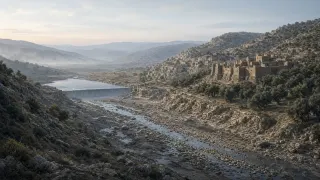
The first camp inside the land, where the name means rolling and everything that happens there is about what is taken away.

They pitch on the tenth day of the first month, which is the day the Passover lamb was first chosen forty years earlier, and the twelve stones out of the river are set up here. The name is explained on the spot: this day have I rolled away the reproach of Egypt from off you, wherefore the name of the place is called Gilgal unto this day. Three things end in this camp in quick succession.

Where it appearsJoshua 4 to 5 · 1 Samuel 11 · 1 Samuel 15

Scroll down to the account
Gilgal

The movements, in the order the text gives them.

The Account of Gilgal

  1. 01

    Joshua 4:19-24

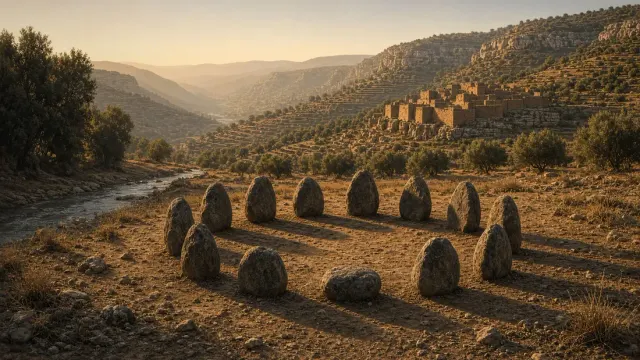
    Those twelve stones did Joshua pitch in Gilgal

    The memorial goes up in the first camp, and the explanation given is for children who will ask about it long afterwards.

    Gilgal receives stones before it receives any spoils from Jericho. Israel's first permanent-looking installation inside the land is not a monument to a captured city. It is a reminder of a river nobody could have crossed that way without the LORD. The camp faces the next obstacle, but its memorial looks back. That is a deliberate arrangement of attention.

    The stones also come with instructions for conversation. A father is not merely to identify the river or admire the workmanship. He must explain why Israel stands on this side of it. The answer joins the Jordan to the Red sea, gathering two generations into one history of deliverance without pretending they all witnessed the same event. What the earlier generation experienced at the sea, this generation has experienced at the river.

    Then the explanation reaches beyond the family. All the people of the earth are to know the strength of the LORD's hand; Israel is to fear him continually. The same stones carry an outward testimony and an inward obligation. They are not there to congratulate Israel on excellent river management.

    Verse by verse

    1. 4:19

      The date links this arrival with the Passover preparations prescribed in Exodus 12:3; it does not supply an absolute year.

    2. 4:20

      Pitch here means set up or erect. The twelve stones represent the twelve tribes, as Joshua 4:4-8 explains.

    3. 4:24

      The verse distinguishes two purposes: knowledge among the nations and enduring reverence within Israel.

    Joshua 4:19-24

    King James Version · 6 verses

    4:19And the people came up out of Jordan on the tenth day of the first month, and encamped in Gilgal, in the east border of Jericho.

    4:20And those twelve stones, which they took out of Jordan, did Joshua pitch in Gilgal.

    4:21And he spake unto the children of Israel, saying, When your children shall ask their fathers in time to come, saying, What mean these stones?

    4:22Then ye shall let your children know, saying, Israel came over this Jordan on dry land.

    4:23For the LORD your God dried up the waters of Jordan from before you, until ye were passed over, as the LORD your God did to the Red sea, which he dried up from before us, until we were gone over:

    4:24That all the people of the earth might know the hand of the LORD, that it is mighty: that ye might fear the LORD your God for ever.

    Joshua 4:19-24: Those twelve stones did Joshua pitch in Gilgal
  2. 02

    Joshua 5:2-9

    I have rolled away the reproach of Egypt

    A generation is circumcised inside hostile country, which makes the army helpless while they heal. The name of the camp is coined here.

    The first action after the river crossing leaves the camp waiting for wounds to heal. Jericho has not been taken, and the kings west of the Jordan have just heard what happened. Yet the chapter turns from their collapsing courage to flint knives and circumcision. The sequence will not allow entry into the land to become merely a military operation.

    The second time does not mean that previously circumcised men undergo the procedure again. Verses 4-7 explain the generational break: the males born during the wilderness journey had not been circumcised. Their fathers' generation supplies the darker contrast. Its men of war had died under the judgment attached to disobedience, while the children now stand inside the land promised to the fathers. The inherited promise remains; the condemned generation does not inherit its fulfillment.

    The account names the bodily cost without dressing it up. They remain in the camp till they were whole. Only then comes the declaration that Egypt's reproach has been rolled away. Gilgal marks more than a change of address. The people have crossed a boundary, and the covenant sign now marks the generation that crossed it.

    Verse by verse

    1. 5:2

      The Hebrew behind sharp knives specifies flint knives. The second time refers to the renewed national act, not a second circumcision of the same individuals.

    2. 5:5

      The passage states that circumcision had not been performed during the journey but does not explain why the practice had lapsed.

    3. 5:8-9

      The reproach of Egypt has been understood as covenantal disgrace or as Egyptian taunting over Israel's condition. The phrase itself does not settle every part of that debate.

    Joshua 5:2-9

    King James Version · 8 verses

    5:2At that time the LORD said unto Joshua, Make thee sharp knives, and circumcise again the children of Israel the second time.

    5:3And Joshua made him sharp knives, and circumcised the children of Israel at the hill of the foreskins.

    5:4And this is the cause why Joshua did circumcise: All the people that came out of Egypt, that were males, even all the men of war, died in the wilderness by the way, after they came out of Egypt.

    5:5Now all the people that came out were circumcised: but all the people that were born in the wilderness by the way as they came forth out of Egypt, them they had not circumcised.

    5:6For the children of Israel walked forty years in the wilderness, till all the people that were men of war, which came out of Egypt, were consumed, because they obeyed not the voice of the LORD: unto whom the LORD sware that he would not shew them the land, which the LORD sware unto their fathers that he would give us, a land that floweth with milk and honey.

    5:7And their children, whom he raised up in their stead, them Joshua circumcised: for they were uncircumcised, because they had not circumcised them by the way.

    5:8And it came to pass, when they had done circumcising all the people, that they abode in their places in the camp, till they were whole.

    5:9And the LORD said unto Joshua, This day have I rolled away the reproach of Egypt from off you. Wherefore the name of the place is called Gilgal unto this day.


  3. 03

    Joshua 5:10-12

    The manna ceased on the morrow

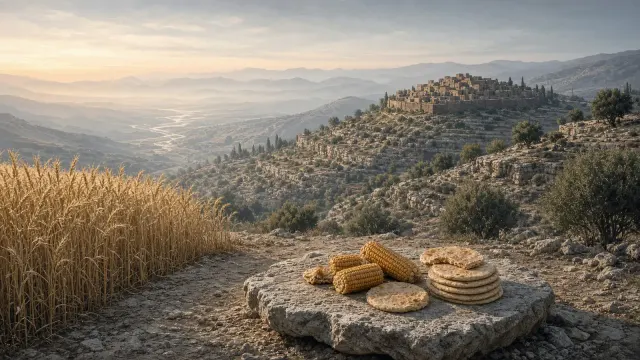
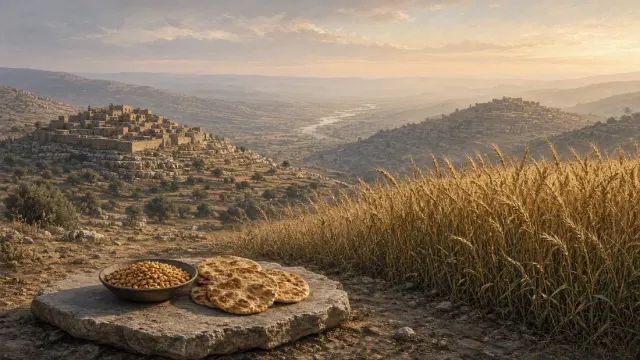
    They keep the Passover, eat the old corn of the land, and the food that had come for forty years stops without ceremony.

    The manna stops after the people have eaten the land's produce, not before food is available. That order matters. The sentence does not describe the withdrawal of provision into an empty camp. It describes a change in provision because Israel has arrived where the wilderness food was carrying it.

    Passover holds the departure from Egypt before the community at precisely this new beginning. The rite is old; the ground beneath it is new. Circumcision in the preceding passage also prepares the sequence, since Exodus 12:48 makes circumcision a condition of a male's participation in Passover. The chapter is not collecting unrelated religious occasions. Covenant sign, feast, and food from Canaan belong together.

    The last verse closes the wilderness arrangement twice: the manna ceased, and Israel had manna no more. Then comes the unshowy replacement, the fruit of the land that year. No menu of marvels follows. Grain is enough to establish the point. The long-promised land has become something people actually eat, and an extraordinary provision can end because its work has been completed.

    Verse by verse

    1. 5:10

      The fourteenth-day Passover follows the timing established in Exodus 12:6. Exodus 12:48 helps explain the preceding emphasis on circumcision.

    2. 5:11

      Corn in this English means grain, not specifically maize. The Hebrew term rendered old corn denotes the land's produce and has been discussed as stored grain.

    3. 5:12

      The text puts the eating of the land's produce before the cessation of manna; it does not describe a period without food.

    Joshua 5:10-12

    King James Version · 3 verses

    5:10And the children of Israel encamped in Gilgal, and kept the passover on the fourteenth day of the month at even in the plains of Jericho.

    5:11And they did eat of the old corn of the land on the morrow after the passover, unleavened cakes, and parched corn in the selfsame day.

    5:12And the manna ceased on the morrow after they had eaten of the old corn of the land; neither had the children of Israel manna any more; but they did eat of the fruit of the land of Canaan that year.

    Joshua 5:10-12: The manna ceased on the morrow
  4. 04

    1 Samuel 11:14-15

    Let us go to Gilgal and renew the kingdom

    The place where the nation began in the land is chosen for the place where the monarchy begins.

    Renew is the word that keeps this gathering in its proper place. Saul has already been anointed by Samuel in 1 Samuel 10:1 and publicly identified as king at Mizpeh in 10:17-24. Gilgal is not a third attempt to discover his name. It is the public renewal of the kingship after the rescue of Jabesh-gilead has answered the earlier challenge to his ability to save Israel.

    The immediate setting gives the celebration an important edge. Some people have demanded the execution of Saul's former detractors. Saul refuses, attributing that day's deliverance to the LORD in 11:13. The assembly moves into rejoicing without turning victory into an occasion for those reprisals. That restraint belongs to this passage's Saul, whatever his later failures.

    Before the LORD occurs twice in one verse: first with the making of the king, then with the peace offerings. The repetition places the throne and the sacrifice in the same acknowledged presence. Saul and the people rejoice greatly, but the ceremony does not present kingship as freedom from the authority that made it possible. The crown is being confirmed, not made absolute.

    Verse by verse

    1. 11:14

      Renew the kingdom presupposes Saul's earlier anointing and public selection in 1 Samuel 10; the ceremony confirms rather than first introduces his kingship.

    2. 11:15

      Peace offerings accompany shared celebration here, as they do with eating and rejoicing in Deuteronomy 27:7.

    1 Samuel 11:14-15

    King James Version · 2 verses

    11:14Then said Samuel to the people, Come, and let us go to Gilgal, and renew the kingdom there.

    11:15And all the people went to Gilgal; and there they made Saul king before the LORD in Gilgal; and there they sacrificed sacrifices of peace offerings before the LORD; and there Saul and all the men of Israel rejoiced greatly.

    1 Samuel 11:14-15: Let us go to Gilgal and renew the kingdom
  5. 05

    1 Samuel 15:22-23

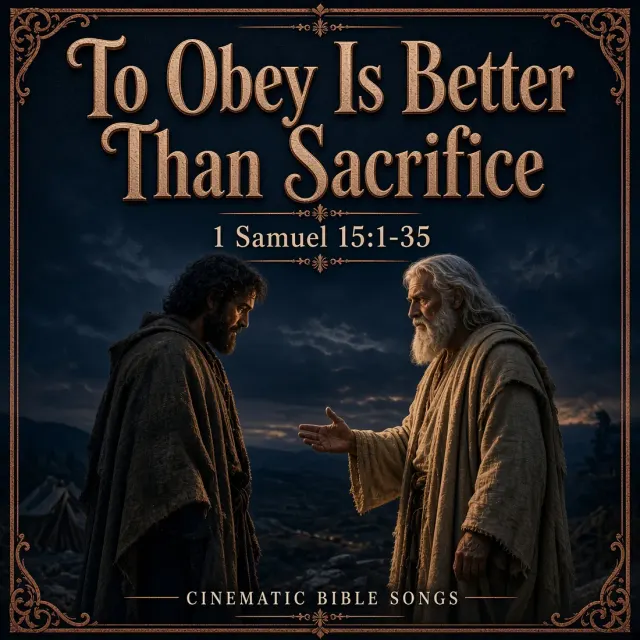
    To obey is better than sacrifice

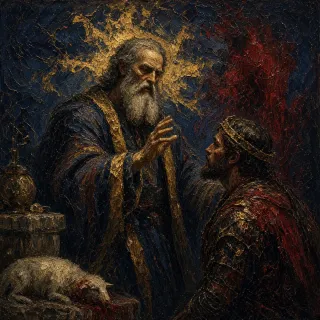
    Saul meets Samuel here with the best of the sheep and the oxen, and is told that the animals are not the currency he thought.

    The sheep have already made Saul's defense difficult. He claims to have performed the command, but Samuel can hear the animals that should not have been kept. Saul then calls them material for sacrifice. The royal explanation improves their proposed destination; it does not change how they came to be there.

    Samuel's answer turns on listening. The Hebrew verb behind obey is also the ordinary verb for hearing, and the chapter has repeatedly set the LORD's voice against Saul's conduct. In verse 24 Saul will admit that he obeyed the people's voice. The issue is not a shortage of religious activity but a transfer of authority disguised as devotion. Nor does Samuel abolish sacrifice. He denies that an offering can substitute for the command it contradicts.

    The setting is severe: the command in verse 3 concerns the destruction of Amalek, including women and children. These verses cannot honestly be reduced to an innocent disagreement about livestock. Within that grim context the verdict is exact: Saul has rejected the word, and the LORD has rejected Saul as king. Gilgal's earlier coronation supplies no exemption. The king is judged by the authority before which his kingship was renewed.

    Verse by verse

    1. 15:22

      To obey translates the Hebrew shama, to hear or listen. The contrast concerns sacrifice offered in place of obedience, not a declaration that every sacrifice is wrong.

    2. 15:23

      The comparison with witchcraft characterizes rebellion; it does not report Saul consulting a medium in this scene. Rejection from kingship is pronounced here, not immediate removal from the throne.

    1 Samuel 15:22-23

    King James Version · 2 verses

    15:22And Samuel said, Hath the LORD as great delight in burnt offerings and sacrifices, as in obeying the voice of the LORD? Behold, to obey is better than sacrifice, and to hearken than the fat of rams.

    15:23For rebellion is as the sin of witchcraft, and stubbornness is as iniquity and idolatry. Because thou hast rejected the word of the LORD, he hath also rejected thee from being king.

    1 Samuel 15:22-23: To obey is better than sacrifice

Why it matters

A whole generation born in the wilderness is circumcised, which leaves an army unable to move for days inside enemy territory, and the account does not pretend that is safe. They keep the Passover on the fourteenth. They eat of the old corn of the land, and on the morrow the manna ceases, and it never comes again. Gilgal stays the base for the whole conquest, and centuries later it is where Saul is made king and where he is told that to obey is better than sacrifice.

6 songs

The music

Every song in the catalogue whose passage falls inside these chapters.

  1. Joshua 3-4

    Stones from the Jordan

  2. Joshua 3:1-4:24

    The Ark Goes Forth

    Play here
    Open song pageRead lyrics
  3. Joshua 3:1-4:24

    Twelve Stones from the River

    Play hereOpen song pageRead lyrics
  4. Joshua 5:1-6:27

    The Seventh Circuit

  5. 1 Samuel 11:1-12:25

    Fear the LORD and Serve Him

  6. 1 Samuel 15:1-35

    To Obey Is Better Than Sacrifice

Nearby

All the places

Report an error on this page