New · FreePlay The Witnesses The in-depth puzzle battle quest through Bible history

People of the Bible

Elijah

Called down fire on a mountain in front of a nation, and asked to die the next day.

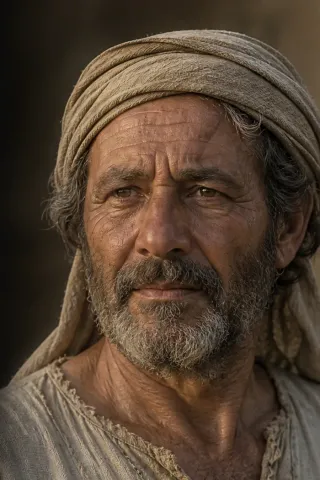
Elijah arrives with no genealogy and no introduction, walks in on the king and announces a drought that will last until he says otherwise, and then disappears for three years. He is fed by ravens at a brook and by a widow whose flour and oil do not run out. On Carmel he gives the people one sentence, how long will you halt between two opinions, and they answer him nothing. Then fire falls. Then a message arrives from the queen, and the same man runs a day into the wilderness and sits under a juniper tree and asks to die.

Where he appears1 Kings 17 to 19 · 1 Kings 21 · 2 Kings 1 to 2

Scroll down to the account
Elijah

The movements, in the order the text gives them.

The Account of Elijah

  1. 01

    1 Kings 17:1-16

    The ravens and the barrel

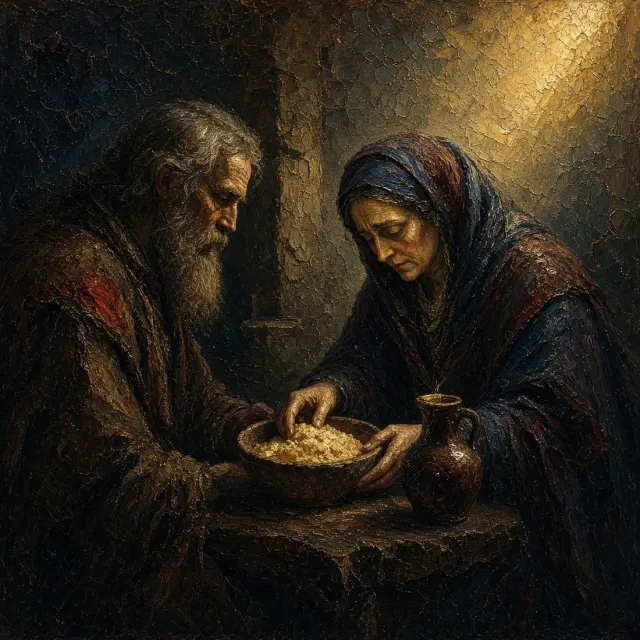
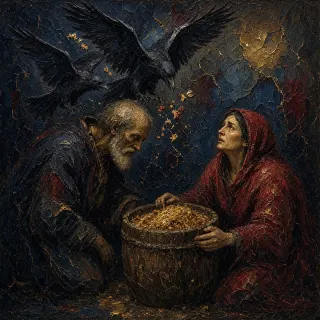
    He announces the drought and is sent to hide. Ravens bring bread and flesh morning and evening, and when the brook dries he is sent to a widow who is gathering sticks for a last meal.

    The two households appointed to feed Elijah have rather unusual qualifications: one belongs to ravens, the other to a woman preparing her last meal. The same words introduce both arrangements, I have commanded. That repetition matters more than the apparent resources of either provider. Even the prophet who announces the drought must watch his own brook dry up. His commission does not give him a private exemption from the weather.

    Then the geography sharpens the whole account. Zarephath belongs to Sidon, the region associated with Jezebel's father in 1 Kings 16:31. Israel's prophet is sustained beyond Israel, in the very territory that might seem least promising. The widow speaks of the LORD thy God; Elijah answers with the LORD God of Israel. No overflowing warehouse appears. The flour and oil simply do not fail, meal after meal. The miracle is not a mountain of provisions. It is tomorrow's bread.

    Verse by verse

    1. 17:4

      Leviticus 11:15 classifies ravens among the birds Israel must not eat. Elijah is fed by the birds, not instructed to eat them.

    2. 17:9

      Zidon is Sidon. The repetition of 'I have commanded' links the widow's provision with the ravens' provision in verse 4.

    3. 17:12

      'Meal' means flour, and 'cruse' is a small container. The verse describes ingredients for one final preparation, not stored cooked meals.

    1 Kings 17:1-16: The ravens and the barrel

    1 Kings 17:1-16

    King James Version · 16 verses

    17:1And Elijah the Tishbite, who was of the inhabitants of Gilead, said unto Ahab, As the LORD God of Israel liveth, before whom I stand, there shall not be dew nor rain these years, but according to my word.

    17:2And the word of the LORD came unto him, saying,

    17:3Get thee hence, and turn thee eastward, and hide thyself by the brook Cherith, that is before Jordan.

    17:4And it shall be, that thou shalt drink of the brook; and I have commanded the ravens to feed thee there.

    17:5So he went and did according unto the word of the LORD: for he went and dwelt by the brook Cherith, that is before Jordan.

    17:6And the ravens brought him bread and flesh in the morning, and bread and flesh in the evening; and he drank of the brook.

    17:7And it came to pass after a while, that the brook dried up, because there had been no rain in the land.

    17:8And the word of the LORD came unto him, saying,

    17:9Arise, get thee to Zarephath, which belongeth to Zidon, and dwell there: behold, I have commanded a widow woman there to sustain thee.

    17:10So he arose and went to Zarephath. And when he came to the gate of the city, behold, the widow woman was there gathering of sticks: and he called to her, and said, Fetch me, I pray thee, a little water in a vessel, that I may drink.

    17:11And as she was going to fetch it, he called to her, and said, Bring me, I pray thee, a morsel of bread in thine hand.

    17:12And she said, As the LORD thy God liveth, I have not a cake, but an handful of meal in a barrel, and a little oil in a cruse: and, behold, I am gathering two sticks, that I may go in and dress it for me and my son, that we may eat it, and die.

    17:13And Elijah said unto her, Fear not; go and do as thou hast said: but make me thereof a little cake first, and bring it unto me, and after make for thee and for thy son.

    17:14For thus saith the LORD God of Israel, The barrel of meal shall not waste, neither shall the cruse of oil fail, until the day that the LORD sendeth rain upon the earth.

    17:15And she went and did according to the saying of Elijah: and she, and he, and her house, did eat many days.

    17:16And the barrel of meal wasted not, neither did the cruse of oil fail, according to the word of the LORD, which he spake by Elijah.

  2. 02

    1 Kings 18:20-40

    How long will you halt

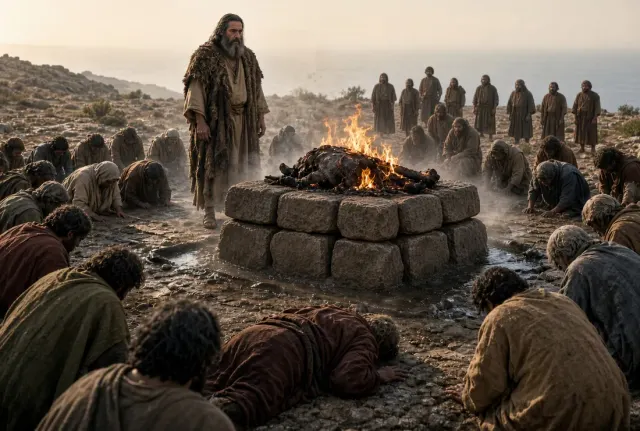
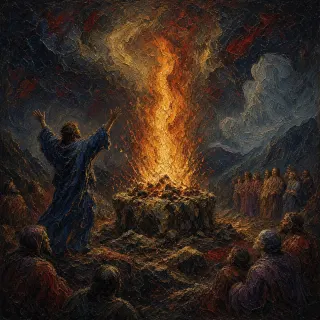
    Four hundred and fifty against one, from morning until the evening sacrifice. He mocks them, repairs the altar of the LORD, digs a trench and fills it with water, and prays sixty-three words.

    The first silence on Carmel belongs to Israel, not Baal. The people answer Elijah not a word. Later the same absence settles over the other altar: no voice, no answer, no attention. Elijah's sarcasm gives Baal a remarkably crowded schedule, but the repeated silence is the sharper verdict. A whole day's noise cannot produce a reply.

    Elijah repairs an altar rather than inventing a religion, and he uses twelve stones in a kingdom that has long been divided. The stones identify the people by the covenant name Israel, not merely by the borders of Ahab's realm. His prayer asks for recognition of God and a turning of their heart, not admiration for his own performance. Then the chapter refuses a tidy ending at the spectacular fire. The prophets of Baal are killed at Kishon. This is a confrontation over Israel's covenant, with the deadly sanctions that covenant contained, not an entertaining contest between rival speakers.

    Verse by verse

    1. 18:22

      Elijah's statement must be read beside 18:4 and 18:13, where Obadiah has preserved a hundred prophets. He is not the only prophet alive.

    2. 18:31

      The twelve stones recall the twelve tribes, and the wording about Jacob's new name points back to Genesis 32:28.

    3. 18:40

      Deuteronomy 13:1-5 prescribes death for a prophet who leads Israel after other gods. The passage belongs to that covenantal setting.

    1 Kings 18:20-40: How long will you halt

    1 Kings 18:20-40

    King James Version · 21 verses

    18:20So Ahab sent unto all the children of Israel, and gathered the prophets together unto mount Carmel.

    18:21And Elijah came unto all the people, and said, How long halt ye between two opinions? if the LORD be God, follow him: but if Baal, then follow him. And the people answered him not a word.

    18:22Then said Elijah unto the people, I, even I only, remain a prophet of the LORD; but Baal’s prophets are four hundred and fifty men.

    18:23Let them therefore give us two bullocks; and let them choose one bullock for themselves, and cut it in pieces, and lay it on wood, and put no fire under: and I will dress the other bullock, and lay it on wood, and put no fire under:

    18:24And call ye on the name of your gods, and I will call on the name of the LORD: and the God that answereth by fire, let him be God. And all the people answered and said, It is well spoken.

    18:25And Elijah said unto the prophets of Baal, Choose you one bullock for yourselves, and dress it first; for ye are many; and call on the name of your gods, but put no fire under.

    18:26And they took the bullock which was given them, and they dressed it, and called on the name of Baal from morning even until noon, saying, O Baal, hear us. But there was no voice, nor any that answered. And they leaped upon the altar which was made.

    18:27And it came to pass at noon, that Elijah mocked them, and said, Cry aloud: for he is a god; either he is talking, or he is pursuing, or he is in a journey, or peradventure he sleepeth, and must be awaked.

    18:28And they cried aloud, and cut themselves after their manner with knives and lancets, till the blood gushed out upon them.

    18:29And it came to pass, when midday was past, and they prophesied until the time of the offering of the evening sacrifice, that there was neither voice, nor any to answer, nor any that regarded.

    18:30And Elijah said unto all the people, Come near unto me. And all the people came near unto him. And he repaired the altar of the LORD that was broken down.

    18:31And Elijah took twelve stones, according to the number of the tribes of the sons of Jacob, unto whom the word of the LORD came, saying, Israel shall be thy name:

    18:32And with the stones he built an altar in the name of the LORD: and he made a trench about the altar, as great as would contain two measures of seed.

    18:33And he put the wood in order, and cut the bullock in pieces, and laid him on the wood, and said, Fill four barrels with water, and pour it on the burnt sacrifice, and on the wood.

    18:34And he said, Do it the second time. And they did it the second time. And he said, Do it the third time. And they did it the third time.

    18:35And the water ran round about the altar; and he filled the trench also with water.

    18:36And it came to pass at the time of the offering of the evening sacrifice, that Elijah the prophet came near, and said, LORD God of Abraham, Isaac, and of Israel, let it be known this day that thou art God in Israel, and that I am thy servant, and that I have done all these things at thy word.

    18:37Hear me, O LORD, hear me, that this people may know that thou art the LORD God, and that thou hast turned their heart back again.

    18:38Then the fire of the LORD fell, and consumed the burnt sacrifice, and the wood, and the stones, and the dust, and licked up the water that was in the trench.

    18:39And when all the people saw it, they fell on their faces: and they said, The LORD, he is the God; the LORD, he is the God.

    18:40And Elijah said unto them, Take the prophets of Baal; let not one of them escape. And they took them: and Elijah brought them down to the brook Kishon, and slew them there.


  3. 03

    1 Kings 19:1-8

    It is enough, take away my life

    One message from Jezebel and he runs a day’s journey and sleeps under a juniper. An angel wakes him twice to eat, and he goes forty days on that food.

    The angel's first answer is food, not an argument. Elijah has asked for his life to end, and the response arrives in painfully ordinary objects: a cake on the coals, a vessel of water, another opportunity to sleep. No speech explains his distress away. The messenger comes twice. The Book of First Kings gives the repetition room to stand.

    Elijah's own comparison is with his fathers, not with the prophets he defeated on Carmel. He says he is no better than they were; the passage does not supply the private calculation behind that sentence. What it does supply is a different assessment: the journey is too great for thee. His insufficiency is acknowledged without becoming the end of his commission. The forty days and nights carry him to Horeb, the mountain associated with Moses and the covenant. Before the next word at the mountain comes bread in the wilderness.

    Verse by verse

    1. 19:3

      Beersheba is explicitly placed in Judah, outside Ahab's northern kingdom. The text then distinguishes the further day's journey into the wilderness.

    2. 19:4

      James 5:17 calls Elijah a man 'subject to like passions as we are.' The biblical descriptions do not provide a modern clinical diagnosis.

    3. 19:8

      'Meat' here means food. The forty days and forty nights recall Moses' periods before God in Exodus 24:18 and 34:28.

    1 Kings 19:1-8

    King James Version · 8 verses

    19:1And Ahab told Jezebel all that Elijah had done, and withal how he had slain all the prophets with the sword.

    19:2Then Jezebel sent a messenger unto Elijah, saying, So let the gods do to me, and more also, if I make not thy life as the life of one of them by to morrow about this time.

    19:3And when he saw that, he arose, and went for his life, and came to Beer-sheba, which belongeth to Judah, and left his servant there.

    19:4But he himself went a day’s journey into the wilderness, and came and sat down under a juniper tree: and he requested for himself that he might die; and said, It is enough; now, O LORD, take away my life; for I am not better than my fathers.

    19:5And as he lay and slept under a juniper tree, behold, then an angel touched him, and said unto him, Arise and eat.

    19:6And he looked, and, behold, there was a cake baken on the coals, and a cruse of water at his head. And he did eat and drink, and laid him down again.

    19:7And the angel of the LORD came again the second time, and touched him, and said, Arise and eat; because the journey is too great for thee.

    19:8And he arose, and did eat and drink, and went in the strength of that meat forty days and forty nights unto Horeb the mount of God.

  4. 04

    1 Kings 19:9-18

    A still small voice

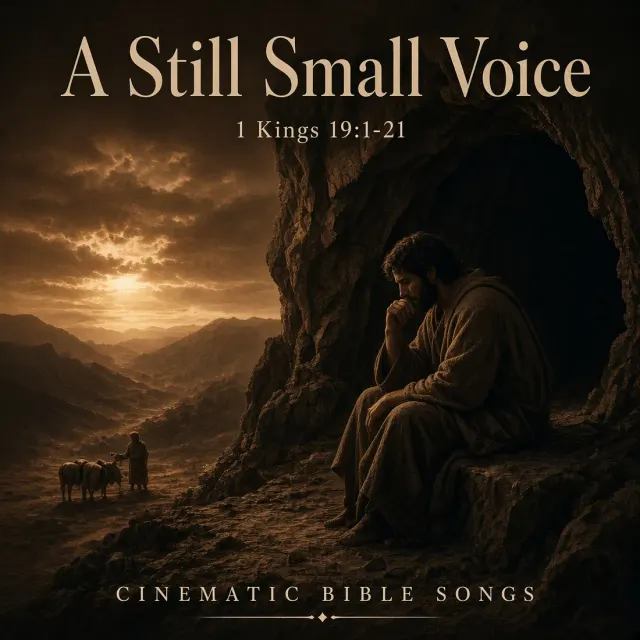
    Asked what he is doing there, he says he alone is left. Wind, earthquake and fire pass and God is in none of them. Then the voice, and a job list, and the news of seven thousand others.

    Elijah repeats his complaint almost word for word after the still small voice. The quiet encounter has not instantly changed his account of the situation. He still says he alone is left. God's answer supplies names, assignments, and finally a number: seven thousand. The prophet's view of Israel is not the whole of Israel.

    Nor does this passage teach that God never acts through fire. Carmel has just established otherwise. Here, wind, earthquake, and fire are explicitly distinguished from the LORD's presence, and Elijah covers his face when the quiet comes. The revelation cannot be reduced to its most impressive effects. Yet the words that follow are not merely soothing. Hazael, Jehu, and Elisha are named, and verse 17 speaks plainly of swords. The stillness belongs to the manner of the encounter, not to a promise that history will become gentle. Elijah receives work to do and a remnant he had not counted.

    Verse by verse

    1. 19:12

      Hebrew qol demamah daqqah combines sound or voice with fine stillness. 'A still small voice' preserves the paradox; translations of its precise sound differ.

    2. 19:13

      The LORD passing by and the covered face recall Exodus 33:18-23. Neither passage identifies Elijah's cave as the exact cleft occupied by Moses.

    3. 19:15-16

      The Hazael and Jehu commissions unfold through Elisha and his circle in 2 Kings 8:7-15 and 9:1-6, not through three recorded anointings by Elijah.

    1 Kings 19:9-18: A still small voice

    1 Kings 19:9-18

    King James Version · 10 verses

    19:9And he came thither unto a cave, and lodged there; and, behold, the word of the LORD came to him, and he said unto him, What doest thou here, Elijah?

    19:10And he said, I have been very jealous for the LORD God of hosts: for the children of Israel have forsaken thy covenant, thrown down thine altars, and slain thy prophets with the sword; and I, even I only, am left; and they seek my life, to take it away.

    19:11And he said, Go forth, and stand upon the mount before the LORD. And, behold, the LORD passed by, and a great and strong wind rent the mountains, and brake in pieces the rocks before the LORD; but the LORD was not in the wind: and after the wind an earthquake; but the LORD was not in the earthquake:

    19:12And after the earthquake a fire; but the LORD was not in the fire: and after the fire a still small voice.

    19:13And it was so, when Elijah heard it, that he wrapped his face in his mantle, and went out, and stood in the entering in of the cave. And, behold, there came a voice unto him, and said, What doest thou here, Elijah?

    19:14And he said, I have been very jealous for the LORD God of hosts: because the children of Israel have forsaken thy covenant, thrown down thine altars, and slain thy prophets with the sword; and I, even I only, am left; and they seek my life, to take it away.

    19:15And the LORD said unto him, Go, return on thy way to the wilderness of Damascus: and when thou comest, anoint Hazael to be king over Syria:

    19:16And Jehu the son of Nimshi shalt thou anoint to be king over Israel: and Elisha the son of Shaphat of Abel-meholah shalt thou anoint to be prophet in thy room.

    19:17And it shall come to pass, that him that escapeth the sword of Hazael shall Jehu slay: and him that escapeth from the sword of Jehu shall Elisha slay.

    19:18Yet I have left me seven thousand in Israel, all the knees which have not bowed unto Baal, and every mouth which hath not kissed him.

  5. 05

    1 Kings 21:17-24

    Have you found me, O my enemy

    Sent to meet Ahab in Naboth’s vineyard on the day he goes down to take it. The king greets him as an enemy and he agrees, and delivers the sentence on the house.

    Ahab has acquired the land, but the vineyard still has Naboth's name. The divine instruction calls it the vineyard of Naboth even while describing the king's attempt to possess it. The murdered owner has not disappeared from the record just because the royal household has cleared the way for a new one.

    Elijah's accusation joins killing and possession in a single sentence. Jezebel arranged the false witnesses; Ahab receives the property. The oracle does not allow the beneficiary to stand outside the crime. Then the language of acquisition turns back on the king: thou hast sold thyself. He gains a vineyard and is described as the thing sold. The threatened destruction reaches his house, with Jeroboam and Baasha named as precedents, and denies the dead even the dignity of burial. The passage is unsparing because the preceding proceedings were not a land dispute. They were murder conducted under the appearance of public justice.

    Verse by verse

    1. 21:19

      Jezebel's letters use Ahab's name and seal in 21:8. The charge against him concerns the killing and the possession, not merely an unfriendly encounter with Elijah.

    2. 21:20

      Hebrew makar means sell. The same accusation is repeated in the assessment of Ahab in 21:25.

    3. 21:22-24

      The houses of Jeroboam and Baasha were condemned in 1 Kings 14:10-11 and 16:3-4; the language about dogs and birds repeats those earlier sentences.

    1 Kings 21:17-24

    King James Version · 8 verses

    21:17And the word of the LORD came to Elijah the Tishbite, saying,

    21:18Arise, go down to meet Ahab king of Israel, which is in Samaria: behold, he is in the vineyard of Naboth, whither he is gone down to possess it.

    21:19And thou shalt speak unto him, saying, Thus saith the LORD, Hast thou killed, and also taken possession? And thou shalt speak unto him, saying, Thus saith the LORD, In the place where dogs licked the blood of Naboth shall dogs lick thy blood, even thine.

    21:20And Ahab said to Elijah, Hast thou found me, O mine enemy? And he answered, I have found thee: because thou hast sold thyself to work evil in the sight of the LORD.

    21:21Behold, I will bring evil upon thee, and will take away thy posterity, and will cut off from Ahab him that pisseth against the wall, and him that is shut up and left in Israel,

    21:22And will make thine house like the house of Jeroboam the son of Nebat, and like the house of Baasha the son of Ahijah, for the provocation wherewith thou hast provoked me to anger, and made Israel to sin.

    21:23And of Jezebel also spake the LORD, saying, The dogs shall eat Jezebel by the wall of Jezreel.

    21:24Him that dieth of Ahab in the city the dogs shall eat; and him that dieth in the field shall the fowls of the air eat.

  6. 06

    2 Kings 2:1-12

    The chariot of fire

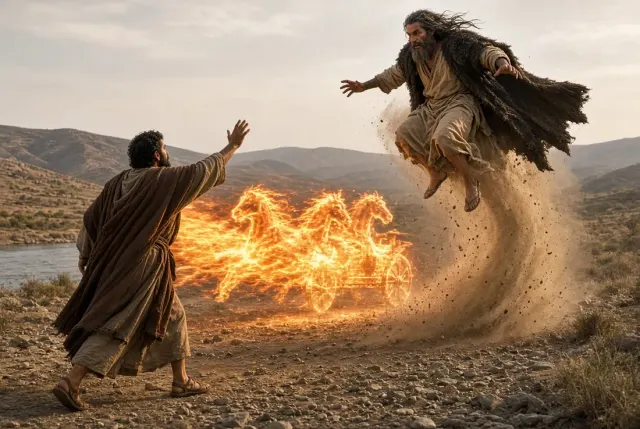
    Three times he tells Elisha to stay and three times Elisha refuses. He strikes the Jordan with his mantle, asks what he can do for him, and is taken up by a whirlwind.

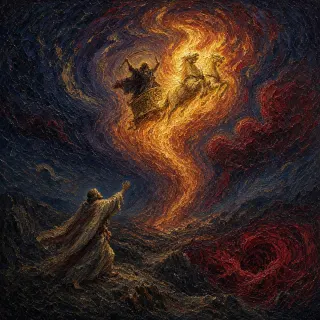
    The chariot does not receive Elijah as a passenger. The Book of Second Kings says that the fiery chariot and horses separate the two men, and that Elijah goes up by a whirlwind. The distinction is stated at the beginning and repeated at the departure. The image is magnificent without adding a boarding scene the passage never supplies.

    What receives the most repetition before that separation is Elisha's refusal to leave. Three times Elijah tells him to remain; three times he stays with his master. The prophetic communities know the departure is coming, so the emphasis is not surprise but attachment and succession. My father, my father belongs beside the request for an heir's double portion. And the last movement in the assigned passage is not triumphant: Elisha tears his own clothes. The heavenly departure does not make the earthly loss unreal. A prophet has been taken, and the man who walked beside him is left holding grief.

    Verse by verse

    1. 2:1

      Second Chronicles 21:12 records a writing from Elijah to Jehoram. Its composition and delivery are not explicitly dated in relation to this departure.

    2. 2:9

      The double portion evokes the firstborn's inheritance in Deuteronomy 21:17. It need not mean a request to perform twice as many miracles.

    3. 2:11

      The whirlwind carries Elijah upward; the chariot and horses part the men. The verse assigns different actions to them.

    4. 2:12

      The king addresses Elisha with the same chariot-and-horsemen title in 2 Kings 13:14, linking both prophets with Israel's protection.

    5. 2:3

      Later reception distinguishes Elijah himself from an Elijah-like ministry: compare John 1:21, Luke 1:17, and Matthew 17:10-13.

    2 Kings 2:1-12: The chariot of fire

    2 Kings 2:1-12

    King James Version · 12 verses

    2:1And it came to pass, when the LORD would take up Elijah into heaven by a whirlwind, that Elijah went with Elisha from Gilgal.

    2:2And Elijah said unto Elisha, Tarry here, I pray thee; for the LORD hath sent me to Beth-el. And Elisha said unto him, As the LORD liveth, and as thy soul liveth, I will not leave thee. So they went down to Beth-el.

    2:3And the sons of the prophets that were at Beth-el came forth to Elisha, and said unto him, Knowest thou that the LORD will take away thy master from thy head to day? And he said, Yea, I know it; hold ye your peace.

    2:4And Elijah said unto him, Elisha, tarry here, I pray thee; for the LORD hath sent me to Jericho. And he said, As the LORD liveth, and as thy soul liveth, I will not leave thee. So they came to Jericho.

    2:5And the sons of the prophets that were at Jericho came to Elisha, and said unto him, Knowest thou that the LORD will take away thy master from thy head to day? And he answered, Yea, I know it; hold ye your peace.

    2:6And Elijah said unto him, Tarry, I pray thee, here; for the LORD hath sent me to Jordan. And he said, As the LORD liveth, and as thy soul liveth, I will not leave thee. And they two went on.

    2:7And fifty men of the sons of the prophets went, and stood to view afar off: and they two stood by Jordan.

    2:8And Elijah took his mantle, and wrapped it together, and smote the waters, and they were divided hither and thither, so that they two went over on dry ground.

    2:9And it came to pass, when they were gone over, that Elijah said unto Elisha, Ask what I shall do for thee, before I be taken away from thee. And Elisha said, I pray thee, let a double portion of thy spirit be upon me.

    2:10And he said, Thou hast asked a hard thing: nevertheless, if thou see me when I am taken from thee, it shall be so unto thee; but if not, it shall not be so.

    2:11And it came to pass, as they still went on, and talked, that, behold, there appeared a chariot of fire, and horses of fire, and parted them both asunder; and Elijah went up by a whirlwind into heaven.

    2:12And Elisha saw it, and he cried, My father, my father, the chariot of Israel, and the horsemen thereof. And he saw him no more: and he took hold of his own clothes, and rent them in two pieces.

Why it matters

Elijah is the prophet the rest of Scripture keeps reaching for. He does not die; he is taken up in a whirlwind with a chariot of fire between him and Elisha. Malachi closes the Old Testament promising him before the great and dreadful day, the gospels ask whether John the Baptist is him, and he stands on the mount of transfiguration beside Moses. The cave at Horeb is the centre of him: not in the wind, not in the earthquake, not in the fire, but a still small voice.

11 songs

The music

Every song in the catalogue whose passage falls inside these chapters.

  1. 1 Kings 16:29-17:24

    The Ravens and the Widow's Barrel

  2. 1 Kings 17

    The Widow's Last Measure

  3. 1 Kings 18

    Answer by Fire

  4. 1 Kings 18

    Fire Fell on Carmel

    Play hereOpen song pageRead lyrics
  5. 1 Kings 18:1-46

    The LORD, He Is God

  6. 1 Kings 19

    A Still Small Voice

  7. 1 Kings 20:1-22:54

    Hast Thou Killed and Also Taken Possession?

  8. 1 Kings 21

    The Vineyard Stolen

  9. 2 Kings 1:1-2:18

    A Chariot of Fire

  10. 2 Kings 2:19-3:27

    Is There Not Here a Prophet?

  11. 2 Kings 2

    The Chariot of Fire

The videos

The videos

Every release whose passage falls inside these chapters, playing here.

Nearby

All the people

Report an error on this page