New · FreePlay The Witnesses The in-depth puzzle battle quest through Bible history

People of the Bible

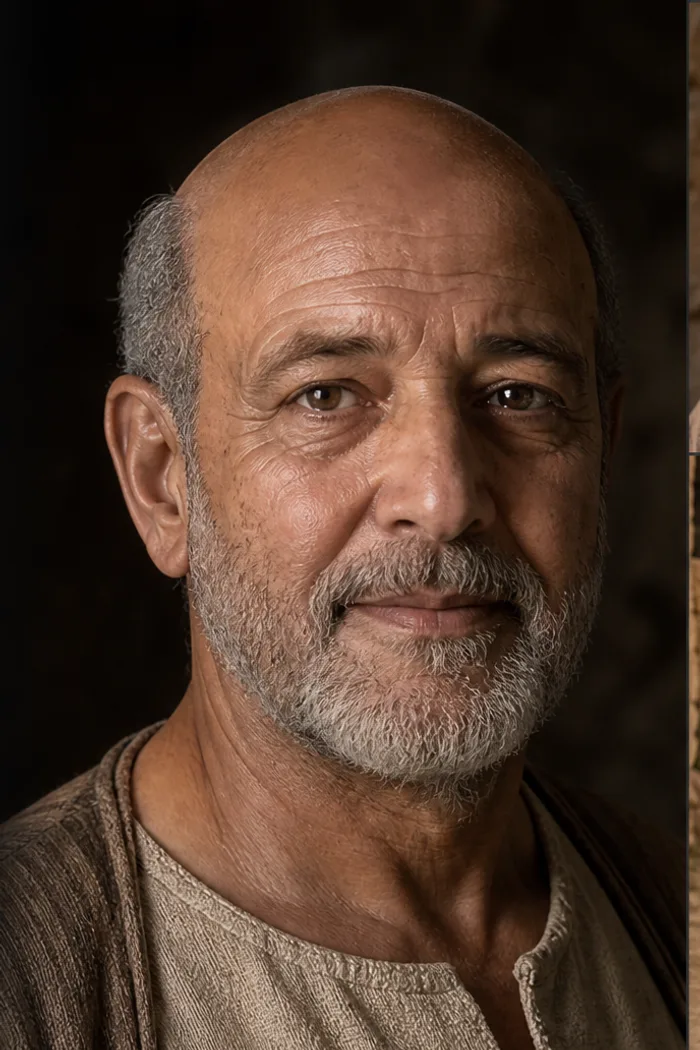
Elisha

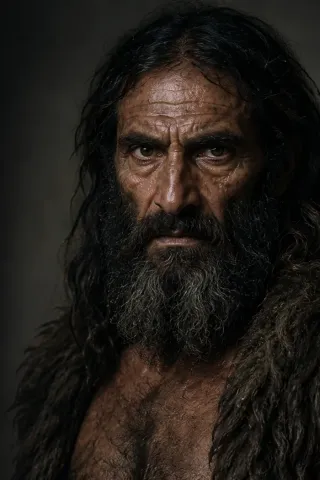
Asked for a double portion of his master’s spirit, and spent fifty years mostly feeding people and mending things.

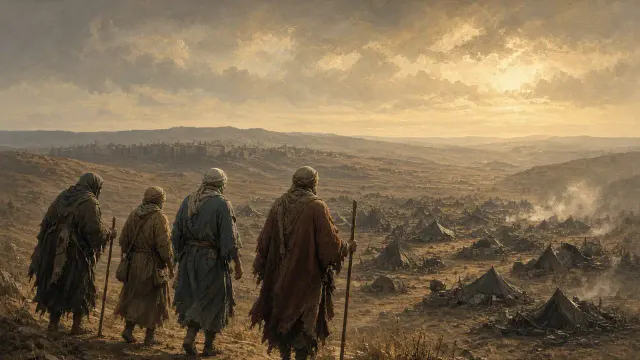
Elisha is ploughing with twelve yoke of oxen when a mantle lands on his shoulders. He asks leave to kiss his parents, then kills the oxen, burns the plough to cook them, feeds the people and follows. He asks for a double portion and gets it, and the miracles that follow are almost all domestic: a widow’s oil, a poisoned pot, twenty loaves for a hundred men, an axe head floating, a child brought back in an upstairs room. He also makes a Syrian army blind, leads them into Samaria, and then tells the king to feed them and send them home.

Where he appears1 Kings 19 · 2 Kings 2 to 13

Scroll down to the account
Elisha

The movements, in the order the text gives them.

The Account of Elisha

  1. 01

    1 Kings 19:19-21

    The mantle and the oxen

    Elijah passes and throws his mantle on him and keeps walking. Elisha burns the equipment of his old life to cook a farewell meal, which leaves nothing to go back to.

    The ploughing equipment becomes the firewood. That is a remarkably concrete farewell: the pair of oxen supplies the meat, the implements supply the heat, and the people eat what had just been pulling a plough. The passage does not say Elisha slaughtered all twelve pairs or owned the entire operation. One pair is enough to make the point. His response to the mantle is not a speech about a changed life. Something in the field actually changes.

    Elijah's brief answer leaves its tone unstated. The unmistakable explanation comes from Elisha's actions: he returns, prepares the meal, rises, and follows. Then the sentence settles on a quieter word than the burning equipment might suggest. He ministered unto him. The successor begins as a servant. When a king later needs a prophet, Elisha is identified as the man who poured water on Elijah's hands in 2 Kings 3:11. Before the divided river comes the water basin.

    Verse by verse

    1. 19:19

      Twelve yoke describes the ploughing operation. Verse 21 specifies a yoke for the slaughter, not the destruction of all twenty-four animals.

    2. 19:20

      Elijah gives no extended explanation of the mantle or of his reply. Elisha understands the encounter as a summons and follows.

    3. 19:21

      The Hebrew verb sharath means to serve or minister. The practical service described in 2 Kings 3:11 gives this final word a tangible setting.

    1 Kings 19:19-21

    King James Version · 3 verses

    19:19So he departed thence, and found Elisha the son of Shaphat, who was plowing with twelve yoke of oxen before him, and he with the twelfth: and Elijah passed by him, and cast his mantle upon him.

    19:20And he left the oxen, and ran after Elijah, and said, Let me, I pray thee, kiss my father and my mother, and then I will follow thee. And he said unto him, Go back again: for what have I done to thee?

    19:21And he returned back from him, and took a yoke of oxen, and slew them, and boiled their flesh with the instruments of the oxen, and gave unto the people, and they did eat. Then he arose, and went after Elijah, and ministered unto him.

    1 Kings 19:19-21: The mantle and the oxen
  2. 02

    2 Kings 2:9-15

    A double portion

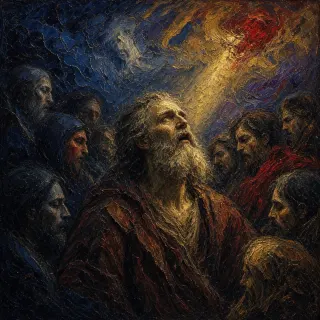
    He asks for what an eldest son inherits. He is told it is a hard thing and that he will have it if he sees him go, and he does, and picks up the mantle that fell.

    A double portion sounds like a request for twice the spectacle. Its sharper biblical setting is a household inheritance. Deuteronomy 21:17 gives the firstborn a double portion, using the same Hebrew expression, pi shenayim. Beside Elisha's cry of My father, my father, the request sounds less like competitive miracle counting and more like the claim of a principal heir. He asks to carry the work, not merely to keep a souvenir.

    The mantle certainly matters, but Elisha does not address the garment or summon the departed prophet. He calls upon the LORD God of Elijah. The distinction keeps a piece of cloth from becoming the source of the power. The river opens, and the watching prophetic company recognizes that Elijah's spirit rests on Elisha. They supply the public acknowledgment. Elisha has inherited the responsibility, crossed the water, and returned to people who need a prophet. The mantle is back at work.

    Verse by verse

    1. 2:9

      Pi shenayim, double portion, also appears in the firstborn inheritance law of Deuteronomy 21:17. The wording supports an inheritance reading rather than requiring exactly twice as many miracles.

    2. 2:10

      Elijah calls the request difficult and makes its fulfillment depend on what Elisha is permitted to see. He does not present the spirit as property he can distribute at will.

    3. 2:15

      The sons of the prophets are a prophetic community, not a claim that all these men are Elijah's biological children. Their recognition completes the succession scene.

    2 Kings 2:9-15

    King James Version · 7 verses

    2:9And it came to pass, when they were gone over, that Elijah said unto Elisha, Ask what I shall do for thee, before I be taken away from thee. And Elisha said, I pray thee, let a double portion of thy spirit be upon me.

    2:10And he said, Thou hast asked a hard thing: nevertheless, if thou see me when I am taken from thee, it shall be so unto thee; but if not, it shall not be so.

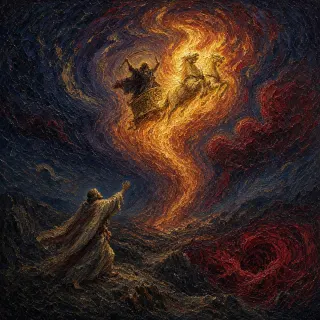
    2:11And it came to pass, as they still went on, and talked, that, behold, there appeared a chariot of fire, and horses of fire, and parted them both asunder; and Elijah went up by a whirlwind into heaven.

    2:12And Elisha saw it, and he cried, My father, my father, the chariot of Israel, and the horsemen thereof. And he saw him no more: and he took hold of his own clothes, and rent them in two pieces.

    2:13He took up also the mantle of Elijah that fell from him, and went back, and stood by the bank of Jordan;

    2:14And he took the mantle of Elijah that fell from him, and smote the waters, and said, Where is the LORD God of Elijah? and when he also had smitten the waters, they parted hither and thither: and Elisha went over.

    2:15And when the sons of the prophets which were to view at Jericho saw him, they said, The spirit of Elijah doth rest on Elisha. And they came to meet him, and bowed themselves to the ground before him.

  3. 03

    2 Kings 4:1-7

    Borrow vessels, not a few

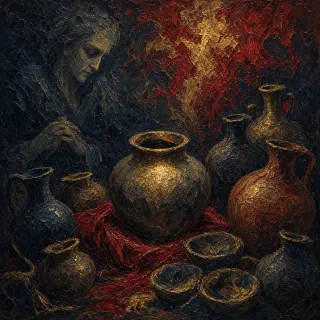
    A widow about to lose her two sons to a creditor has one pot of oil. He tells her to borrow every empty vessel she can, shut the door, and pour. The oil stops when the vessels run out.

    The sons who are about to be taken away become the hands that bring the jars. That small arrangement holds the whole rescue together. The creditor threatens to break up the household; behind the closed door, mother and sons work together to preserve it. Elisha is not even described as being in the room. The pouring belongs to the woman, and the carrying belongs to the children whose future is at stake.

    The ending is more exact than a general announcement that everything turned out well. Sell the oil. Pay thy debt. Live thou and thy children of the rest. The provision addresses the debt and then the household's life beyond it. When the oil stops, the chapter reports that no vessel remains. It does not reprimand the family for insufficient faith or insufficient borrowing. Turning that silence into a scolding would make the commentary harsher than the prophet. He gives the widow instructions for living, not a lecture about the jars she failed to find.

    Verse by verse

    1. 4:1

      The deceased husband belonged to the sons of the prophets. His reverence for the LORD has not prevented the family from falling into debt.

    2. 4:5

      The sons bring the vessels while their mother pours. Debt bondage involving children also appears explicitly in Nehemiah 5:5.

    3. 4:6

      Stayed means stopped. The passage gives no criticism of the number of vessels the family borrowed.

    2 Kings 4:1-7

    King James Version · 7 verses

    4:1Now there cried a certain woman of the wives of the sons of the prophets unto Elisha, saying, Thy servant my husband is dead; and thou knowest that thy servant did fear the LORD: and the creditor is come to take unto him my two sons to be bondmen.

    4:2And Elisha said unto her, What shall I do for thee? tell me, what hast thou in the house? And she said, Thine handmaid hath not any thing in the house, save a pot of oil.

    4:3Then he said, Go, borrow thee vessels abroad of all thy neighbours, even empty vessels; borrow not a few.

    4:4And when thou art come in, thou shalt shut the door upon thee and upon thy sons, and shalt pour out into all those vessels, and thou shalt set aside that which is full.

    4:5So she went from him, and shut the door upon her and upon her sons, who brought the vessels to her; and she poured out.

    4:6And it came to pass, when the vessels were full, that she said unto her son, Bring me yet a vessel. And he said unto her, There is not a vessel more. And the oil stayed.

    4:7Then she came and told the man of God. And he said, Go, sell the oil, and pay thy debt, and live thou and thy children of the rest.

  4. 04

    2 Kings 4:18-37

    The room on the wall

    The Shunammite’s son dies on her knees at noon. She lays him on the prophet’s bed, rides for Carmel, and will not be fobbed off with a staff sent ahead by a servant.

    The bed she provided for the prophet becomes the bed on which she lays her dead son. The furnishings listed earlier in the chapter are no longer incidental hospitality. Her gift of a room has become the place where the promise made in that room seems to have collapsed. Her protest is exact: she had not asked for the child, and she had warned against being deceived. The passage lets that accusation stand without tidying her grief into polite religious language.

    Elisha, meanwhile, admits something a lesser account might have hidden: the LORD hath hid it from me. He is a prophet, not a man with permanent access to every fact. His staff produces no response. His own arrival leads to prayer, close bodily contact, warmth, movement, and finally seven sneezes. Those details resist turning the scene into an effortless display or a reproducible technique. At the end, the mother bows at the same feet she had seized on the mountain. This time she leaves carrying her son.

    Verse by verse

    1. 4:19

      The child reports pain in his head, but the passage does not identify the illness. A diagnosis of sunstroke goes beyond what is stated.

    2. 4:26

      The short reply translated It is well uses shalom. It does not erase the death already reported or replace the fuller protest she makes to Elisha.

    3. 4:27

      Elisha expressly says the LORD has not told him the cause of her distress. Prophetic calling is not presented as omniscience.

    4. 4:37

      Hebrews 11:35 mentions women receiving their dead raised to life. It names neither mother, but the accounts in 1 Kings 17 and 2 Kings 4 provide the clear scriptural background.

    2 Kings 4:18-37: The room on the wall

    2 Kings 4:18-37

    King James Version · 20 verses

    4:18And when the child was grown, it fell on a day, that he went out to his father to the reapers.

    4:19And he said unto his father, My head, my head. And he said to a lad, Carry him to his mother.

    4:20And when he had taken him, and brought him to his mother, he sat on her knees till noon, and then died.

    4:21And she went up, and laid him on the bed of the man of God, and shut the door upon him, and went out.

    4:22And she called unto her husband, and said, Send me, I pray thee, one of the young men, and one of the asses, that I may run to the man of God, and come again.

    4:23And he said, Wherefore wilt thou go to him to day? it is neither new moon, nor sabbath. And she said, It shall be well.

    4:24Then she saddled an ass, and said to her servant, Drive, and go forward; slack not thy riding for me, except I bid thee.

    4:25So she went and came unto the man of God to mount Carmel. And it came to pass, when the man of God saw her afar off, that he said to Gehazi his servant, Behold, yonder is that Shunammite:

    4:26Run now, I pray thee, to meet her, and say unto her, Is it well with thee? is it well with thy husband? is it well with the child? And she answered, It is well.

    4:27And when she came to the man of God to the hill, she caught him by the feet: but Gehazi came near to thrust her away. And the man of God said, Let her alone; for her soul is vexed within her: and the LORD hath hid it from me, and hath not told me.

    4:28Then she said, Did I desire a son of my lord? did I not say, Do not deceive me?

    4:29Then he said to Gehazi, Gird up thy loins, and take my staff in thine hand, and go thy way: if thou meet any man, salute him not; and if any salute thee, answer him not again: and lay my staff upon the face of the child.

    4:30And the mother of the child said, As the LORD liveth, and as thy soul liveth, I will not leave thee. And he arose, and followed her.

    4:31And Gehazi passed on before them, and laid the staff upon the face of the child; but there was neither voice, nor hearing. Wherefore he went again to meet him, and told him, saying, The child is not awaked.

    4:32And when Elisha was come into the house, behold, the child was dead, and laid upon his bed.

    4:33He went in therefore, and shut the door upon them twain, and prayed unto the LORD.

    4:34And he went up, and lay upon the child, and put his mouth upon his mouth, and his eyes upon his eyes, and his hands upon his hands: and he stretched himself upon the child; and the flesh of the child waxed warm.

    4:35Then he returned, and walked in the house to and fro; and went up, and stretched himself upon him: and the child sneezed seven times, and the child opened his eyes.

    4:36And he called Gehazi, and said, Call this Shunammite. So he called her. And when she was come in unto him, he said, Take up thy son.

    4:37Then she went in, and fell at his feet, and bowed herself to the ground, and took up her son, and went out.


  5. 05

    2 Kings 6:8-23

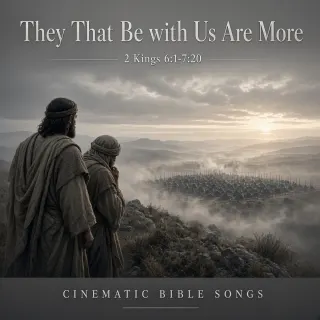
    They that are with us are more

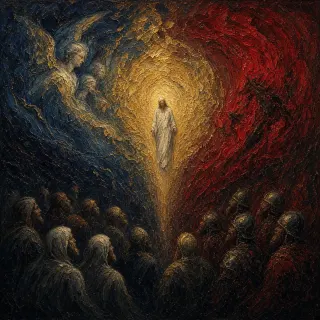
    His servant sees the city surrounded and panics. Elisha prays for his eyes to be opened, then prays the enemy blind, walks them to Samaria, and orders bread and water instead of swords.

    Elisha does not ask for reinforcements. He asks for his servant's eyes to be opened. The mountain is already full of horses and chariots of fire; the change is in what the frightened servant can see. Then the prayers turn in the opposite direction. The attackers lose the sight they need, follow the very man they came to seize, and regain their sight inside Samaria. The intended prisoner has conducted the arresting party into another king's city.

    The king of Israel promptly finds a use for them: shall I smite them, repeated twice. Elisha supplies a table instead. Bread and water become a great provision, and the men sent to capture him are fed and released. The chapter permits the irony without making peace broader than the text does. Syrian raiding bands cease coming in the way described here; the very next verse introduces a siege by the Syrian king's army. This meal ends this encounter. It is not a claim that every war has ended.

    Verse by verse

    1. 6:15

      The servant here is unnamed. The passage does not identify him as Gehazi.

    2. 6:17

      The fiery horses and chariots recall 2 Kings 2:11, but here they surround Elisha rather than separate two prophets.

    3. 6:23

      The statement concerns raiding bands. Verse 24 immediately distinguishes a subsequent siege by Benhadad and his assembled army.

    2 Kings 6:8-23: They that are with us are more

    2 Kings 6:8-23

    King James Version · 16 verses

    6:8Then the king of Syria warred against Israel, and took counsel with his servants, saying, In such and such a place shall be my camp.

    6:9And the man of God sent unto the king of Israel, saying, Beware that thou pass not such a place; for thither the Syrians are come down.

    6:10And the king of Israel sent to the place which the man of God told him and warned him of, and saved himself there, not once nor twice.

    6:11Therefore the heart of the king of Syria was sore troubled for this thing; and he called his servants, and said unto them, Will ye not shew me which of us is for the king of Israel?

    6:12And one of his servants said, None, my lord, O king: but Elisha, the prophet that is in Israel, telleth the king of Israel the words that thou speakest in thy bedchamber.

    6:13And he said, Go and spy where he is, that I may send and fetch him. And it was told him, saying, Behold, he is in Dothan.

    6:14Therefore sent he thither horses, and chariots, and a great host: and they came by night, and compassed the city about.

    6:15And when the servant of the man of God was risen early, and gone forth, behold, an host compassed the city both with horses and chariots. And his servant said unto him, Alas, my master! how shall we do?

    6:16And he answered, Fear not: for they that be with us are more than they that be with them.

    6:17And Elisha prayed, and said, LORD, I pray thee, open his eyes, that he may see. And the LORD opened the eyes of the young man; and he saw: and, behold, the mountain was full of horses and chariots of fire round about Elisha.

    6:18And when they came down to him, Elisha prayed unto the LORD, and said, Smite this people, I pray thee, with blindness. And he smote them with blindness according to the word of Elisha.

    6:19And Elisha said unto them, This is not the way, neither is this the city: follow me, and I will bring you to the man whom ye seek. But he led them to Samaria.

    6:20And it came to pass, when they were come into Samaria, that Elisha said, LORD, open the eyes of these men, that they may see. And the LORD opened their eyes, and they saw; and, behold, they were in the midst of Samaria.

    6:21And the king of Israel said unto Elisha, when he saw them, My father, shall I smite them? shall I smite them?

    6:22And he answered, Thou shalt not smite them: wouldest thou smite those whom thou hast taken captive with thy sword and with thy bow? set bread and water before them, that they may eat and drink, and go to their master.

    6:23And he prepared great provision for them: and when they had eaten and drunk, he sent them away, and they went to their master. So the bands of Syria came no more into the land of Israel.

Why it matters

Where Elijah is fire on a mountain, Elisha is the same power spent almost entirely on small mercies and foreigners. The enemy general he heals and will not be paid for, the enemy army he feeds, the barren woman, the borrowed axe. Jesus names both scenes that were most offensive to his hometown congregation: Elijah sent to a widow in Sidon, and Elisha cleansing Naaman the Syrian and no other leper in Israel.

14 songs

The music

Every song in the catalogue whose passage falls inside these chapters.

  1. 1 Kings 19

    A Still Small Voice

  2. 2 Kings 1:1-2:18

    A Chariot of Fire

  3. 2 Kings 2:19-3:27

    Is There Not Here a Prophet?

  4. 2 Kings 2

    The Chariot of Fire

  5. 2 Kings 4:1-37

    Borrow Thee Vessels, Not a Few

  6. 2 Kings 4:38-5:27

    Wash and Be Clean

  7. 2 Kings 5

    Wash in Jordan

  8. 2 Kings 6:8-23

    More With Us

  9. 2 Kings 6:1-7:20

    They That Be with Us Are More

  10. 2 Kings 8:1-9:13

    The Man Who Shall Smite the House of Ahab

  11. 2 Kings 9-10

    Jezebel at the Window

  12. 2 Kings 9:14-10:36

    No Baal Left in the House

  13. 2 Kings 11:1-12:21

    The King's Son upon the Throne

  14. 2 Kings 13:1-25

    The Arrow of the LORD's Deliverance

The videos

The videos

Every release whose passage falls inside these chapters, playing here.

Nearby

All the people

Report an error on this page