About this song
About this song
This song belongs to the 2 Kings collection. One recording is available to play here, with the complete lyrics below.
- Collection
- 2 Kings
[Verse 1]
A prophet's widow cries that a creditor has come for her two sons.
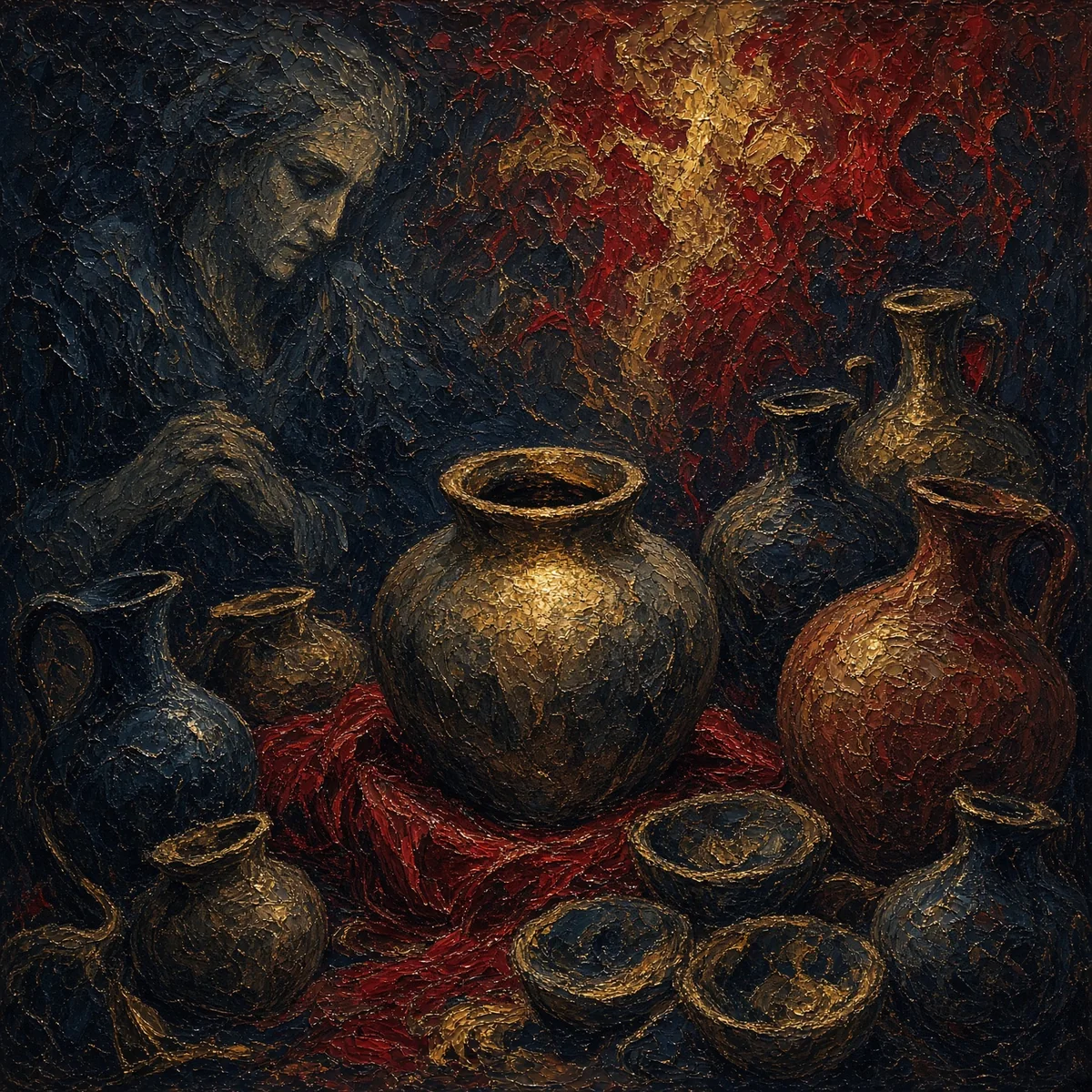
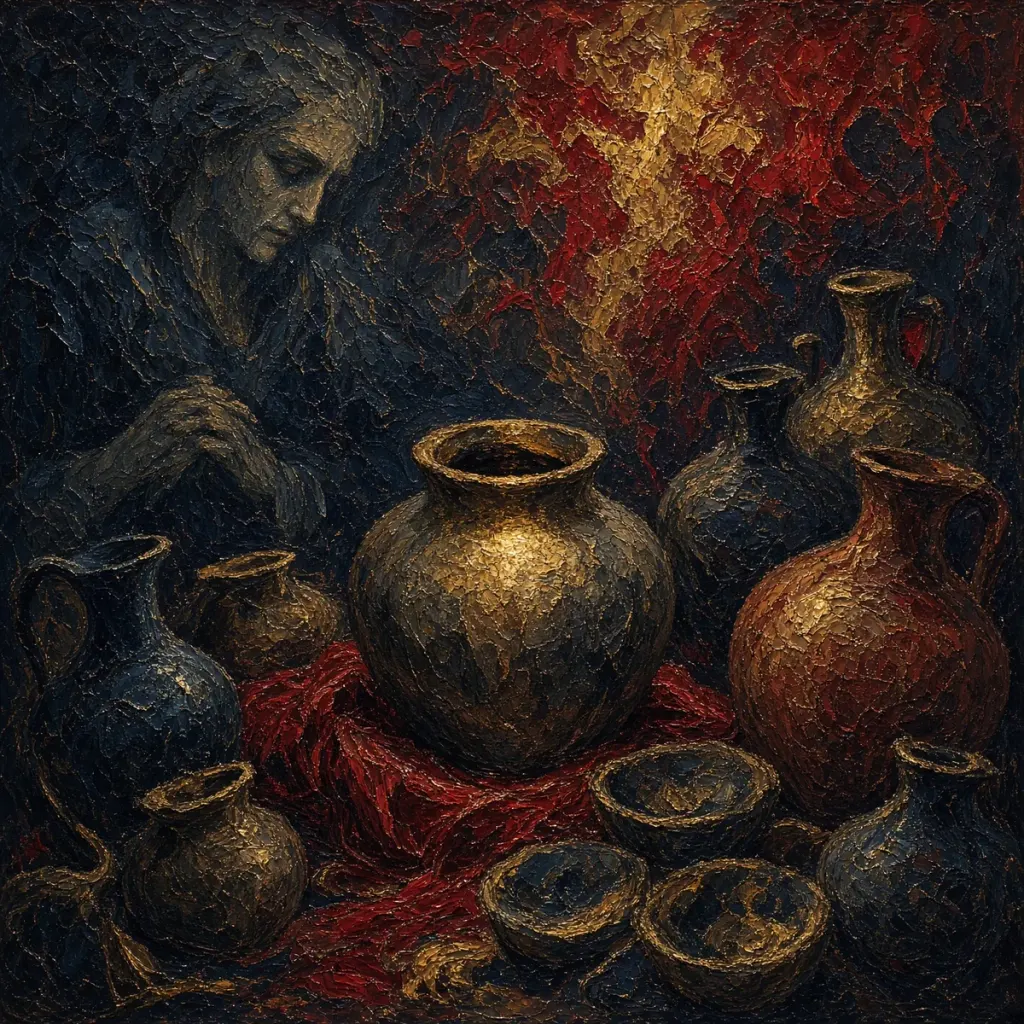
She is told to borrow many empty vessels from her neighbors.
Oil continues until every borrowed vessel is full.
A great woman at Shunem repeatedly constrains Elisha to eat bread.
[Pre-Chorus]
No crowd could see the faithfulness begun,
But quiet mercy worked when day was done.
[Chorus]
Borrow Thee Vessels, Not a Few, hold the promise near,
Through the quiet road and changing year.
A faithful heart kept walking without fame,
And mercy wrote a future in the name.
[Verse 2]
The woman asks nothing because she dwells among her own people.
Gehazi notes that she has no child and her husband is old.
Elisha promises that she will embrace a son at the appointed season.
The grown child goes to his father among the reapers and cries about his head.
[Bridge]
She lays the child on Elisha's bed and rides urgently to Carmel.
The mother bypasses Gehazi's greeting and clings to Elisha's feet.
Gehazi's staff brings no response, so Elisha enters and prays alone.
Elisha stretches upon the child, who warms, sneezes seven times.
[Final Chorus]
Borrow Thee Vessels, Not a Few, hold the promise near,
Through the quiet road and changing year.
A faithful heart kept walking without fame,
And mercy wrote a future through the name.
[Outro]
The years moved on, the faithful promise stayed.
Mercy was larger than the quiet choice they made.
Named in this songElishaGehaziCarmel
About the passage
2 Kings 4: Oil, a room, a child, and bread
The Book of 2 Kings 4 keeps moving from large prophetic claims into rooms, kitchens, fields, debts, and meals. A widow facing the loss of her sons discovers that the little oil left in her house can fill every borrowed vessel and leave enough to pay what she owes. A Shunammite woman builds Elisha a room without asking for reward, receives the promise of a son she never requested, and later carries that dead child back to the bed prepared for the prophet. Her protest forces the original promise back into view, while Elisha's prayer and persistent presence precede the child's restoration. The chapter then turns from one household to a hungry prophetic community: unfamiliar gourds make the common pot dangerous, and twenty barley loaves appear absurdly small for a hundred men. By the end, threatened bodies have repeatedly been preserved through ordinary objects that remain ordinary. Oil, a bed, meal, and barley loaves matter, but the chapter keeps attaching the decisive result to the LORD's word.
Study 2 Kings 4 in depth →