- 01
Exodus 32:1
We wot not what is become of him
The trigger is a missing man and an unbearable wait. The request is for something that goes before them, which is what the pillar had been doing.
- 02
Exodus 32:2-4
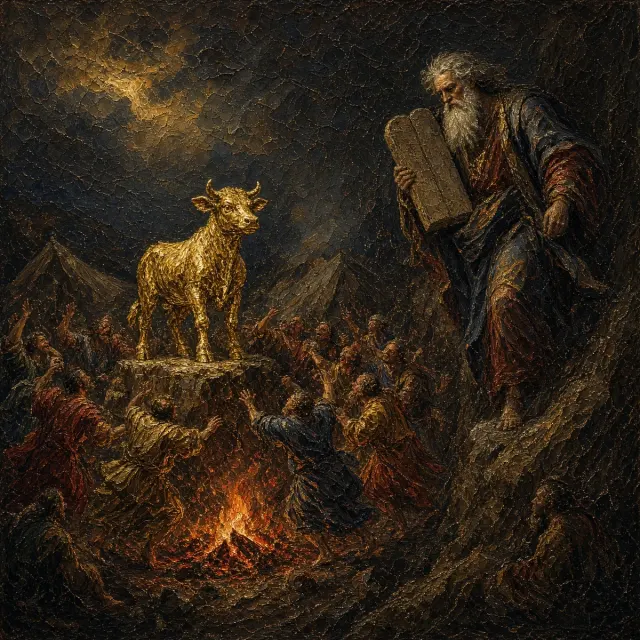
He fashioned it with a graving tool
Aaron does the work himself, and the account says so plainly here and lets him tell a different version twenty verses later.
- 03
Exodus 32:5-6
Tomorrow is a feast to the LORD
The covenant name is used over the calf. Nobody has swapped gods; they have swapped what God is allowed to look like.
- 04
Exodus 32:21-24
There came out this calf
Asked what the people did to him, Aaron says he threw the gold in the fire and the calf emerged on its own. It is the least convincing sentence he ever speaks.
- 05
Exodus 32:30-32
Blot me out of thy book
Moses goes back up to make an atonement and offers himself instead of them, which is refused, and the chapter ends without the matter resolved.







They know Moses is late. They do not know that Moses is dead, gone, or finished, and the verse does not say any of those things has happened. The distance between what they know and what they demand is where the trouble begins. An unexplained absence becomes a reason to commission gods. The requested replacement is something that can go before them, taking the place of guidance already associated with the LORD in Exodus 13:21.
This Moses is a remarkably reduced description of the man currently receiving instructions for their worship. Their speech remembers the departure from Egypt but attaches it to the missing human leader, then proposes a manufactured answer to his absence. Aaron is not a random bystander caught near the crowd. Exodus 24:14 left him among those responsible for matters while Moses was away. The request therefore reaches precisely the man expected to handle the waiting. The mountain's silence has not supplied new instructions. The camp decides to supply its own.