
New · FreePlay The Witnesses The in-depth puzzle battle quest through Bible history

Objects of the Bible

The tablets of the covenant

The only thing in Scripture described as written with the finger of God, and it lasted about forty days.

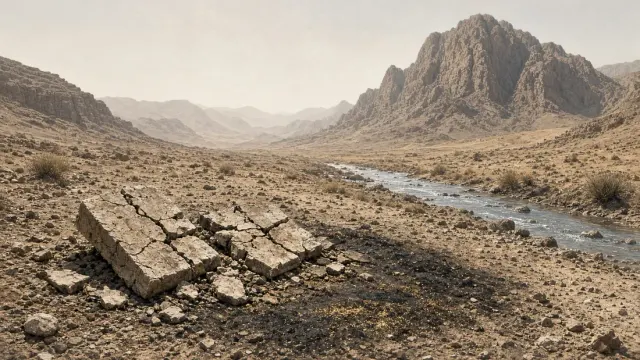
Moses goes up to receive tables of stone, and a law, and commandments which I have written, that thou mayest teach them. He is there forty days and forty nights. The description of what he is given is unusually physical: two tables of testimony, tables of stone, written with the finger of God, and later, written on both their sides, on the one side and on the other were they written. The work was the work of God, and the writing was the writing of God, graven upon the tables.

Where it appearsExodus 24 · Exodus 31 · Exodus 32 · Exodus 34

Scroll down to the account
The tablets of the covenant

The movements, in the order the text gives them.

The Account of The tablets of the covenant

  1. 01

    Exodus 24:12-18

    Come up to me into the mount, and be there

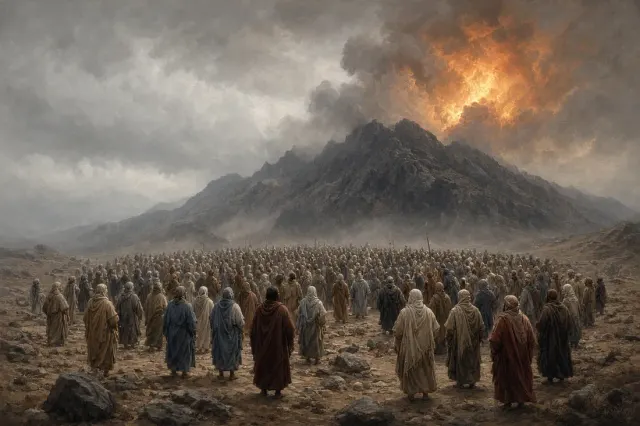
    The instruction includes waiting as well as climbing. A cloud covers the mount six days and he is called on the seventh.

    The tablets are promised for teaching, not for display. That thou mayest teach them gives the stone its destination before Moses ever carries it down the mountain. Earlier in the chapter, the people have heard the covenant read and answered together; the writing does not introduce a secret religion available only to the man inside the cloud. It gives lasting form to words that bind a people.

    The approach is slower than the invitation might suggest. Come up is followed by six days beneath the cloud before the call on the seventh. Moses does not set the appointment simply by arriving. Meanwhile, ordinary disputes still need someone to hear them, so Aaron and Hur are left available to the elders. The mountain burns before Israel's eyes, and the camp still requires administration. The Book of Exodus places those facts together without embarrassment. Revelation has not abolished the practical business of living together, and the law about to be given belongs to precisely that business.

    Verse by verse

    1. 24:12

      Tables means tablets. The stated purpose of the written commandments is that Moses should teach them.

    2. 24:14

      Aaron and Hur are designated to handle matters during the absence; the passage does not describe a camp without responsible leadership.

    3. 24:16-18

      The text gives six days before the seventh-day call and a forty-day stay. It does not explicitly explain how those periods are to be added or overlapped.

    Exodus 24:12-18

    King James Version · 7 verses

    24:12And the LORD said unto Moses, Come up to me into the mount, and be there: and I will give thee tables of stone, and a law, and commandments which I have written; that thou mayest teach them.

    24:13And Moses rose up, and his minister Joshua: and Moses went up into the mount of God.

    24:14And he said unto the elders, Tarry ye here for us, until we come again unto you: and, behold, Aaron and Hur are with you: if any man have any matters to do, let him come unto them.

    24:15And Moses went up into the mount, and a cloud covered the mount.

    24:16And the glory of the LORD abode upon mount Sinai, and the cloud covered it six days: and the seventh day he called unto Moses out of the midst of the cloud.

    24:17And the sight of the glory of the LORD was like devouring fire on the top of the mount in the eyes of the children of Israel.

    24:18And Moses went into the midst of the cloud, and gat him up into the mount: and Moses was in the mount forty days and forty nights.

    Exodus 24:12-18: Come up to me into the mount, and be there
  2. 02

    Exodus 31:18

    Written with the finger of God

    One verse ends the long instructions for the tabernacle and hands him the tables, and the phrase it uses is not used of anything else.

    After all the instructions about human craftsmanship, the final object comes from God's own hand. The chapter has named workers, materials, and skills for the sanctuary. Then the tablets are simply given. Moses receives them when the conversation ends, not as the product of a workshop he has supervised. The contrast is quiet, but exact: much of the sanctuary must be made in obedience; these words arrive already written.

    Tables of testimony names their function. They stand as the written witness of the covenant, not as an ornament that happens to carry religious language. The finger of God places their authority beyond Moses' personal judgment, while the stone gives that authority a tangible form he can carry. Second Corinthians 3:3 later deliberately changes the writing surface from stone to hearts, and the means from ink to the Spirit. Paul's contrast depends on this earlier object having real weight. The stone is not a prop to be dismissed. It is the surface from which his comparison begins.

    Verse by verse

    1. 31:18

      Testimony identifies the tablets as a covenantal witness; Exodus 32:16 also attributes both their making and their engraving to God.

    2. 31:18

      Deuteronomy 9:11 places the giving of the tablets at the end of the forty days. The text does not say Moses possessed them for forty days before breaking them.

    Exodus 31:18

    King James Version · 1 verse

    31:18And he gave unto Moses, when he had made an end of communing with him upon mount Sinai, two tables of testimony, tables of stone, written with the finger of God.

    Exodus 31:18: Written with the finger of God
  3. 03

    Exodus 32:15-19

    He cast the tables out of his hands

    The description of how beautiful they are comes immediately before they are destroyed, which is the order the text chooses on purpose.

    The tablets get their fullest physical description just before they are broken. Both sides bear writing. Both the stonework and the engraving are God's work. The Book of Exodus makes the loss concrete before it happens; Moses is not carrying rough notes that can casually be copied out again. The covenant has acquired a material witness, and that witness is in his hands.

    Below him stands another made object. The calf is human workmanship credited with divine deliverance, while the tablets are divine workmanship rejected by human conduct. That reversal gives the scene its terrible precision. Joshua hears what sounds like battle; Moses distinguishes singing, and the sight confirms the character of the noise. His anger is stated, not something that needs to be invented. He throws the tablets down beneath the mountain where the covenant was received. The passage does not record a command to break them, but neither does it present an accidental slip. The broken stone makes the already broken allegiance visible.

    Verse by verse

    1. 32:15

      The writing covered both sides. The passage does not specify the tablets' dimensions or how the commandments were divided between them.

    2. 32:16

      The repeated attribution to God contrasts with the calf Aaron fashioned in 32:4.

    3. 32:19

      Moses' anger is explicit. No divine command to throw the tablets is reported in this passage.

    Exodus 32:15-19

    King James Version · 5 verses

    32:15And Moses turned, and went down from the mount, and the two tables of the testimony were in his hand: the tables were written on both their sides; on the one side and on the other were they written.

    32:16And the tables were the work of God, and the writing was the writing of God, graven upon the tables.

    32:17And when Joshua heard the noise of the people as they shouted, he said unto Moses, There is a noise of war in the camp.

    32:18And he said, It is not the voice of them that shout for mastery, neither is it the voice of them that cry for being overcome: but the noise of them that sing do I hear.

    32:19And it came to pass, as soon as he came nigh unto the camp, that he saw the calf, and the dancing: and Moses’ anger waxed hot, and he cast the tables out of his hands, and brake them beneath the mount.

    Exodus 32:15-19: He cast the tables out of his hands
  4. 04

    Exodus 34:1-4

    Hew thee two tables of stone

    The replacement is a collaboration. He cuts the stone and rises early and carries it up himself, and the writing is still not his.

    The second set begins with work for Moses' hands. The first tablets were God's workmanship; now Moses must cut the replacement stones himself. But the division of labor stops there. I will write is God's promise, and the promised words are the words that were in the first tablets. Restoration is not a negotiation for easier terms.

    The brief reminder which thou brakest leaves the damage on the record. God does not speak as though nothing happened, yet the command to return means the broken tablets are not the final word about the covenant. Moses climbs again, this time under an explicit instruction that no one accompany him and even the livestock be kept away from the mountain. The renewed approach retains the old seriousness. Deuteronomy 10:1-5 later follows these replacement tablets into the ark, where Moses deposits them as commanded. Stone is cut, words are written again, and a place is prepared to keep them. The covenant is renewed without pretending it was never broken.

    Verse by verse

    1. 34:1

      Like unto the first applies to the replacement tablets; the words are likewise specified as those of the first inscription.

    2. 34:3

      The prohibition includes other people and grazing animals. This ascent is explicitly solitary.

    3. 34:4

      Moses cuts and carries the stone. The verse does not say he composes a replacement covenant.

    Exodus 34:1-4

    King James Version · 4 verses

    34:1And the LORD said unto Moses, Hew thee two tables of stone like unto the first: and I will write upon these tables the words that were in the first tables, which thou brakest.

    34:2And be ready in the morning, and come up in the morning unto mount Sinai, and present thyself there to me in the top of the mount.

    34:3And no man shall come up with thee, neither let any man be seen throughout all the mount; neither let the flocks nor herds feed before that mount.

    34:4And he hewed two tables of stone like unto the first; and Moses rose up early in the morning, and went up unto mount Sinai, as the LORD had commanded him, and took in his hand the two tables of stone.

    Exodus 34:1-4: Hew thee two tables of stone
  5. 05

    Exodus 34:29-30

    He wist not that the skin of his face shone

    He comes down with the second pair unaware of his own face, and Aaron and the people are afraid to come near him.

    The man carrying the evidence is also carrying evidence on his face, and he does not know it. Moses comes down with the tablets in his hand, but the people's attention catches on the skin of his face. The radiance is not a display he has arranged. Moses wist not. That small statement rules out a performance more effectively than a paragraph praising his humility would have done.

    The people are afraid to approach, including Aaron, whose hands had made the calf. But the next movement is not permanent withdrawal: Moses calls them near and communicates the commandments. The brightness does not replace the words he has brought. Second Corinthians 3:7-18 later builds an argument about covenantal glory from this face and the veil described in the following verses. Paul reads the event through the surpassing glory of the new covenant; the Book of Exodus first presents the concrete encounter. A face shines, a frightened assembly hesitates, and the man they hesitate to approach begins to speak.

    Verse by verse

    1. 34:29

      Wist not means did not know. The shining is specified as belonging to the skin of Moses' face.

    2. 34:30

      Fear is explicitly attributed to Aaron and the Israelites; the text does not assign Moses a wish to frighten them.

    3. 34:29-30

      Second Corinthians 3:7-18 draws on this radiance and the subsequent veil. Its covenantal interpretation should be distinguished from details explicitly stated here.

    Exodus 34:29-30

    King James Version · 2 verses

    34:29And it came to pass, when Moses came down from mount Sinai with the two tables of testimony in Moses’ hand, when he came down from the mount, that Moses wist not that the skin of his face shone while he talked with him.

    34:30And when Aaron and all the children of Israel saw Moses, behold, the skin of his face shone; and they were afraid to come nigh him.

    Exodus 34:29-30: He wist not that the skin of his face shone

Why it matters

He comes down carrying them into a camp that has spent the interval making something else, and breaks them beneath the mount. The second set is different in one way that matters: hew thee two tables of stone like unto the first, and I will write upon them the words that were in the first tables, which thou brakest. The stone is now his work and the writing still is not. He is there another forty days, neither eating bread nor drinking water, and comes down with a face he does not know is shining.

2 songs

The music

Every song in the catalogue whose passage falls inside these chapters.

  1. Exodus 32

    The Calf of Gold

  2. Exodus 33-34

    Show Me Thy Glory

Nearby

All the objects

Report an error on this page