

Lyrics · Numbers
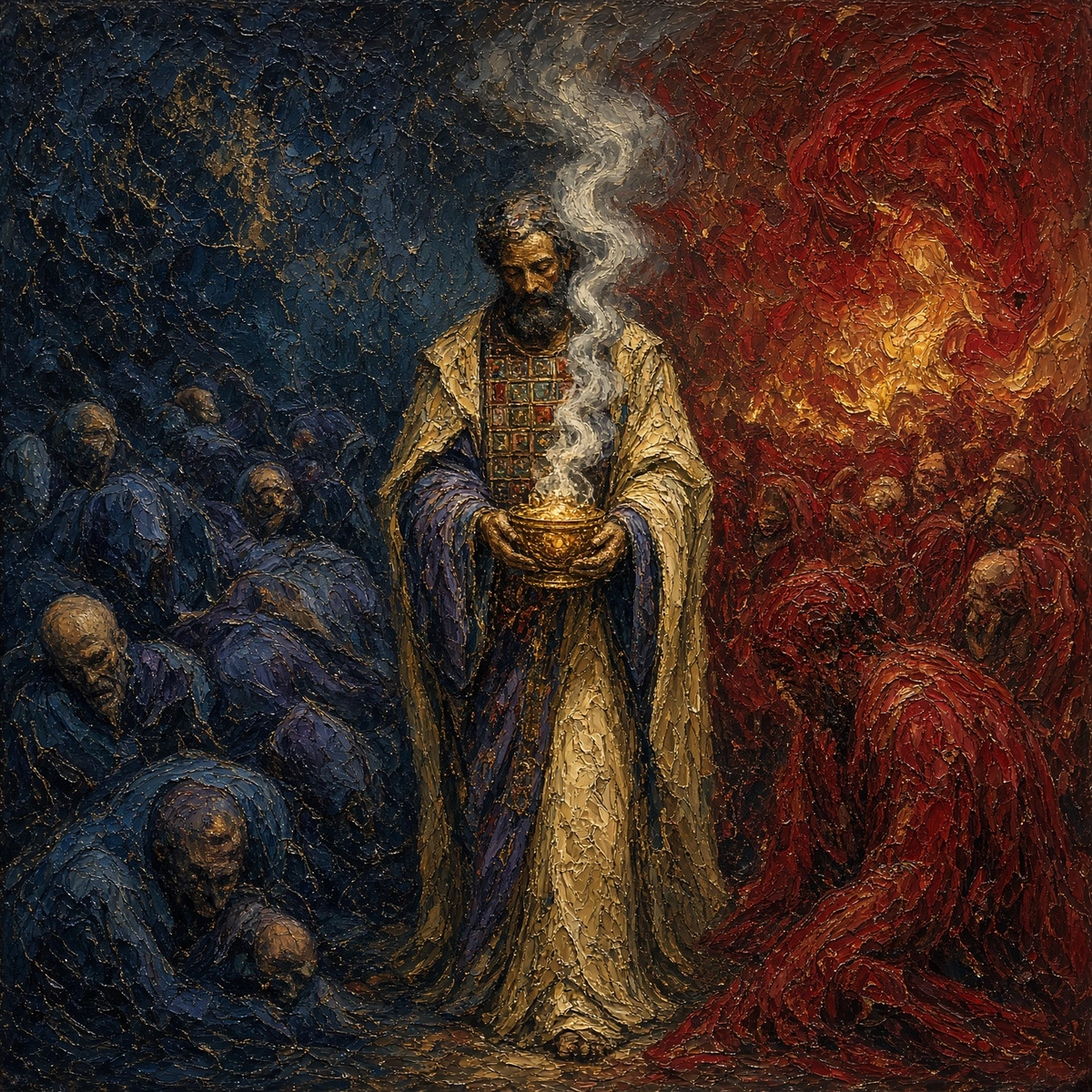
Between the Dead and the Living
Numbers 15:1-17:13
Lyrics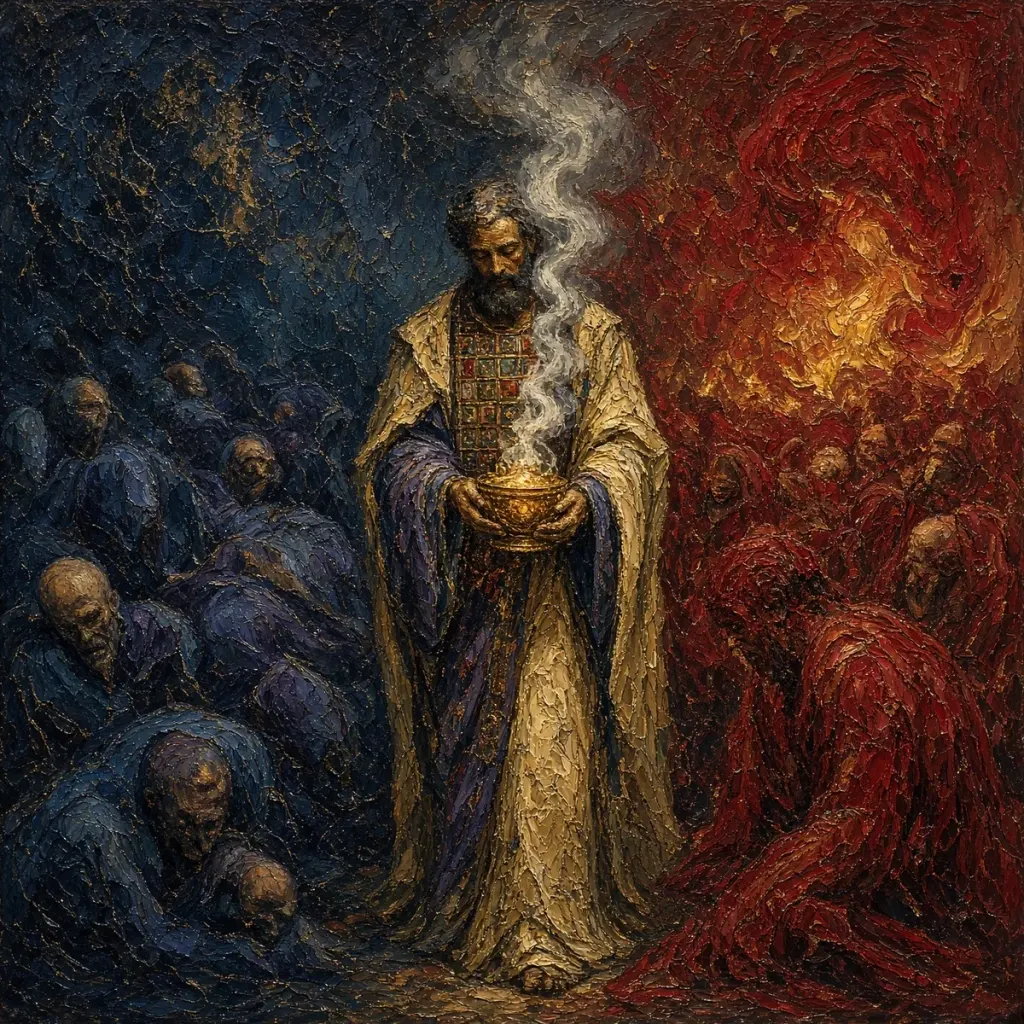
Playing next
About this song
About this song
This song belongs to the Numbers collection. 2 recordings are available to play here, with the complete lyrics below.
- Bible book
- Numbers
- Collection
- Numbers
- Musical styles
- Electronic
About the passage
Numbers 15: Future bread, present accountability, and a visible reminder
Numbers 15 begins in the shadow of the sentence pronounced on the wilderness generation, yet its first words look beyond that sentence to settled life. Grain, oil, wine, and bread all assume that Israel will enter the land and live from its produce. The chapter then turns from future worship to present accountability, carefully separating failure committed in ignorance from defiance that despises the LORD's word. That distinction is followed by the man found gathering sticks on the Sabbath, whose case is held until a ruling is given rather than filled out with motives the text never supplies. The closing command puts remembrance on the edge of ordinary clothing: fringes and a blue cord are meant to catch the eye, turn sight toward the commandments, and resist the wandering of heart and eyes. Promise, atonement, judgment, and memory all meet here. Israel's future remains real, but so does the demand to remember whose people they are.
Study Numbers 15 in depthNumbers 16: The contested priest stands between death and life
Numbers 16 takes a challenge to priestly and Mosaic authority and refuses to leave it as a contest of personalities. Korah's Levite grievance, the Reubenite accusations of Dathan and Abiram, and the support of 250 recognized leaders are brought before the LORD's choice. The judgments are distinct and terrible: the earth opens beneath the rebel households, fire consumes the incense offerers, and their censers are hammered into a permanent covering for the altar. Yet the next morning the congregation accuses Moses and Aaron of killing the LORD's people, and another plague begins. The chapter's final image answers the accusation in an unexpected way. Aaron, whose office has just been contested, runs into the stricken assembly with authorized incense and stands "between the dead and the living." The same priestly service challenged as illegitimate becomes the means of atonement. Numbers therefore ends the crisis not with Aaron enjoying vindication, but with the priest in the middle of danger, serving the people who had opposed him.
Study Numbers 16 in depthNumbers 17: A staff bears fruit and the people fear to approach
Numbers 17 replaces competing claims with twelve named rods laid before the LORD. The procedure is quiet compared with the earth, fire, and plague of the previous chapter, but its purpose is just as serious: the LORD will make his choice visible so that murmuring does not keep ending in death. Aaron's rod does more than sprout. By the next morning it carries buds, blossoms, and almonds, while the other rods are returned to their owners unchanged. The chosen rod is then kept before the testimony as a continuing sign. Yet the people receive a token meant to preserve life with fresh fear, crying that anyone who comes near the tabernacle will die. The chapter deliberately ends before correcting that fear. It establishes the appointment and records the congregation's alarm, leaving Numbers 18 to explain how priests and Levites will guard access so that the sanctuary may remain among Israel without every approach becoming another fatal crisis.
Study Numbers 17 in depth