

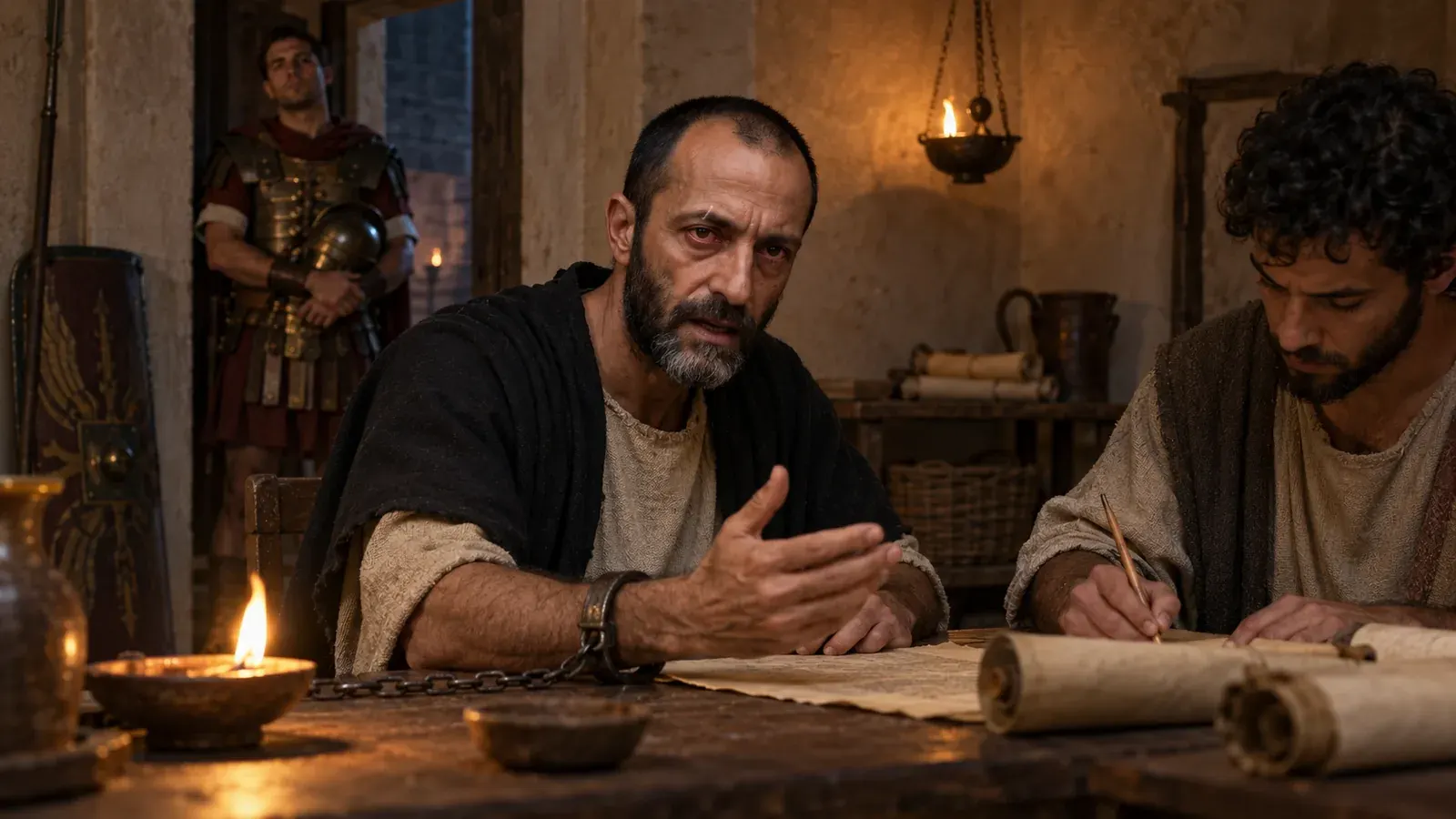
Ephesians 6:10-12
We wrestle not against flesh and blood
The opponent is named before the equipment, and the list of what it is not comes first, which rules out the obvious reading.
Verse by verse
- 6:11
Wiles means schemes or stratagems. The related wording in Ephesians 4:14 concerns deceit, which helps explain why truth belongs in the equipment.
- 6:12
High places translates the same Greek expression rendered heavenly places elsewhere in Ephesians, including 1:3 and 1:20. It is not a reference to hilltop shrines here.

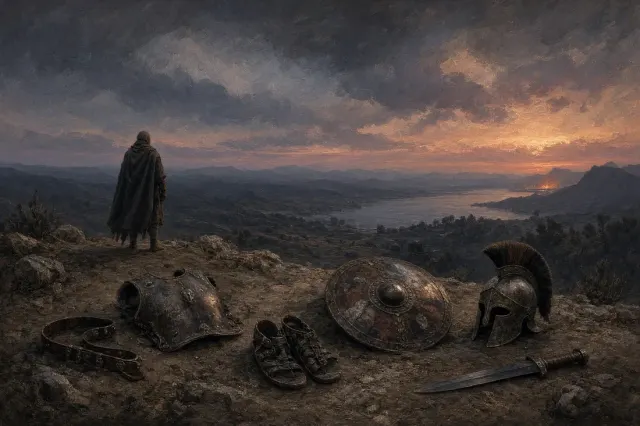
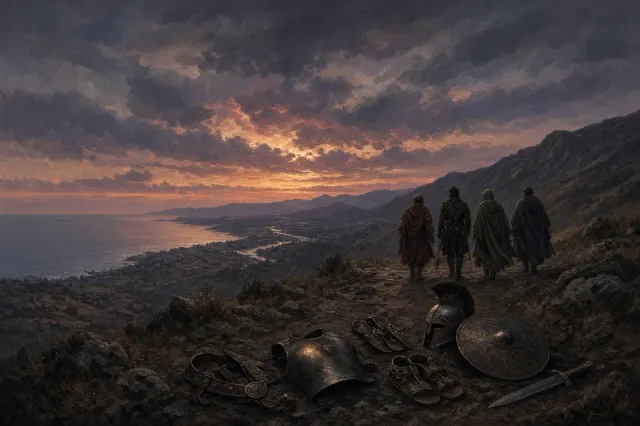
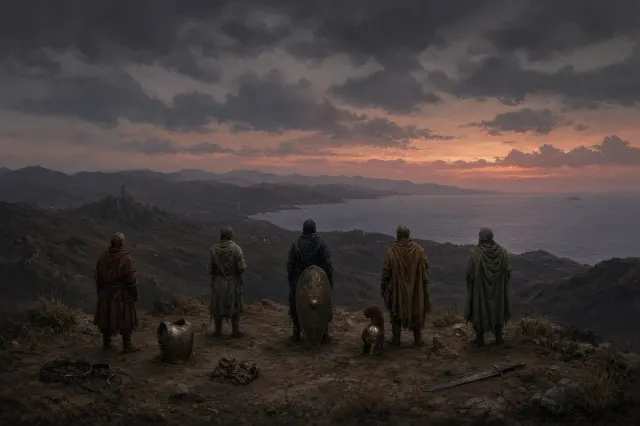
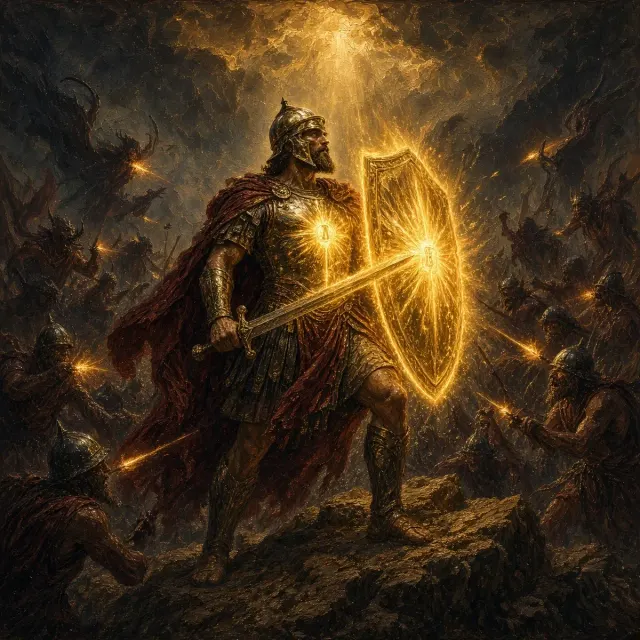

Before Paul names a single piece of equipment, he identifies the source of strength. In the Lord comes before armour, and his might comes before the demand to stand. This is not an invitation to manufacture enough personal intensity to intimidate the invisible world. The equipment belongs to God, and the strength is received rather than invented.
The next surprise is the enemy's identity. Flesh and blood is explicitly excluded as the ultimate opponent. The military language cannot simply be transferred to whatever human beings the reader dislikes. Paul names spiritual powers, then keeps the practical equipment grounded in truth, righteousness, faith, salvation, and peace. The imagery is fierce; its specified resources are not human violence.
Even the pictures shift. Wrestle evokes close struggle, while the following verses describe armour. Paul is not delivering a technical manual for one ancient fighting style. He is giving the conflict both proximity and scale: close enough to require resistance, larger than the person immediately in front of the combatant. The first instruction is about dependence, not bravado.