Objects of the Bible

The basin and the towel

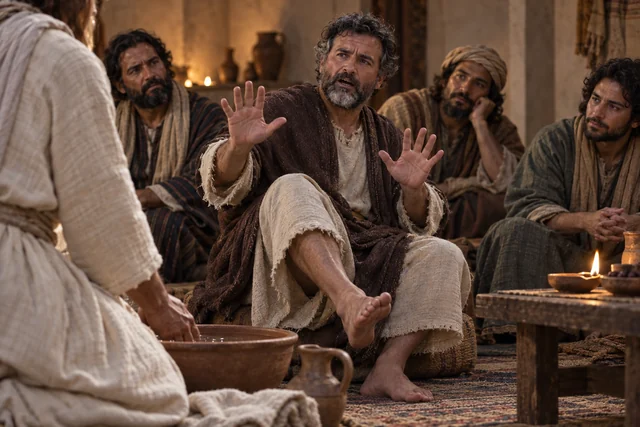
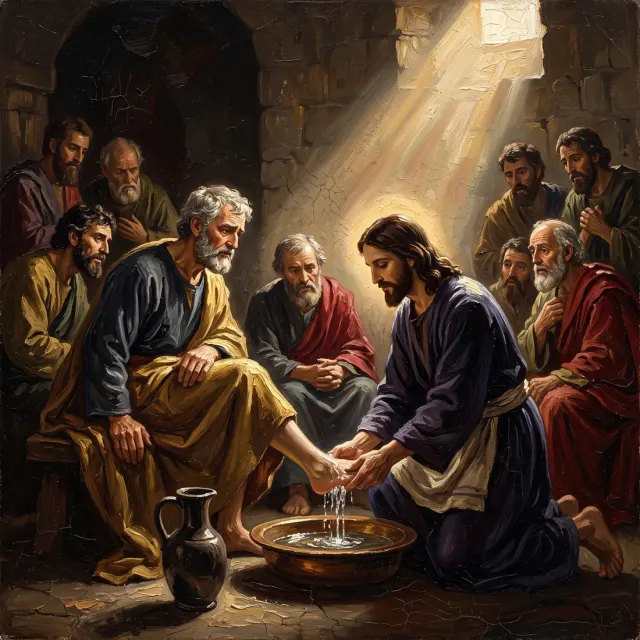
The job belonged to the lowest servant in the house, and there was no servant, so twelve men sat and let each other’s feet stay dirty.

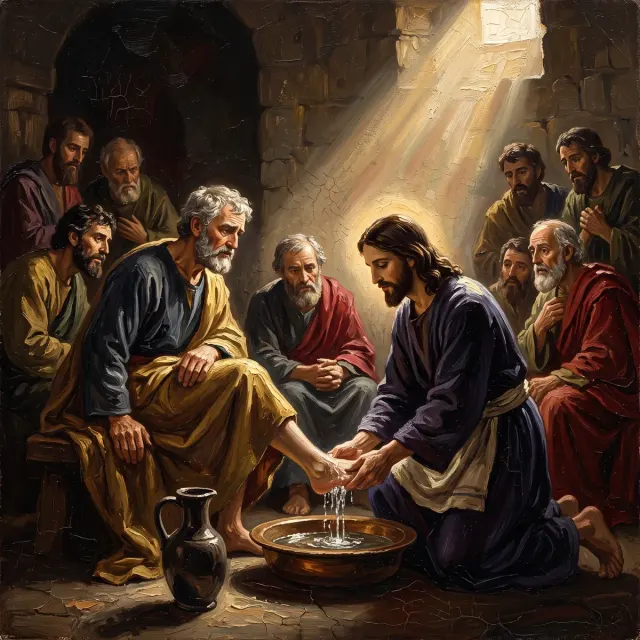
John sets the scene with an unusually long sentence about what was known: knowing that the Father had given all things into his hands, and that he was come from God, and went to God, he riseth from supper, and laid aside his garments, and took a towel, and girded himself. The inventory of what he knew is put immediately before the inventory of what he took off. The account is deliberate about the order.

Where it appearsJohn 13

Scroll down to the account
The basin and the towel

The movements, in the order the text gives them.

The Account of The basin and the towel

  1. 01

    John 13:3-4

    Knowing that the Father had given all things into his hands

    The clause about authority is placed immediately before the verb about undressing, and the sentence does not explain the join.

    All things have been put into his hands. The next thing he puts into them is a towel. The sequence is the point: John does not describe someone forgetting his dignity or briefly acting beneath an identity he must later recover. Jesus knows where he has come from, where he is going, and what the Father has entrusted to him. Knowing those things, he gets up to serve.

    The movements are unhurried and practical. Outer garments come off; the towel is tied around him; in the next verse water goes into a basin. The cloth is not being displayed as a symbol while someone else does the washing. It will be used to dry actual feet. Nor does John supply a missing servant, an argument about whose turn it was, or a roster of men refusing the task. Those additions can distract from the astonishing detail already present. The hands with all things in them take responsibility for this.

    Verse by verse

    1. 13:3

      Knowing governs the action that follows. Jesus' awareness of his authority and origin is the setting for the service, not a contrast John asks to be discarded.

    2. 13:4

      Girded himself means that he fastened the towel around his body; verse 5 identifies it as the cloth used to dry the feet.

    John 13:3-4

    King James Version · 2 verses

    13:3Jesus knowing that the Father had given all things into his hands, and that he was come from God, and went to God;

    13:4He riseth from supper, and laid aside his garments; and took a towel, and girded himself.

    John 13:3-4: Knowing that the Father had given all things into his hands
  2. 02

    John 13:6-8

    Thou shalt never wash my feet

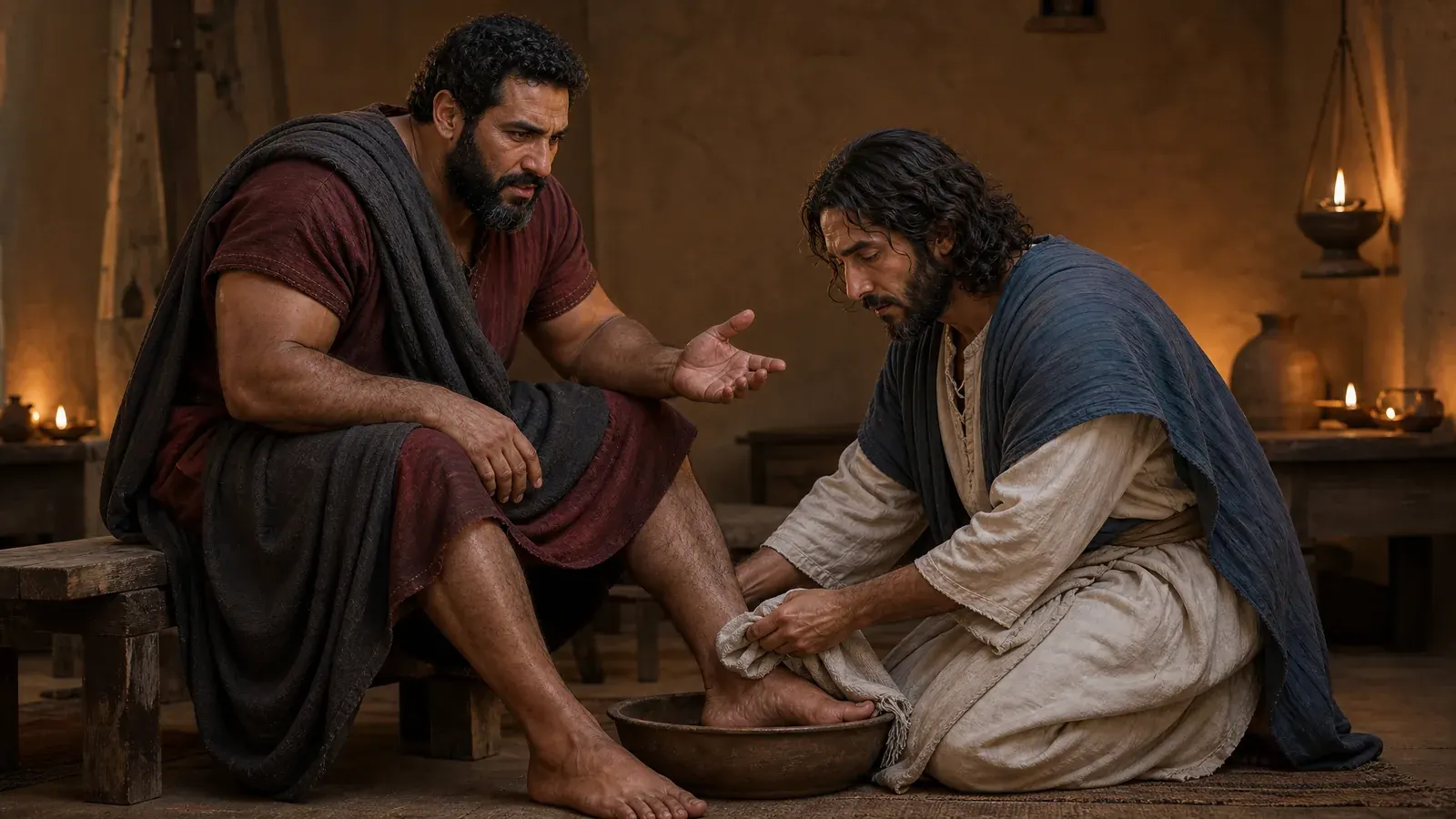
    Peter refuses on principle and reverses completely one verse later, which is how Peter usually appears in this gospel.

    Peter's never lasts one reply. He refuses the washing absolutely, then, when Jesus makes its necessity clear, the next verse finds him requesting hands and head as well. The change is vivid, but it is not merely comic indecision. Both statements try to set the terms of an action Peter has already been told he does not yet understand.

    Jesus' answer moves the matter beyond an awkward reversal of rank. No part with me is language of participation and belonging, not a warning about unsuitable table manners. Peter must receive what Jesus is doing before he can prescribe its limits. The later instruction to wash one another's feet does not erase that first dependence: the disciples are recipients before they are imitators. John also leaves room between action and understanding. Hereafter is a promise, not an insult. Peter is not required to produce an explanation on the spot. He is required to stop turning his incomplete explanation into a veto.

    Verse by verse

    1. 13:7

      Hereafter promises later understanding without specifying that every implication will be grasped immediately when the washing ends.

    2. 13:8

      No part with me concerns Peter's relationship with Jesus. The reply makes the washing more than a matter of hygiene or courtesy.

    John 13:6-8

    King James Version · 3 verses

    13:6Then cometh he to Simon Peter: and Peter saith unto him, Lord, dost thou wash my feet?

    13:7Jesus answered and said unto him, What I do thou knowest not now; but thou shalt know hereafter.

    13:8Peter saith unto him, Thou shalt never wash my feet. Jesus answered him, If I wash thee not, thou hast no part with me.

    John 13:6-8: Thou shalt never wash my feet
  3. 03

    John 13:10-11

    Ye are clean, but not all

    The aside is explained by the Book of John rather than the speaker, and it identifies one man without naming him to the room.

    The exception is not a patch of dirt the towel missed. John immediately explains not all by naming the coming betrayal. Clean has moved beyond the surface of the body, and the explanation is supplied in the passage itself. The washing cannot be read as an automatic certificate that everyone present stands in the same relation to Jesus.

    At the same time, the assurance to the others remains real. Jesus does not say that because one betrays, no one is clean. The sentence distinguishes instead of flattening the whole table into either innocence or corruption. The bath and the washing of feet provide its physical grammar: a person already bathed does not need the whole process repeated to address dirty feet. Christian interpreters have developed different accounts of the spiritual meaning, particularly in relation to baptism and forgiveness. John does not label a sacrament here. What he explicitly labels is the exception. The problem with Judas is betrayal, not insufficient water.

    Verse by verse

    1. 13:10

      Every whit means entirely. The physical comparison distinguishes a completed bath from the washing of feet.

    2. 13:10-11

      Augustine, Tractate on John 56.4, interprets the bath as baptism and the feet as continuing need for forgiveness. That is an explicit ancient interpretation, not a ritual named by these verses.

    John 13:10-11

    King James Version · 2 verses

    13:10Jesus saith to him, He that is washed needeth not save to wash his feet, but is clean every whit: and ye are clean, but not all.

    13:11For he knew who should betray him; therefore said he, Ye are not all clean.

    John 13:10-11: Ye are clean, but not all
  4. 04

    John 13:14-15

    Ye also ought to wash one another’s feet

    The lesson is given as an example to copy rather than an attitude to hold, which is a harder instruction.

    He does not retire the titles. Lord and Master remain correct after the towel has done its work, and their continued correctness supplies the argument. If the one rightly addressed that way has washed their feet, rank cannot serve as their excuse for refusing comparable service. The lesson is not that Jesus was never Lord. It is that the disciples have just seen what their Lord does.

    One another gives the instruction its shape. The action is not to establish a permanent class of washers beneath a permanent class of people entitled to clean feet. The obligation runs across the group. Nor is it enough to admire the performance as an exceptional thing only Jesus could do. An example is something left for imitation. Christians differ over whether this command requires a continuing footwashing rite, a broader pattern of service, or both. The disagreement should not obscure the concrete starting point. Jesus names the task he performed and places his disciples under a corresponding obligation.

    Verse by verse

    1. 13:14

      Lord and Master are retained, not repudiated. The force of the argument depends on Jesus' acknowledged authority.

    2. 13:15

      An example establishes a pattern to follow. This verse does not provide a calendar or detailed order for a later ceremony.

    John 13:14-15

    King James Version · 2 verses

    13:14If I then, your Lord and Master, have washed your feet; ye also ought to wash one another’s feet.

    13:15For I have given you an example, that ye should do as I have done to you.

    John 13:14-15: Ye also ought to wash one another’s feet
  5. 05

    John 13:17

    Happy are ye if ye do them

    The blessing is conditional on action and the condition is stated plainly, with knowing explicitly ruled insufficient.

    There are two conditions in this short sentence, and the second prevents the first from collecting all the credit. Knowing these things is not the same as doing them. Jesus has given both the demonstration and its explanation, but an accurately remembered lesson can still remain unused. The towel has not become a qualification merely because everyone can describe it.

    These things keeps the saying attached to what has just happened. It is not a floating promise that useful information will produce a pleasant life. The blessing belongs to carrying out the service whose meaning Jesus has explained. The chapter then returns to betrayal, and later to Peter's confident promise of loyalty. Knowledge and declaration will have ample opportunity to separate from conduct. John does not have to add an abstract lecture about the danger. The conversation already contains the distinction. The final measure here is not whether the disciples can repeat the lesson, but whether another person's feet actually get washed.

    Verse by verse

    1. 13:17

      The second if attaches the blessing to doing, not simply to possessing information about the example.

    2. 13:17

      James 1:22-25 makes a comparable distinction between hearing and doing, and likewise links blessedness with the deed.

    John 13:17

    King James Version · 1 verse

    13:17If ye know these things, happy are ye if ye do them.

Why it matters

Foot washing was done on arrival by the least of the household. Nobody had done it, and in Luke’s account of the same evening the disciples are arguing about which of them should be accounted the greatest. Peter refuses twice, first out of deference and then, when told what refusing costs, swings to the other extreme and asks for his hands and head as well. The instruction afterwards is not about humility in the abstract. Ye also ought to wash one another’s feet. And Judas, whose feet were in that basin, is still in the room.

2 songs

The music

Every song in the catalogue whose passage falls inside these chapters.

  1. John 13:1-38

    He Loved Them unto the End

    Play here
    Open song pageRead lyrics
  2. John 13:1-17

    Ye Ought Also to Wash One Another's Feet

Nearby

All the objects

Report an error on this page