Objects of the Bible

The bread and the cup

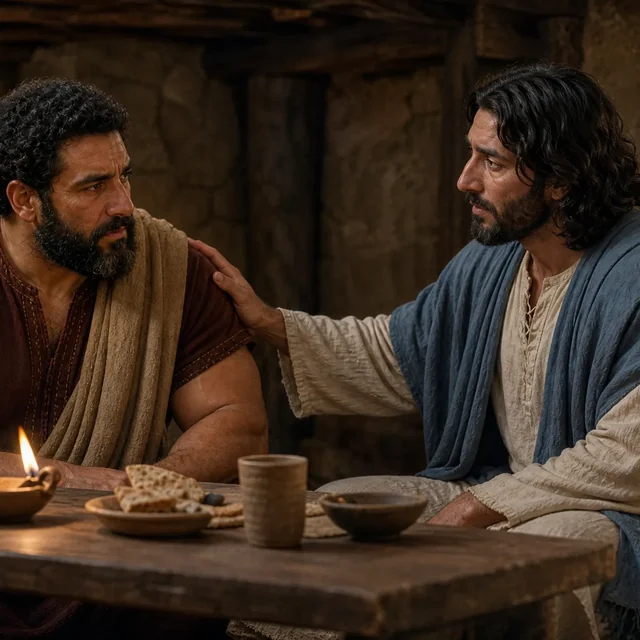
A Passover meal with the wrong explanation attached, given while the man who would sell him was still at the table.

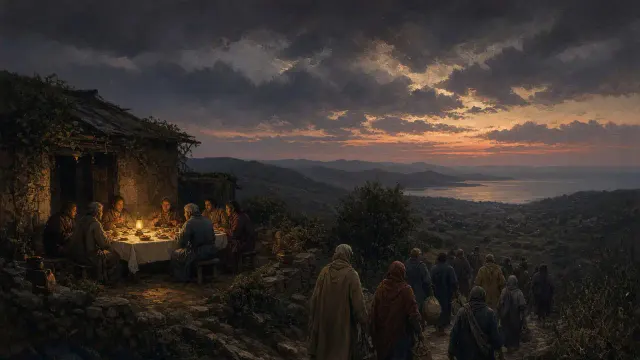
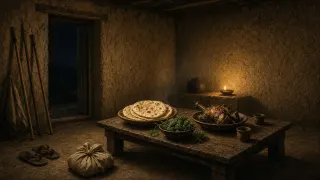
Every element of the meal already had a meaning, rehearsed annually for over a thousand years, and every Jew at that table knew the script. The bread is the bread of affliction. The cup is the cup of redemption. What happens is that the explanation is replaced mid meal: this is my body, this is my blood of the new testament. No argument is offered for the substitution and no one at the table objects to it, which is itself remarkable.

Where it appearsMatthew 26 · Luke 22 · 1 Corinthians 11

Scroll down to the account
The bread and the cup

The movements, in the order the text gives them.

The Account of The bread and the cup

  1. 01

    Luke 22:15

    With desire I have desired to eat this passover with you

    The doubled verb is a Hebrew intensifier. The evening opens with wanting rather than with dread.

    The desire gets said twice. With desire I have desired is not an awkward way of clearing the throat before the important words. It is the important opening: Jesus names the intensity of his longing to eat this particular Passover with these particular people. The room has been found, the meal prepared, and the hour reached. Then the carefully arranged occasion receives a deadline: before I suffer.

    That last phrase keeps the warmth from becoming comfortable. This is not an ordinary farewell dinner whose importance becomes clear only afterward. Jesus explains it under the approaching weight of his death, and the bread and cup will give that explanation something the disciples can hold. Yet suffering is not the object of the desire stated here. Eating with them is. The distinction matters. The Book of Luke lets affection and foreknowledge occupy the same sentence without making either cancel the other. The table is wanted, not merely required.

    Verse by verse

    1. 22:15

      This passover identifies the meal already prepared in Luke 22:7-13; it is not a generic reference to fellowship.

    2. 22:15

      Before I suffer explicitly anticipates suffering. It does not say that suffering itself is what Jesus desires.

    Luke 22:15

    King James Version · 1 verse

    22:15And he said unto them, With desire I have desired to eat this passover with you before I suffer:

    Luke 22:15: With desire I have desired to eat this passover with you
  2. 02

    Matthew 26:26-28

    This is my body, this is my blood

    The oldest liturgy in the nation is reassigned in two sentences, and nobody at the table asks a question.

    The verbs belong to a meal: took, blessed, brake, gave. The explanation does not stop at a meal. Jesus identifies the bread with his body and the cup with his blood, placing his coming death inside actions already passing from his hands to theirs. The physical simplicity is striking. No elaborate equipment is introduced. Bread and a shared cup carry words of immense consequence.

    New testament here means a new covenant, not a volume of Christian writings. Exodus 24:8 joins covenant and blood when Moses sprinkles the people; Jeremiah 31:31-34 promises a new covenant whose terms include forgiveness. Both passages help the language at this table come into focus. The words are not detached predictions that he will die. They interpret that death as blood shed for many for the remission of sins. Whatever later Christian disagreements about how the bread and cup communicate his presence, this much is explicit: Jesus gives the death a meaning before his executioners give it a date.

    Verse by verse

    1. 26:27

      Drink ye all of it addresses all the disciples; all describes the people invited to drink, not a command to empty every last drop.

    2. 26:28

      Remission means forgiveness. The verse explicitly connects the shedding of Jesus' blood with the forgiveness of sins.

    Matthew 26:26-28

    King James Version · 3 verses

    26:26And as they were eating, Jesus took bread, and blessed it, and brake it, and gave it to the disciples, and said, Take, eat; this is my body.

    26:27And he took the cup, and gave thanks, and gave it to them, saying, Drink ye all of it;

    26:28For this is my blood of the new testament, which is shed for many for the remission of sins.

    Matthew 26:26-28: This is my body, this is my blood
  3. 03

    Luke 22:21

    The hand of him that betrayeth me is with me on the table

    Luke places the announcement after the bread and cup, which means the meal was shared before the man left.

    The betrayal has a hand on the table. That is a much harsher detail than the presence of an unnamed enemy somewhere outside the room. The sentence locates the danger inside the shared meal, close enough to reach the bread. Luke places it immediately after the words over the cup, so covenant and betrayal stand next to each other without a protective interval.

    The following verse holds two claims together: the Son of man goes as determined, and the betrayer remains responsible. Divine purpose does not become an alibi for the hand beside the dish. Neither does betrayal make the meal an accident that escaped Jesus' notice. Different Gospel accounts arrange their supper material differently, and this line should not be stretched into a timetable settling every disputed detail of Judas's departure. Its own point is already severe enough. Table fellowship, normally a visible sign of belonging, can be occupied by someone acting against the host. Proximity is not innocence.

    Verse by verse

    1. 22:21

      The hand makes the betrayer's presence concrete. Luke does not describe a distant conspiracy only.

    2. 22:21

      Luke places this statement after the bread and cup sayings; comparison with other Gospels should preserve that order rather than silently rearrange it.

    Luke 22:21

    King James Version · 1 verse

    22:21But, behold, the hand of him that betrayeth me is with me on the table.

    Luke 22:21: The hand of him that betrayeth me is with me on the table
  4. 04

    Matthew 26:29

    Until that day when I drink it new with you

    The last thing said over the cup is about a future meal, which turns the evening into an interval rather than an ending.

    The hinge of the sentence is until. Jesus announces an abstention, but not an endless one, and the sentence that begins with no more drinking ends with drinking new in his Father's kingdom. The cup therefore points beyond the death it has just explained. The future is not left as an empty room after the disciples have gone home.

    With you deserves its own weight. These are the men who will shortly insist on their loyalty, and whom Jesus will warn about scattering that very night. The promise does not depend on pretending that warning was never spoken. Matthew puts failure and future fellowship within the same stretch of conversation. Nor does the verse supply a date or a detailed map of the kingdom's banquet. It gives the assurance in the language already present on the table: fruit of the vine, drinking together, a meal made new. The farewell contains an appointment, though no calendar is handed round.

    Verse by verse

    1. 26:29

      Fruit of the vine refers to the cup just shared. The verse does not introduce a different drink.

    2. 26:29

      Until makes the statement forward-looking; with you specifies renewed fellowship rather than solitary vindication.

    Matthew 26:29

    King James Version · 1 verse

    26:29But I say unto you, I will not drink henceforth of this fruit of the vine, until that day when I drink it new with you in my Father’s kingdom.

    Matthew 26:29: Until that day when I drink it new with you
  5. 05

    1 Corinthians 11:20-22

    This is not to eat the Lord’s supper

    The rebuke is about arriving early and eating alone. The charge is social before it is theological.


    They have managed to bring supper and lose the Lord's supper. Paul's objection is not that the menu needs improving. His own supper has displaced the Lord's supper, and the result can be measured at either end of the room: one person remains hungry while another is drunk. The meeting has preserved its name while contradicting the meal it claims to observe.

    The sharpest phrase is shame them that have not. Poverty is being made visible as humiliation inside the church's gathering. Paul does not treat that as an unfortunate social detail to be cleared away before the serious theology begins. It is precisely why he recounts the bread and cup in the next verses. The meal handed down from the night of betrayal exposes what their private feasts have become. His final I praise you not is admirably free of diplomatic cushioning. A table announcing a body given for others has become an arrangement for leaving others unfed.

    Verse by verse

    1. 11:21

      Drunken describes intoxication, set against another participant's hunger. Paul is naming actual unequal consumption.

    2. 11:22

      Them that have not refers to people lacking resources in this setting. Their humiliation is part of Paul's charge against the gathering.

    1 Corinthians 11:20-22

    King James Version · 3 verses

    11:20When ye come together therefore into one place, this is not to eat the Lord’s supper.

    11:21For in eating every one taketh before other his own supper: and one is hungry, and another is drunken.

    11:22What? have ye not houses to eat and to drink in? or despise ye the church of God, and shame them that have not? What shall I say to you? shall I praise you in this? I praise you not.

    1 Corinthians 11:20-22: This is not to eat the Lord’s supper

Why it matters

Luke is careful about what was still true in the room. He puts the betrayal announcement after the bread and the cup, and adds behold, the hand of him that betrayeth me is with me on the table. Paul, writing to a church that had turned the meal into a class problem, passes on the same night that he was betrayed as part of the formula, which fixes the timing into the liturgy permanently. The rest of his correction is about people eating before others arrive, and the charge is not irreverence but not tarrying one for another.

3 songs

The music

Every song in the catalogue whose passage falls inside these chapters.

  1. Matthew 26:17-35; Mark 14:12-31; Luke 22:7-38; John 13-17

    This Do in Remembrance

  2. Luke 22:7-23

    The New Covenant Cup

    Play here
    Open song pageRead lyrics
  3. 1 Corinthians 11:17-34

    This Do in Remembrance of Me

Nearby

All the objects

Report an error on this page