New · FreePlay The Witnesses The in-depth puzzle battle quest through Bible history

Objects of the Bible

The Passover lamb

Chosen on the tenth, kept until the fourteenth, and the blood went on the outside of the door where nobody inside could see it.

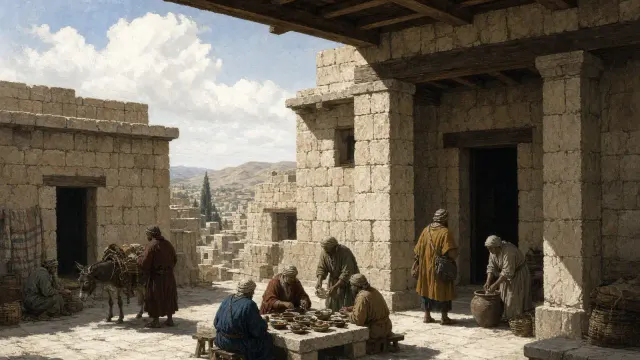
The instructions are domestic and exact. A lamb for a house, and if the household is too little for a lamb then he and his neighbour share one, according to every man’s eating. It is taken on the tenth day and kept up until the fourteenth, which means four days of a lamb living in the house before anything happens to it. Without blemish, a male of the first year, and it may be taken from the sheep or from the goats.

Where it appearsExodus 12

Scroll down to the account
The Passover lamb

The movements, in the order the text gives them.

The Account of The Passover lamb

  1. 01

    Exodus 12:3-6

    Keep it up until the fourteenth day

    Four days between choosing and killing. The measure is per household and per appetite, and a family too small shares with the nearest house.

    The instructions for a nation's deliverance pause to count mouths. A household too small for an animal must join its nearest neighbor, and the calculation is made according to his eating. The Book of Exodus has room for both the whole congregation and the amount one person can manage for supper. Nobody is required to acquire a larger appetite to qualify for the meal. The household remains the setting, but its boundary is opened to the household next door.

    The dates give the preparation a deliberate shape: selection on the tenth, slaughter on the fourteenth. The animal is specified by age, sex, and freedom from blemish; nothing says it must become a family pet during the interval. That familiar addition supplies an emotion the passage does not supply. What it does supply is a community preparing together before departure is possible. Israel is still in Egypt, but its calendar and its kitchens are already being ordered around release.

    Verse by verse

    1. 12:3-4

      The number of participants is calculated by household size and consumption. The nearest neighboring household can share the animal.

    2. 12:5-6

      The animal is an unblemished male of its first year, selected on the tenth and kept until the fourteenth. The passage does not describe its treatment as a household pet.
    Exodus 12:3-6

    King James Version · 4 verses

    12:3Speak ye unto all the congregation of Israel, saying, In the tenth day of this month they shall take to them every man a lamb, according to the house of their fathers, a lamb for an house:

    12:4And if the household be too little for the lamb, let him and his neighbour next unto his house take it according to the number of the souls; every man according to his eating shall make your count for the lamb.

    12:5Your lamb shall be without blemish, a male of the first year: ye shall take it out from the sheep, or from the goats:

    12:6And ye shall keep it up until the fourteenth day of the same month: and the whole assembly of the congregation of Israel shall kill it in the evening.

    Exodus 12:3-6: Keep it up until the fourteenth day
  2. 02

    Exodus 12:7

    Strike it on the two side posts

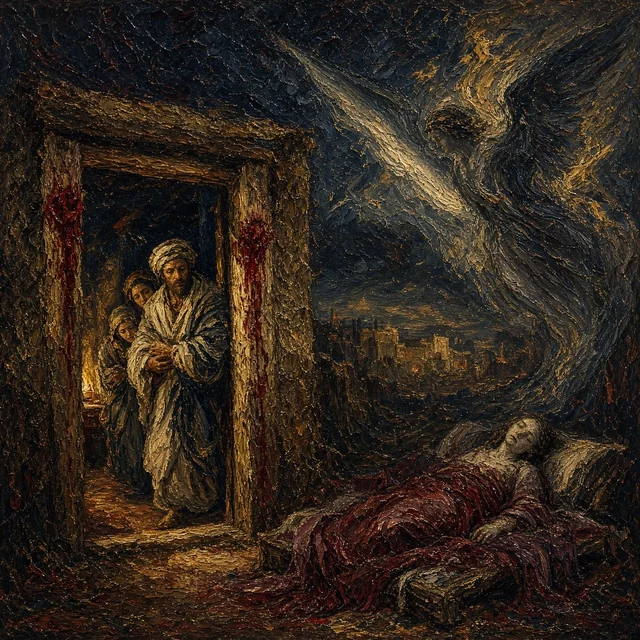
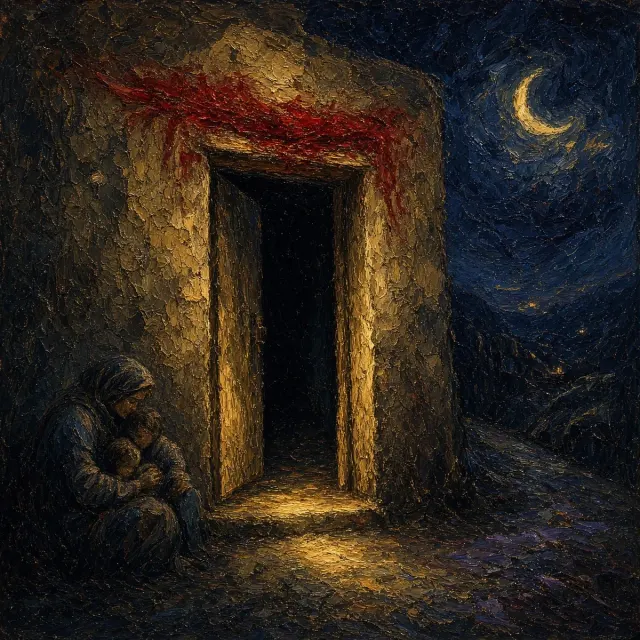
    The mark is on the outside of the door. Everyone protected by it spends the night unable to see the thing protecting them.

    The same animal provides food for the table and blood for the doorway. Those are distinct uses, carefully placed. The flesh is eaten within the houses; the blood marks the entrance. Nothing in the instructions turns the blood into something to drink, and nothing requires a family to leave its shelter to demonstrate courage. Verse 22 will make remaining inside until morning an explicit command. The doorway is a boundary, not a viewing platform.

    The detail also keeps this first Passover recognizably domestic. No tabernacle has yet been erected, no altar at Jerusalem receives these offerings, and the marked entrances belong to houses in Egypt. Deliverance reaches the place where people eat and sleep. Later, Paul names Christ as the Passover sacrifice in 1 Corinthians 5:7, giving the connection an explicit New Testament basis. That later reading does not erase the material arrangement here: blood on the posts, a meal behind them, and a household under the promise attached to that sign.

    Verse by verse

    1. 12:7

      Strike it means apply the blood to the specified parts of the doorway. Verse 22 identifies hyssop as the implement.

    2. 12:7

      The houses marked by blood are the houses where the meal is eaten. The passage links the sign and the sheltered household without prescribing a diagram of a cross.

    Exodus 12:7

    King James Version · 1 verse

    12:7And they shall take of the blood, and strike it on the two side posts and on the upper door post of the houses, wherein they shall eat it.

    Exodus 12:7: Strike it on the two side posts
  3. 03

    Exodus 12:11

    Ye shall eat it in haste

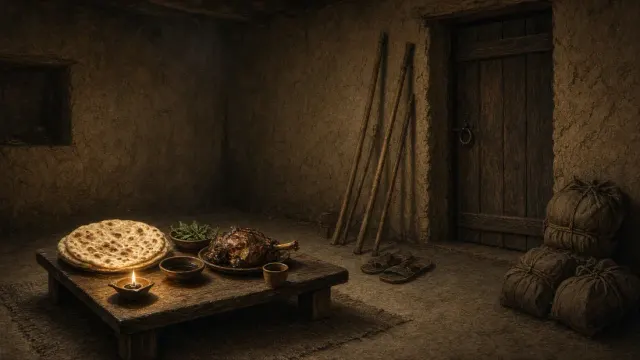
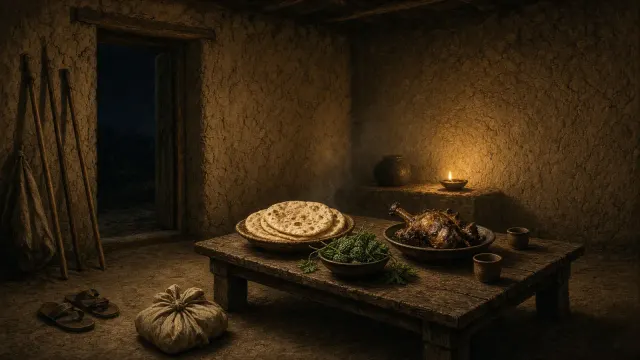
    Dressed to leave, shoes on, staff in hand. The meal is eaten in the posture of people who expect the door to open.

    This is a meal eaten with the journey already on the body. Clothes are gathered for movement, shoes remain on, and a staff is in hand. The usual business of settling down to eat has been interrupted by the business of being ready to leave. Even the posture belongs to the exodus. The command does not describe a leisurely celebration of a freedom achieved long ago; it prepares a people whose departure has not yet happened.

    The final words prevent haste from making the meal seem accidental. It is the LORD'S passover. Its urgency is prescribed, not improvised, and its owner is named. Later generations will keep the memorial after settlement in the land, as verses 24-27 explain; this first night's travel equipment belongs to the circumstances of departure. The distinction matters. The Book of Exodus preserves both the meal that had to be eaten ready for the road and the enduring observance through which that night would be explained.

    Verse by verse

    1. 12:11

      Loins girded describes clothing secured for movement. Shoes and a staff complete the picture of readiness for travel.

    2. 12:11

      This verse specifies the circumstances of the first Passover. Verses 24-27 extend its remembrance into later generations and life in the promised land.

    Exodus 12:11

    King James Version · 1 verse

    12:11And thus shall ye eat it; with your loins girded, your shoes on your feet, and your staff in your hand; and ye shall eat it in haste: it is the LORD’s passover.

    Exodus 12:11: Ye shall eat it in haste
  4. 04

    Exodus 12:13

    When I see the blood, I will pass over you

    The stated condition is the blood and not the household’s conduct. The verb the whole feast is named for is in this sentence.

    The decisive sight in this sentence belongs to God. The blood is a token for the people, but the promise turns on his recognition of it. That order matters: the household does not escape because its occupants watch the doorway intently enough, or because the blood possesses an independent power. The protection is stated as something the LORD will do. The sign has force because he has attached his promise to it.

    Judgment and shelter occupy the same sentence. The verse does not soften the plague into a harmless background for Israel's release; it speaks of destruction in Egypt while declaring that destruction will not fall upon the marked houses. Verse 23 develops the picture by saying that the LORD will not permit the destroyer to enter. The blood is not a claim that these households have never sinned, a claim the passage never makes. It marks the distinction God has commanded them to observe on a night when life depends upon his protection.

    Verse by verse

    1. 12:13

      Token means a sign. The promise identifies the LORD, not the substance by itself, as the one who passes over and protects.

    2. 12:13

      Exodus 12:23 explains the protection by saying that the LORD will not allow the destroyer to enter the marked houses.

    Exodus 12:13

    King James Version · 1 verse

    12:13And the blood shall be to you for a token upon the houses where ye are: and when I see the blood, I will pass over you, and the plague shall not be upon you to destroy you, when I smite the land of Egypt.

    Exodus 12:13: When I see the blood, I will pass over you
  5. 05

    Exodus 12:26-27

    What mean ye by this service

    The rite comes with an instruction about explaining it, so that the meaning survives the people who were there.

    The children have been given a place in the ceremony before they have asked anything. Their question is not treated as an interruption to be silenced. It is anticipated, and the adults are furnished with an answer. The observance is meant to produce speech as well as repetition: an unusual meal opens a conversation, and the answer must explain an actual deliverance. A family can preserve the actions and still fail to explain them. These instructions provide for both.

    The prescribed answer holds two facts together, the Egyptians were struck and Israel's houses were delivered. Neither is allowed to disappear into a pleasant account of a traditional meal. Nor does the answer begin with the cleverness of those who escaped; it names the LORD'S passover and attributes the rescue to him. The people bow while still receiving the instructions, before the midnight event is reported in verse 29. The memory of deliverance is being prepared before the deliverance itself has reached its appointed night.

    Verse by verse

    1. 12:26

      The anticipated question concerns the meaning of the service. The instruction gives explanation a formal place within its transmission.

    2. 12:27

      The people bow before the account of the plague in verse 29. Their worship here responds to the promise and its instructions.

    Exodus 12:26-27

    King James Version · 2 verses

    12:26And it shall come to pass, when your children shall say unto you, What mean ye by this service?

    12:27That ye shall say, It is the sacrifice of the LORD’s passover, who passed over the houses of the children of Israel in Egypt, when he smote the Egyptians, and delivered our houses. And the people bowed the head and worshipped.

    Exodus 12:26-27: What mean ye by this service

Why it matters

Then the detail the whole night turns on: they shall take of the blood and strike it on the two side posts and on the upper door post of the houses. It goes on the outside. The people sheltering behind it never see it, which makes the safety entirely a matter of something done rather than something felt. They eat standing, loins girded, shoes on, staff in hand, in haste. And the day is made an ordinance forever, with a script for when your children ask what this service means to you.

2 songs

The music

Every song in the catalogue whose passage falls inside these chapters.

  1. Exodus 11:1-12:36

    Blood upon the Door

  2. Exodus 11-12

    When the Blood Was Seen

Nearby

All the objects

Report an error on this page