1:5There was in the days of Herod, the king of Judæa, a certain priest named Zacharias, of the course of Abia: and his wife was of the daughters of Aaron, and her name was Elisabeth.
1:6And they were both righteous before God, walking in all the commandments and ordinances of the Lord blameless.
1:7And they had no child, because that Elisabeth was barren, and they both were now well stricken in years.
1:8And it came to pass, that while he executed the priest’s office before God in the order of his course,
1:9According to the custom of the priest’s office, his lot was to burn incense when he went into the temple of the Lord.
1:10And the whole multitude of the people were praying without at the time of incense.
1:11And there appeared unto him an angel of the Lord standing on the right side of the altar of incense.
1:12And when Zacharias saw him, he was troubled, and fear fell upon him.
1:13But the angel said unto him, Fear not, Zacharias: for thy prayer is heard; and thy wife Elisabeth shall bear thee a son, and thou shalt call his name John.
1:14And thou shalt have joy and gladness; and many shall rejoice at his birth.
1:15For he shall be great in the sight of the Lord, and shall drink neither wine nor strong drink; and he shall be filled with the Holy Ghost, even from his mother’s womb.
1:16And many of the children of Israel shall he turn to the Lord their God.
1:17And he shall go before him in the spirit and power of Elias, to turn the hearts of the fathers to the children, and the disobedient to the wisdom of the just; to make ready a people prepared for the Lord.
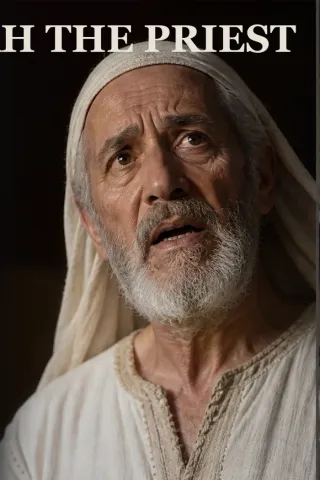
1:18And Zacharias said unto the angel, Whereby shall I know this? for I am an old man, and my wife well stricken in years.
1:19And the angel answering said unto him, I am Gabriel, that stand in the presence of God; and am sent to speak unto thee, and to shew thee these glad tidings.
1:20And, behold, thou shalt be dumb, and not able to speak, until the day that these things shall be performed, because thou believest not my words, which shall be fulfilled in their season.
1:21And the people waited for Zacharias, and marvelled that he tarried so long in the temple.
1:22And when he came out, he could not speak unto them: and they perceived that he had seen a vision in the temple: for he beckoned unto them, and remained speechless.
1:23And it came to pass, that, as soon as the days of his ministration were accomplished, he departed to his own house.
1:24And after those days his wife Elisabeth conceived, and hid herself five months, saying,
1:25Thus hath the Lord dealt with me in the days wherein he looked on me, to take away my reproach among men.



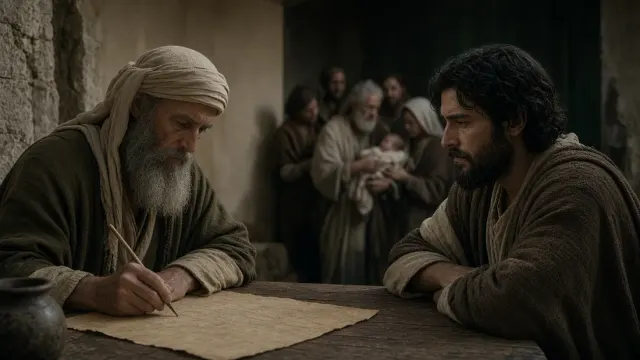
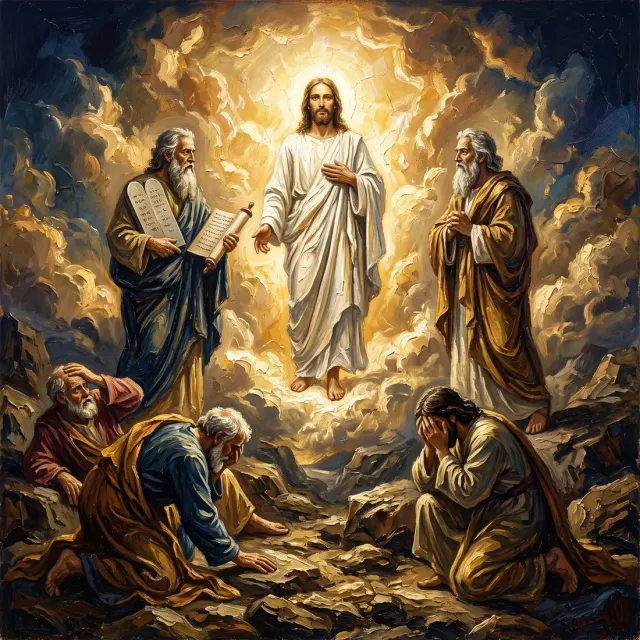
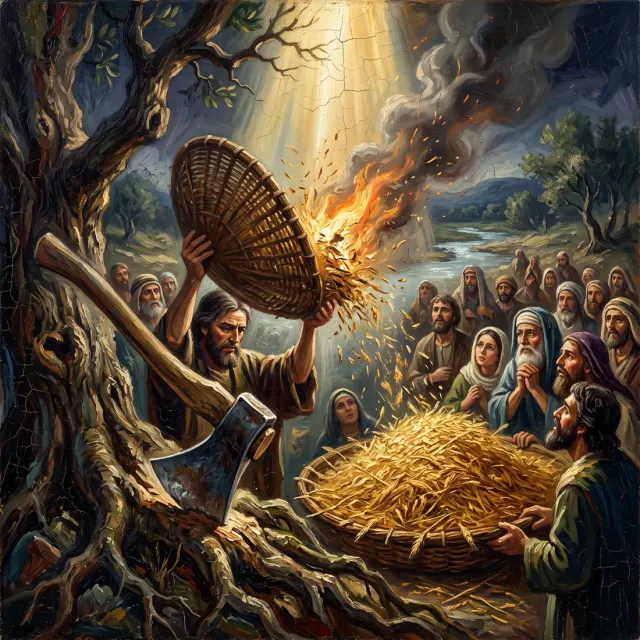
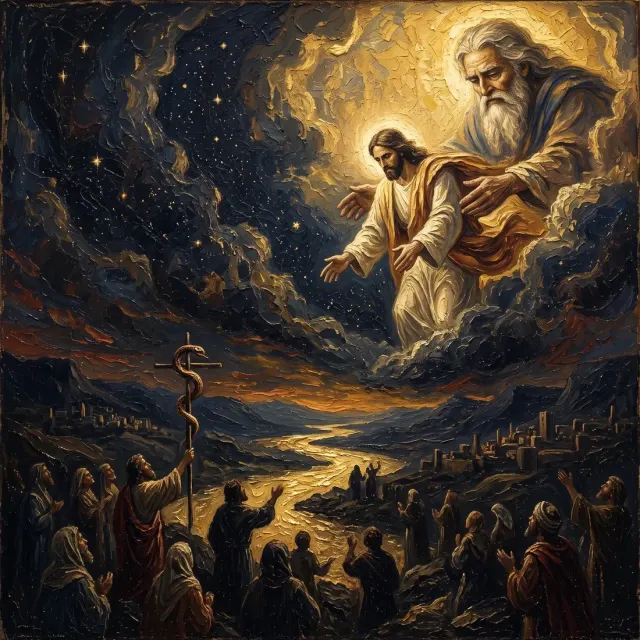






The promised child belongs to his parents, but his task reaches far beyond their house. Gabriel moves from a prayer heard to a people prepared. Those are not two unrelated announcements. The birth that removes Elizabeth's reproach also begins the turning of Israel toward its Lord. A family without a child stands at the opening of a national restoration, and the Book of Luke makes sure that the family's childlessness has not been mistaken for evidence against its righteousness. Both facts are stated before the angel arrives.
John's greatness is measured in the sight of the Lord, not by the size of the crowds he will gather. The wine prohibition marks a consecrated life; the filling with the Holy Ghost begins before public speech is possible. His commission is already relational: fathers and children, the disobedient and the wisdom of the just, a people and their God. The echo of Malachi's final promise is unmistakable. Elijah's spirit and power mean prophetic continuity, not the return of Elijah through another birth. John prepares the way; he is not the destination.
Zechariah, meanwhile, asks for certainty while an angel is standing beside the altar. The incongruity is in the scene itself. His unbelief is explicitly named, and his speech is suspended, but the promise is not. Gabriel's announcement does not wait for the priest to produce a better response. The child will arrive on God's timetable, including the months in which his father cannot explain himself.