New · FreePlay The Witnesses The in-depth puzzle battle quest through Bible history

Objects of the Bible

The bronze serpent

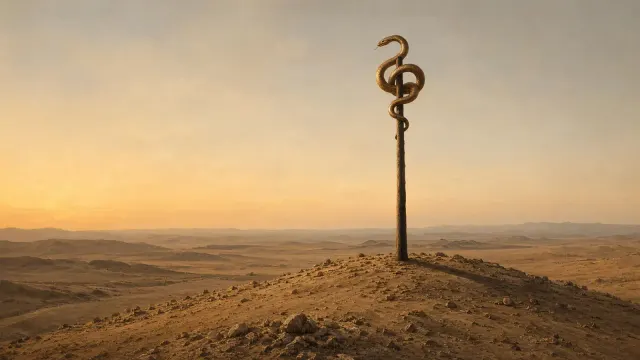
The cure was a model of the thing that was killing them, and you had to look at it.

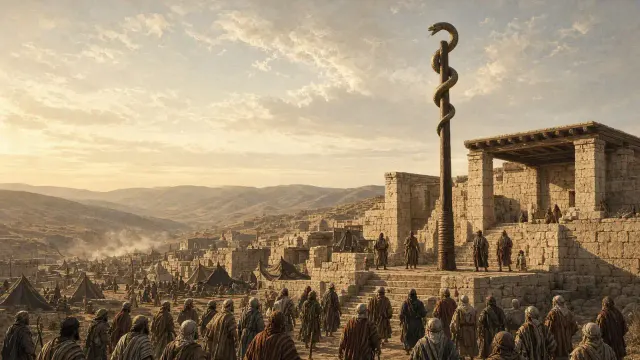
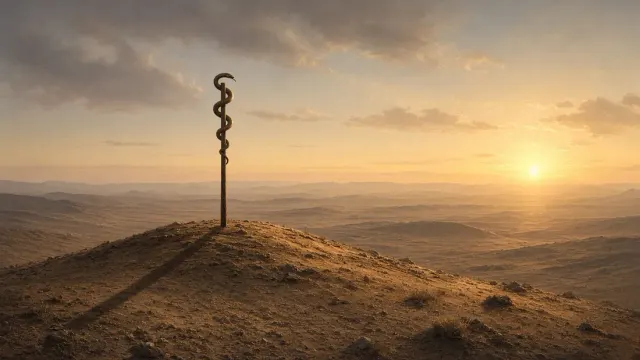
The complaint that starts it is the old one with a new edge: our soul loatheth this light bread. Fiery serpents come among the people and many die, and the confession that follows is unusually direct: we have sinned, for we have spoken against the LORD and against thee. Moses prays, and the answer is not the removal of the snakes. Make thee a fiery serpent, and set it upon a pole, and it shall come to pass that every one that is bitten, when he looketh upon it, shall live.

Where it appearsNumbers 21 · John 3

Scroll down to the account
The bronze serpent

The movements, in the order the text gives them.

The Account of The bronze serpent

  1. 01

    Numbers 21:4-5

    Our soul loatheth this light bread

    The journey is round about the land of Edom and the people are much discouraged because of the way. The complaint names the manna as the grievance.

    There is no bread, they say, before immediately complaining about the bread. The contradiction is not an accounting error the Book of Numbers has failed to catch. Their own words turn the provision into something that no longer counts. This light bread is not praise for a delicate texture; the Hebrew adjective carries contempt. The food that has sustained the journey is dismissed as worthless.

    The route itself is genuinely difficult. The chapter names the detour around Edom, and the preceding chapter records Edom's refusal to let Israel pass. Discouragement because of the way is expressly stated, so the complaint need not be explained by an invented dislike of walking. But the speech moves from hardship to accusation: the departure from Egypt is described as a plan to bring them to death. God and Moses are named together as its targets. The passage allows the difficulty its full reality while exposing what the people make of it. A hard road has become evidence against the deliverer.

    Verse by verse

    1. 21:4

      To compass means to go around. Numbers 20:14-21 gives the refusal of passage through Edom behind the detour.

    2. 21:5

      Qeloqel, translated light, is glossed contemptible or worthless in Brown-Driver-Briggs; it is not a modern nutritional description.
    Numbers 21:4-5

    King James Version · 2 verses

    21:4And they journeyed from mount Hor by the way of the Red sea, to compass the land of Edom: and the soul of the people was much discouraged because of the way.

    21:5And the people spake against God, and against Moses, Wherefore have ye brought us up out of Egypt to die in the wilderness? for there is no bread, neither is there any water; and our soul loatheth this light bread.

    Numbers 21:4-5: Our soul loatheth this light bread
  2. 02

    Numbers 21:6-7

    We have sinned

    The admission is immediate and complete, and the request is that the serpents be taken away, which is not what happens.

    The man they accused is the man they ask to pray. Their confession names both targets of the earlier speech, the LORD and Moses, so the request does more than acknowledge that the snakes are dangerous. It identifies the accusation itself as sin. The reversal is in their words before it is in any change to their circumstances.

    The deaths are reported without decoration. Much people of Israel died is not merely a dramatic way of saying the camp had a fright. Nor does the answer require Moses to produce a speech about the treatment he received. And Moses prayed for the people closes the exchange with an action. They ask for the serpents to be removed; the following verses record a means by which those bitten may live, rather than explicitly announcing that every serpent disappeared. First Corinthians 10:9 later recalls destruction by serpents in its warning against testing Christ. The canonical memory keeps the judgment serious even while this account opens a way of rescue.

    Verse by verse

    1. 21:6

      Fiery describes the serpents; the passage does not identify a modern species or say that they breathed fire.

    2. 21:7

      The confession explicitly names speech against the LORD and Moses. Moses' response is intercession, not a demand for personal compensation.

    Numbers 21:6-7

    King James Version · 2 verses

    21:6And the LORD sent fiery serpents among the people, and they bit the people; and much people of Israel died.

    21:7Therefore the people came to Moses, and said, We have sinned, for we have spoken against the LORD, and against thee; pray unto the LORD, that he take away the serpents from us. And Moses prayed for the people.

    Numbers 21:6-7: We have sinned
  3. 03

    Numbers 21:8-9

    When he looketh upon it, shall live

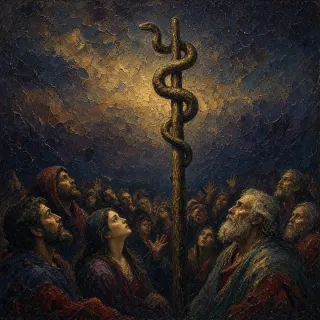
    The remedy is visible, public and passive. A man too weak to walk can still turn his head, which appears to be the design.

    The appointed remedy has the shape of the danger. Moses does not make an image of a harmless animal to replace an unpleasant sight; he makes a serpent. The thing raised on the pole confronts the bitten people with the likeness of what is killing them, but God's promise attaches life to looking at it. The reversal is deliberate in the instructions themselves, not an embellishment added by later symbolism.

    Every one that is bitten makes the condition clear, and the next verse records its fulfillment. The text does not require touching the metal, carrying an offering, or possessing a private copy. Nor does it say that bronze has acquired a healing property independent of God's command. Moses makes what he is told to make, and the bitten person looks as directed. Second Kings 18:4 will distinguish this appointed use from the later burning of incense to the same object. Looking under a promise and worshipping the metal are not interchangeable acts.

    Verse by verse

    1. 21:8

      The pole raises the image into view; no dimensions or detailed design are supplied.

    2. 21:9

      The verse describes the bitten person looking and living. It does not command prayer, sacrifice, or incense to the metal serpent.

    Numbers 21:8-9

    King James Version · 2 verses

    21:8And the LORD said unto Moses, Make thee a fiery serpent, and set it upon a pole: and it shall come to pass, that every one that is bitten, when he looketh upon it, shall live.

    21:9And Moses made a serpent of brass, and put it upon a pole, and it came to pass, that if a serpent had bitten any man, when he beheld the serpent of brass, he lived.

    Numbers 21:8-9: When he looketh upon it, shall live
  4. 04

    2 Kings 18:4

    He called it Nehushtan

    Hezekiah destroys it because it had become an object of incense. A genuine relic of a genuine rescue turns into the thing it once cured.

    Its connection to Moses is stated in the very sentence that records its destruction. The Book of Second Kings does not rescue Hezekiah's action by claiming this was a counterfeit. It was the brasen serpent that Moses had made. The reason given for breaking it is equally explicit: the Israelites were burning incense to it. Its original commission and its later misuse belong to the same object's history.

    That distinction is sharper than a simple rejection of old things. Numbers 21 commanded a particular act in response to a particular danger; it did not institute a continuing cult of the serpent. The verse in Second Kings marks the changed practice, not a discovery that Moses had been wrong to obey. Immediately afterward, Hezekiah is described as keeping the commandments given through Moses. Within the chapter's own framing, breaking Moses' object is not the same as rejecting Moses' authority. The respected origin does not authorize every later use. The incense explains why the metal is broken.

    Verse by verse

    1. 18:4

      The text identifies the object as the serpent Moses made, not a later imitation.

    2. 18:4

      Burning incense is the stated reason for its destruction. The verse does not specify when that practice began or where the object had been kept throughout the intervening period.

    2 Kings 18:4

    King James Version · 1 verse

    18:4He removed the high places, and brake the images, and cut down the groves, and brake in pieces the brasen serpent that Moses had made: for unto those days the children of Israel did burn incense to it: and he called it Nehushtan.

    2 Kings 18:4: He called it Nehushtan
  5. 05

    John 3:14-15

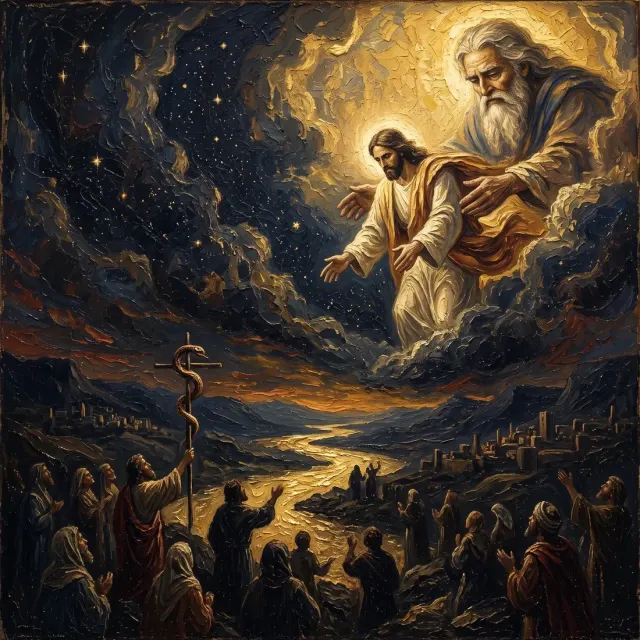
    Even so must the Son of man be lifted up

    The comparison is made to a man who came at night, and it puts the whole logic of looking rather than achieving at the centre of the conversation.

    The connection to Jesus is made by Jesus. As Moses lifted up the serpent establishes the comparison, and even so must the Son of man be lifted up brings it into his explanation to Nicodemus. This is not a later reader discovering a resemblance that the Gospel never names. The language points directly back to Numbers, with life given to those facing death through God's appointed means.

    The comparison is precise without making every feature identical. Looking at the raised serpent corresponds here to believing in the Son of man; survival from the bite opens into the promise of eternal life. It does not follow that Jesus is being identified with the serpent's venom or with everything serpents signify elsewhere. John 12:32-33 later explains lifting up by the kind of death Jesus will die, anchoring the phrase in the cross. The old bronze object had already been destroyed in Israel's history. Its place in Jesus' teaching depends on the event and the promise, not on anyone preserving the metal.

    Verse by verse

    1. 3:14

      The comparison explicitly names Moses and the wilderness serpent of Numbers 21:8-9.

    2. 3:15

      The promised outcome is eternal life, not simply recovery from a bodily illness.

    3. 3:14-15

      John 12:32-33 identifies the lifting up with Jesus' death. That later explanation clarifies the cross reference without adding a new meaning from outside the Gospel.

    John 3:14-15

    King James Version · 2 verses

    3:14And as Moses lifted up the serpent in the wilderness, even so must the Son of man be lifted up:

    3:15That whosoever believeth in him should not perish, but have eternal life.

    John 3:14-15: Even so must the Son of man be lifted up

Why it matters

Nothing is asked of the bitten except a look, and what they have to look at is an image of their own affliction lifted up where everyone can see it. The serpents are not taken away; the dying is. Then the object has a long and bad afterlife. Seven centuries later Hezekiah breaks in pieces the brasen serpent that Moses had made, for unto those days the children of Israel did burn incense to it, and he called it Nehushtan, a piece of brass. And Jesus, talking to Nicodemus at night, reaches for exactly this: as Moses lifted up the serpent in the wilderness, even so must the Son of man be lifted up.

4 songs

The music

Every song in the catalogue whose passage falls inside these chapters.

  1. Numbers 21:4-9

    Look and Live

  2. John 3:1-21

    Born Again

  3. John 3:1-21

    Born of the Spirit

    Play here
    Open song pageRead lyrics
  4. John 3:14-21

    God So Loved the World

Nearby

All the objects

Report an error on this page