New · FreePlay The Witnesses The in-depth puzzle battle quest through Bible history

Objects of the Bible

The harp of David

It got him into the palace, and later he was playing it while a spear came at him.

The job description arrives before the man does. Saul’s servants suggest seeking out a man who is a cunning player on an harp, and one of them gives a recommendation that reads like a reference letter: cunning in playing, and a mighty valiant man, and a man of war, and prudent in matters, and a comely person, and the LORD is with him. Music is the first item on that list and the reason he is sent for.

Where it appears1 Samuel 16 · 1 Samuel 18

Scroll down to the account
The harp of David

The movements, in the order the text gives them.

The Account of The harp of David

  1. 01

    1 Samuel 16:16-18

    Seek out a man who is a cunning player

    The servants propose music as treatment, and the recommendation that follows lists six qualities with playing at the front.

    Saul asks for a musician and receives a recommendation considerably longer than the vacancy requires. Skilled playing, valor, military ability, prudent speech, good appearance, and finally the LORD is with him. The list does not reduce David to a gifted pair of hands. The servant presents a whole person, and the final qualification reaches beyond anything Saul can assess by asking for a tune.

    Skill itself is not treated as an optional ornament. The request is for a cunning player, and Saul repeats it as a man that can play well. Cunning means accomplished here, not dishonest. The king's household is looking for someone who knows the instrument. Yet the larger chapter has already placed this search inside a change neither a hiring decision nor a musical performance can reverse: the Spirit of the LORD has come upon David and departed from Saul in verses 13-14. The man brought in to relieve the present king is the man already anointed to succeed him. The practical appointment carries more weight than its participants' stated purpose.

    Verse by verse

    1. 16:16

      Cunning means skillful or accomplished in this older English usage.

    2. 16:18

      The qualifications are given in the servant's recommendation. No exact age or length of military service is supplied.

    3. 16:18

      The statement that the LORD is with David follows the account of his anointing and reception of the Spirit in 16:13.
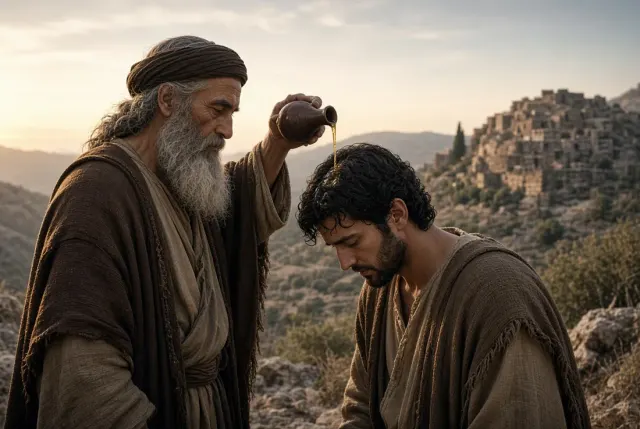
    1 Samuel 16:16-18

    King James Version · 3 verses

    16:16Let our lord now command thy servants, which are before thee, to seek out a man, who is a cunning player on an harp: and it shall come to pass, when the evil spirit from God is upon thee, that he shall play with his hand, and thou shalt be well.

    16:17And Saul said unto his servants, Provide me now a man that can play well, and bring him to me.

    16:18Then answered one of the servants, and said, Behold, I have seen a son of Jesse the Beth-lehemite, that is cunning in playing, and a mighty valiant man, and a man of war, and prudent in matters, and a comely person, and the LORD is with him.

    1 Samuel 16:16-18: Seek out a man who is a cunning player
  2. 02

    1 Samuel 16:21-23

    Saul was refreshed, and was well

    The result is stated without explaining how. David becomes his armourbearer and Saul loves him greatly, which makes what follows worse.

    Saul loved him greatly. The words should not be hurried past merely because the relationship later becomes dangerous. The Book of First Samuel gives David's welcome real substance: affection, a place in service, and a message asking Jesse to let him remain. The man at the harp is not introduced as an intruder the king instantly recognizes and resents.

    The relief is equally plainly stated. David plays, Saul is refreshed, and the troubling spirit departs. The passage attributes an actual effect to the performance without preserving the melody, naming a psalm, or offering a method that guarantees the same result whenever anyone plays. Its opening when describes recurring need, not a permanent change in Saul's condition or standing. The difficult phrase evil spirit from God belongs to the chapter's theological account and should neither be quietly deleted nor converted into a modern diagnosis. Music brings relief within that account. It does not erase the distinction established earlier between the king from whom the Spirit has departed and the servant upon whom the Spirit has come.

    Verse by verse

    1. 16:21

      Armourbearer adds a service role to the musical appointment; it is not another name for a harpist.

    2. 16:23

      The passage reports relief but identifies neither a composition nor sung lyrics.

    3. 16:23

      The wording evil spirit from God should be read as the text's own description, not as a modern medical diagnosis.

    1 Samuel 16:21-23

    King James Version · 3 verses

    16:21And David came to Saul, and stood before him: and he loved him greatly; and he became his armourbearer.

    16:22And Saul sent to Jesse, saying, Let David, I pray thee, stand before me; for he hath found favour in my sight.

    16:23And it came to pass, when the evil spirit from God was upon Saul, that David took an harp, and played with his hand: so Saul was refreshed, and was well, and the evil spirit departed from him.

    1 Samuel 16:21-23: Saul was refreshed, and was well
  3. 03

    1 Samuel 18:10-11

    David played with his hand, as at other times

    The phrase as at other times is doing a lot of work. The routine is unchanged and the spear is new.

    One hand makes music; the other holds a javelin. The verse sets them beside each other with almost unbearable economy. David is doing what he has done before, as at other times. The familiar work continues, but the object in Saul's hand turns the room into a place of immediate danger. The contrast does not need an imagined tremor in the musician's fingers.

    Saul's purpose is not left for speculation. He says he will strike David to the wall, and then the account records David escaping his presence twice. This is more than displeasure with a performance. The chapter has already supplied the setting in Saul's anger over the women's comparison of their victories, and it now supplies an attempted killing. The word prophesied must also be read in this troubling context; no divine message is quoted as authorization for the attack. The Book of First Samuel keeps spiritual disturbance, Saul's stated intention, and David's continued service in the same frame. The hand hired to bring relief is answered by a hand prepared to kill.

    Verse by verse

    1. 18:10

      The Hebrew verb rendered prophesied is also used in accounts of prophetic activity; its use here does not identify the murderous intention as a message from God.

    2. 18:10

      As at other times marks the continuity of David's musical service.

    3. 18:11

      Twice describes David's avoidance of Saul's presence in this account; the verse does not provide a detailed sequence for each escape.

    1 Samuel 18:10-11

    King James Version · 2 verses

    18:10And it came to pass on the morrow, that the evil spirit from God came upon Saul, and he prophesied in the midst of the house: and David played with his hand, as at other times: and there was a javelin in Saul’s hand.

    18:11And Saul cast the javelin; for he said, I will smite David even to the wall with it. And David avoided out of his presence twice.

    1 Samuel 18:10-11: David played with his hand, as at other times
  4. 04

    1 Samuel 19:9-10

    He smote the javelin into the wall

    It happens again with the same setup, and this time David slips away in the night. The harp is not mentioned after that.

    The wall receives the blow intended for David. That physical detail states the violence of the attempt more effectively than an added description of Saul's expression would do. A missed body does not turn the act into an empty threat. The javelin strikes the wall because David has slipped out of its path.

    The oath earlier in the chapter makes the scene heavier still. Saul had sworn, As the LORD liveth, he shall not be slain, after Jonathan defended David. David was then restored to his presence as in times past. Now the same room of service contains another attempt to pin him to the masonry. The harp has not changed its task; the royal assurance has failed to govern the royal hand. David flees and escapes that night, and the following verses move the danger to his own house. The passage records no counterattack from the musician. Its final movement is departure, not retaliation. The man who came into Saul's household to make him well must leave it to remain alive.

    Verse by verse

    1. 19:9

      The juxtaposition of Saul's armed hand and David's playing hand repeats the arrangement in 18:10.

    2. 19:10

      Saul's oath not to kill David appears earlier in the same chapter, in verse 6.

    3. 19:10

      The account of the watched house and Michal's assistance follows in verses 11-12; it is distinct from the missed javelin described here.

    1 Samuel 19:9-10

    King James Version · 2 verses

    19:9And the evil spirit from the LORD was upon Saul, as he sat in his house with his javelin in his hand: and David played with his hand.

    19:10And Saul sought to smite David even to the wall with the javelin; but he slipped away out of Saul’s presence, and he smote the javelin into the wall: and David fled, and escaped that night.

    1 Samuel 19:9-10: He smote the javelin into the wall

Why it matters

What the playing does is described plainly and without mechanism: David took an harp, and played with his hand, so Saul was refreshed, and was well, and the evil spirit departed from him. It works, repeatedly, for years. The same instrument is in his hands in chapter 18 when Saul throws a javelin at him twice, and David avoids out of his presence twice. The job that got him in is the job he is doing when the house turns against him, and he keeps doing it.

3 songs

The music

Every song in the catalogue whose passage falls inside these chapters.

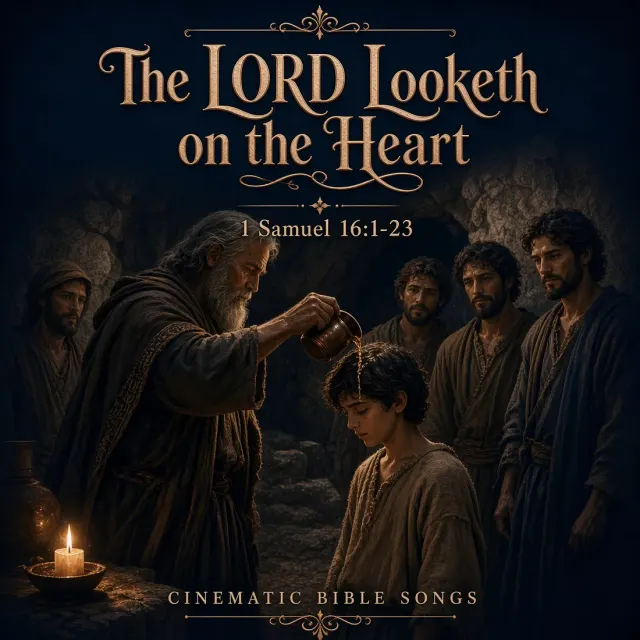
  1. 1 Samuel 16:1-23

    The LORD Looketh on the Heart

  2. 1 Samuel 16

    The Shepherd Anointed

  3. 1 Samuel 18:1-20:42

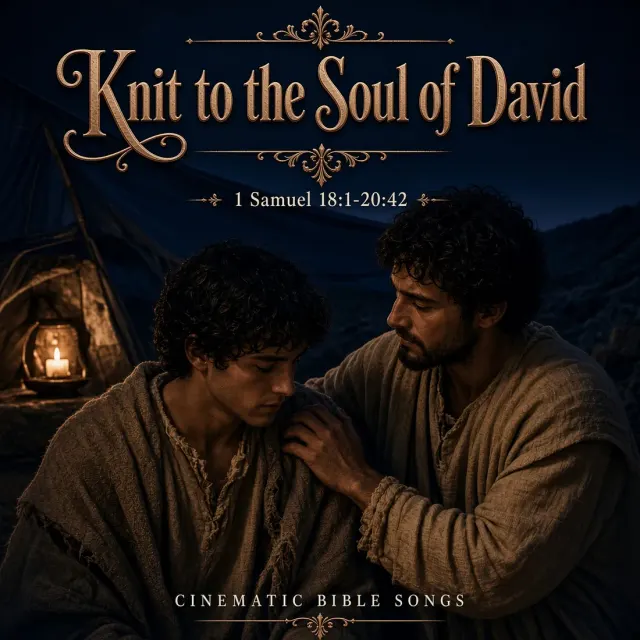
    Knit to the Soul of David

Nearby

All the objects

Report an error on this page