New · FreePlay The Witnesses The in-depth puzzle battle quest through Bible history

People of the Bible

Balaam

Hired to curse a nation, blessed it four times instead, and then found a way to damage it anyway.

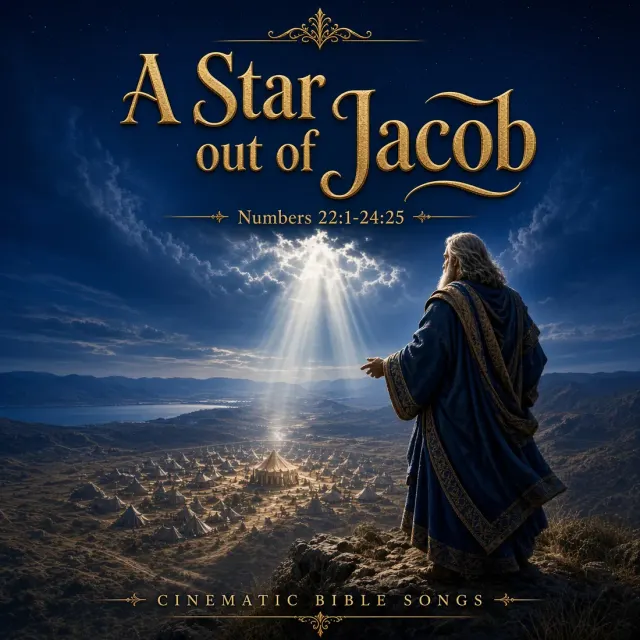
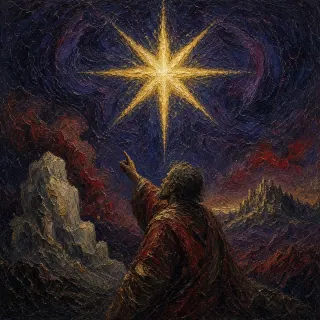
Balaam is a diviner from the Euphrates with a reputation: whoever he blesses is blessed. The king of Moab sends money and sends it twice, and Balaam keeps asking God for a different answer to the same question. On the road his donkey sees what he does not and refuses to move three times, and he beats it until it speaks. Standing over the camp he opens his mouth four times to curse and blessing comes out every time, including a line about a star coming out of Jacob. Then he goes home. What happens next is not in his oracles.

Where he appearsNumbers 22 to 24 · Numbers 31

Scroll down to the account
Balaam

The movements, in the order the text gives them.

The Account of Balaam

  1. 01

    Numbers 22:7-20

    Asking again for a better answer

    The first delegation is refused plainly. A larger one arrives with more honour and more money, and he invites them to stay the night while he asks again.

    The message loses its strongest sentence on the way back to the king. God says that Israel is blessed. Balaam tells the visitors only that the LORD refuses him permission to go. The visitors then report that Balaam refuses to come. A divine verdict has become a difficult appointment, and Balak responds as though a more impressive delegation might clear the diary. The changing wording matters more than the changing personnel.

    Balaam's answer about a house full of silver and gold is not empty religious decoration. The limit he names is real: he cannot make God's word say something else. Yet he asks for another night, although the identity of the people and the prohibition against cursing them have not changed. The Book of Numbers leaves that tension exposed. Second Peter 2:15 later names his love of payment, but the present passage does not supply a private monologue. Its final permission allows a journey, not a curse. The king has obtained a visitor. He has not obtained control of the visitor's mouth.

    Verse by verse

    1. 22:7

      The Hebrew qesamim concerns divination. The KJV renders it here as its rewards, making the proposed engagement a paid religious service.

    2. 22:12

      The people are already blessed before Balaam gives any oracle. His words do not create the status that God declares here.

    3. 22:18

      The expression the LORD my God does not establish Balaam as an Israelite or as a model of covenant faithfulness.

    4. 22:20

      Permission here and divine anger in 22:22 stand side by side. Readers differ over the condition and the manner of his going; the text never grants permission to curse.

    Numbers 22:7-20

    King James Version · 14 verses

    22:7And the elders of Moab and the elders of Midian departed with the rewards of divination in their hand; and they came unto Balaam, and spake unto him the words of Balak.

    22:8And he said unto them, Lodge here this night, and I will bring you word again, as the LORD shall speak unto me: and the princes of Moab abode with Balaam.

    22:9And God came unto Balaam, and said, What men are these with thee?

    22:10And Balaam said unto God, Balak the son of Zippor, king of Moab, hath sent unto me, saying,

    22:11Behold, there is a people come out of Egypt, which covereth the face of the earth: come now, curse me them; peradventure I shall be able to overcome them, and drive them out.

    22:12And God said unto Balaam, Thou shalt not go with them; thou shalt not curse the people: for they are blessed.

    22:13And Balaam rose up in the morning, and said unto the princes of Balak, Get you into your land: for the LORD refuseth to give me leave to go with you.

    22:14And the princes of Moab rose up, and they went unto Balak, and said, Balaam refuseth to come with us.

    22:15And Balak sent yet again princes, more, and more honourable than they.

    22:16And they came to Balaam, and said to him, Thus saith Balak the son of Zippor, Let nothing, I pray thee, hinder thee from coming unto me:

    22:17For I will promote thee unto very great honour, and I will do whatsoever thou sayest unto me: come therefore, I pray thee, curse me this people.

    22:18And Balaam answered and said unto the servants of Balak, If Balak would give me his house full of silver and gold, I cannot go beyond the word of the LORD my God, to do less or more.

    22:19Now therefore, I pray you, tarry ye also here this night, that I may know what the LORD will say unto me more.

    22:20And God came unto Balaam at night, and said unto him, If the men come to call thee, rise up, and go with them; but yet the word which I shall say unto thee, that shalt thou do.

  2. 02

    Numbers 22:21-35

    The donkey that saw the angel

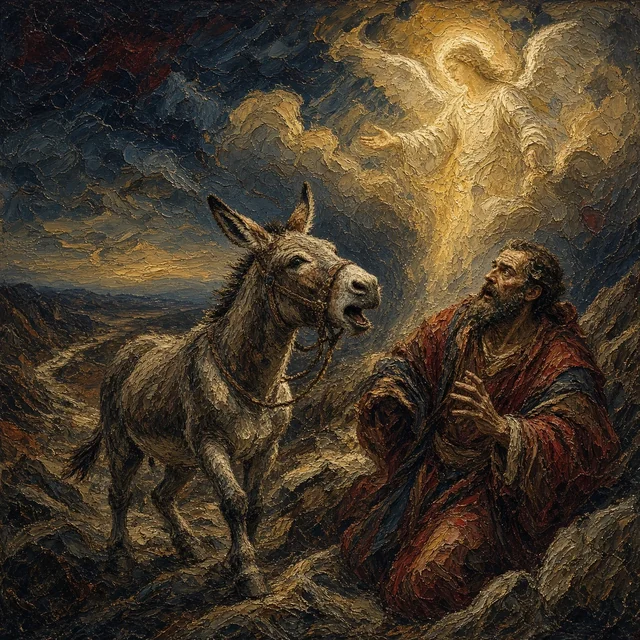
    Three times the animal turns aside, three times he strikes it. When it finally speaks the question it asks is what he has done to deserve this, and only then are his eyes opened.

    Balaam wants a sword while a drawn sword is already blocking the road. The irony is exact, and the danger is not amusing: the animal he strikes is keeping him alive. First she can escape into a field, then only press against a wall, then not turn at all. The narrowing road removes her alternatives one by one. Balaam reads each act of preservation as another offense against him.

    The LORD opens the donkey's mouth and then opens Balaam's eyes. Those are two different gifts, and the professional speaker needs the second before he understands the first. Even his wish to kill her is answered by the angel's declaration that she has prevented his own death. The Book of Numbers gives the animal neither a lecture on prophecy nor a clever insult. She appeals to the long record of her ordinary faithfulness. Balaam has to concede it. When the journey resumes, the restriction on his speech is repeated almost word for word. The man who must speak God's words has first had to hear them from an unexpected mouth.

    Verse by verse

    1. 22:23

      The Hebrew word athon denotes a female donkey. The repeated she in the KJV follows the actual wording, rather than supplying a detail absent from it.

    2. 22:28

      Second Peter 2:16 explicitly recalls this speech as a rebuke that restrained the madness of the prophet.

    3. 22:31

      Balaam does not develop sharper vision through his own skill. The opening of his eyes is expressly attributed to the LORD.

    4. 22:35

      The command repeats the limit in 22:20: permission to accompany the men does not place the message at their disposal.

    Numbers 22:21-35: The donkey that saw the angel

    Numbers 22:21-35

    King James Version · 15 verses

    22:21And Balaam rose up in the morning, and saddled his ass, and went with the princes of Moab.

    22:22And God’s anger was kindled because he went: and the angel of the LORD stood in the way for an adversary against him. Now he was riding upon his ass, and his two servants were with him.

    22:23And the ass saw the angel of the LORD standing in the way, and his sword drawn in his hand: and the ass turned aside out of the way, and went into the field: and Balaam smote the ass, to turn her into the way.

    22:24But the angel of the LORD stood in a path of the vineyards, a wall being on this side, and a wall on that side.

    22:25And when the ass saw the angel of the LORD, she thrust herself unto the wall, and crushed Balaam’s foot against the wall: and he smote her again.

    22:26And the angel of the LORD went further, and stood in a narrow place, where was no way to turn either to the right hand or to the left.

    22:27And when the ass saw the angel of the LORD, she fell down under Balaam: and Balaam’s anger was kindled, and he smote the ass with a staff.

    22:28And the LORD opened the mouth of the ass, and she said unto Balaam, What have I done unto thee, that thou hast smitten me these three times?

    22:29And Balaam said unto the ass, Because thou hast mocked me: I would there were a sword in mine hand, for now would I kill thee.

    22:30And the ass said unto Balaam, Am not I thine ass, upon which thou hast ridden ever since I was thine unto this day? was I ever wont to do so unto thee? And he said, Nay.

    22:31Then the LORD opened the eyes of Balaam, and he saw the angel of the LORD standing in the way, and his sword drawn in his hand: and he bowed down his head, and fell flat on his face.

    22:32And the angel of the LORD said unto him, Wherefore hast thou smitten thine ass these three times? behold, I went out to withstand thee, because thy way is perverse before me:

    22:33And the ass saw me, and turned from me these three times: unless she had turned from me, surely now also I had slain thee, and saved her alive.

    22:34And Balaam said unto the angel of the LORD, I have sinned; for I knew not that thou stoodest in the way against me: now therefore, if it displease thee, I will get me back again.

    22:35And the angel of the LORD said unto Balaam, Go with the men: but only the word that I shall speak unto thee, that thou shalt speak. So Balaam went with the princes of Balak.

  3. 03

    Numbers 23:1-24:9

    Four altars, four blessings

    Balak moves him from ridge to ridge so he will see less of the camp and say something worse, and each time the words come out the other way. How shall I curse whom God has not cursed.

    Balak changes the scenery. The blessing does not change. Seven altars are built, then seven more, then seven more again; the king supplies animals and new vantage points while the word put into Balaam's mouth remains beyond purchase. At one point Balak asks for neither curse nor blessing. That is a considerable retreat from the original commission.

    The declarations also grow larger than his immediate problem. Israel is a people set apart, then a people with its divine king among it, then a camp pictured as watered gardens and a resting lion. In the second oracle, God is not a man, that he should lie answers this particular attempt to reverse a blessing. It is not permission to forget the passages where God responds to repentance or intercession. Nor does the declaration about no iniquity erase the rebellions already recorded in the Book of Numbers. Here the hostile curse cannot obtain a verdict against the people God accompanies.

    By the third oracle Balaam no longer seeks enchantments. He looks toward the wilderness, and the spirit of God comes upon him. The hired curse ends in the old blessing of Jacob. Balak has paid for the sacrifices, but he cannot choose what they are followed by.

    Verse by verse

    1. 23:1

      This range contains three sets of seven altars and three blessing oracles. Numbers 24:10 explicitly counts the blessings as three; the next major oracle begins in 24:15.

    2. 23:10

      The dust of Jacob recalls the promise of innumerable descendants in Genesis 13:16 and 28:14.

    3. 23:20

      Joshua 24:9-10 later summarizes the encounter as God refusing the intended curse and delivering Israel from Balak.

    4. 23:21

      Readers differ over whether the wording chiefly concerns guilt or the harm sought against Israel. The surrounding book does not present Israel as a population without sin.

    5. 24:2

      The text directly attributes this utterance to the spirit of God. Balaam's later wrongdoing does not make these particular words a false prophecy.

    Numbers 23:1-24:9: Four altars, four blessings

    Numbers 23:1-24:9

    King James Version · 39 verses

    23:1And Balaam said unto Balak, Build me here seven altars, and prepare me here seven oxen and seven rams.

    23:2And Balak did as Balaam had spoken; and Balak and Balaam offered on every altar a bullock and a ram.

    23:3And Balaam said unto Balak, Stand by thy burnt offering, and I will go: peradventure the LORD will come to meet me: and whatsoever he sheweth me I will tell thee. And he went to an high place.

    23:4And God met Balaam: and he said unto him, I have prepared seven altars, and I have offered upon every altar a bullock and a ram.

    23:5And the LORD put a word in Balaam’s mouth, and said, Return unto Balak, and thus thou shalt speak.

    23:6And he returned unto him, and, lo, he stood by his burnt sacrifice, he, and all the princes of Moab.

    23:7And he took up his parable, and said, Balak the king of Moab hath brought me from Aram, out of the mountains of the east, saying, Come, curse me Jacob, and come, defy Israel.

    23:8How shall I curse, whom God hath not cursed? or how shall I defy, whom the LORD hath not defied?

    23:9For from the top of the rocks I see him, and from the hills I behold him: lo, the people shall dwell alone, and shall not be reckoned among the nations.

    23:10Who can count the dust of Jacob, and the number of the fourth part of Israel? Let me die the death of the righteous, and let my last end be like his!

    23:11And Balak said unto Balaam, What hast thou done unto me? I took thee to curse mine enemies, and, behold, thou hast blessed them altogether.

    23:12And he answered and said, Must I not take heed to speak that which the LORD hath put in my mouth?

    23:13And Balak said unto him, Come, I pray thee, with me unto another place, from whence thou mayest see them: thou shalt see but the utmost part of them, and shalt not see them all: and curse me them from thence.

    23:14And he brought him into the field of Zophim, to the top of Pisgah, and built seven altars, and offered a bullock and a ram on every altar.

    23:15And he said unto Balak, Stand here by thy burnt offering, while I meet the LORD yonder.

    23:16And the LORD met Balaam, and put a word in his mouth, and said, Go again unto Balak, and say thus.

    23:17And when he came to him, behold, he stood by his burnt offering, and the princes of Moab with him. And Balak said unto him, What hath the LORD spoken?

    23:18And he took up his parable, and said, Rise up, Balak, and hear; hearken unto me, thou son of Zippor:

    23:19God is not a man, that he should lie; neither the son of man, that he should repent: hath he said, and shall he not do it? or hath he spoken, and shall he not make it good?

    23:20Behold, I have received commandment to bless: and he hath blessed; and I cannot reverse it.

    23:21He hath not beheld iniquity in Jacob, neither hath he seen perverseness in Israel: the LORD his God is with him, and the shout of a king is among them.

    23:22God brought them out of Egypt; he hath as it were the strength of an unicorn.

    23:23Surely there is no enchantment against Jacob, neither is there any divination against Israel: according to this time it shall be said of Jacob and of Israel, What hath God wrought!

    23:24Behold, the people shall rise up as a great lion, and lift up himself as a young lion: he shall not lie down until he eat of the prey, and drink the blood of the slain.

    23:25And Balak said unto Balaam, Neither curse them at all, nor bless them at all.

    23:26But Balaam answered and said unto Balak, Told not I thee, saying, All that the LORD speaketh, that I must do?

    23:27And Balak said unto Balaam, Come, I pray thee, I will bring thee unto another place; peradventure it will please God that thou mayest curse me them from thence.

    23:28And Balak brought Balaam unto the top of Peor, that looketh toward Jeshimon.

    23:29And Balaam said unto Balak, Build me here seven altars, and prepare me here seven bullocks and seven rams.

    23:30And Balak did as Balaam had said, and offered a bullock and a ram on every altar.

    24:1And when Balaam saw that it pleased the LORD to bless Israel, he went not, as at other times, to seek for enchantments, but he set his face toward the wilderness.

    24:2And Balaam lifted up his eyes, and he saw Israel abiding in his tents according to their tribes; and the spirit of God came upon him.

    24:3And he took up his parable, and said, Balaam the son of Beor hath said, and the man whose eyes are open hath said:

    24:4He hath said, which heard the words of God, which saw the vision of the Almighty, falling into a trance, but having his eyes open:

    24:5How goodly are thy tents, O Jacob, and thy tabernacles, O Israel!

    24:6As the valleys are they spread forth, as gardens by the river’s side, as the trees of lign aloes which the LORD hath planted, and as cedar trees beside the waters.

    24:7He shall pour the water out of his buckets, and his seed shall be in many waters, and his king shall be higher than Agag, and his kingdom shall be exalted.

    24:8God brought him forth out of Egypt; he hath as it were the strength of an unicorn: he shall eat up the nations his enemies, and shall break their bones, and pierce them through with his arrows.

    24:9He couched, he lay down as a lion, and as a great lion: who shall stir him up? Blessed is he that blesseth thee, and cursed is he that curseth thee.


  4. 04

    Numbers 24:15-19

    A star out of Jacob

    The last oracle looks past the present camp to a ruler still to come. It is the high point of everything he ever said and the last good thing recorded about him.

    The man summoned to prevent Israel's future is made to announce its ruler. Not now, and not nigh, give the vision distance; the star and the sceptre give it a royal shape. The star is not an isolated astronomical clue. It stands beside the emblem of rule, and the following lines describe dominion over named enemies. Moab's king is listening to the announcement of Moab's defeat.

    David's victories over Moab and Edom in Second Samuel 8:2, 14 provide a concrete historical comparison. Christian interpretation has also read the passage as pointing beyond David to Christ. Those readings should not be collapsed into the claim that every detail has only one uncontested referent. The Book of Numbers itself does not name the ruler here. What it does make unmistakable is the reversal of Balak's commission: the people marked for a curse are assigned a future of power. Balaam speaks of opened eyes again, the very gift he needed on the road. His vision is real. It remains a gift, not a possession.

    Verse by verse

    1. 24:16

      The language of opened eyes repeats 24:3-4 and recalls the LORD opening Balaam's eyes in 22:31.

    2. 24:17

      The Hebrew shebet, rendered Sceptre, can mean a rod or staff. Its royal use also appears in Genesis 49:10.

    3. 24:18

      Seir is associated with Esau and Edom in Genesis 36:8. The paired names belong to the same territorial and ancestral setting.

    4. 24:19

      The city is not named in this verse. Identifying a particular city requires an argument beyond the wording given here.

    Numbers 24:15-19

    King James Version · 5 verses

    24:15And he took up his parable, and said, Balaam the son of Beor hath said, and the man whose eyes are open hath said:

    24:16He hath said, which heard the words of God, and knew the knowledge of the most High, which saw the vision of the Almighty, falling into a trance, but having his eyes open:

    24:17I shall see him, but not now: I shall behold him, but not nigh: there shall come a Star out of Jacob, and a Sceptre shall rise out of Israel, and shall smite the corners of Moab, and destroy all the children of Sheth.

    24:18And Edom shall be a possession, Seir also shall be a possession for his enemies; and Israel shall do valiantly.

    24:19Out of Jacob shall come he that shall have dominion, and shall destroy him that remaineth of the city.

    Numbers 24:15-19: A star out of Jacob
  5. 05

    Numbers 31:8, 16

    The counsel at Peor

    He dies by the sword in a battle against Midian, and one verse later Moses names him as the one whose advice put the women in the camp. The curse he could not say, he arranged.

    The beautiful blessings were not a certificate of the speaker's character. Numbers 25 describes the disaster at Peor without naming Balaam as its adviser. Numbers 31:16 supplies that connection explicitly. The man who could not make a curse work helped bring Israel into conduct that exposed it to judgment. Revelation 2:14 identifies the counsel's direction: food offered to idols and fornication. The failure of the hired oracle did not end his harmful involvement.

    The two selected verses are separated by the account of captives and Moses' anger. They are not a transcript of Balaam planning the campaign, and the Book of Numbers does not provide his private explanations. It does provide his death, placed after the names of five Midianite kings. Earlier he wished for the death of the righteous in 23:10. Here the sentence is stark: Balaam also the son of Beor they slew with the sword. The mouth had spoken a true blessing. That truth did not acquit its owner.

    Verse by verse

    1. 31:8

      Joshua 13:22 also records his death and calls him the soothsayer. Balaam is listed alongside the kings here, not identified as another king.

    2. 31:16

      This is the explicit link between Balaam and Peor that Numbers 25 does not supply. Revelation 2:14 additionally names Balak as the recipient of his teaching.

    Numbers 31:8, 16

    King James Version · 2 verses

    31:8And they slew the kings of Midian, beside the rest of them that were slain; namely, Evi, and Rekem, and Zur, and Hur, and Reba, five kings of Midian: Balaam also the son of Beor they slew with the sword.

    31:16Behold, these caused the children of Israel, through the counsel of Balaam, to commit trespass against the LORD in the matter of Peor, and there was a plague among the congregation of the LORD.

    Numbers 31:8, 16: The counsel at Peor

Why it matters

Balaam is the case of a man who says every correct thing and is still counted among the worst names in Scripture. His poetry is genuine prophecy and is quoted for centuries. But Numbers 31 says the women who drew Israel into Peor did it on his advice, and Peter, Jude and Revelation all use his name as shorthand for selling out for money. The book puts both in, the oracle and the counsel, and does not reconcile them for us.

2 songs

The music

Every song in the catalogue whose passage falls inside these chapters.

  1. Numbers 22:1-24:25

    A Star out of Jacob

  2. Numbers 22-24

    The Donkey Saw the Angel

Nearby

All the people

Report an error on this page