New · FreePlay The Witnesses The in-depth puzzle battle quest through Bible history

People of the Bible

Phinehas

Ended a plague with a spear, and years later ended a civil war by asking a question first.

Phinehas is the grandson of Aaron, a priest in a generation that has just watched twenty-four thousand people die at Peor. While the assembly is weeping at the door of the tent, a man walks past them all with a Midianite woman. Phinehas takes a spear and follows them in, and the plague stops. He is given a covenant of peace, which is a strange thing to be given for that act, and the text says he was zealous with God’s own zeal and made atonement.

Where he appearsNumbers 25 · Numbers 31 · Joshua 22

Scroll down to the account
Phinehas

The movements, in the order the text gives them.

The Account of Phinehas

  1. 01

    Numbers 25:1-9

    The spear at Peor

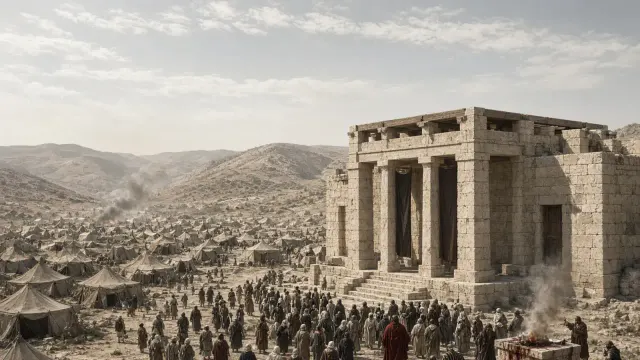
    Israel is dying by the thousand and the leaders are being hanged in the sun. One man brings a woman into the camp in full view, and Phinehas rises up from the congregation and follows.

    Twice verse 6 says in the sight of. Whatever is left unstated about the tent, the arrival is public: Moses and the congregation see the man bring the woman in while the people are weeping at the tabernacle door. The opening verses have already named the breach: sexual wrongdoing, sacrificial meals, and allegiance to Baalpeor. The issue is not merely a woman's nationality. Israel has joined itself to another god.

    Phinehas' genealogy interrupts the movement before the weapon appears: son of Eleazar, son of Aaron the priest. The Book of Numbers identifies the priestly house before describing the killing. Then the account becomes terribly short. He follows them, kills them both, and the plague stops. No speech is given to him, and no private thoughts are supplied to make the violence easier to absorb.

    Nothing about that brevity makes the event small. The final number is twenty-four thousand, and the text does not allow two deaths to conceal that wider devastation. The spear and the arrested plague stand immediately together. Lives stop being lost; those already lost are still counted.

    Verse by verse

    1. 25:1-3

      The opening connects sexual wrongdoing with sacrificial eating and worship of Baalpeor. Numbers 31:16 later attributes the counsel behind the breach at Peor to Balaam.

    2. 25:6

      The women in verse 1 are Moabite; the woman brought into the camp here is Midianite. The chapter does not call these the same nationality.

    3. 25:7

      Exodus 6:25 already identifies Phinehas as Eleazar's son and Aaron's grandson. His mother's name is not given there; she is identified as a daughter of Putiel.

    4. 25:8

      The Hebrew word translated tent is qubbah. The verse does not specify the pair's precise position or describe a sexual act inside it.

    5. 25:9

      Numbers gives 24,000 deaths; 1 Corinthians 10:8 gives 23,000 in one day. The time qualification differs, but neither passage explicitly explains how the two counts relate.

    Numbers 25:1-9

    King James Version · 9 verses

    25:1And Israel abode in Shittim, and the people began to commit whoredom with the daughters of Moab.

    25:2And they called the people unto the sacrifices of their gods: and the people did eat, and bowed down to their gods.

    25:3And Israel joined himself unto Baal-peor: and the anger of the LORD was kindled against Israel.

    25:4And the LORD said unto Moses, Take all the heads of the people, and hang them up before the LORD against the sun, that the fierce anger of the LORD may be turned away from Israel.

    25:5And Moses said unto the judges of Israel, Slay ye every one his men that were joined unto Baal-peor.

    25:6And, behold, one of the children of Israel came and brought unto his brethren a Midianitish woman in the sight of Moses, and in the sight of all the congregation of the children of Israel, who were weeping before the door of the tabernacle of the congregation.

    25:7And when Phinehas, the son of Eleazar, the son of Aaron the priest, saw it, he rose up from among the congregation, and took a javelin in his hand;

    25:8And he went after the man of Israel into the tent, and thrust both of them through, the man of Israel, and the woman through her belly. So the plague was stayed from the children of Israel.

    25:9And those that died in the plague were twenty and four thousand.

    Numbers 25:1-9: The spear at Peor
  2. 02

    Numbers 25:10-13

    A covenant of peace

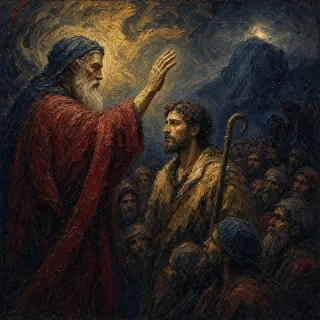
    He is given the priesthood for his descendants forever, and the words used are peace and atonement. The reward and the deed are held together without comment.

    A covenant of peace follows two killings. The Book of Numbers does not soften that collision. Peace is named after wrath has been turned away and the congregation spared from being consumed. It describes what God grants, not a claim that the means were gentle. Phinehas does not deliver a defence of himself. God speaks about him to Moses.

    The explanation turns on whose zeal this was. The Hebrew ties Phinehas' zeal to God's own jealousy, rather than supplying a portrait of an unusually hot temper. The judgment is God's statement about this particular act. Then comes the priestly word: atonement. Aaron had once stood between the dead and the living with incense while a plague stopped, in Numbers 16:46-48. His grandson is now associated with the same result through a very different intervention.

    The promise reaches beyond Phinehas to his seed after him. This is not a commoner being admitted into Aaron's family; his place in that family has already been given. A lasting priestly covenant is attached to his descendants. The paragraph begins with a congregation not consumed and ends with a priesthood continuing.

    Verse by verse

    1. 25:10-11

      The commendation is spoken by the LORD to Moses. It is not a declaration in which Phinehas assigns divine approval to his own conduct.

    2. 25:11

      The Hebrew repeats the root qana three times, linking Phinehas' zeal with God's zeal or jealousy. The repetition is stronger than the varied English wording suggests.

    3. 25:12

      Peace translates shalom. Here it names the covenant God grants after the turning away of wrath described in verse 11.

    4. 25:13

      Atonement explicitly interprets Phinehas' action in relation to the congregation. Numbers 16:46-48 also joins priestly atonement with the stopping of a plague.

    5. 25:12-13

      The line through Phinehas and his son Abishua appears in 1 Chronicles 6:4-15. Ezra 7:1-5 also traces the priest Ezra's ancestry through Phinehas.

    Numbers 25:10-13

    King James Version · 4 verses

    25:10And the LORD spake unto Moses, saying,

    25:11Phinehas, the son of Eleazar, the son of Aaron the priest, hath turned my wrath away from the children of Israel, while he was zealous for my sake among them, that I consumed not the children of Israel in my jealousy.

    25:12Wherefore say, Behold, I give unto him my covenant of peace:

    25:13And he shall have it, and his seed after him, even the covenant of an everlasting priesthood; because he was zealous for his God, and made an atonement for the children of Israel.

    Numbers 25:10-13: A covenant of peace
  3. 03

    Joshua 22:9-34

    What is this altar

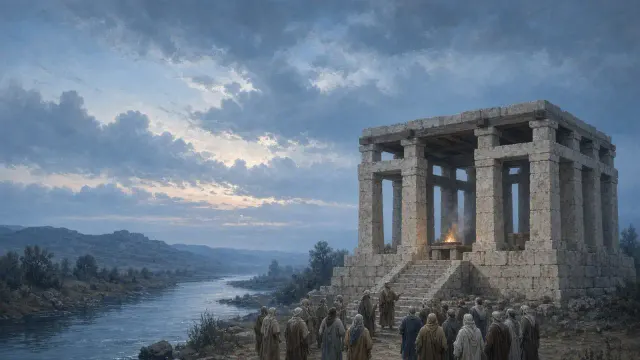
    The tribes across the Jordan build something huge and the rest assemble to fight. Phinehas goes with ten chiefs, asks what it means, is told it is a witness and not for sacrifice, and the war does not happen.

    Phinehas brings the memory of Peor into a dispute that looks alarmingly similar and is not. The western tribes have heard about a large altar, assembled for war, and sent him with ten leaders. The charge is already rebellion. Yet the embassy contains something more generous than an ultimatum: an offer to share the western inheritance if the eastern land is the problem. They are prepared to make room, not merely demand compliance.

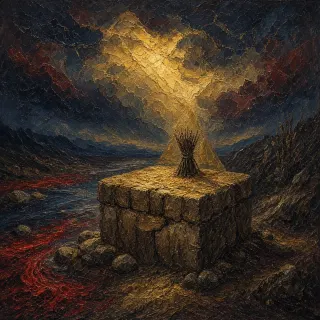
    The eastern tribes answer that the altar is not for sacrifice at all. Their stated fear concerns future children: the Jordan might become a reason to deny their descendants a place in the LORD's worship. The same structure that looks like separation is intended to testify to belonging. It is a copy, a witness, not another functioning sanctuary. Its stones are carrying an argument about the next generation.

    Phinehas accepts that distinction. He does not demand a confession to the charge he brought; he declares that the trespass has not been committed. Peor still matters, but it has not happened again merely because an altar looks suspicious. The report goes back, Israel blesses God, and the threatened invasion is abandoned. Here Phinehas helps preserve the people by finding out what the stones mean.

    Verse by verse

    1. 22:13

      Numbers 31:6 also places Phinehas with the force sent against Midian. Judges 20:28 identifies him before the ark during the conflict with Benjamin; this passage does not describe a rejection of all warfare.

    2. 22:17

      Peor is not a remote example in the mouth of this delegation: Phinehas personally intervened there in Numbers 25:7-8. The remembered danger is judgment falling on the congregation through covenant breach.

    3. 22:19

      The offer of land is conditional on the eastern territory being considered unclean. The delegation proposes sharing its own side of the inheritance rather than accepting another sacrificial altar.

    4. 22:26-28

      The eastern tribes explicitly deny a sacrificial use for the altar and call it a pattern and a witness. Their fear concerns the exclusion of future descendants, not an exclusion already reported as having occurred.

    5. 22:31

      Phinehas connects the LORD's presence with the finding that no trespass has occurred. First Chronicles 9:20 also remembers his earlier authority with the words that the LORD was with him.

    6. 22:34

      Ed represents the Hebrew word for witness. The KJV supplies it as the altar's name from the explanatory clause that follows; the Hebrew has no separate occurrence of that name before the clause.

    Joshua 22:9-34: What is this altar

    Joshua 22:9-34

    King James Version · 26 verses

    22:9And the children of Reuben and the children of Gad and the half tribe of Manasseh returned, and departed from the children of Israel out of Shiloh, which is in the land of Canaan, to go unto the country of Gilead, to the land of their possession, whereof they were possessed, according to the word of the LORD by the hand of Moses.

    22:10And when they came unto the borders of Jordan, that are in the land of Canaan, the children of Reuben and the children of Gad and the half tribe of Manasseh built there an altar by Jordan, a great altar to see to.

    22:11And the children of Israel heard say, Behold, the children of Reuben and the children of Gad and the half tribe of Manasseh have built an altar over against the land of Canaan, in the borders of Jordan, at the passage of the children of Israel.

    22:12And when the children of Israel heard of it, the whole congregation of the children of Israel gathered themselves together at Shiloh, to go up to war against them.

    22:13And the children of Israel sent unto the children of Reuben, and to the children of Gad, and to the half tribe of Manasseh, into the land of Gilead, Phinehas the son of Eleazar the priest,

    22:14And with him ten princes, of each chief house a prince throughout all the tribes of Israel; and each one was an head of the house of their fathers among the thousands of Israel.

    22:15And they came unto the children of Reuben, and to the children of Gad, and to the half tribe of Manasseh, unto the land of Gilead, and they spake with them, saying,

    22:16Thus saith the whole congregation of the LORD, What trespass is this that ye have committed against the God of Israel, to turn away this day from following the LORD, in that ye have builded you an altar, that ye might rebel this day against the LORD?

    22:17Is the iniquity of Peor too little for us, from which we are not cleansed until this day, although there was a plague in the congregation of the LORD,

    22:18But that ye must turn away this day from following the LORD? and it will be, seeing ye rebel to day against the LORD, that to morrow he will be wroth with the whole congregation of Israel.

    22:19Notwithstanding, if the land of your possession be unclean, then pass ye over unto the land of the possession of the LORD, wherein the LORD’s tabernacle dwelleth, and take possession among us: but rebel not against the LORD, nor rebel against us, in building you an altar beside the altar of the LORD our God.

    22:20Did not Achan the son of Zerah commit a trespass in the accursed thing, and wrath fell on all the congregation of Israel? and that man perished not alone in his iniquity.

    22:21Then the children of Reuben and the children of Gad and the half tribe of Manasseh answered, and said unto the heads of the thousands of Israel,

    22:22The LORD God of gods, the LORD God of gods, he knoweth, and Israel he shall know; if it be in rebellion, or if in transgression against the LORD, (save us not this day,)

    22:23That we have built us an altar to turn from following the LORD, or if to offer thereon burnt offering or meat offering, or if to offer peace offerings thereon, let the LORD himself require it;

    22:24And if we have not rather done it for fear of this thing, saying, In time to come your children might speak unto our children, saying, What have ye to do with the LORD God of Israel?

    22:25For the LORD hath made Jordan a border between us and you, ye children of Reuben and children of Gad; ye have no part in the LORD: so shall your children make our children cease from fearing the LORD.

    22:26Therefore we said, Let us now prepare to build us an altar, not for burnt offering, nor for sacrifice:

    22:27But that it may be a witness between us, and you, and our generations after us, that we might do the service of the LORD before him with our burnt offerings, and with our sacrifices, and with our peace offerings; that your children may not say to our children in time to come, Ye have no part in the LORD.

    22:28Therefore said we, that it shall be, when they should so say to us or to our generations in time to come, that we may say again, Behold the pattern of the altar of the LORD, which our fathers made, not for burnt offerings, nor for sacrifices; but it is a witness between us and you.

    22:29God forbid that we should rebel against the LORD, and turn this day from following the LORD, to build an altar for burnt offerings, for meat offerings, or for sacrifices, beside the altar of the LORD our God that is before his tabernacle.

    22:30And when Phinehas the priest, and the princes of the congregation and heads of the thousands of Israel which were with him, heard the words that the children of Reuben and the children of Gad and the children of Manasseh spake, it pleased them.

    22:31And Phinehas the son of Eleazar the priest said unto the children of Reuben, and to the children of Gad, and to the children of Manasseh, This day we perceive that the LORD is among us, because ye have not committed this trespass against the LORD: now ye have delivered the children of Israel out of the hand of the LORD.

    22:32And Phinehas the son of Eleazar the priest, and the princes, returned from the children of Reuben, and from the children of Gad, out of the land of Gilead, unto the land of Canaan, to the children of Israel, and brought them word again.

    22:33And the thing pleased the children of Israel; and the children of Israel blessed God, and did not intend to go up against them in battle, to destroy the land wherein the children of Reuben and Gad dwelt.

    22:34And the children of Reuben and the children of Gad called the altar Ed: for it shall be a witness between us that the LORD is God.


Why it matters

Phinehas is hard, and the Bible does not soften him. What it does do is show him twice. The second time, the eastern tribes build a great altar by the Jordan and the rest of Israel gathers for war. Phinehas is sent ahead, and instead of striking he asks them what they have done, listens to the answer, and finds it good. The same man is remembered for both, and the second scene is the one that keeps the nation whole.

2 songs

The music

Every song in the catalogue whose passage falls inside these chapters.

  1. Numbers 25:1-27:23

    A Shepherd for the Congregation

  2. Joshua 20:1-22:34

    The Altar Called Witness

Nearby

All the people

Report an error on this page