
New · FreePlay The Witnesses The in-depth puzzle battle quest through Bible history

Places of the Bible

Marah and Elim

Three days after the song they found water they could not drink, and a day later more wells than they had people to use them.

The two places are six verses apart and the account puts them together on purpose. They go three days into the wilderness of Shur and find no water, which is already dangerous, and then they find water and it is bitter. The name they give the place is the problem: Marah means bitterness. The people murmur against Moses saying what shall we drink, which is not a theological question, it is the only question there is.

Where it appearsExodus 15

Scroll down to the account

The movements, in the order the text gives them.

The Account of Marah and Elim

  1. 01

    Exodus 15:22-23

    They could not drink of the waters

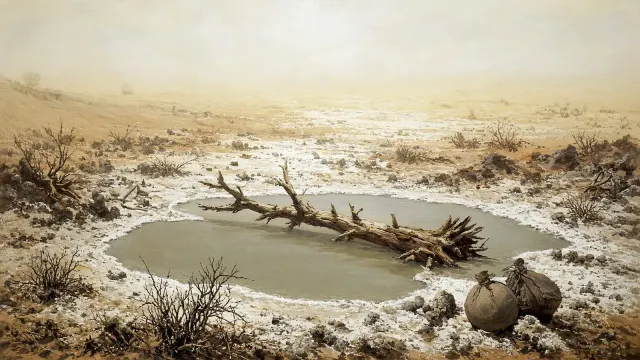
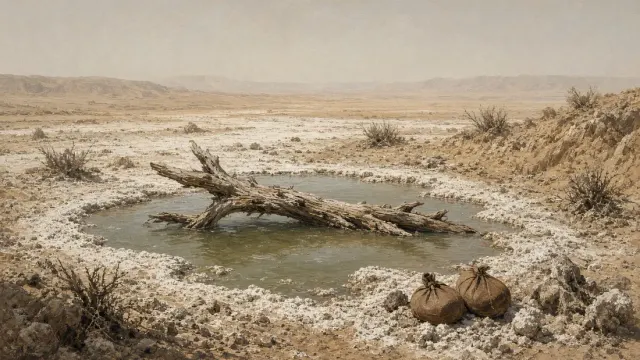
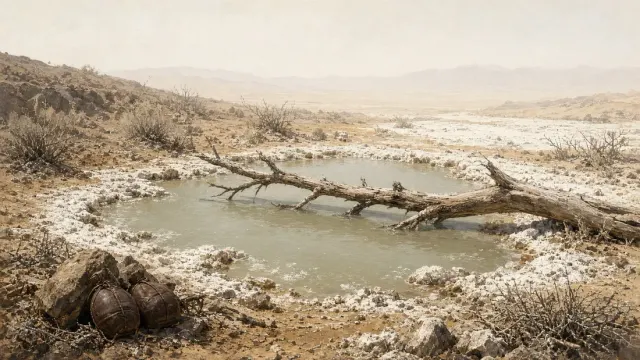
    Three days without water, then water that cannot be used. The place is named for the taste, and the name sticks to the event.

    The first problem after too much water is no water. The sea has ceased to be a barrier, but the wilderness has not ceased to be a wilderness. Three days of travel lead to a place where the needed thing is finally present and still cannot be used. The text moves from found no water to could not drink. Presence is not provision yet.

    That distinction gives Marah its particular severity. These are not people refusing an unfashionable beverage. The Book of Exodus says that they could not drink the waters because they were bitter. It supplies no chemical analysis and no measured quantity, but it does make the inability plain. The name preserves the condition: Marah belongs to the Hebrew language of bitterness. The map carries the taste.

    Moses remains the one bringing Israel onward. Nothing in these verses says that he has lost the route or stepped outside divine guidance. The chapter that has just celebrated deliverance leaves room for thirst without pretending that thirst cancels the deliverance. Its two bodies of water pose opposite problems. At the sea, Israel needed water to move aside. At Marah, Israel needs it to become drinkable.

    Verse by verse

    1. 15:22

      The three days are measured from the departure from the sea. The passage does not state how many days passed between Marah and Elim.

    2. 15:23

      Marah is connected explicitly with the bitter condition of its water. No specific mineral, toxin, or plant remedy is identified.

    3. 15:23

      Could not drink describes an actual obstacle to using the water, not merely a complaint about its flavor.
    Exodus 15:22-23

    King James Version · 2 verses

    15:22So Moses brought Israel from the Red sea, and they went out into the wilderness of Shur; and they went three days in the wilderness, and found no water.

    15:23And when they came to Marah, they could not drink of the waters of Marah, for they were bitter: therefore the name of it was called Marah.

    Exodus 15:22-23: They could not drink of the waters
  2. 02

    Exodus 15:24-25

    The LORD shewed him a tree

    The cure is something already growing there. The verse continues without a pause into a statute and an ordinance and a proving.

    Moses is given a tree, not an explanation of the water. That restraint is worth keeping. The Hebrew word can mean a tree or wood, and the passage names neither a species nor a chemical process. It records what Moses is shown, what he casts into the water, and the change that follows. Turning the verse into a recipe would require ingredients it never supplies.

    There are two kinds of speech in these lines. The people murmur against Moses; Moses cries to the LORD. The complaint reaches the leader, but the appeal does not stop with him. The answer is concrete enough to be handled and thrown. Whatever later symbolism might be drawn from the wood, the immediate result is water the people can drink.

    Then the verse refuses to end at relief. There he made for them a statute and an ordinance, and there he proved them. The repeated there fastens instruction and testing to this particular place of need. Israel has not reached Sinai, but instruction has already begun. Marah is not merely an inconvenient stop on the way to the law. Here, the provision of water and the ordering of the people's life occupy the same sentence.

    Verse by verse

    1. 15:24

      Murmured identifies the manner and target of the complaint. The need for drinking water is not presented as imaginary.

    2. 15:25

      Tree translates ets, a word also used for wood. The verse does not identify the species or prescribe a repeatable water treatment.

    3. 15:25

      Proved means tested. The statute and ordinance belong to this pre-Sinai setting; the next verse supplies the accompanying call to obedience.

    Exodus 15:24-25

    King James Version · 2 verses

    15:24And the people murmured against Moses, saying, What shall we drink?

    15:25And he cried unto the LORD; and the LORD shewed him a tree, which when he had cast into the waters, the waters were made sweet: there he made for them a statute and an ordinance, and there he proved them,

    Exodus 15:24-25: The LORD shewed him a tree
  3. 03

    Exodus 15:26

    I am the LORD that healeth thee

    The first time this name is given it is attached to bitter water made drinkable, and to a condition about listening.

    The sentence begins with if. Its famous final declaration, I am the LORD that healeth thee, belongs to that whole sentence, not to a separate promise without terms. Hearing, doing, giving ear, and keeping accumulate before the promise about the diseases brought upon Egypt. The people are being addressed as a community under God's instruction, not handed a diagnosis for every possible sick individual.

    Egypt remains the comparison. Israel has seen what the LORD's judgment can do; at Marah the people have also received water made drinkable. The same divine authority stands behind judgment and preservation. The title healer is therefore more than a comforting change of subject after the plagues. It explains the difference between being delivered from Egypt and continuing under the patterns of resistance displayed there.

    The sequence also matters. The water was made sweet in the preceding verse. The statement of obedience does not erase that gift or say that Moses first collected proof of everyone's merit. Provision and instruction are both present, but they are not interchangeable. A rescued people is now being taught the terms of life with its rescuer. The healing name has a setting, and that setting gives it its force.

    Verse by verse

    1. 15:26

      Diligently hearken renders an emphatic repetition of the Hebrew verb hear. The following verbs make clear that attentive hearing includes action.

    2. 15:26

      The diseases are identified by reference to those brought upon the Egyptians. The verse does not state that every illness proves an individual's disobedience.

    3. 15:26

      The final phrase describes the LORD as Israel's healer. It should not be detached from the conditional sentence and its original communal address.

    Exodus 15:26

    King James Version · 1 verse

    15:26And said, If thou wilt diligently hearken to the voice of the LORD thy God, and wilt do that which is right in his sight, and wilt give ear to his commandments, and keep all his statutes, I will put none of these diseases upon thee, which I have brought upon the Egyptians: for I am the LORD that healeth thee.

    Exodus 15:26: I am the LORD that healeth thee
  4. 04

    Exodus 15:27

    Twelve wells and threescore and ten palm trees

    The counting is the point. The next camp has more than enough, and the account records the abundance in numbers that match the family.

    After Marah's argument, Elim gets an inventory. Twelve wells. Seventy palm trees. A camp beside the water. No speech is recorded, and the chapter does not make the arrival compete with the sea for spectacle. Its change of pace is part of the force: water no longer has to be driven back or made sweet. The people can pitch their tents beside it.

    The numbers invite attention because twelve and seventy already belong to Israel's family history. Genesis 49:28 names twelve tribes, and Exodus 1:5 counts seventy descendants in Jacob's company. That makes a symbolic reading of Elim understandable, but the verse itself does not assign a spring to each tribe or a palm to each ancestor. Its first statement is about an actual stopping place, not a coded seating plan.

    The closing words are beautifully plain: they encamped there by the waters. At Marah, arrival at water had not ended the problem. Here, the water determines where the camp can rest. Elim is not the promised land, and Exodus 16:1 records the departure from it. It is nevertheless a real place of provision, not a consolation prize. For this stop, the inventory is enough.

    Verse by verse

    1. 15:27

      Threescore and ten means seventy. The palm trees are counted separately from the twelve water sources.

    2. 15:27

      Wells renders the Hebrew word for springs or water sources here. It need not mean twelve shafts dug by human hands.

    3. 15:27

      Neither this verse nor Numbers 33:9 gives the travel time from Marah to Elim or distributes the springs among the tribes.

    Exodus 15:27

    King James Version · 1 verse

    15:27And they came to Elim, where were twelve wells of water, and threescore and ten palm trees: and they encamped there by the waters.

    Exodus 15:27: Twelve wells and threescore and ten palm trees

Why it matters

What is given at Marah is not only water. A tree is shown to Moses and cast in and the water turns sweet, and then, in the same breath, there is a statute and an ordinance and a test, and a name: I am the LORD that healeth thee. Then they come to Elim, and the account counts what is there with the precision of a man who had been thirsty: twelve wells of water and threescore and ten palm trees, and they encamped there by the waters. Twelve wells for twelve tribes and seventy palms for the seventy who came down to Egypt.

1 song

The music

Every song in the catalogue whose passage falls inside these chapters.

  1. Exodus 15:22-17:16

    Bread from Heaven, Water from Stone

Nearby

All the places

Report an error on this page