17:17And Jesse said unto David his son, Take now for thy brethren an ephah of this parched corn, and these ten loaves, and run to the camp to thy brethren;
17:18And carry these ten cheeses unto the captain of their thousand, and look how thy brethren fare, and take their pledge.
17:19Now Saul, and they, and all the men of Israel, were in the valley of Elah, fighting with the Philistines.
17:20And David rose up early in the morning, and left the sheep with a keeper, and took, and went, as Jesse had commanded him; and he came to the trench, as the host was going forth to the fight, and shouted for the battle.
17:21For Israel and the Philistines had put the battle in array, army against army.
17:22And David left his carriage in the hand of the keeper of the carriage, and ran into the army, and came and saluted his brethren.
17:23And as he talked with them, behold, there came up the champion, the Philistine of Gath, Goliath by name, out of the armies of the Philistines, and spake according to the same words: and David heard them.
17:24And all the men of Israel, when they saw the man, fled from him, and were sore afraid.
17:25And the men of Israel said, Have ye seen this man that is come up? surely to defy Israel is he come up: and it shall be, that the man who killeth him, the king will enrich him with great riches, and will give him his daughter, and make his father’s house free in Israel.
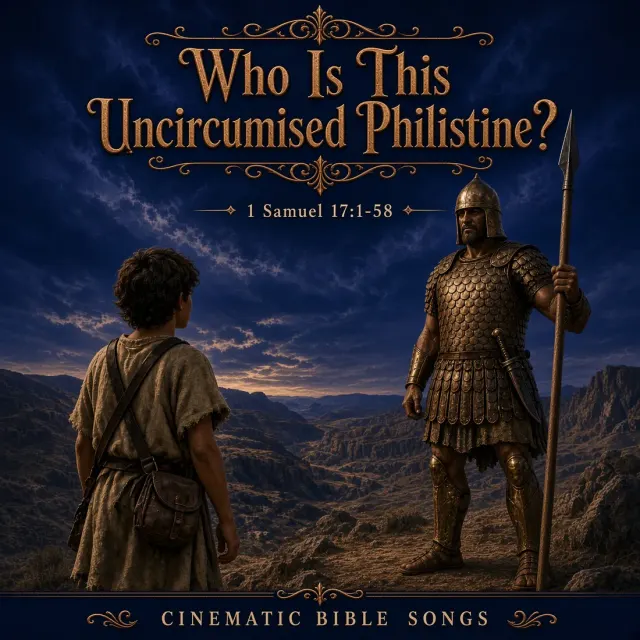
17:26And David spake to the men that stood by him, saying, What shall be done to the man that killeth this Philistine, and taketh away the reproach from Israel? for who is this uncircumcised Philistine, that he should defy the armies of the living God?
17:27And the people answered him after this manner, saying, So shall it be done to the man that killeth him.
17:28And Eliab his eldest brother heard when he spake unto the men; and Eliab’s anger was kindled against David, and he said, Why camest thou down hither? and with whom hast thou left those few sheep in the wilderness? I know thy pride, and the naughtiness of thine heart; for thou art come down that thou mightest see the battle.
17:29And David said, What have I now done? Is there not a cause?


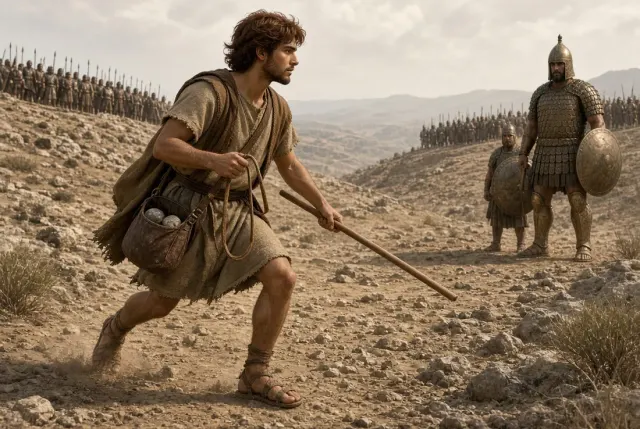
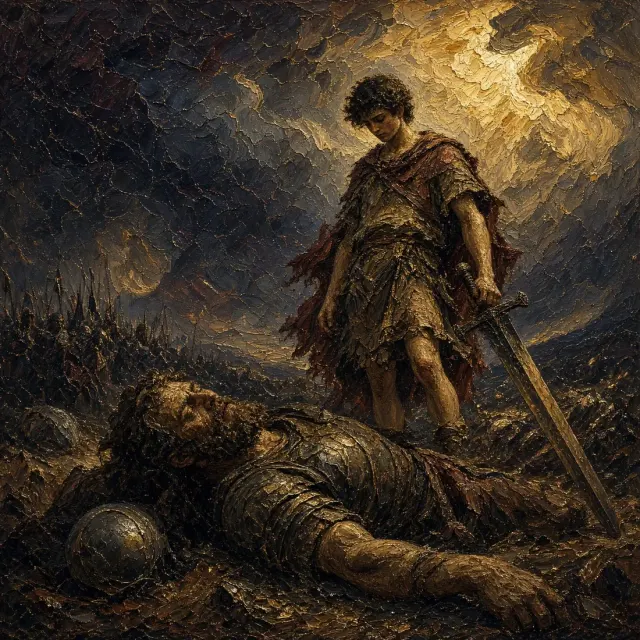
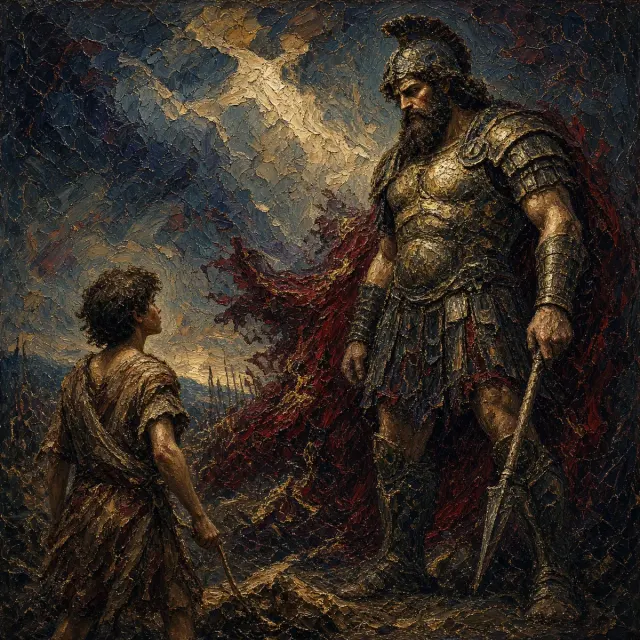
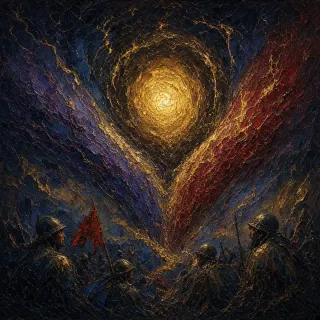
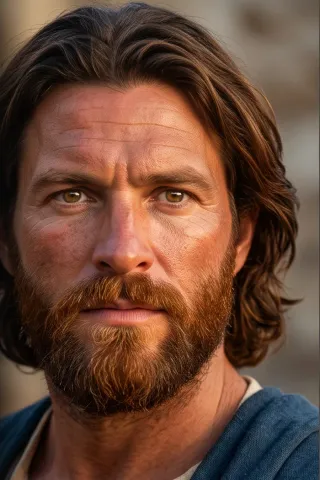
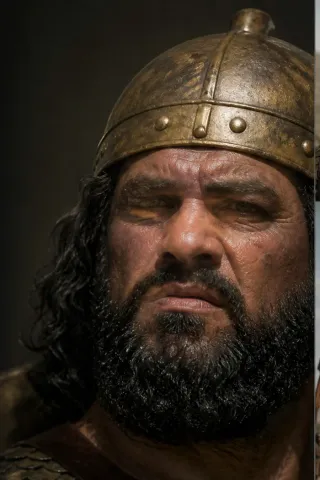
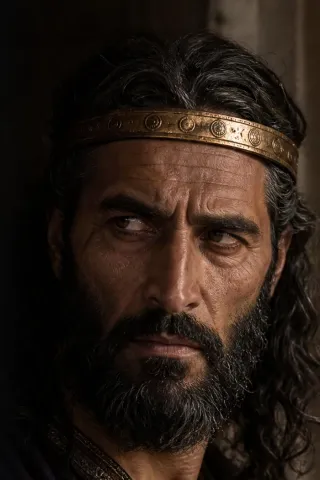
The first confrontation is drawn as a landscape. One army occupies one height, the other occupies another, and the sentence leaves the valley lying between them. Before the Book of First Samuel gives the champion his measurements, it gives the conflict its shape. There is a space neither battle line has yet crossed.
Shochoh, which belongeth to Judah, is not a decorative geographical aside. The Philistines have assembled in territory identified as Judah's. This is not a contest arranged on neutral ground for the entertainment of two armies. The land itself is already part of the dispute.
Both sides have gathered, camped, and arranged themselves for battle. The verbs describe considerable activity without yet describing a resolution. Soldiers can occupy the correct positions and still leave the decisive ground untouched. That final clause, and there was a valley between them, makes the distance almost tangible. The setting is doing work before anybody speaks.