
O panorama
Gênesis 4 abre com “And Adam knew Eve his wife; and she conceived, and bare Cain, and said, I have gotten a…”, muda perto do versículo 13 com “And Cain said unto the LORD, My punishment is greater than I can bear.” e termina com “And to Seth, to him also there was born a son; and he called his name Enos: then began…”. Esses pontos traçam o movimento próprio do capítulo, da abertura à conclusão.
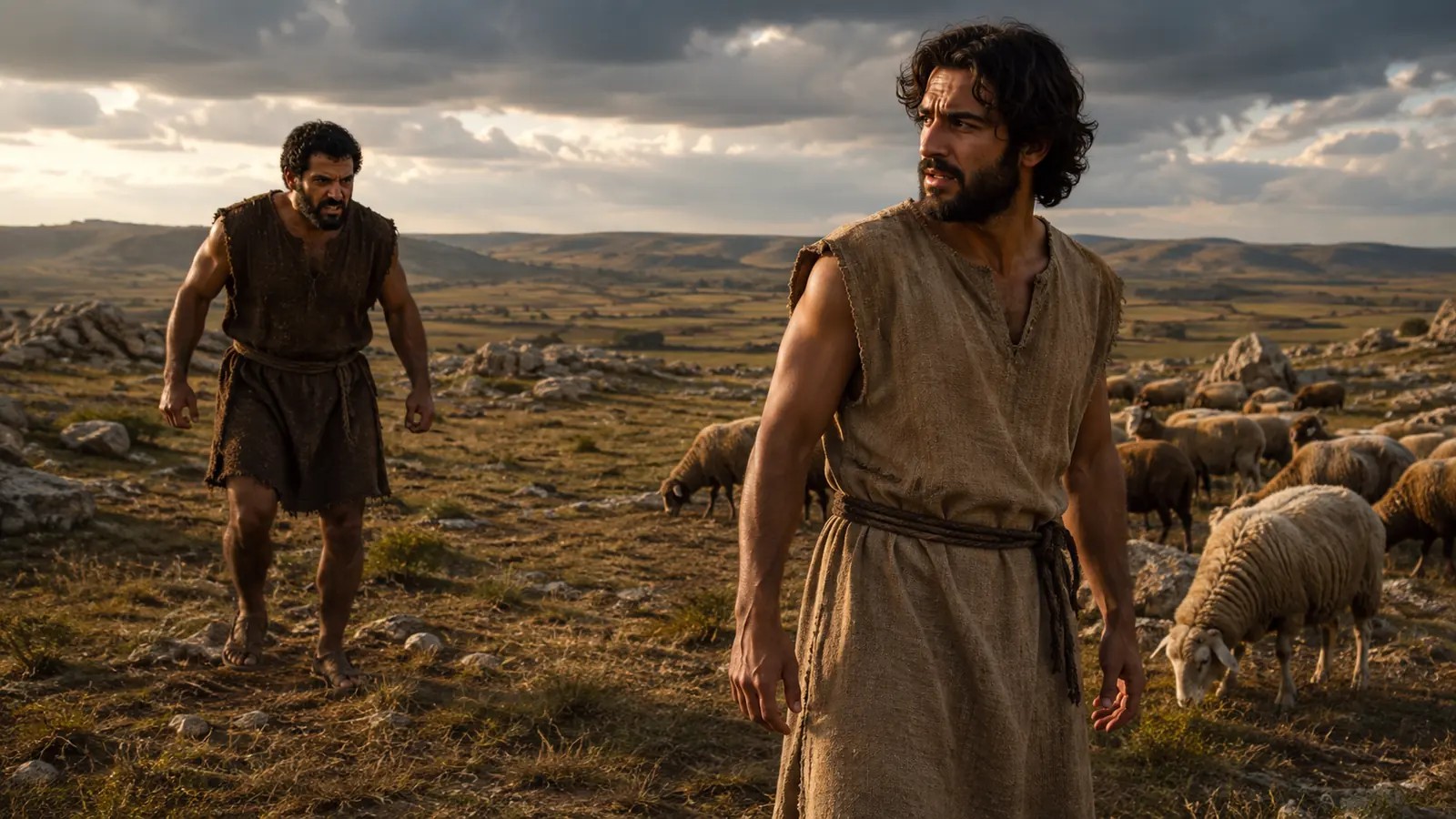
A Escritura ao lado do resumo
Gênesis · Versão King James · 26Gênesis 4:1-7
Versículos 1–7: Adam knew Eve his wife; and she conceived, and bare Cain, and said, I…
Gênesis 4:1–7 abre com “And Adam knew Eve his wife; and she conceived, and bare Cain, and said, I have gotten a man from…” e chega a “If thou doest well, shalt thou not be accepted? and if thou doest not well, sin lieth at the…” no último versículo. Esse percurso desenvolve A desconfiança entra no jardim, o exílio vem em seguida e a violência de Caim mostra como o pecado passa rapidamente do coração humano para a história.
Contexto que dá vida à passagem
Este bloco contém 2 perguntas. Elas não são simples pontuação: mostram onde uma voz procura, desafia, teme ou tenta compreender.
“And Adam knew Eve his wife; and she conceived, and bare Cain, and said, I have gotten a man from the LORD.” Nomear Adam e Cain mantém o relato ligado a pessoas ou lugares concretos. Acompanhe onde o nome retorna e o que muda ao redor dele.
Gênesis 4:1-7
Versão King James1And Adam knew Eve his wife; and she conceived, and bare Cain, and said, I have gotten a man from the LORD.
2And she again bare his brother Abel. And Abel was a keeper of sheep, but Cain was a tiller of the ground.
3And in process of time it came to pass, that Cain brought of the fruit of the ground an offering unto the LORD.
4And Abel, he also brought of the firstlings of his flock and of the fat thereof. And the LORD had respect unto Abel and to his offering:
5But unto Cain and to his offering he had not respect. And Cain was very wroth, and his countenance fell.
6And the LORD said unto Cain, Why art thou wroth? and why is thy countenance fallen?
7If thou doest well, shalt thou not be accepted? and if thou doest not well, sin lieth at the door. And unto thee shall be his desire, and thou shalt rule over him.
Gênesis 4:8-14
Versículos 8–14: Cain talked with Abel his brother: and it came to pass, when they were…
Gênesis 4:8–14 abre com “And Cain talked with Abel his brother: and it came to pass, when they were in the field, that…” e chega a “Behold, thou hast driven me out this day from the face of the earth; and from thy face shall I…” no último versículo. Esse percurso desenvolve A desconfiança entra no jardim, o exílio vem em seguida e a violência de Caim mostra como o pecado passa rapidamente do coração humano para a história.
Contexto que dá vida à passagem
Este bloco contém 2 perguntas. Elas não são simples pontuação: mostram onde uma voz procura, desafia, teme ou tenta compreender.
“And Cain talked with Abel his brother: and it came to pass, when they were in the field, that Cain rose up against…” Esse conhecido sinal narrativo faz o tempo avançar. O que segue é uma nova cena, consequência ou resposta a uma tensão anterior.
“And the LORD said unto Cain, Where is Abel thy brother? And he said, I know not: Am I my brother’s keeper?” A pergunta desacelera a passagem. Observe quem precisa responder, o que ela pressupõe e se as linhas seguintes apresentam uma resposta.
Gênesis 4:8-14
Versão King James8And Cain talked with Abel his brother: and it came to pass, when they were in the field, that Cain rose up against Abel his brother, and slew him.
9And the LORD said unto Cain, Where is Abel thy brother? And he said, I know not: Am I my brother’s keeper?
10And he said, What hast thou done? the voice of thy brother’s blood crieth unto me from the ground.
11And now art thou cursed from the earth, which hath opened her mouth to receive thy brother’s blood from thy hand;
12When thou tillest the ground, it shall not henceforth yield unto thee her strength; a fugitive and a vagabond shalt thou be in the earth.
13And Cain said unto the LORD, My punishment is greater than I can bear.
14Behold, thou hast driven me out this day from the face of the earth; and from thy face shall I be hid; and I shall be a fugitive and a vagabond in the earth; and it shall come to pass, that every one that findeth me shall slay me.
Gênesis 4:15-21
Versículos 15–21: The LORD said unto him, Therefore whosoever slayeth Cain, vengeance…
Gênesis 4:15–21 abre com “And the LORD said unto him, Therefore whosoever slayeth Cain, vengeance shall be taken on him…” e chega a “And his brother’s name was Jubal: he was the father of all such as handle the harp and organ.” no último versículo. Esse percurso desenvolve A desconfiança entra no jardim, o exílio vem em seguida e a violência de Caim mostra como o pecado passa rapidamente do coração humano para a história.
Contexto que dá vida à passagem
“And the LORD said unto him, Therefore whosoever slayeth Cain, vengeance shall be taken on him sevenfold. And the LORD…” A ordem não pode ser entendida apenas pelo verbo. O destinatário, o propósito e seu lugar na aliança ou argumento definem a responsabilidade.
“And Cain went out from the presence of the LORD, and dwelt in the land of Nod, on the east of Eden.” Nomear Cain e Eden mantém o relato ligado a pessoas ou lugares concretos. Acompanhe onde o nome retorna e o que muda ao redor dele.
Gênesis 4:15-21
Versão King James15And the LORD said unto him, Therefore whosoever slayeth Cain, vengeance shall be taken on him sevenfold. And the LORD set a mark upon Cain, lest any finding him should kill him.
16And Cain went out from the presence of the LORD, and dwelt in the land of Nod, on the east of Eden.
17And Cain knew his wife; and she conceived, and bare Enoch: and he builded a city, and called the name of the city, after the name of his son, Enoch.
18And unto Enoch was born Irad: and Irad begat Mehujael: and Mehujael begat Methusael: and Methusael begat Lamech.
19And Lamech took unto him two wives: the name of the one was Adah, and the name of the other Zillah.
20And Adah bare Jabal: he was the father of such as dwell in tents, and of such as have cattle.
21And his brother’s name was Jubal: he was the father of all such as handle the harp and organ.
Gênesis 4:22-26
Versículos 22–26: Zillah, she also bare Tubal-cain, an instructer of every artificer in…
Gênesis 4:22–26 abre com “And Zillah, she also bare Tubal-cain, an instructer of every artificer in brass and iron: and…” e chega a “And to Seth, to him also there was born a son; and he called his name Enos: then began men to…” no último versículo. Esse percurso desenvolve A desconfiança entra no jardim, o exílio vem em seguida e a violência de Caim mostra como o pecado passa rapidamente do coração humano para a história.
Contexto que dá vida à passagem
“And Zillah, she also bare Tubal-cain, an instructer of every artificer in brass and iron: and the sister of Tubal-cain…” Nomear Tubal e Naamah mantém o relato ligado a pessoas ou lugares concretos. Acompanhe onde o nome retorna e o que muda ao redor dele.
Gênesis 4:22-26
Versão King James22And Zillah, she also bare Tubal-cain, an instructer of every artificer in brass and iron: and the sister of Tubal-cain was Naamah.
23And Lamech said unto his wives, Adah and Zillah, Hear my voice; ye wives of Lamech, hearken unto my speech: for I have slain a man to my wounding, and a young man to my hurt.
24If Cain shall be avenged sevenfold, truly Lamech seventy and sevenfold.
25And Adam knew his wife again; and she bare a son, and called his name Seth: For God, said she, hath appointed me another seed instead of Abel, whom Cain slew.
26And to Seth, to him also there was born a son; and he called his name Enos: then began men to call upon the name of the LORD.
Detalhes que merecem atenção
A imagem de abertura
Genesis 4:1 começa com “And Adam knew Eve his wife; and she conceived, and bare Cain, and said, I have gotten a man from the LORD.”
Onde o capítulo muda
Genesis 4:10 forma uma mudança natural: “And he said, What hast thou done? the voice of thy brother’s blood crieth unto me from the ground.”
A nota final
Genesis 4:26 deixa o leitor com “And to Seth, to him also there was born a son; and he called his name Enos: then began men to call upon the name of the LORD.”
Um caminho de palavras pelo capítulo
As palavras Cain, LORD, Abel, name, bare, Lamech ajudam a revelar as preocupações repetidas do capítulo.
Primeiro o texto
Onde os leitores divergem
O resumo começa com o que a passagem diz e como suas partes se relacionam. Ele não presume que uma denominação já resolveu todas as questões. A dependência de uma tradição, teoria literária ou reconstrução histórica é claramente identificada.
O texto KJV aparece primeiro. As conclusões interpretativas são identificadas, e as diferenças surgem quando ajudam a explicar por que comunidades sérias nem sempre chegam à mesma resposta.
As notas interpretativas comparativas deste capítulo estão em preparação. Até que as notas revisadas estejam prontas, esta página separa o texto KJV do resumo e da aplicação sem afirmar que leitores responsáveis concordam em todas as questões.