
Exodus 2:1–10
Baby Moses in the basket
Ages 8 to 11
The account
A man from the house of Levi married a woman from the house of Levi. They had a son. His mother saw that he was a goodly child, and she hid him for three months.
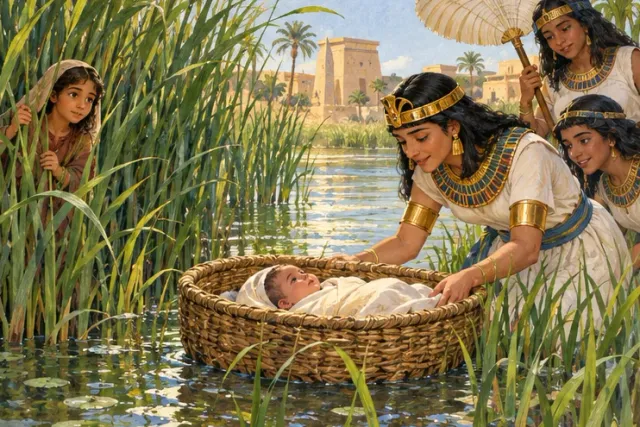
When she could no longer hide him, she made an ark of bulrushes for him. She coated it with slime and pitch, placed the baby inside, and laid the ark among the plants at the river's edge. The baby's sister stood some distance away to see what would happen.
Pharaoh's daughter came down to the river to wash. Her maidens walked beside the river. When Pharaoh's daughter saw the ark among the plants, she sent her maid to bring it to her.
She opened the ark and saw the baby. He was crying, and she had compassion on him. She knew he was one of the Hebrews' children.
Then the baby's sister spoke to Pharaoh's daughter. She asked whether she should call a Hebrew woman to nurse the child. Pharaoh's daughter told her to go, so the girl called the baby's own mother.
Pharaoh's daughter told the woman to nurse the child and said she would pay her. The mother cared for him until he grew. Then she brought him to Pharaoh's daughter, and he became her son. Pharaoh's daughter named him Moses because she had drawn him out of the water.
Memory verse
And Pharaoh’s daughter said to her, Go. And the maid went and called the child’s mother.
Exodus 2:8
Talk about it
- What did Moses' mother make for him when she could no longer hide him?
- Who watched from a distance to see what would happen?
- What did Pharaoh's daughter do after she found the crying baby?
Try this
Draw six small pictures showing the account in order, from the baby being hidden to Moses becoming Pharaoh's daughter's son. Number the pictures 1 through 6, then use your drawings to retell what happened without adding details the Bible does not give.
What can we learn?
One lesson we can draw from this account is that careful help and compassion can matter greatly when someone is in danger. Several people acted, and each action affected what happened next.
Ages 12 to 15
The account
Exodus places this account in Egypt, where the Hebrews were living under Pharaoh's rule. Just before this passage, Pharaoh had commanded that every Hebrew son who was born should be cast into the river. That danger explains why the first actions in Exodus 2 matter so much.
A man from the house of Levi married a daughter of Levi. She conceived and gave birth to a son. When she saw that he was a goodly child, she hid him for three months. The passage does not tell us what those three months were like. It simply tells us what she did.
When she could no longer hide him, she prepared an ark of bulrushes. She coated it with slime and pitch, put the child inside, and laid it among the flags at the river's edge. His sister stood at a distance to learn what would happen to him.
Pharaoh's daughter then came down to wash at the river while her maidens walked along the river's side. She noticed the ark among the flags and sent her maid to fetch it. When she opened it, she saw the baby crying. She had compassion on him and recognized that he was one of the Hebrews' children.
At that moment, the child's sister approached Pharaoh's daughter and asked whether she should call a Hebrew woman to nurse the baby. Pharaoh's daughter told her to go. The girl went and called the child's own mother.
The result is striking. Pharaoh's daughter told the mother to take the child and nurse him for her, and she promised to pay wages for the care. The woman took the child and nursed him. When he had grown, she brought him to Pharaoh's daughter, and he became her son.
Pharaoh's daughter named him Moses. She explained the name by saying that she had drawn him out of the water. The passage begins with a Hebrew baby being hidden because of danger and ends with that same child living as the son of Pharaoh's daughter. Exodus does not yet explain everything Moses will become, but this rescue places him at the beginning of a much larger part of Israel's history.
Memory verse
And Pharaoh’s daughter said to her, Go. And the maid went and called the child’s mother.
Exodus 2:8
Think about it
- Why does Pharaoh's earlier command make the mother's actions in this account especially important?
- What do the actions of the child's mother and sister show about people trying to protect someone in danger?
- Why is Pharaoh's daughter's compassion important, especially after she recognized that the baby was Hebrew?
- Why might Exodus wait until later chapters to show the larger importance of Moses' rescue?
Going deeper
This account is the beginning of Moses' place in the wider history of Exodus. Later, God calls Moses to go to Pharaoh and bring the children of Israel out of Egypt (Exodus 3). The baby drawn from the river in Exodus 2 becomes the man through whom God leads Israel out, so this early rescue connects directly with the deliverance that follows.
What can we learn?
A lesson we can draw from this account is that compassion and careful action can change what happens in a dangerous situation. It also shows how the choices of several people can shape what comes next, even before anyone can see the larger result.