
Genesis 4:1–16
Cain and Abel

Ages 12 to 15
The account
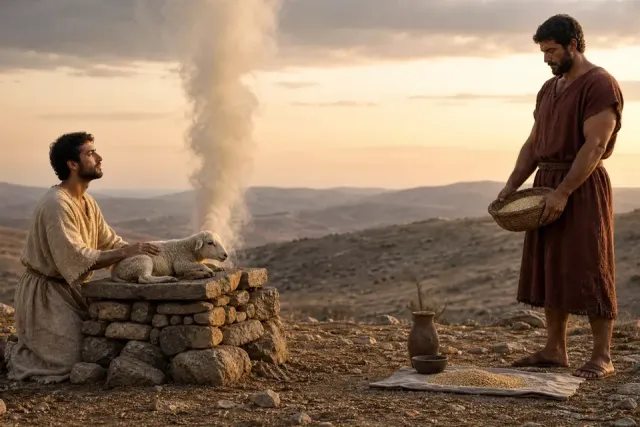
Genesis 4 introduces Cain and Abel, sons of Adam and Eve. Cain worked the ground, while Abel kept sheep. In time, each brother brought an offering to the Lord. Cain brought fruit from the ground. Abel brought from the firstlings of his flock and from their fat. The Lord had respect for Abel and his offering, but he did not have respect for Cain and his offering.
The passage does not directly explain the reason for the different responses. It does tell us what happened next. Cain became very angry, and his face fell. The Lord questioned Cain about his anger and warned him that if he did well he would be accepted, but if he did not do well, sin was lying at the door. The warning ended, "And unto thee shall be his desire, and thou shalt rule over him." (Genesis 4:7)
Cain then talked with Abel. While they were in the field, Cain rose up against his brother and killed him. Genesis gives the fact plainly without graphic description.
The Lord asked Cain where Abel was. Cain answered that he did not know and asked whether he was his brother's keeper. The Lord then confronted him. Abel's blood was described as crying from the ground. Because the earth had received Abel's blood from Cain's hand, Cain was cursed from the earth. The ground he worked would no longer give him its strength, and he would become a fugitive and a vagabond.
Cain replied that his punishment was greater than he could bear. He said that he was being driven from the face of the earth, would be hidden from God's face, and feared that anyone who found him would kill him.
The Lord answered that anyone who killed Cain would face sevenfold vengeance. He then set a mark upon Cain so that anyone finding him would not kill him. Genesis does not describe what that mark looked like, so any picture or explanation of its form goes beyond the passage.
Cain then went out from the presence of the Lord and lived in the land of Nod, east of Eden.
This short account follows closely after the disobedience of Adam and Eve in Genesis 3. The effects of sin now appear not only between people and God, but also between two brothers.
Memory verse
And the LORD said unto Cain, Where is Abel thy brother? And he said, I know not: Am I my brother’s keeper?
Genesis 4:9
Think about it
- Why is it important not to invent a reason for God's different responses to the two offerings when Genesis 4 does not state one directly?
- What does God's warning to Cain show about the seriousness of anger and sin before Cain attacks Abel?
- Why does Cain's answer about Abel matter after the Lord asks where his brother is?
- What does the mark placed on Cain show about the difference between judgment and permission for others to take revenge?
Going deeper
Genesis 3 shows sin entering human life, and Genesis 4 shows it spreading into a family and ending in murder. Later, Hebrews 11:4 remembers Abel's offering in connection with faith, while 1 John 3:12 contrasts Cain's works with Abel's. Those later passages add biblical reflection, but Genesis 4 itself stays focused on the brothers, the warning Cain received, his act against Abel and God's judgment afterward.
What can we learn?
This account can help us take anger, jealousy and responsibility for other people seriously before harm is done. It also cautions us not to add explanations Scripture itself does not give, especially when discussing why God accepted one offering and not the other.