
Luke 22:7–20; John 13:1–17
The Last Supper
Ages 8 to 11
The account
The day came when the Passover lamb was to be killed. Jesus sent Peter and John to prepare the Passover meal. They asked where to prepare it. Jesus told them how to find the place, and they found everything as he had said.
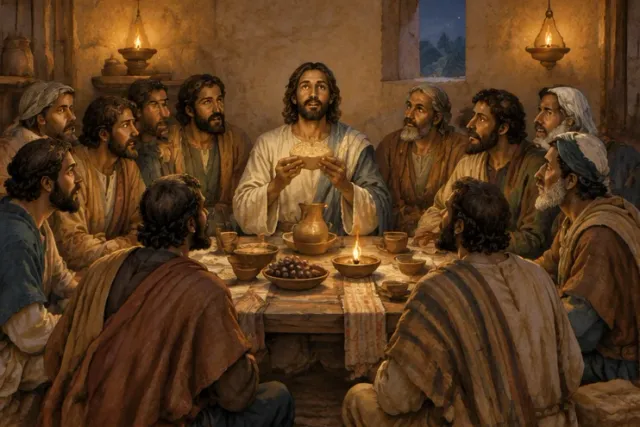
When the time came, Jesus sat down with the apostles. He told them he had greatly desired to eat this Passover with them before he suffered. During the meal, he took a cup, gave thanks, and told them to share it. He also took bread, gave thanks, broke it, and gave it to them. He said the bread was his body, given for them, and told them to do this in remembrance of him. After supper he spoke of the cup as the new testament in his blood, which was shed for them.
John also records something Jesus did at the supper. Jesus rose, laid aside his outer garments, wrapped a towel around himself, poured water into a basin, and washed the disciples' feet. Peter questioned him, but Jesus continued teaching him.
When Jesus had finished, he put his garments back on and sat down again. He explained that although they called him Master and Lord, he had washed their feet. He had given them an example to follow.
The meal pointed to what Jesus was about to do, and the foot washing showed humble service in a way the disciples could see.
Memory verse
For I have given you an example, that ye should do as I have done to you.
John 13:15
Talk about it
- Who did Jesus send to prepare the Passover meal?
- What did Jesus do with the bread and the cup?
- What surprising job did Jesus do for his disciples?
Try this
On a sheet of paper, draw four simple pictures: bread, a cup, a basin and a towel. Under each one, write what Jesus did with it during the meal.
What can we learn?
We can learn that remembering important things and serving others can both be shown through simple actions. Jesus' example shows that leadership does not have to mean taking the highest place.
Ages 12 to 15
The account
The setting was Passover, the feast that remembered Israel's deliverance from Egypt. On the day when the Passover lamb was killed, Jesus sent Peter and John to prepare the meal. They asked where he wanted it prepared. Jesus gave them instructions for finding a furnished upper room in the city. They went, found things as he had said, and made ready the Passover.
When the hour came, Jesus sat down with the twelve apostles. He told them that he had strongly desired to eat this Passover with them before he suffered. He took a cup, gave thanks, and told them to divide it among themselves. Then he took bread, gave thanks, broke it, and gave it to them. He identified the bread with his body, given for them, and told them to do this in remembrance of him. After supper he spoke of the cup as the new testament in his blood, shed for them.
John records another important part of the meal. He explains that Jesus knew the time had come for him to leave this world and go to the Father. At the supper, Jesus rose, laid aside his garments, wrapped himself with a towel, poured water into a basin, and began washing the disciples' feet and wiping them with the towel.
When Jesus came to Peter, Peter objected. Jesus told him that Peter did not yet understand what he was doing but would understand later. Peter then went from refusing the washing to asking for his hands and head to be washed too. Jesus answered that one who had been washed needed only his feet washed. He also said the disciples were clean, but not all of them. John explains that Jesus knew who would betray him.
After washing their feet, Jesus put his garments back on and sat down. He asked whether they understood what he had done. They rightly called him Master and Lord, yet he had taken the place of one who served. Jesus said he had given them an example so that they should do as he had done. He also reminded them that a servant is not greater than his lord.
These passages place the meal just before Jesus' suffering. Luke emphasizes the Passover, the bread, the cup, remembrance, and the new testament. John emphasizes Jesus' deliberate act of humble service. Together they show Jesus preparing his disciples for what was coming and teaching them through actions they would remember.
Memory verse
For I have given you an example, that ye should do as I have done to you.
John 13:15
Think about it
- Why did the Passover setting matter for this meal?
- What does washing the disciples' feet show about the kind of example Jesus chose to give?
- Why do you think Jesus told the disciples to remember him through the bread?
- How do the bread, the cup and the foot washing prepare the disciples for what was about to happen?
Going deeper
Passover reaches back to Exodus 12, when Israel remembered deliverance from Egypt through a meal. Jesus speaks of the cup as the new testament in his blood, language that connects with the Bible's wider theme of covenant, including the promise of a new covenant in Jeremiah 31:31. John adds the foot washing, giving a visible example of humble service during the meal.
What can we learn?
This account shows that Jesus prepared his disciples with both words and actions. A lesson we can draw is that remembrance, gratitude and humble service can shape the way people care for one another.