
The big picture
Passover, the feast remembering God's rescue of his people from slavery, draws near. Jesus, the teacher in Jerusalem, the temple city, shares a final meal with his closest followers. He speaks of his body and blood given for them while betrayal is already planned. They argue about rank and promise loyalty they cannot sustain. Jesus prays in anguish, accepts arrest, and faces abuse and questioning. Peter's denial unfolds nearby. The chapter places Jesus' willing service beside human fear, ambition, and treachery.
In this chapter
- Judas Arranges a Secret Betrayal Luke 22:1-6
The chief priests and scribes, teachers of God's law, want Jesus killed but fear the crowd.
- Two Followers Prepare the Passover Room Luke 22:7-13
On the day the Passover lamb is killed, Jesus sends Peter and John, two of the twelve, to prepare the meal.
- Bread and Cup Express His Gift Luke 22:14-20
Jesus sits with the twelve apostles, his chosen messengers, and says he has deeply wanted this meal before suffering.
- The Greatest Must Take the Servant’s Place Luke 22:21-30
Jesus says the betrayer's hand is at the table.
- Peter’s Failure Is Foreseen and Prayed for Luke 22:31-38
Jesus addresses Peter as Simon and says Satan seeks to shake the followers like grain in a sieve.
- Jesus Prays in Deep Anguish Luke 22:39-46
Jesus goes as usual to the mount of Olives, a ridge outside the city, and the followers accompany him.
- A Kiss and a Sword Meet Healing Luke 22:47-53
Judas leads an armed crowd toward Jesus and approaches to kiss him.
- Peter Denies Jesus Three Times Luke 22:54-62
Jesus is taken to the high priest's house, and Peter follows at a distance.
- The Council Treats His Claim as Evidence Luke 22:63-71
The men holding Jesus mock and beat him.
Central truth
Giving himself for his followers, Jesus prays for their restoration while betrayal, ambition, and fear expose their weakness.
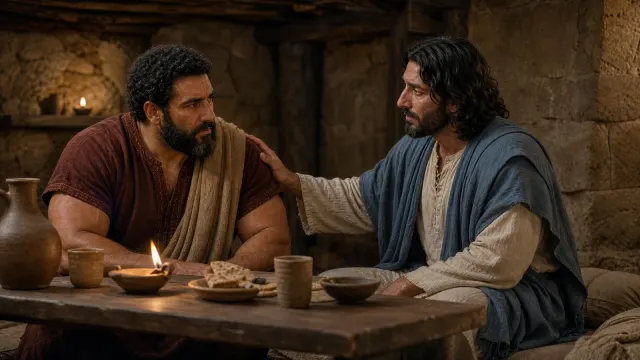

Scripture beside the summary
Luke · King James Version · 71Luke 22:1-6
Judas Arranges a Secret Betrayal
The chief priests and scribes, teachers of God's law, want Jesus killed but fear the crowd. Luke says Satan, God's enemy, enters Judas Iscariot, one of the twelve close followers. Judas approaches the priests and temple officers to arrange how to hand Jesus over. They are delighted and promise payment. He agrees and begins looking for a chance away from the crowd. The plot gains access through someone inside Jesus' own circle. Luke names evil's work without removing Judas' active part: he goes, negotiates, agrees, and seeks the moment. The approaching feast now carries a hidden plan for arrest.
In everyday life
A safeguarding investigator compares a venue's access records after a trusted volunteer gives private entry details to people seeking to harm a guest. The records show choices made inside a circle meant to provide care. Trust has made the breach possible. Judas' act belongs to Satan's attack and Jesus' death, not only misuse of private information.
Notice
Luke 22:6 Judas seeks a moment when the crowd is absent. His knowledge of Jesus' movements offers the leaders a way around the public obstacle they fear.
Luke 22:1-6
King James Version1Now the feast of unleavened bread drew nigh, which is called the Passover.
2And the chief priests and scribes sought how they might kill him; for they feared the people.
3Then entered Satan into Judas surnamed Iscariot, being of the number of the twelve.
4And he went his way, and communed with the chief priests and captains, how he might betray him unto them.
5And they were glad, and covenanted to give him money.
6And he promised, and sought opportunity to betray him unto them in the absence of the multitude.
Luke 22:7-13
Two Followers Prepare the Passover Room
On the day the Passover lamb is killed, Jesus sends Peter and John, two of the twelve, to prepare the meal. They ask where. He tells them to follow a man carrying a water jar into a house and ask its owner for the teacher's guest room. The owner will show a large furnished room upstairs. They find everything as he described and make the preparations. While opponents plan secrecy around him, Jesus directs the setting of the meal. The followers' task is concrete and ordinary: find the host, receive the room, and ready the food for the appointed gathering.
In everyday life
A reunion organiser sends two cousins to follow the caretaker into a hall where a room has already been set aside. They find the tables ready and prepare the meal as directed. The arrangements let the family gather before a difficult departure. Jesus directs a final Passover before his saving death, not only a planned family occasion.
Notice
Luke 22:13 The followers find the room as Jesus has told them. Their preparation occurs under his direction rather than through a last-minute search for any available space.
Luke 22:7-13
King James Version7Then came the day of unleavened bread, when the passover must be killed.
8And he sent Peter and John, saying, Go and prepare us the passover, that we may eat.
9And they said unto him, Where wilt thou that we prepare?
10And he said unto them, Behold, when ye are entered into the city, there shall a man meet you, bearing a pitcher of water; follow him into the house where he entereth in.
11And ye shall say unto the goodman of the house, The Master saith unto thee, Where is the guestchamber, where I shall eat the passover with my disciples?
12And he shall shew you a large upper room furnished: there make ready.
13And they went, and found as he had said unto them: and they made ready the passover.
Luke 22:14-20
Bread and Cup Express His Gift
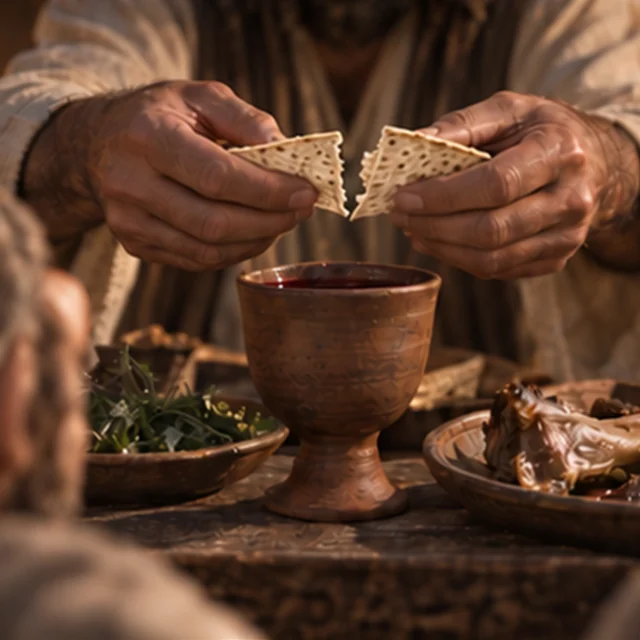
Jesus sits with the twelve apostles, his chosen messengers, and says he has deeply wanted this meal before suffering. He looks toward its fulfilment in God's kingdom and shares a cup with thanks. He then blesses and breaks bread, giving it as his body offered for them. They are to continue this act in remembrance of him. The cup after supper is the new covenant in his blood, poured out for them. A covenant is God's binding relationship with his people. Christians understand his presence in bread and wine differently. Across those readings, the meal centres on his self-giving death and the promised kingdom.
In everyday life
A departing parent sets bread before her grown children and asks them to keep sharing meals together while she is far away. She speaks of a promise that continues through separation. The table holds both grief and hope. Jesus gives his body and covenant blood for his followers, not merely a family custom to preserve affection.
Notice
Luke 22:19 Jesus speaks of his body as given for the people at the table. The meal explains the coming death through a gift rather than only an act of violence.
Luke 22:14-20
King James Version14And when the hour was come, he sat down, and the twelve apostles with him.
15And he said unto them, With desire I have desired to eat this passover with you before I suffer:
16For I say unto you, I will not any more eat thereof, until it be fulfilled in the kingdom of God.
17And he took the cup, and gave thanks, and said, Take this, and divide it among yourselves:
18For I say unto you, I will not drink of the fruit of the vine, until the kingdom of God shall come.
19And he took bread, and gave thanks, and brake it, and gave unto them, saying, This is my body which is given for you: this do in remembrance of me.
20Likewise also the cup after supper, saying, This cup is the new testament in my blood, which is shed for you.
Luke 22:21-30
The Greatest Must Take the Servant’s Place
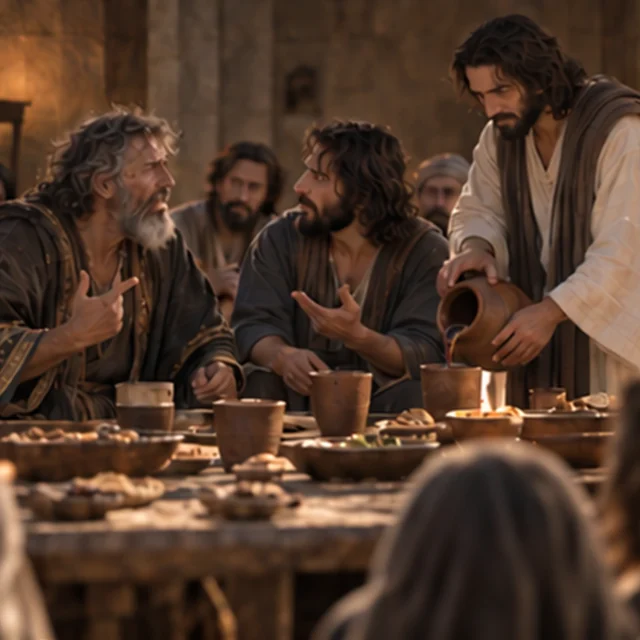
Jesus says the betrayer's hand is at the table. His death follows God's purpose, but the betrayer still faces blame. The followers question one another and also dispute who is greatest. Jesus contrasts their calling with rulers who dominate yet enjoy titles of public generosity. Their leader must serve as the least. He himself is among them as one who serves, not one demanding service. He recognises that they have stayed with him through trials and promises a place at his kingdom's table. They will share judgement over Israel, God's people divided into twelve tribes. Future honour does not excuse present rivalry.
In everyday life
A senior expedition medic washes cups after the team meal while younger members debate who deserves the best sleeping space. Her role gives her more responsibility to serve, not a right to leave every task to others. The action challenges their ranking. Jesus promises a kingdom and authority over God's people, not only a healthier team culture.
Notice
Luke 22:27 Jesus compares the seated guest with the serving person, then places himself in the serving role. His own conduct answers their argument about greatness.
Luke 22:21-30
King James Version21But, behold, the hand of him that betrayeth me is with me on the table.
22And truly the Son of man goeth, as it was determined: but woe unto that man by whom he is betrayed!
23And they began to enquire among themselves, which of them it was that should do this thing.
24And there was also a strife among them, which of them should be accounted the greatest.
25And he said unto them, The kings of the Gentiles exercise lordship over them; and they that exercise authority upon them are called benefactors.
26But ye shall not be so: but he that is greatest among you, let him be as the younger; and he that is chief, as he that doth serve.
27For whether is greater, he that sitteth at meat, or he that serveth? is not he that sitteth at meat? but I am among you as he that serveth.
28Ye are they which have continued with me in my temptations.
29And I appoint unto you a kingdom, as my Father hath appointed unto me;
30That ye may eat and drink at my table in my kingdom, and sit on thrones judging the twelve tribes of Israel.
Luke 22:31-38
Peter’s Failure Is Foreseen and Prayed for
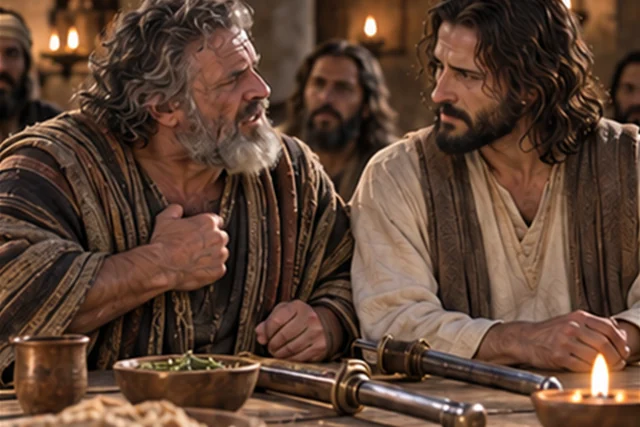
Jesus addresses Peter as Simon and says Satan seeks to shake the followers like grain in a sieve. He has prayed for Peter's faith and tells him to strengthen the others when he turns back. Peter promises prison and death rather than desertion. Jesus predicts three denials before the rooster crows. He then contrasts their earlier welcome on mission with the danger ahead, speaking of purse, bag, and sword. Scripture about him being counted with wrongdoers must be fulfilled. The followers produce two swords. His brief reply ends the exchange. Christians differ on the sword saying, but the coming arrest shows Jesus refusing violent defence.

In everyday life
A mentor tells a new rescue coordinator that strain will expose weaknesses he does not yet see. She has arranged support and asks him to help others after he learns from failure. He insists he will never break. Jesus predicts Peter's denial and prays for his faith, not merely a likely training setback.
Notice
Luke 22:32 Peter's return and future service are named before the denial occurs. Failure is foreseen, but it is not the final purpose he gives Peter.
Luke 22:31-38
King James Version31And the Lord said, Simon, Simon, behold, Satan hath desired to have you, that he may sift you as wheat:
32But I have prayed for thee, that thy faith fail not: and when thou art converted, strengthen thy brethren.
33And he said unto him, Lord, I am ready to go with thee, both into prison, and to death.
34And he said, I tell thee, Peter, the cock shall not crow this day, before that thou shalt thrice deny that thou knowest me.
35And he said unto them, When I sent you without purse, and scrip, and shoes, lacked ye any thing? And they said, Nothing.
36Then said he unto them, But now, he that hath a purse, let him take it, and likewise his scrip: and he that hath no sword, let him sell his garment, and buy one.
37For I say unto you, that this that is written must yet be accomplished in me, And he was reckoned among the transgressors: for the things concerning me have an end.
38And they said, Lord, behold, here are two swords. And he said unto them, It is enough.
Luke 22:39-46
Jesus Prays in Deep Anguish
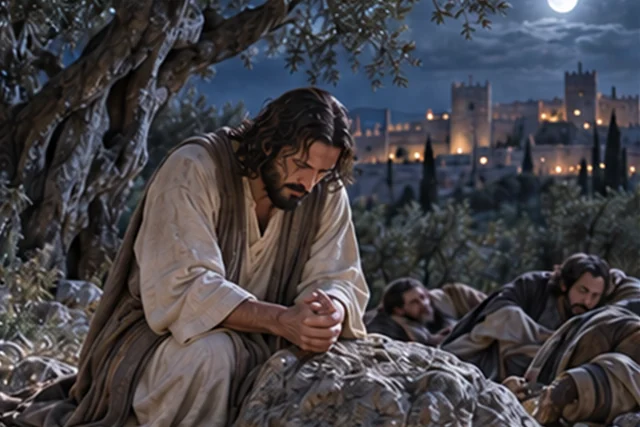
Jesus goes as usual to the mount of Olives, a ridge outside the city, and the followers accompany him. He tells them to pray against temptation. A short distance away, he kneels and asks the Father to remove the cup, his image for the suffering ahead. Yet he submits his own will to the Father's. An angel strengthens him. His anguish deepens as he prays, and Luke compares his falling sweat to great drops of blood. Returning, he finds the followers asleep from sorrow. He urges them to rise and pray. Their grief has brought sleep where he asked for watchful dependence.
In everyday life
A transplant donor sits alone before surgery and tells a chaplain that she wishes there were another way to help. She remains committed while admitting fear, and a friend's presence gives strength for the next hour. Consent does not erase anguish. Jesus yields to the Father's will in his saving death, unlike a voluntary medical procedure.
Notice
Luke 22:45 Luke explains the followers' sleep through sorrow. Their weakness is real, yet Jesus still calls them to prayer rather than treating grief as the end of responsibility.
Luke 22:39-46
King James Version39And he came out, and went, as he was wont, to the mount of Olives; and his disciples also followed him.
40And when he was at the place, he said unto them, Pray that ye enter not into temptation.
41And he was withdrawn from them about a stone’s cast, and kneeled down, and prayed,
42Saying, Father, if thou be willing, remove this cup from me: nevertheless not my will, but thine, be done.
43And there appeared an angel unto him from heaven, strengthening him.
44And being in an agony he prayed more earnestly: and his sweat was as it were great drops of blood falling down to the ground.
45And when he rose up from prayer, and was come to his disciples, he found them sleeping for sorrow,
46And said unto them, Why sleep ye? rise and pray, lest ye enter into temptation.
Luke 22:47-53
A Kiss and a Sword Meet Healing
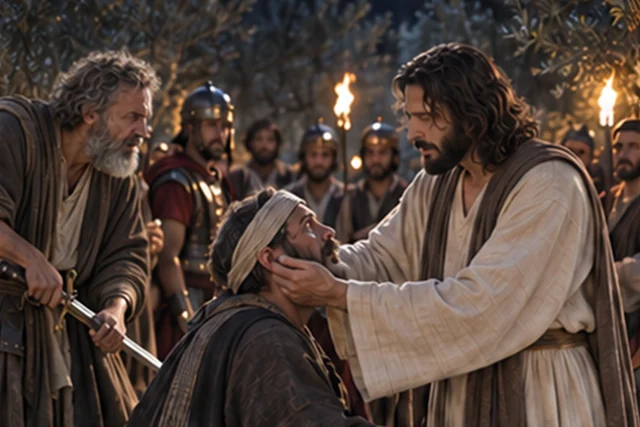
Judas leads an armed crowd toward Jesus and approaches to kiss him. Jesus names the betrayal hidden in that familiar greeting. The followers ask about using swords, and one strikes the high priest's servant, cutting off his right ear. Jesus stops the violence and heals the ear. He then questions the chief priests, temple officers, and elders about arriving armed as if he were a thief. They had not seized him while he taught openly in the temple. He names this as their hour and the rule of darkness. Even as he is betrayed, he repairs harm done to someone on the arresting side.
In everyday life
A protest first-aider steps between an angry participant and a wounded security worker, then treats the worker's cut. The crowd around her has divided into sides, but immediate care does not follow that division. She stops one harm from becoming permission for another. Jesus restores a severed ear during his betrayal, not merely a wound treated with supplies.
Notice
Luke 22:51 Jesus heals the servant harmed by his own side. His response to arrest does not approve retaliatory injury against those taking him.
Luke 22:47-53
King James Version47And while he yet spake, behold a multitude, and he that was called Judas, one of the twelve, went before them, and drew near unto Jesus to kiss him.
48But Jesus said unto him, Judas, betrayest thou the Son of man with a kiss?
49When they which were about him saw what would follow, they said unto him, Lord, shall we smite with the sword?
50And one of them smote the servant of the high priest, and cut off his right ear.
51And Jesus answered and said, Suffer ye thus far. And he touched his ear, and healed him.
52Then Jesus said unto the chief priests, and captains of the temple, and the elders, which were come to him, Be ye come out, as against a thief, with swords and staves?
53When I was daily with you in the temple, ye stretched forth no hands against me: but this is your hour, and the power of darkness.
Luke 22:54-62
Peter Denies Jesus Three Times
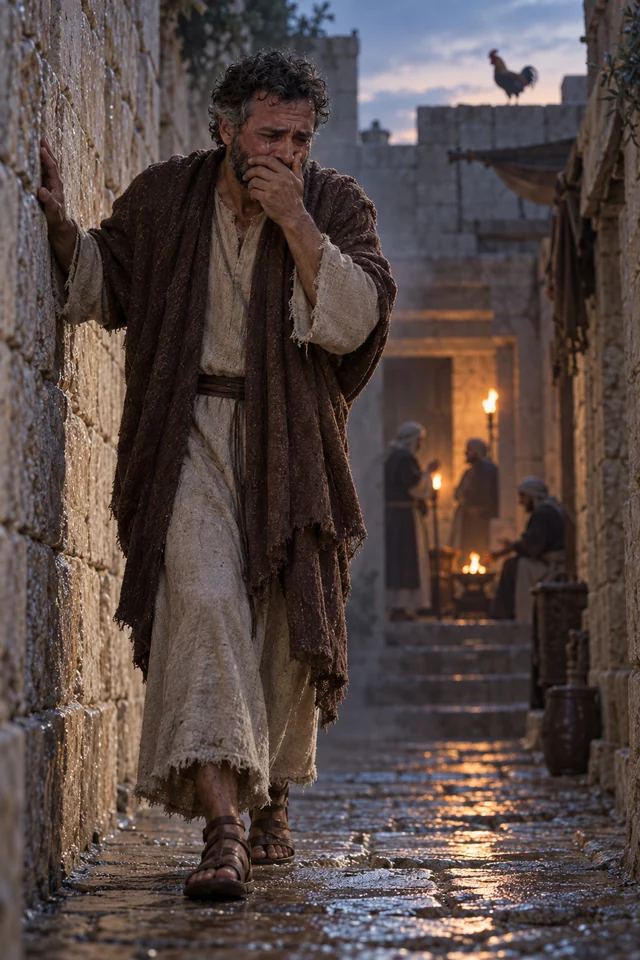
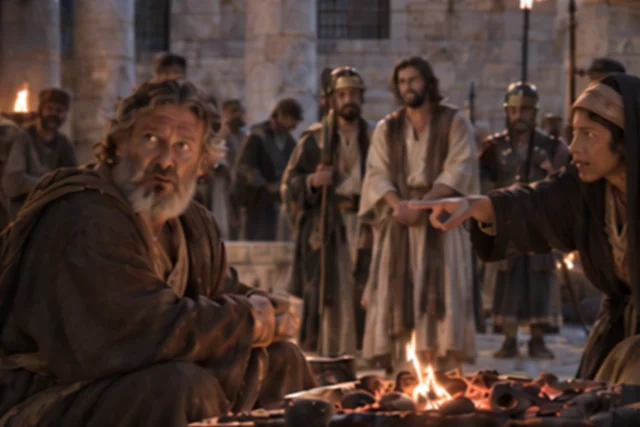
Jesus is taken to the high priest's house, and Peter follows at a distance. He sits near a fire with others in the courtyard. A servant girl identifies him as Jesus' companion, but he denies knowing him. Another person challenges him later, and he again refuses the connection. About an hour afterward a third person points to his Galilæan speech, marking him as from the northern region. While Peter denies again, the rooster crows. Jesus turns and looks at him. Peter remembers the warning and leaves in bitter tears. The predicted failure becomes personal as he meets the eyes of the one he has denied.
In everyday life
A former student denies knowing a teacher being publicly shamed, then repeats the denial when questioned twice more. Across the room she catches the teacher's eye and remembers her promise to stand by him. She steps outside in tears. Peter denies Jesus while a death plot unfolds, not only during public embarrassment.
Notice
Luke 22:61 Jesus' look comes at the moment Peter remembers the warning. Luke ties recognition of failure to a personal encounter, not only the sound of the rooster.
Luke 22:54-62
King James Version54Then took they him, and led him, and brought him into the high priest’s house. And Peter followed afar off.
55And when they had kindled a fire in the midst of the hall, and were set down together, Peter sat down among them.
56But a certain maid beheld him as he sat by the fire, and earnestly looked upon him, and said, This man was also with him.
57And he denied him, saying, Woman, I know him not.
58And after a little while another saw him, and said, Thou art also of them. And Peter said, Man, I am not.
59And about the space of one hour after another confidently affirmed, saying, Of a truth this fellow also was with him: for he is a Galilæan.
60And Peter said, Man, I know not what thou sayest. And immediately, while he yet spake, the cock crew.
61And the Lord turned, and looked upon Peter. And Peter remembered the word of the Lord, how he had said unto him, Before the cock crow, thou shalt deny me thrice.
62And Peter went out, and wept bitterly.
Luke 22:63-71
The Council Treats His Claim as Evidence
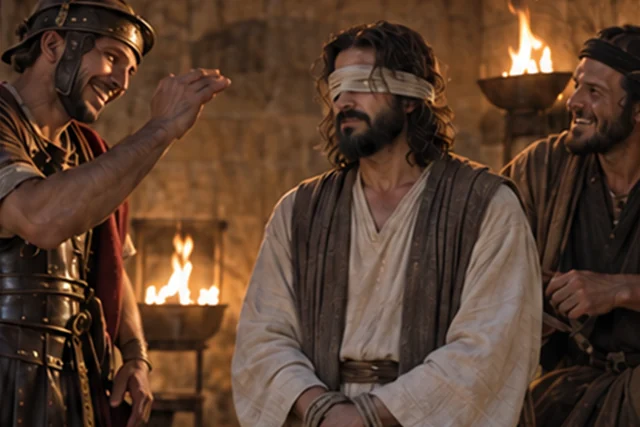
The men holding Jesus mock and beat him. They cover his eyes, strike him, and challenge him to name the attacker as a test of prophecy. At daybreak the elders, chief priests, and scribes gather the council. They ask whether he is the Christ, God's promised king. Jesus says they will neither believe his answer nor respond honestly to his questions. He says the Son of man, his title for himself, will sit beside God's power. Asked whether he is God's Son, he affirms their words. They decide they need no further witness. His own declaration becomes the evidence they seek against him.
In everyday life
A detention monitor receives a report that an accused person was mocked before the hearing and questioned by officials already fixed on guilt. She records both the treatment and the closed questions for review. The process reveals its direction before a fair answer is possible. Jesus declares divine sonship and future glory, not only innocence before hostile officials.
Notice
Luke 22:71 The council says it has heard enough from Jesus himself. The hearing ends on his identity claim rather than a tested account of criminal acts.
Luke 22:63-71
King James Version63And the men that held Jesus mocked him, and smote him.
64And when they had blindfolded him, they struck him on the face, and asked him, saying, Prophesy, who is it that smote thee?
65And many other things blasphemously spake they against him.
66And as soon as it was day, the elders of the people and the chief priests and the scribes came together, and led him into their council, saying,
67Art thou the Christ? tell us. And he said unto them, If I tell you, ye will not believe:
68And if I also ask you, ye will not answer me, nor let me go.
69Hereafter shall the Son of man sit on the right hand of the power of God.
70Then said they all, Art thou then the Son of God? And he said unto them, Ye say that I am.
71And they said, What need we any further witness? for we ourselves have heard of his own mouth.
Details worth noticing
The opening image
Luke 22:1 begins with “Now the feast of unleavened bread drew nigh, which is called the Passover.”
Where the chapter turns
Luke 22:36 forms a natural hinge: “Then said he unto them, But now, he that hath a purse, let him take it, and likewise his scrip: and he that hath no sword, let him sell his garment, and…”
The final note
Luke 22:71 leaves the reader with “And they said, What need we any further witness? for we ourselves have heard of his own mouth.”
A word trail through the chapter
The words Peter, Lord, passover, chief, Jesus, kingdom help reveal the chapter’s repeated concerns.
KJV words made clear
- unleavened
- Made without yeast, especially the bread eaten at Passover.
- benefactors
- People publicly honoured as generous helpers of others.
- scrip
- A bag used to carry provisions while travelling.
Music and video connected to the passage
Related media appears when its Scripture reference overlaps this study. Music and video can illuminate a theme while the biblical text remains the foundation.