
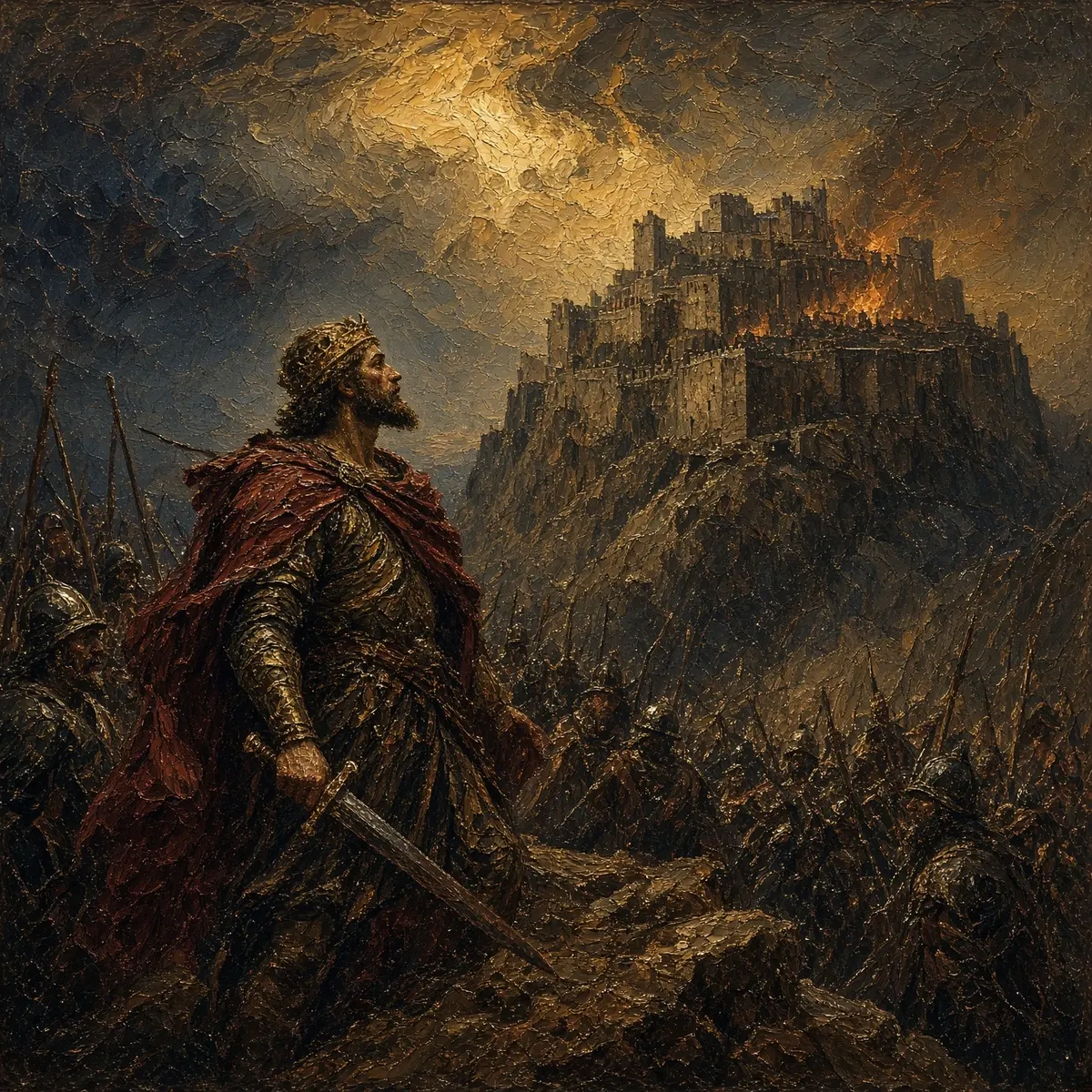

2 Samuel 15:30
He went up, and wept as he went up
A king leaves his capital barefoot with his head covered, and the whole company copies him. The route out is this hill.
Verse by verse
- 15:30
The covered head and bare feet belong to the verse's visible mourning. The text does not supply an interior monologue explaining every gesture.
- 15:30
The repeated ascent follows the crossing of the Kidron in 15:23. David is leaving Jerusalem toward the wilderness, not approaching it to claim the throne.
- 15:30
At the summit in 15:32, the KJV places David's worship and Hushai's arrival. The passage does not identify a precise later Christian commemorative site.


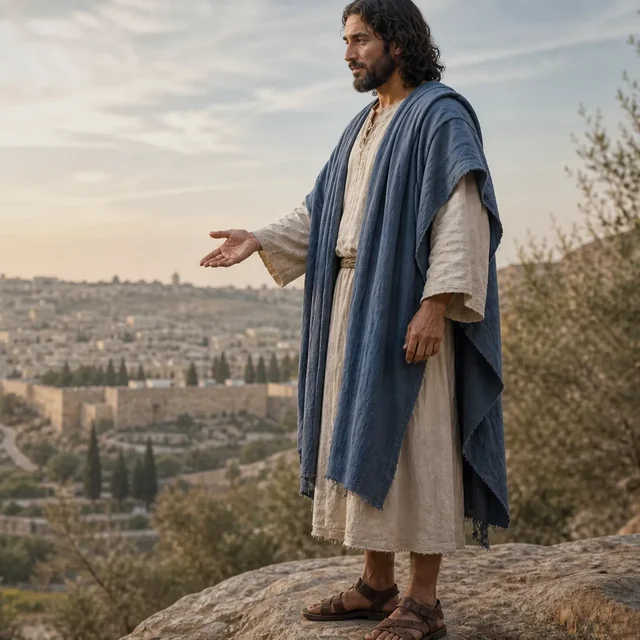

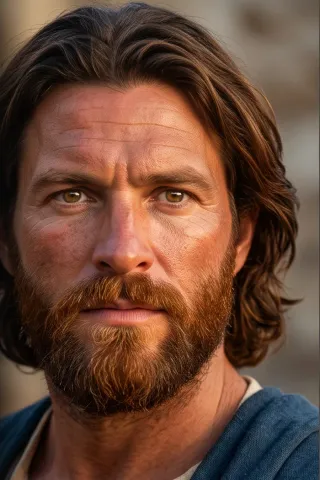


The king's feet are bare. A chapter that began with Absalom acquiring chariots, horses, and fifty runners now puts David on a hillside without shoes. The contrast needs no speech attached to it. One son has assembled the appearance of kingship; his father is leaving the capital with his head covered. Even the direction hurts. This is an ascent, but nothing in it looks like advancement.
The verse keeps returning to going up and weeping. David does both, and then the people do both. The repetition makes the climb take time instead of allowing the departure to become a tidy statement about a displaced king. Nor does the Book of Second Samuel give him a private grief, screened from his followers. Their covered heads answer his; their tears accompany his tears. The man who took Jerusalem is walking away from it, and the people who remain with him are not being offered a triumphal procession. Their loyalty has taken the form of a shared climb.