
Luke

24 Chapters
Luke: The Whole Book, Chapter by Chapter
Promises Find Their Voices
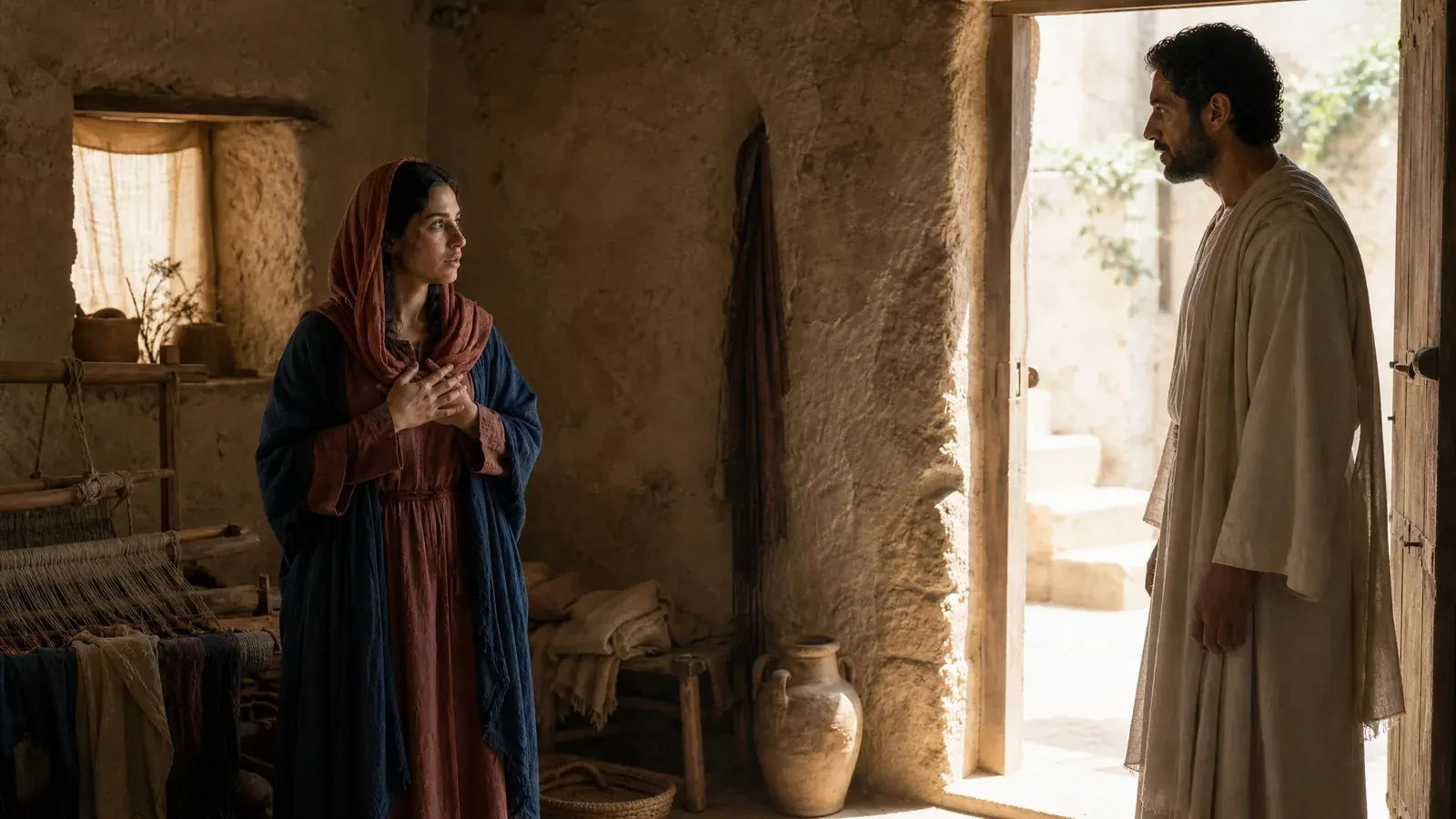
The Book of Luke opens with certainty built from testimony, then moves at once into two households where old promises acquire particular names. Zacharias receives glad tidings in the temple and leaves unable to speak; Mary receives a far larger announcement in Nazareth and answers without pretending to know more than she has been told. Elisabeth recognizes what is happening before either child can speak, and Mary's praise stretches her own low estate into God's remembered mercy toward Israel and Abraham. The relatives expect a familiar family name, but "His name is John" ends the discussion and restores Zacharias's voice. Even then, the father's prophecy looks beyond his own son to the Davidic salvation John will prepare. The chapter keeps pairing private lives with Israel's long expectation: barrenness and conception, silence and praise, an overlooked young woman and an endless kingdom. Before either ministry begins, the Book of Luke has already made clear that John and Jesus belong together without occupying the same place.
One complete chapter pageOpen chapter →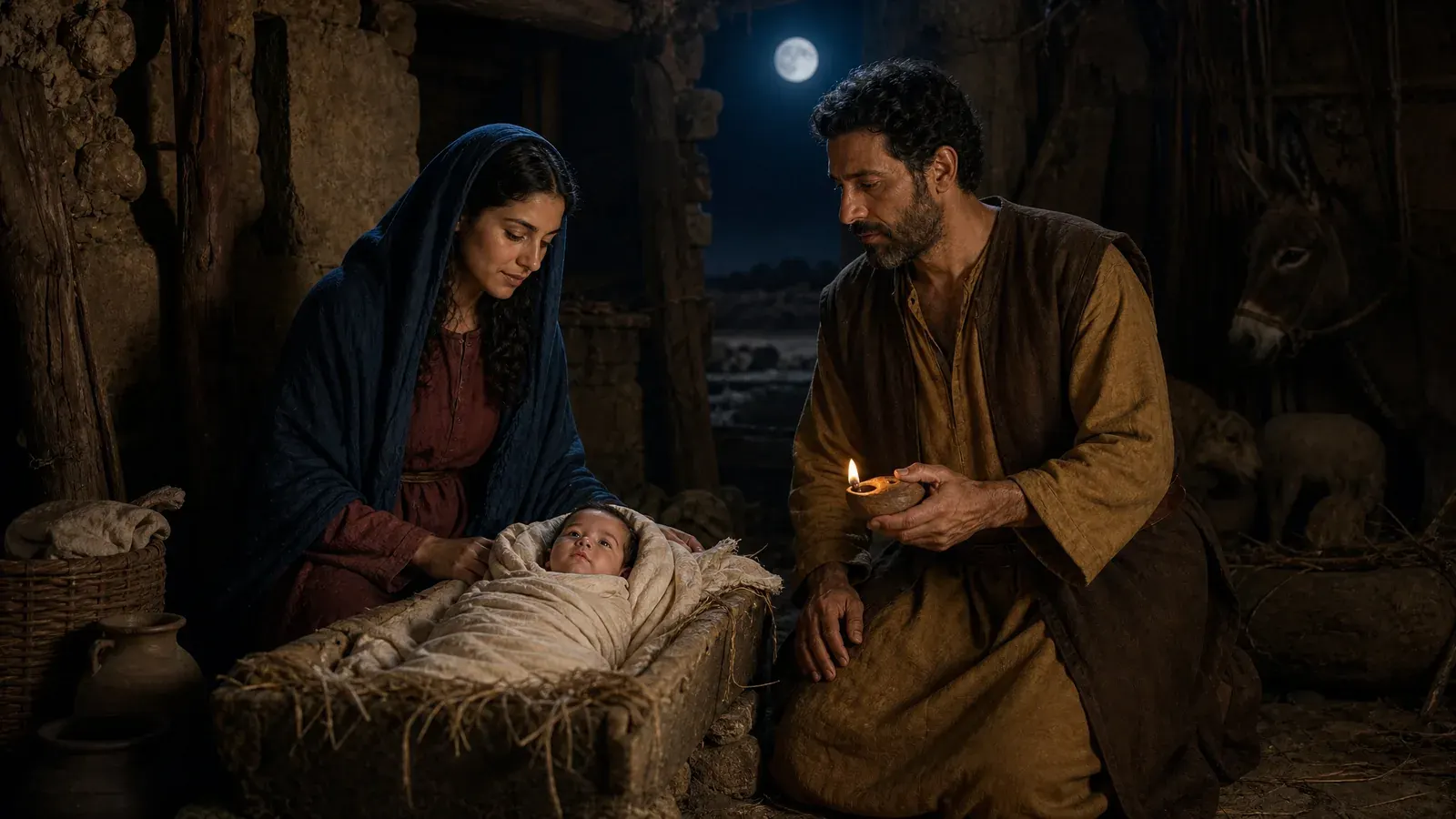
The Promised King Enters Ordinary Days
The Book of Luke places the promised king inside the machinery and routines of ordinary life. An imperial decree moves Joseph and Mary toward Bethlehem, yet Jesus arrives without visible royal staging and is laid in a manger. Heaven supplies the titles, but the identifying sign given to shepherds is precisely that unroyal resting place. The temple scenes keep the child firmly within Israel's law while Simeon and Anna widen the meaning of his arrival: salvation reaches the Gentiles, Israel receives glory, redemption is being awaited, and opposition is already coming. The chapter never lets recognition become sentimental. Simeon's blessing carries a sword-shaped warning for Mary. Then the Book of Luke returns the family to Nazareth and allows years to pass without invented marvels. At twelve, Jesus speaks of his Father's concerns in the temple, yet goes home and remains subject to his parents. Distinctive sonship and ordinary human growth stand together. The chapter closes not with spectacle but with increase in wisdom, stature, and favour.
One complete chapter pageOpen chapter →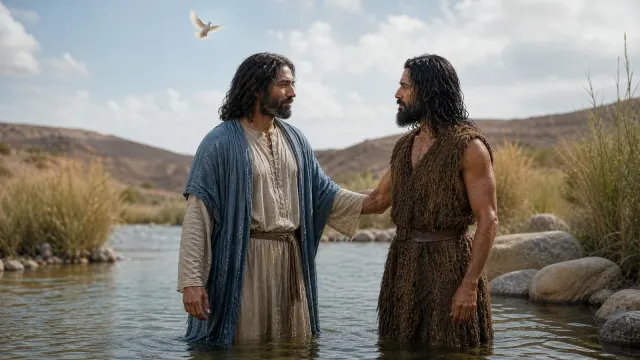
A Voice in the Wilderness and a Name from Heaven
The Book of Luke surrounds John's ministry with the names of rulers and priests, then sends the decisive word somewhere else entirely: into the wilderness. Isaiah's road-making language gives John's preaching its scale, while his practical answers give repentance a surprisingly ordinary wardrobe and payroll. The crowd's speculation about John is answered by his refusal to take the larger title. He points beyond water to the coming one who brings the Holy Ghost, fire, and judgment, then pays for confronting Herod with imprisonment. Jesus enters the scene among the baptized and is praying when heaven opens, the Spirit descends, and the voice names him the beloved Son. The Book of Luke then traces his ancestry backward, through David and Abraham, all the way to Adam and God. The chapter therefore moves from public rulers to wilderness prophecy, from fruit visible in daily conduct to sonship declared from heaven, and from Israel's history to a human horizon reaching the first man. Identity is established before the wilderness will test it.
One complete chapter pageOpen chapter →
The Announced Mission Meets Resistance
The sonship announced from heaven is tested in the wilderness before Jesus publicly defines his mission in Nazareth. The devil offers shortcuts involving bread, dominion, and a dramatic proof of protection; Jesus answers from Israel's own wilderness Scripture and refuses to make sonship serve the tempter's terms. Back in Galilee, Isaiah's promise of good news, release, sight, and liberty becomes a present announcement: "This day" it is fulfilled. Nazareth initially marvels, then turns violent when Jesus cites mercy reaching outsiders and refuses to make hometown familiarity a claim on prophetic benefit. Capernaum responds differently, astonished at a word that carries authority over both teaching and unclean spirits. Healings move from synagogue to household to crowds, yet even enthusiastic demand cannot confine the mission to one city. The chapter repeatedly tests attempts to control Jesus, whether by satanic challenge, local entitlement, hostile force, demonic testimony, or grateful crowds. He keeps moving according to the purpose for which he says he was sent.
One complete chapter pageOpen chapter →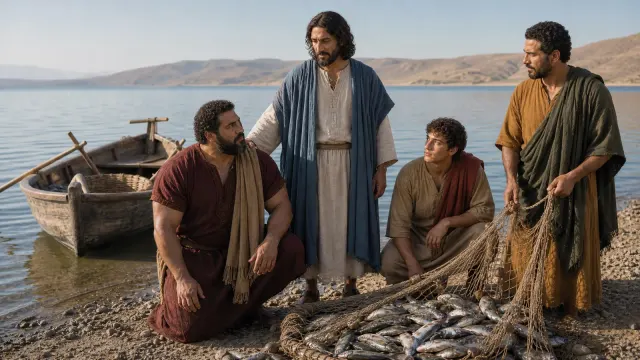
The Call Reaches Boats, Rooftops, and Tables
The Book of Luke 5 keeps putting Jesus' authority inside ordinary places where people already have routines, reputations, and expectations. Simon's empty nets become full, but the abundance is not the destination; the fishermen leave it behind when called. A man uncertain about Jesus' willingness to cleanse receives touch as well as command, then is sent back toward the priestly process Moses prescribed. A paralysed man lowered through a roof turns healing into public evidence for the less visible claim that the Son of man can forgive sins. Levi rises from the customs station, then opens his house to the people he already knows, making table fellowship the next arena of dispute. Jesus answers with the image of a physician whose presence among the sick is not professional failure but the point of the work. Questions about fasting then widen into bridegroom, cloth, and wineskin images. Again and again, the chapter shows established forms encountering a presence they cannot simply absorb without change.
One complete chapter pageOpen chapter →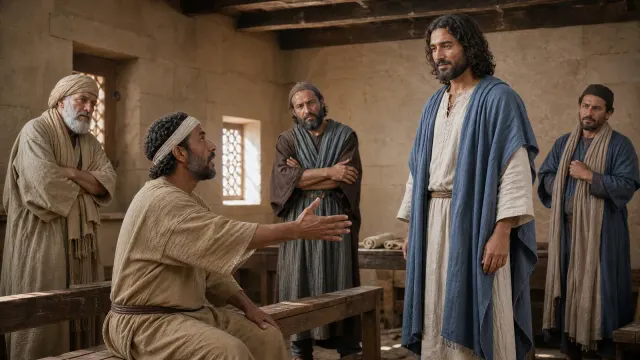
Mercy Exposes a Different Measure
The Book of Luke 6 puts Sabbath arguments, chosen apostles, blessings and woes, enemy-love, judgment, speech, and foundations under one searching question: what kind of life does Jesus' teaching actually produce? The Sabbath disputes reveal a sharp contrast between a restored hand and people watching for grounds of accusation. After a night of prayer, Jesus chooses twelve from among a much larger body of disciples, then addresses that community amid crowds seeking healing. His blessings and woes overturn easy confidence in present comfort, while enemy-love breaks the ordinary economy of repayment by grounding mercy in the Father's kindness even toward the unthankful and evil. The warning against judging is not a ban on seeing any fault; the beam must come out so the eye can see clearly enough to help. Trees are known by fruit, hearts by what they produce, and houses by what the flood reveals about their hidden foundations. The chapter ends by making admiration insufficient: hearing becomes meaningful only when it reaches conduct.
One complete chapter pageOpen chapter →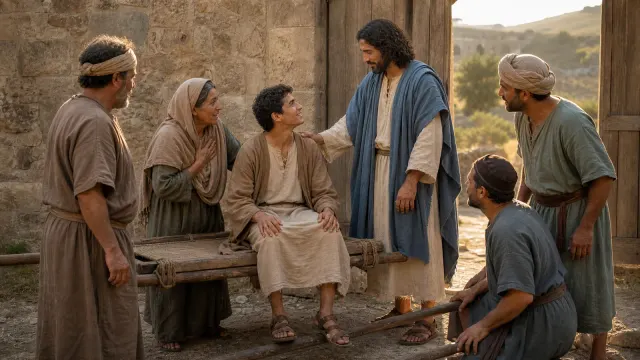
Authority Recognized in Unexpected Company
The Book of Luke 7 repeatedly places recognition in people whom conventional expectations might not put first. A Gentile centurion understands authority well enough to trust Jesus' word without demanding his presence, while Jewish elders willingly plead his case. A widow at Nain makes no request at all; compassion moves Jesus to stop the funeral and return her only son. John then sends the question that has to be asked, and Jesus answers through the shape of his works before publicly affirming John's prophetic place. The chapter exposes a generation capable of rejecting opposite forms of ministry: John's restraint is called demonic, while Jesus' table fellowship is called gluttony. That complaint then walks into an actual dining room. Simon the Pharisee evaluates the woman touching Jesus and assumes acceptance proves ignorance. Instead, her tears, kisses, and ointment become the visible response to forgiveness, while Simon's omissions expose a colder reception. The chapter ends where several earlier disputes have ended, with Jesus speaking forgiveness and peace while others wonder who has such authority.
One complete chapter pageOpen chapter →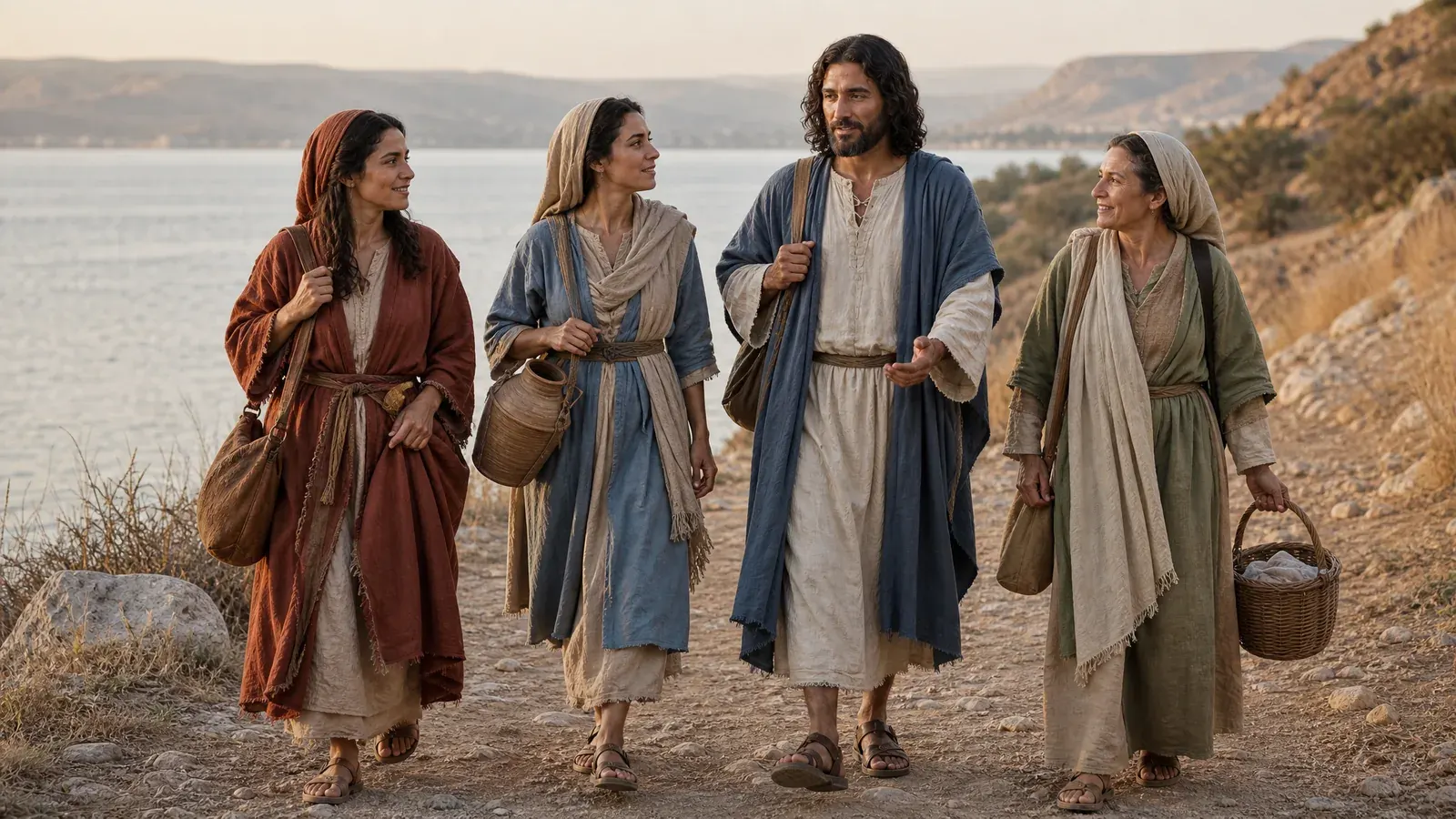
Hearing Is Tested on the Road and the Water
The Book of Luke 8 begins by showing how the traveling ministry is materially sustained, then makes hearing the word the chapter's central test. The same seed meets radically different receptions, and Jesus quickly applies the point to light, family, fear, demonic bondage, chronic illness, and death. His mother and brothers do not gain automatic access through biology; family is described through hearing and doing. A storm obeys before the disciples understand who has commanded it. Across the lake, a man long driven among tombs returns home clothed and in his right mind while the surrounding population asks Jesus to leave. On the return journey, Jairus's urgent crisis is interrupted by a woman whose twelve years of suffering receive their own attention rather than being treated as delay. Then the report of death reaches Jairus, and Jesus continues anyway. The final command after the girl rises is almost startlingly ordinary: feed her. Throughout the chapter, proximity to Jesus is easy to observe; recognizing and responding to his authority is the deeper question.
One complete chapter pageOpen chapter →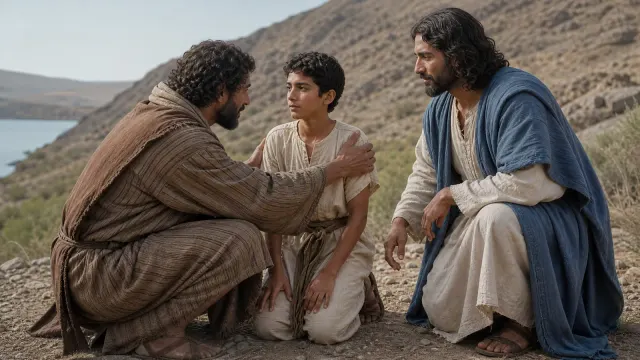
Glory Turns Its Face Toward Jerusalem
The Book of Luke 9 gives the disciples authority and then spends the rest of the chapter showing how much authority can be exercised before understanding catches up. The Twelve travel light, preach, heal, and return, only to be told to feed a crowd they cannot supply from their own resources. Peter correctly names Jesus as God's Christ, but the title is immediately defined by rejection, death, resurrection, and a cross carried by followers. On the mountain, glory appears, yet Moses and Elias speak about the departure Jesus will accomplish at Jerusalem. Back below, failed deliverance, confusion about suffering, an argument over greatness, and an attempt to police another exorcist expose how quickly the disciples can witness power without grasping its shape. Then Jesus sets his face toward Jerusalem. A Samaritan village refuses him, but the answer is another village, not fire from heaven. The final three encounters strip following of comfortable delays. Glory, suffering, mission, and misunderstanding now travel the same road.
One complete chapter pageOpen chapter →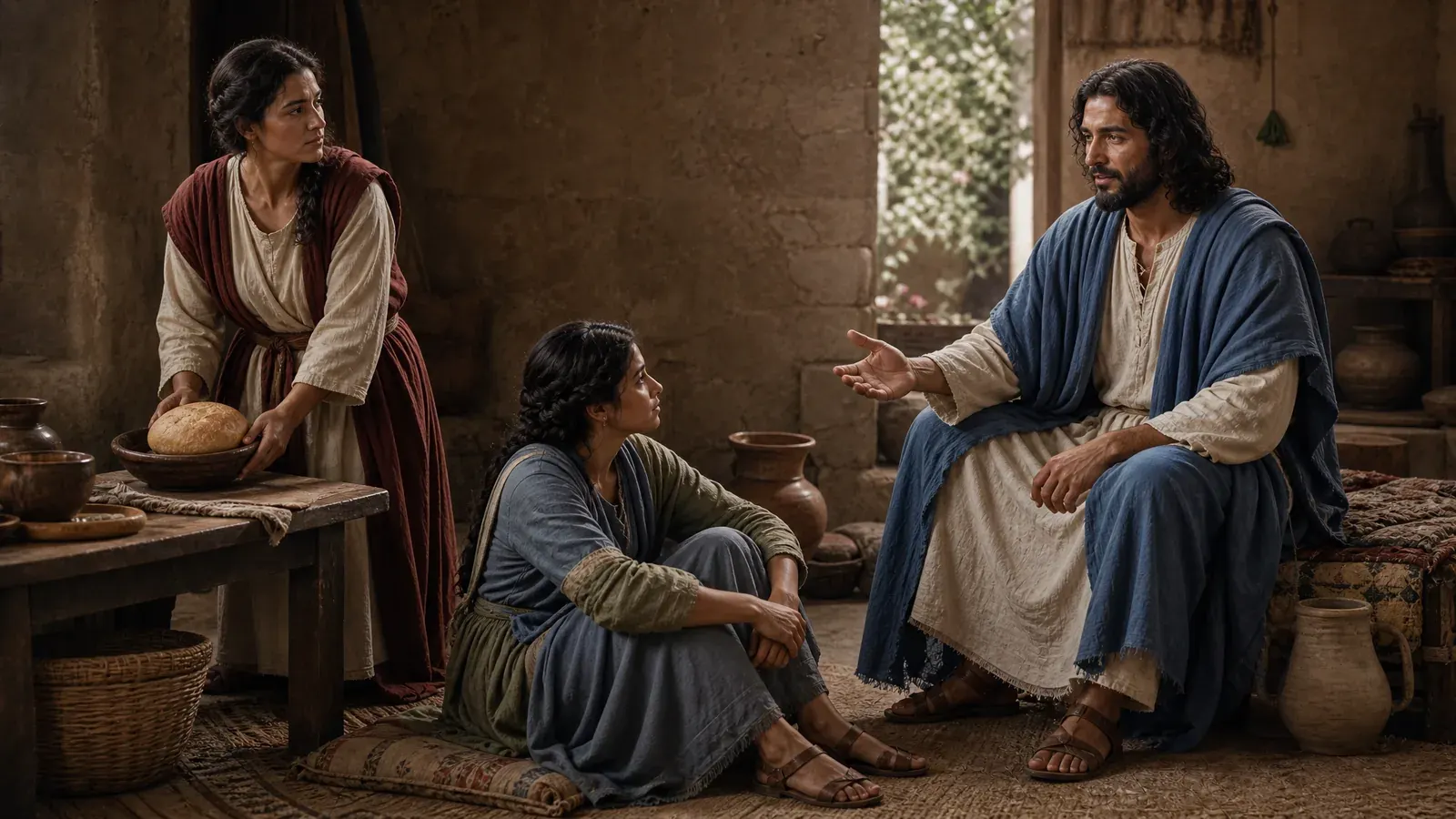
The Kingdom Arrives Through Messengers and Mercy
The Book of Luke 10 widens the circle of messengers, then steadily narrows the field until the kingdom is being tested in a ditch and a kitchen. Seventy others go ahead of Jesus in pairs, dependent on hospitality yet carrying an announcement that remains true whether a town receives them or refuses them. Their joyful return after demons submit becomes an occasion for Jesus to relocate joy from exercised power to names written in heaven. Privilege also increases accountability: cities that have seen much are judged by their response to what happened among them. A lawyer then supplies the right summary of the law himself but tries to define the neighbor tightly enough to justify his position. Jesus answers with a Samaritan whose mercy has verbs, expenses, transportation, lodging, time, and an open account. The final household scene refuses another kind of narrowing. Martha's service is real service, but it cannot be used to remove Mary from hearing at Jesus' feet. Mission, mercy, and attention all expose what receiving the kingdom looks like.
One complete chapter pageOpen chapter →
Prayer, Light, and the Resistance to Hearing
The Book of Luke 11 begins with prayer and ends with people trying to trap Jesus in his words. Between those points, the chapter keeps asking what it means to receive what God is already giving. Jesus teaches his disciples to pray to a Father whose generosity exceeds that of reluctant neighbors and flawed human parents, with the Holy Spirit as the climactic gift. When Jesus casts out a devil, some witnesses reinterpret deliverance as collaboration with Beelzebub, forcing a choice between a divided satanic kingdom and the arrival of God's stronger rule. Others demand a sign while the greater-than-Jonah and greater-than-Solomon stands before them. The lamp saying turns the problem from absent light to impaired reception. Then, at a Pharisee's table, polished externals are measured against inward greed, justice, love of God, and the burdens imposed by legal experts. The final image is devastatingly vocational: people holding the key of knowledge neither enter nor let others in. The response is not reconsideration but an organized effort to obtain an accusation.
One complete chapter pageOpen chapter →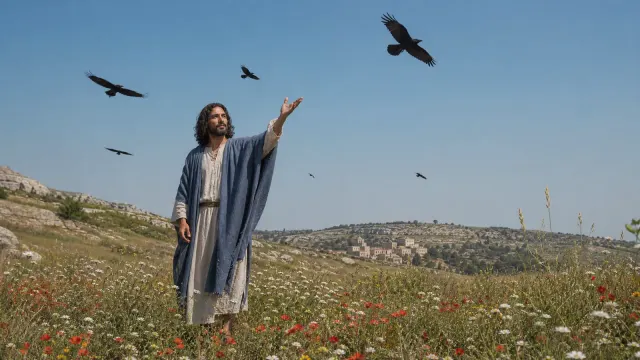
What Possessions and Precautions Cannot Secure
The Book of Luke 12 gathers a huge crowd but repeatedly dismantles the kinds of security a crowd can mistake for safety. Hidden hypocrisy will be exposed, human persecutors do not possess final authority, and the God whose judgment reaches beyond death also remembers sparrows and numbers hairs. A dispute over inheritance becomes a parable about a man rich in produce but unable to store the years he has promised himself. Jesus then points to ravens and lilies, not to romanticize carelessness but to expose the limits of anxiety and possessions before the Father's knowledge and gift of the kingdom. Readiness takes the form of servants doing entrusted work, and authority increases rather than decreases accountability. Jesus' mission will not produce universal household agreement; it can divide even the closest relationships. The chapter ends by comparing the crowd's accurate weather reading with its failure to read the present moment. The recurring pressure is the same: apparent control over reputation, goods, time, authority, or tomorrow cannot secure what only God governs.
One complete chapter pageOpen chapter →
Mercy Opens an Interval That Will Not Last Forever
Luke 13 keeps mercy and judgment in the same frame without letting either dissolve the other. Sudden deaths are not permission to rank the victims as worse sinners, yet surviving the disaster is not a certificate of innocence. The fig tree is spared, but the extra year is filled with digging, manure, and the expectation of fruit. A woman bent for eighteen years is released on the Sabbath, and Jesus makes the calendar itself part of the argument: if an animal may be loosed for water, a daughter of Abraham need not wait another day. The kingdom then appears in images that begin almost too small to notice and end by filling their surroundings. But small beginnings do not mean casual entrance. Familiarity with Jesus is not the same as belonging to him, and people arrive from every direction while some who assumed precedence find themselves outside. The chapter closes with Herod's threat, Jesus' unaltered course, and a lament over Jerusalem in which warning and desired protection are spoken together.
One complete chapter pageOpen chapter →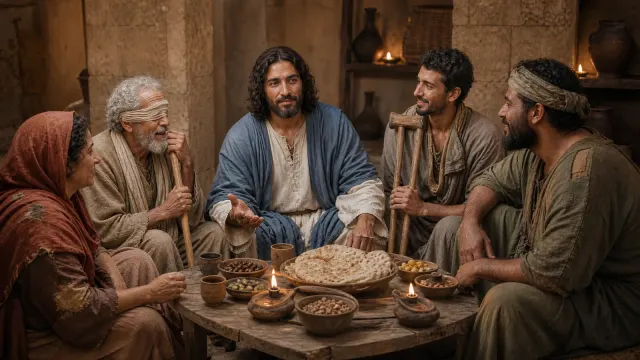
A Place at the Table and the Cost of Following
Luke 14 begins at a Sabbath table where people are watching Jesus and ends with a warning that merely traveling near him does not amount to discipleship. In between, every kind of social position gets unsettled. A man is healed while the lawyers and Pharisees have no answer for a simple comparison with rescuing an animal. Guests reaching for the best seats are told to let the host assign honor, and the host himself is told to invite people who cannot close the circle by repaying him. A confident remark about eating in God's kingdom receives a parable in which the original guests are too occupied to come and the house fills from streets, lanes, roads, and hedges. Then Jesus turns from the meal to the multitudes. The crowd is large, but the terms are not discounted for volume. Family allegiance, possessions, life itself, and the cross all enter the reckoning. The final image of useless salt makes the chapter's distinction sharp: a familiar label cannot substitute for the character that gives the thing its purpose.
One complete chapter pageOpen chapter →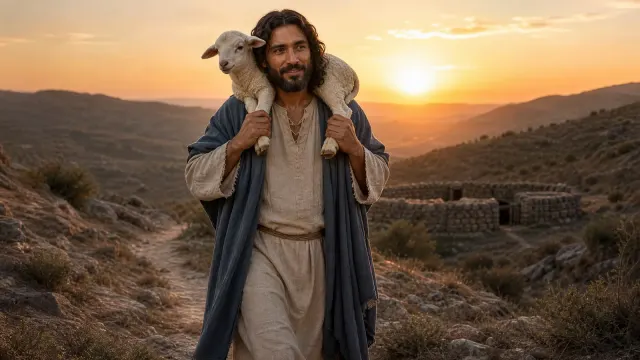
The Celebration Has Room for Both Sons
Luke 15 answers a complaint about Jesus receiving sinners by asking whether anyone can understand finding without understanding joy. The shepherd finds one sheep and calls others to celebrate. The woman finds one coin after lighting a lamp and sweeping the house, and she does the same. Then the pattern becomes a household with two sons, and the chapter grows more complicated without abandoning the rhythm. The younger son takes his share, wastes it, returns with a confession, and is met by a father who runs before the proposed employment arrangement can define the reunion. Robe, ring, shoes, and feast make the welcome public. Yet the chapter does not end at the table. The elder son is outside, angry that this celebration exists at all, and the father goes out again. He does not deny the elder son's place or the reality of what remains his. He restores the word “brother” and explains why joy is necessary. Luke leaves the final door open because the complaint that began the chapter has now been placed inside the parable.
One complete chapter pageOpen chapter →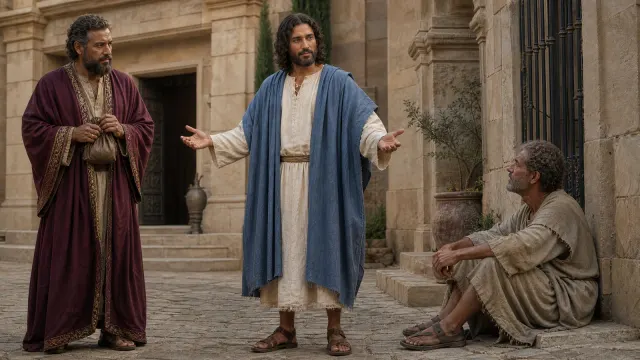
Money, Trust, and the Gate Left Uncrossed
Luke 16 keeps returning to wealth until money is revealed as far more than an amount on a ledger. A steward about to lose his position acts decisively with the little time and authority he has left, and Jesus isolates the man's foresight without baptizing his dishonesty. The sayings that follow describe money as “least,” “unrighteous mammon,” and something belonging to another, turning possession into stewardship before it can become mastery. The Pharisees' ridicule then opens a wider question about self-justification, public approval, and a law that does not evaporate when the kingdom is proclaimed. Finally, Luke places abundance and destitution within a few steps of each other: a rich man feasts while Lazarus lies at his gate. After death, the distance becomes an uncrossable gulf. Even then, the rich man imagines Lazarus being sent on errands. His request for a messenger to his brothers is refused not because they have no witness, but because they already have Moses and the prophets. The chapter closes on the unsettling possibility that more spectacular evidence cannot repair a settled refusal to hear.
One complete chapter pageOpen chapter →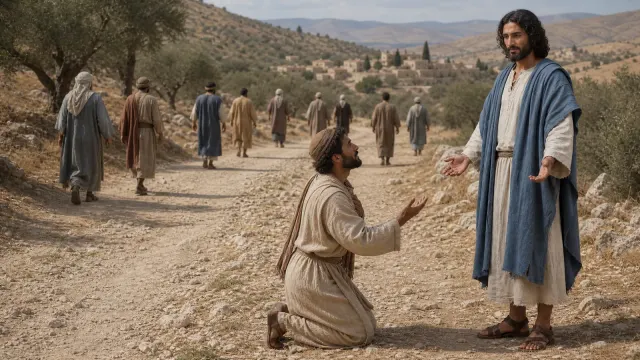
Faithfulness Between the Present Kingdom and Its Revealing
Luke 17 moves from ordinary community life to the revealing of the Son of man without treating those subjects as separate worlds. Jesus warns against becoming the means by which vulnerable people stumble, then demands repeated forgiveness when a brother returns in repentance. The apostles answer that pressure by asking for more faith, but the mustard seed image refuses to make faith impressive because of its size. The servant comparison then removes any idea that obedience places God in debt. On the road to Jerusalem, ten lepers are cleansed and one Samaritan returns, so receiving mercy and recognizing its source are allowed to stand as distinct moments. Questions about the kingdom follow. Its presence cannot be reduced to a spectacle located by observers saying “here” or “there,” yet the future revealing of the Son of man will not be a private secret either. Lightning, Noah, Lot, and sudden separation all make the same point from different directions: ordinary life can continue right up to a boundary that exposes what proximity, routine, and shared space could not settle.
One complete chapter pageOpen chapter →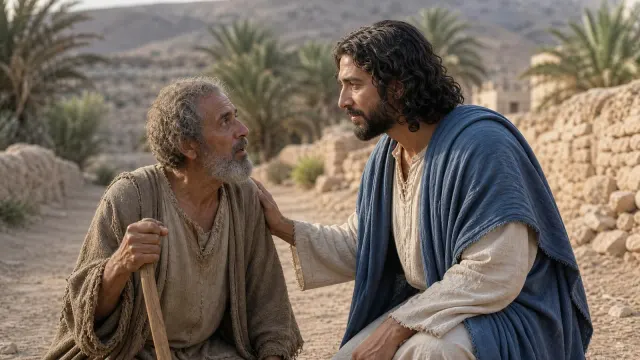
Those Who Receive What They Cannot Secure
Luke 18 gathers people who cannot secure the outcome they need and shows what happens when dependence is placed in the open. A widow keeps returning to an unjust judge until even a man who fears neither God nor people acts on her case. A Pharisee then arrives at the temple with a résumé built partly from comparison, while a publican offers nothing but a plea for mercy, and the verdict comes from outside both men. Infants are carried to Jesus and become the model for receiving the kingdom before they can display achievement. A wealthy ruler has the opposite problem: he possesses much, yet the one demanded relinquishment exposes what he cannot simply add to his existing life. The Twelve hear a clear prediction of suffering, death, and resurrection and still do not understand. Near Jericho, a blind beggar recognizes enough to keep crying “Son of David” when the procession tells him to be quiet. Jesus stops, restores his sight, and the man joins the road. Dependence in this chapter is not passivity. It is the admission that the decisive gift cannot be manufactured by status, wealth, comparison, or proximity.
One complete chapter pageOpen chapter →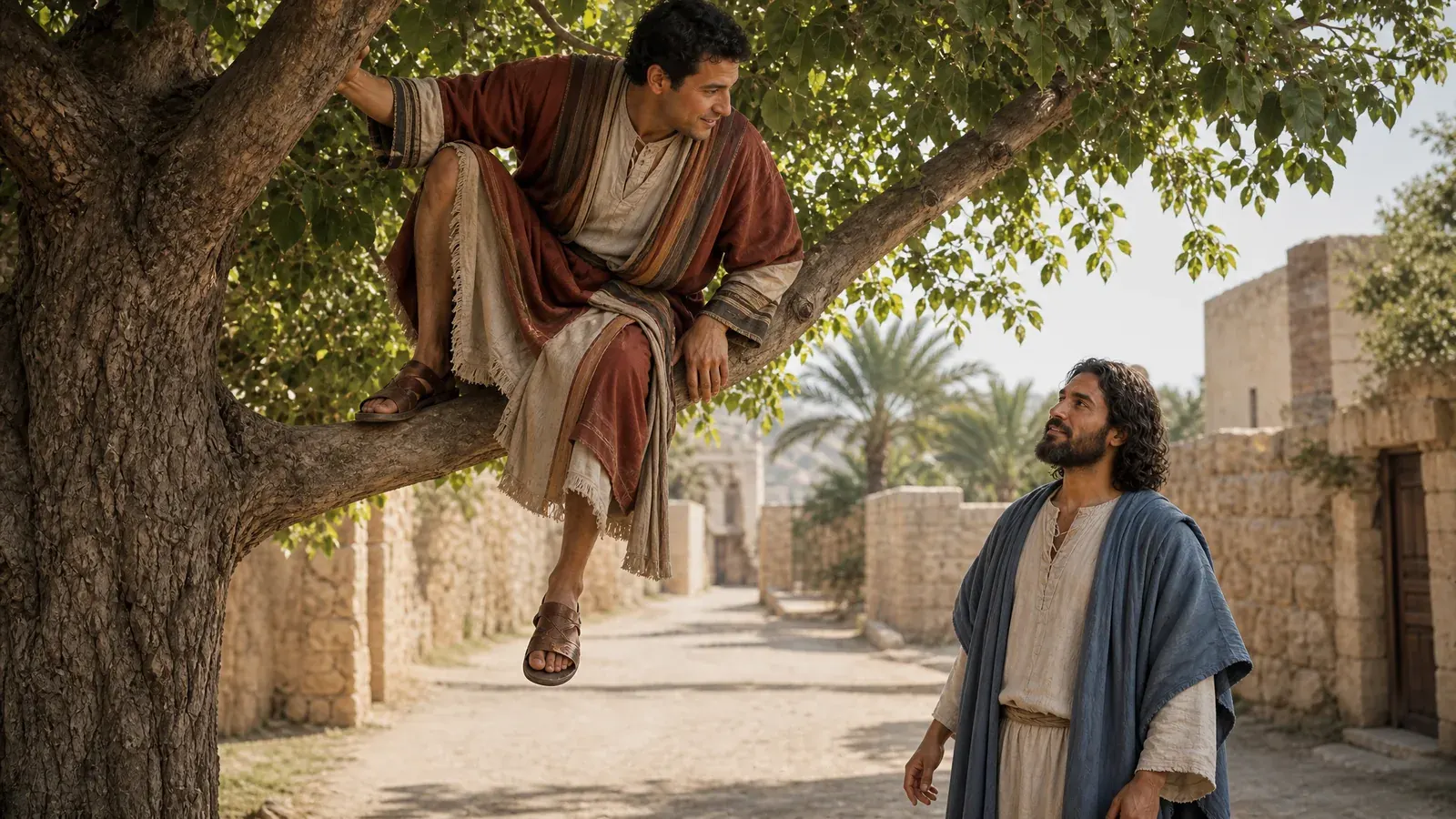
The King Comes Near, and the City Fails to Recognize the Hour
Luke 19 brings Jesus to Jerusalem while repeatedly asking who recognizes what is actually happening. Zacchaeus climbs a tree to see Jesus and discovers that Jesus is already looking for him. The contested meal in his house ends with salvation named and the Son of man's purpose stated as seeking and saving the lost. Because Jerusalem is near and people expect the kingdom to appear immediately, Jesus tells a parable that inserts departure, entrusted service, opposition, return, and reckoning between expectation and public manifestation. Then the royal entry arrives deliberately, with a colt, garments, loud praise, and the title “King.” Yet the next movement is not triumphal satisfaction. Jesus sees the city and weeps because its peace and visitation have not been recognized. In the temple, he drives out buyers and sellers, names the place a house of prayer, and then teaches there daily. The authorities seek to destroy him while the people hang on his words. The chapter therefore refuses a single crowd reaction or a simple victory scene. Recognition and blindness, welcome and hostility, kingship and grief all occupy Jerusalem at once.
One complete chapter pageOpen chapter →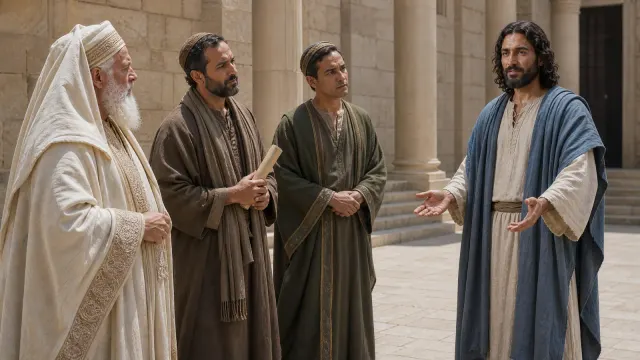
Questions Designed to Close the Case
Luke 20 is filled with questions, but very few of them are simple requests for information. In the temple, authorities demand the source of Jesus' authority, only to discover that answering his counterquestion about John would expose their own calculated refusal. The vineyard parable then gives the authority dispute a violent shape: tenants reject servant after servant and finally kill the heir they recognize. Spies try a different route with Caesar's coin, hoping either answer can be turned into evidence before the governor. Sadducees construct a seven-brother marriage problem to make resurrection look absurd, but Jesus answers by showing that they have carried the conditions of mortality unchanged into a life no longer governed by death. He then raises his own question from Psalm 110 about David's Lord, opening the Messiah's identity beyond ancestry alone. The chapter closes with a warning against scribes whose public religious prominence can coexist with devouring widows' houses. Luke has moved from verbal traps to the conduct beneath them, exposing how expertise, status, and polished questions can conceal a very practical appetite for power.
One complete chapter pageOpen chapter →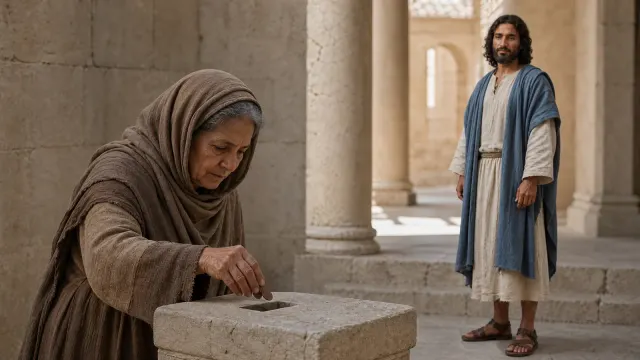
What Remains When the Admired Stones Fall
Luke 21 begins with two mites and ends with people arriving early to hear Jesus, and between those ordinary details the chapter reaches from Jerusalem's temple to cosmic upheaval. Jesus measures a widow's gift by what it costs her, not by its visible size, just before others admire the temple's stones and dedicated gifts. He answers their admiration by announcing destruction. When they ask when and what sign, the first instruction is not a date but a warning against deception. Wars, earthquakes, famines, and pestilences are real upheavals, yet they do not automatically mean the end is immediate. Persecution will become a witness stand, even when faithful testimony does not prevent betrayal or death. Jerusalem's encirclement calls for flight rather than confidence in the city's walls, while the horizon eventually opens to signs in heaven and the coming Son of man. The generation saying remains debated, but the claim that Jesus' words will not pass away is not. The chapter closes by returning from speculation to watchfulness, prayer, and the daily rhythm of teaching. Luke's emphasis is readiness and endurance, not mastery of a timetable.
One complete chapter pageOpen chapter →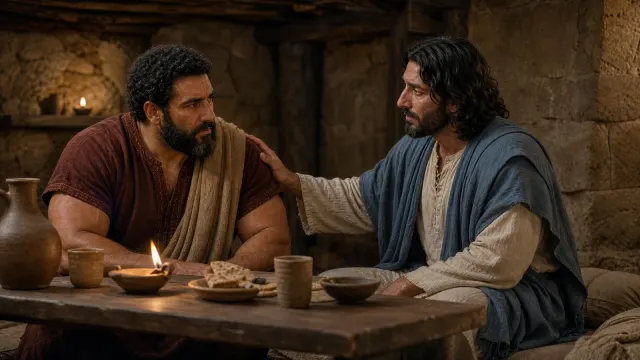
The Meal, the Prayer, and the Hour of Darkness
Luke 22 compresses betrayal, covenant, ambition, failure, prayer, violence, and trial into a single night without making Jesus merely reactive to events around him. Judas gives the authorities the quiet opportunity they have been seeking, but the Passover is still prepared under Jesus' direction and interpreted by him before the arrest begins. Bread and cup are joined to his body, blood, remembrance, covenant, suffering, and the kingdom to come. At that same table the disciples manage to debate greatness, and Jesus answers not by abolishing future authority but by redefining it through the one who serves. Peter promises prison and death, then receives a prediction of denial and, before the failure has happened, a word about restoration. On the mount of Olives, Jesus asks for the cup to pass and submits his will to the Father while the disciples sleep from sorrow. A sword is drawn at the arrest, but the final healing before the crucifixion repairs the wound. Peter's denials then fulfill the word he dismissed, and the chapter closes with mockers demanding prophecy from a prisoner whose prediction has just come true.
One complete chapter pageOpen chapter →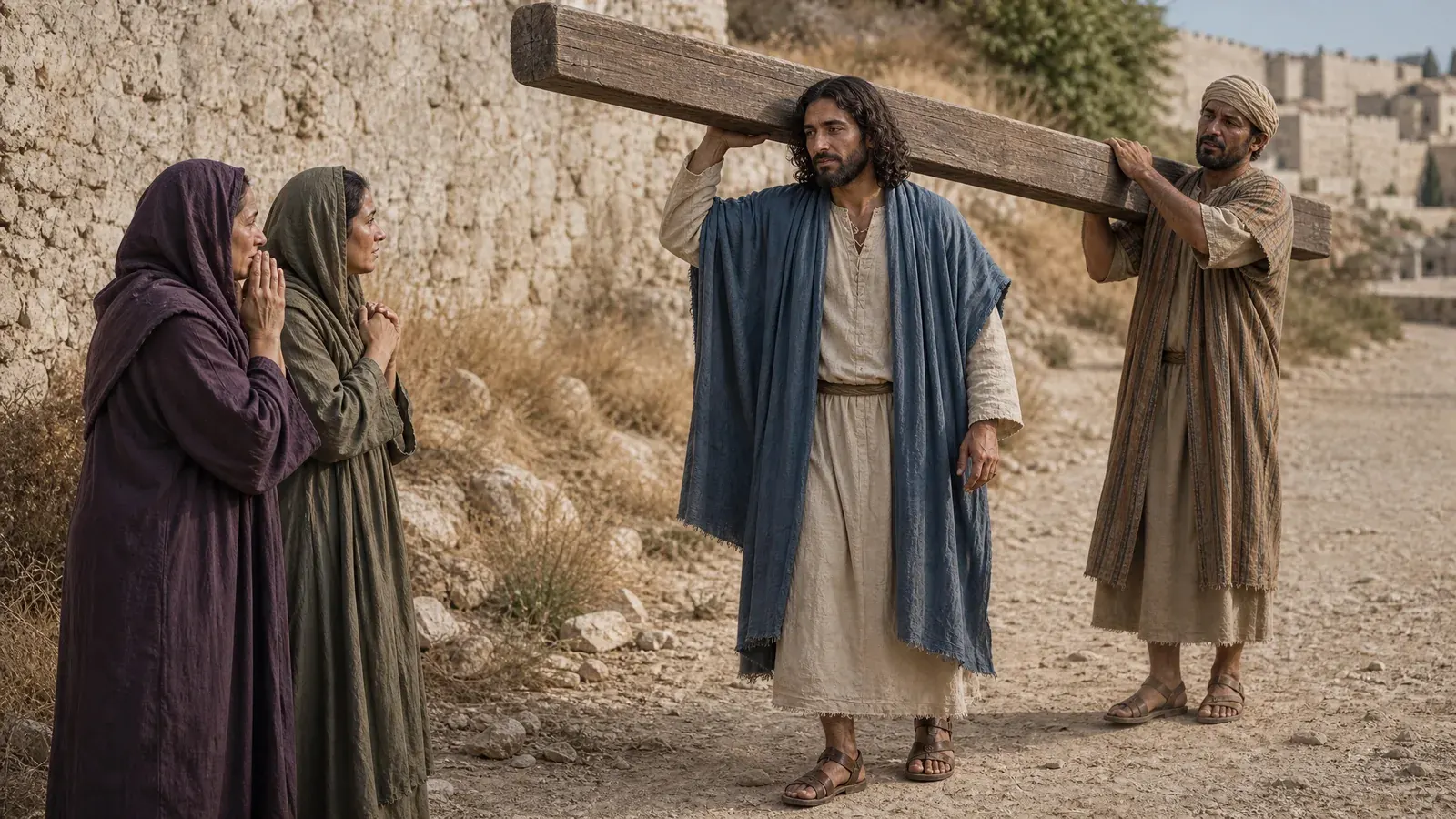
The Condemned King Continues to Give
Luke 23 repeatedly separates the legal sentence imposed on Jesus from the question of his guilt. Before Pilate, charges are translated into language suitable for Roman authority, including an accusation about tribute that Luke has already shown to distort Jesus' words. Pilate declares that he finds no fault and sends the Galilean to Herod, whose curiosity produces many questions, no miracle, mockery, and a return. Pilate then states innocence again and again, yet releases Barabbas, a man actually imprisoned for sedition and murder, while delivering Jesus to crucifixion. On the road, Simon carries the cross behind him and mourning women hear a warning about Jerusalem. At Calvary, Jesus prays for forgiveness while rulers, soldiers, and one criminal insist that true kingship should prove itself through self-rescue. Another criminal sees differently and asks to be remembered; he receives the promise of being with Jesus in paradise. Darkness, a torn veil, Jesus' final prayer to the Father, and a centurion's recognition follow. Joseph's dissenting council membership and the women's careful observation of the burial keep the chapter's responses varied to the end. The condemned king continues to give while those judging him repeatedly reveal what they cannot make the sentence prove.
One complete chapter pageOpen chapter →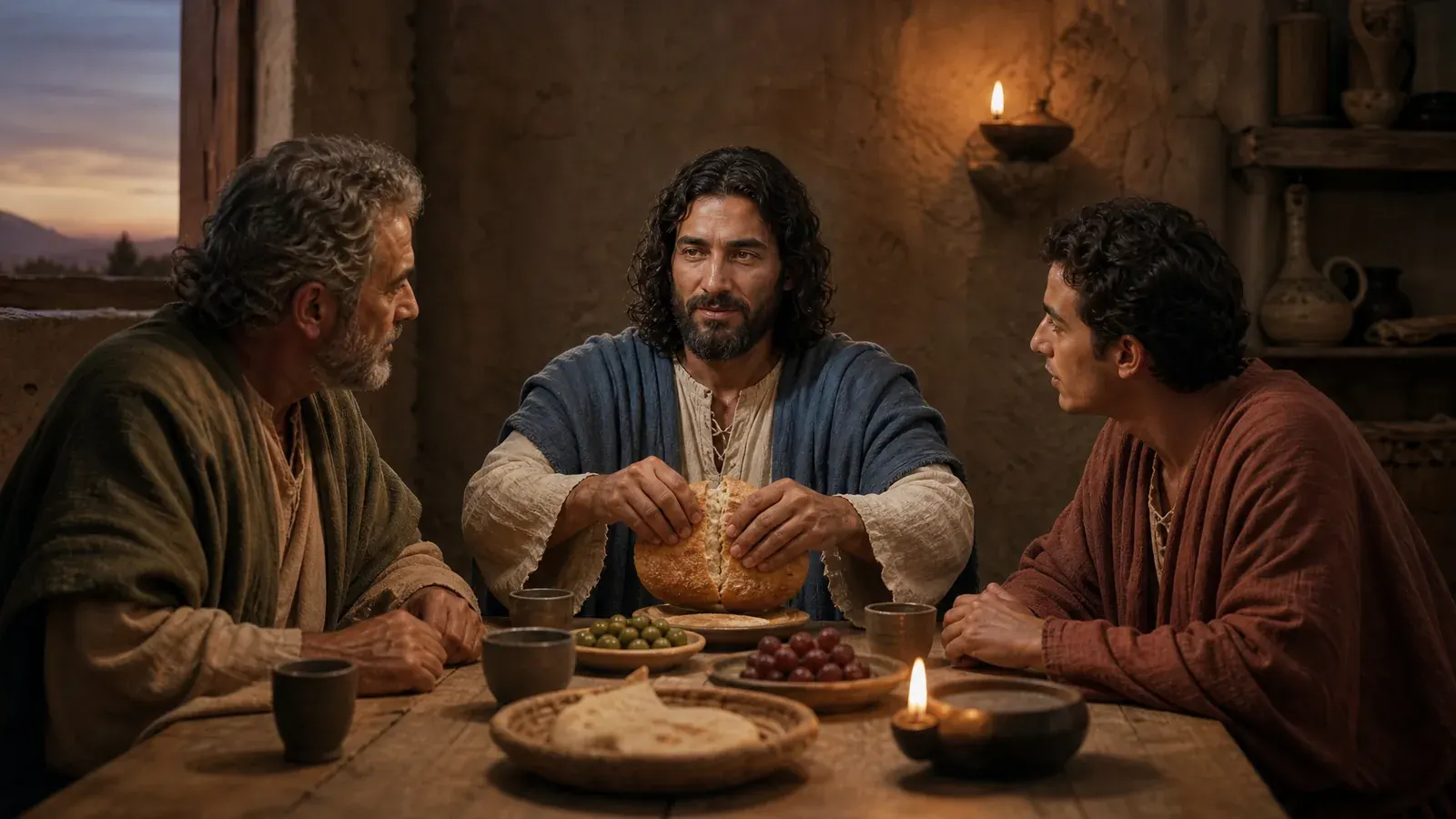
The Scriptures Open and the Witnesses Return with Joy
The final chapter of the Book of Luke keeps separating what people can see from what they are able to understand. An empty tomb does not explain itself, remembered words do. Accurate reports do not automatically produce belief, and two travelers can rehearse the facts of Jesus' death while failing to see how suffering belongs to redemption. Jesus therefore opens the Scriptures before recognition settles the matter, then opens the gathered disciples' understanding after showing that “it is I myself.” The chapter refuses to choose between bodily presence and scriptural interpretation. Both are necessary to the witness Luke is preparing. That witness is then given a direction, repentance and remission of sins among all nations beginning at Jerusalem, and a limit, they must wait for power from on high. The Book of Luke closes with Jesus blessing as he departs and the disciples returning to Jerusalem with worship, praise, and great joy.
One complete chapter pageOpen chapter →Source: eBible.org · eng-kjv2006