
The big picture
Women who followed Jesus, the teacher killed on a cross, return to his tomb with burial spices. They find an empty place and hear that he has risen. His followers struggle to believe until he meets them, opens Scripture, and shares food. The death they thought ended their hope becomes part of the purpose he explains. Jesus then sends them as witnesses of forgiveness for all nations, but first tells them to wait for God's power. Grief gives way to worship and joy.
In this chapter
- The Empty Tomb Raises Questions Luke 24:1-12
Early on the first day of the week, women bring spices to the tomb.
- Two Travellers Describe Their Broken Hope Luke 24:13-24
Two followers walk from Jerusalem, the temple city, toward Emmaus, a village about seven miles away.
- Scripture Explains Suffering Before Glory Luke 24:25-27
Jesus rebukes their slowness to believe all that God's prophets said.
- Recognition at the Broken Bread Luke 24:28-35
Near Emmaus, Jesus appears ready to continue, but the two urge him to stay because evening is near.
- Jesus Shows That He Is Bodily Present Luke 24:36-43
While the gathered followers speak, Jesus stands among them and offers peace.
- Witnesses Must Wait for Promised Power Luke 24:44-49
Jesus recalls what he taught before his death.
- Departure Brings Worship and Joy Luke 24:50-53
Jesus leads the followers toward Bethany, a village near Jerusalem.
Central truth
Jesus meets doubtful followers after rising, explains his suffering through Scripture, and prepares them to carry forgiveness to every nation.

Scripture beside the summary
Luke · King James Version · 53Luke 24:1-12
The Empty Tomb Raises Questions
Early on the first day of the week, women bring spices to the tomb. The stone is moved, and Jesus' body is absent. Two men in shining clothes ask why they seek the living among the dead. They remind them of his promise in Galilee, the northern region: betrayal, crucifixion, and rising on the third day. The women remember and report to the eleven closest followers and others. Mary Magdalene, Joanna, and Mary the mother of James are among the messengers. The men dismiss their words. Peter, one of the eleven, runs to inspect the tomb, sees the linen alone, and leaves wondering.
In everyday life
A missing-person liaison watches a family dismiss a caller's report because it overturns what they have accepted. One relative goes to the named place and finds evidence that demands a new explanation, though he remains uncertain. Checking begins to unsettle disbelief. The women announce resurrection after a real death, not the correction of a mistaken missing-person report.
Notice
Luke 24:8 The women remember Jesus' words when prompted at the tomb. Their explanation of the empty place rests on his earlier promise, not only on absence.
Luke 24:1-12
King James Version1Now upon the first day of the week, very early in the morning, they came unto the sepulchre, bringing the spices which they had prepared, and certain others with them.
2And they found the stone rolled away from the sepulchre.
3And they entered in, and found not the body of the Lord Jesus.
4And it came to pass, as they were much perplexed thereabout, behold, two men stood by them in shining garments:
5And as they were afraid, and bowed down their faces to the earth, they said unto them, Why seek ye the living among the dead?
6He is not here, but is risen: remember how he spake unto you when he was yet in Galilee,
7Saying, The Son of man must be delivered into the hands of sinful men, and be crucified, and the third day rise again.
8And they remembered his words,
9And returned from the sepulchre, and told all these things unto the eleven, and to all the rest.
10It was Mary Magdalene, and Joanna, and Mary the mother of James, and other women that were with them, which told these things unto the apostles.
11And their words seemed to them as idle tales, and they believed them not.
12Then arose Peter, and ran unto the sepulchre; and stooping down, he beheld the linen clothes laid by themselves, and departed, wondering in himself at that which was come to pass.
Luke 24:13-24
Two Travellers Describe Their Broken Hope
Two followers walk from Jerusalem, the temple city, toward Emmaus, a village about seven miles away. They discuss what happened. Jesus joins them, but they are prevented from recognising him. Asked why they are sad, Cleopas, one of the two, wonders how anyone can be unaware of the events. They describe Jesus of Nazareth, his home town, as a prophet great in word and deed. Their leaders handed him over to death. They had hoped he would free Israel, God's people. They also report the women's strange news and the empty tomb confirmed by others. All these facts remain disconnected from a living hope.
In everyday life
A dismissed factory worker walks home with a colleague, recounting the promised rescue plan and its apparent collapse. A visitor asks questions that let their lost expectations emerge before offering any explanation. They know many facts but see no future in them. The travellers speak unknowingly with the risen Jesus, not an informed outsider with new plans.
Notice
Luke 24:21 Their hope is spoken in the past tense. They know reports of an empty tomb, but have not yet connected those reports with the rescue they expected.
Luke 24:13-24
King James Version13And, behold, two of them went that same day to a village called Emmaus, which was from Jerusalem about threescore furlongs.
14And they talked together of all these things which had happened.
15And it came to pass, that, while they communed together and reasoned, Jesus himself drew near, and went with them.
16But their eyes were holden that they should not know him.
17And he said unto them, What manner of communications are these that ye have one to another, as ye walk, and are sad?
18And the one of them, whose name was Cleopas, answering said unto him, Art thou only a stranger in Jerusalem, and hast not known the things which are come to pass there in these days?
19And he said unto them, What things? And they said unto him, Concerning Jesus of Nazareth, which was a prophet mighty in deed and word before God and all the people:
20And how the chief priests and our rulers delivered him to be condemned to death, and have crucified him.
21But we trusted that it had been he which should have redeemed Israel: and beside all this, to day is the third day since these things were done.
22Yea, and certain women also of our company made us astonished, which were early at the sepulchre;
23And when they found not his body, they came, saying, that they had also seen a vision of angels, which said that he was alive.
24And certain of them which were with us went to the sepulchre, and found it even so as the women had said: but him they saw not.
Luke 24:25-27
Scripture Explains Suffering Before Glory
Jesus rebukes their slowness to believe all that God's prophets said. The Christ, God's promised king, had to suffer before entering glory. Beginning with Moses, the lawgiver, and continuing through the prophets, he explains the Scriptures concerning himself. He does not treat his death as a wrong turn that God must now repair. The suffering belongs within the purpose the sacred writings disclose. The followers need more than a new fact at the tomb; they need a way to understand the facts they already have. Jesus gives that understanding before they recognise the companion walking beside them.
In everyday life
A conservator explains a damaged mural to apprentices who think every dark patch is decay. Old plans show that some shadows belong to the intended design, and the whole scene changes as they learn to read it. Facts gain meaning through the larger pattern. Jesus explains a saving death through Scripture, not marks within a work of art.
Notice
Luke 24:27 Jesus draws from Moses and the prophets rather than one isolated line. His explanation places suffering and glory within a broad scriptural pattern.
Luke 24:25-27
King James Version25Then he said unto them, O fools, and slow of heart to believe all that the prophets have spoken:
26Ought not Christ to have suffered these things, and to enter into his glory?
27And beginning at Moses and all the prophets, he expounded unto them in all the scriptures the things concerning himself.
Luke 24:28-35
Recognition at the Broken Bread
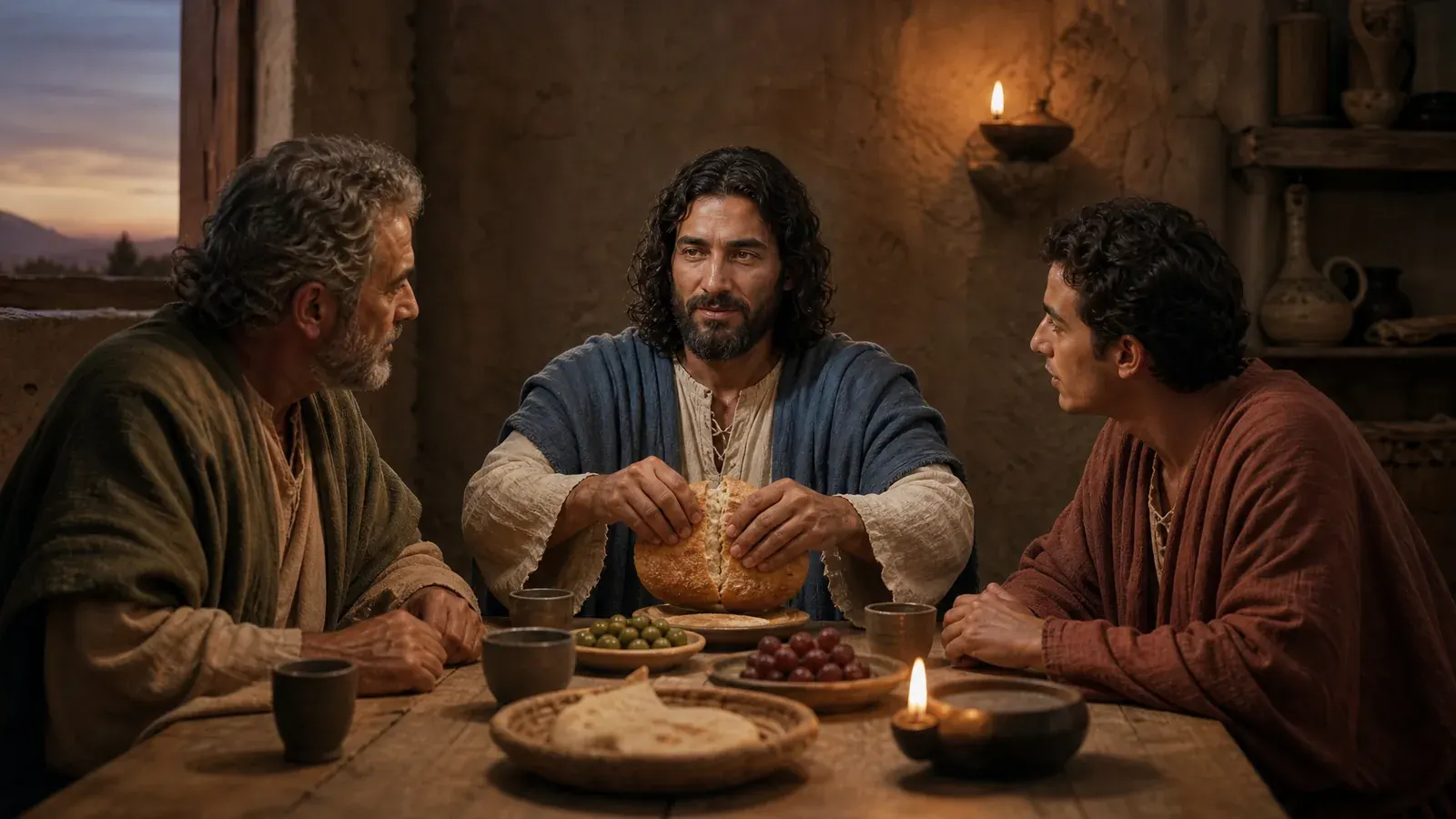
Near Emmaus, Jesus appears ready to continue, but the two urge him to stay because evening is near. At the meal he blesses, breaks, and gives bread. Their eyes open, they recognise him, and he disappears from sight. They recall the force of his words as he explained Scripture on the road. At once they return to Jerusalem and find the eleven gathered with others. The group already says the Lord has risen and appeared to Simon, another name for Peter. The two add their own account of the road and the meal. Private recognition becomes shared testimony without waiting until morning.

In everyday life
An adult pupil hears a visiting speaker explain a familiar poem. At supper she recognises her old teacher through a distinctive gesture. Earlier words fall into place, and she hurries to tell classmates who else is nearby. Jesus is recognised after rising from death and then vanishes, unlike an ordinary reunion.
Notice
Luke 24:33 The travellers return that same hour despite having urged their guest to stay because it was late. Recognition changes what they are ready to do.
Luke 24:28-35
King James Version28And they drew nigh unto the village, whither they went: and he made as though he would have gone further.
29But they constrained him, saying, Abide with us: for it is toward evening, and the day is far spent. And he went in to tarry with them.
30And it came to pass, as he sat at meat with them, he took bread, and blessed it, and brake, and gave to them.
31And their eyes were opened, and they knew him; and he vanished out of their sight.
32And they said one to another, Did not our heart burn within us, while he talked with us by the way, and while he opened to us the scriptures?
33And they rose up the same hour, and returned to Jerusalem, and found the eleven gathered together, and them that were with them,
34Saying, The Lord is risen indeed, and hath appeared to Simon.
35And they told what things were done in the way, and how he was known of them in breaking of bread.
Luke 24:36-43
Jesus Shows That He Is Bodily Present
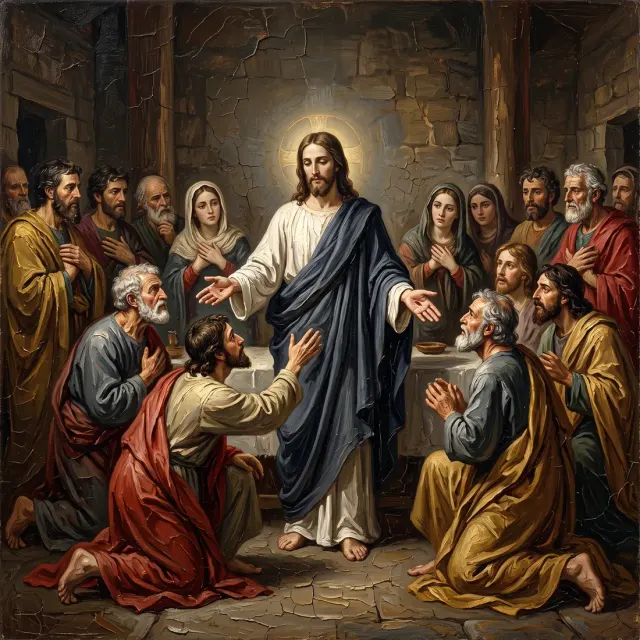
While the gathered followers speak, Jesus stands among them and offers peace. They fear they are seeing a spirit. He asks why doubts rise and shows his hands and feet. They can touch him and see flesh and bones, which a spirit does not have. Joy and wonder still leave them struggling to believe, so he asks for food. They give fish and honeycomb, and he eats before them. Luke describes a real bodily presence, not only a message or shared feeling. The same Jesus they knew stands before them, and he meets their confusion with tangible evidence.
In everyday life
A hospital visitor arrives after a false report of his death and sits with relatives too shocked to trust their eyes. He takes a chair, accepts food, and speaks until recognition settles into confidence. Ordinary contact helps them take in his presence. Jesus has actually died and risen, not survived a mistaken report.
Notice
Luke 24:43 Jesus eats the food before them. Luke adds this ordinary bodily act to the invitation to touch, directly answering their fear that they see a spirit.
Luke 24:36-43
King James Version36And as they thus spake, Jesus himself stood in the midst of them, and saith unto them, Peace be unto you.
37But they were terrified and affrighted, and supposed that they had seen a spirit.
38And he said unto them, Why are ye troubled? and why do thoughts arise in your hearts?
39Behold my hands and my feet, that it is I myself: handle me, and see; for a spirit hath not flesh and bones, as ye see me have.
40And when he had thus spoken, he shewed them his hands and his feet.
41And while they yet believed not for joy, and wondered, he said unto them, Have ye here any meat?
42And they gave him a piece of a broiled fish, and of an honeycomb.
43And he took it, and did eat before them.
Luke 24:44-49
Witnesses Must Wait for Promised Power
Jesus recalls what he taught before his death. The law of Moses, the prophets, and the Psalms, sacred songs of worship, must be fulfilled in him. He opens the followers' understanding of these writings. The Christ must suffer and rise on the third day. Then turning from sin and receiving forgiveness must be proclaimed in his name to every nation, starting at Jerusalem. They are witnesses of these events. Jesus promises what his Father has pledged, power from above, and tells them to remain in the city until they receive it. Their task is worldwide, but they must not begin by relying on themselves alone.
In everyday life
A disaster-mapping instructor gives a team its assignment and asks members to wait for the verified maps before leaving. They know the destination and urgency, but enthusiasm cannot replace the resource the work requires. Waiting is part of being sent responsibly. Jesus promises divine power for worldwide witness, not the arrival of better equipment.
Notice
Luke 24:49 The command to stay accompanies the command to witness. The pause does not cancel the mission; it prepares them to carry it with promised help.
Luke 24:44-49
King James Version44And he said unto them, These are the words which I spake unto you, while I was yet with you, that all things must be fulfilled, which were written in the law of Moses, and in the prophets, and in the psalms, concerning me.
45Then opened he their understanding, that they might understand the scriptures,
46And said unto them, Thus it is written, and thus it behoved Christ to suffer, and to rise from the dead the third day:
47And that repentance and remission of sins should be preached in his name among all nations, beginning at Jerusalem.
48And ye are witnesses of these things.
49And, behold, I send the promise of my Father upon you: but tarry ye in the city of Jerusalem, until ye be endued with power from on high.
Luke 24:50-53
Departure Brings Worship and Joy
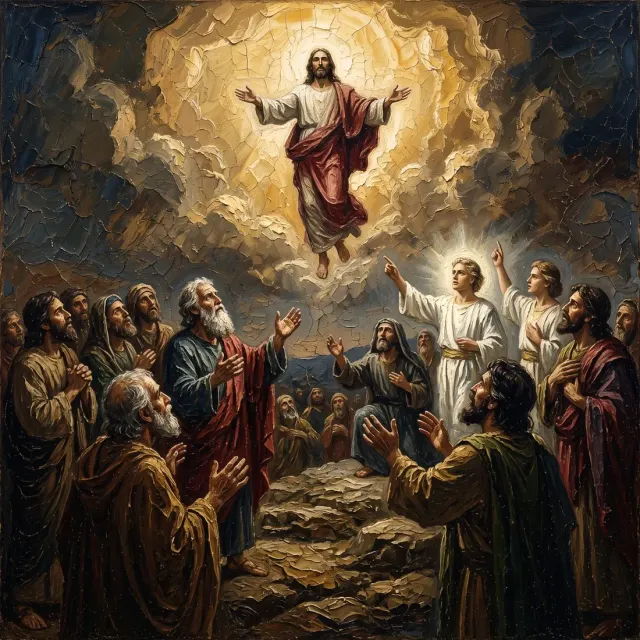
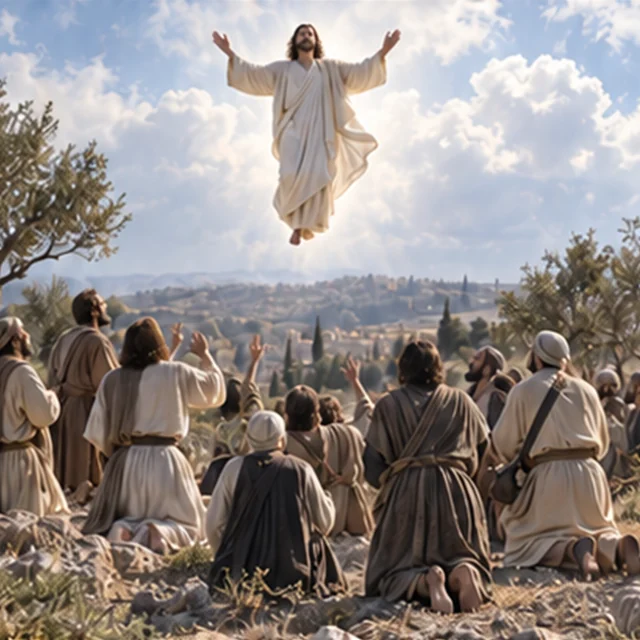
Jesus leads the followers toward Bethany, a village near Jerusalem. He lifts his hands and blesses them. While doing so, he parts from them and is taken into heaven. They worship him and return to Jerusalem with great joy. They continue praising God in the temple. The end is unlike the grief that opened the chapter: Jesus' absence from sight no longer means defeat or a lost hope. They have seen him alive, heard his purpose, and received his blessing. Their waiting begins in worship rather than in a return to the despair of the road.
In everyday life
A beloved tutor blesses each student with words of encouragement before leaving a small school in trained local hands. The students return to their rooms with gratitude rather than assuming the work has ended. Departure comes with confidence in what continues. Jesus is taken into heaven and worshipped as Lord, not retiring from a teaching post.
Notice
Luke 24:51 Jesus is blessing them as he departs. The last visible act described is one of goodwill toward the followers he has restored and commissioned.
Luke 24:50-53
King James Version50And he led them out as far as to Bethany, and he lifted up his hands, and blessed them.
51And it came to pass, while he blessed them, he was parted from them, and carried up into heaven.
52And they worshipped him, and returned to Jerusalem with great joy:
53And were continually in the temple, praising and blessing God. Amen.
Details worth noticing
The opening image
Luke 24:1 begins with “Now upon the first day of the week, very early in the morning, they came unto the sepulchre, bringing the spices which they had prepared, and certain…”
Where the chapter turns
Luke 24:26 forms a natural hinge: “Ought not Christ to have suffered these things, and to enter into his glory?”
The final note
Luke 24:53 leaves the reader with “And were continually in the temple, praising and blessing God. Amen.”
A word trail through the chapter
The words Jerusalem, sepulchre, hands, Jesus, blessed, certain help reveal the chapter’s repeated concerns.
KJV words made clear
- threescore furlongs
- About seven and a half miles, roughly twelve kilometres.
- remission
- Forgiveness or release from the debt of sin.
- endued
- Clothed or supplied with a power not produced by oneself.
Music and video connected to the passage
Related media appears when its Scripture reference overlaps this study. Music and video can illuminate a theme while the biblical text remains the foundation.