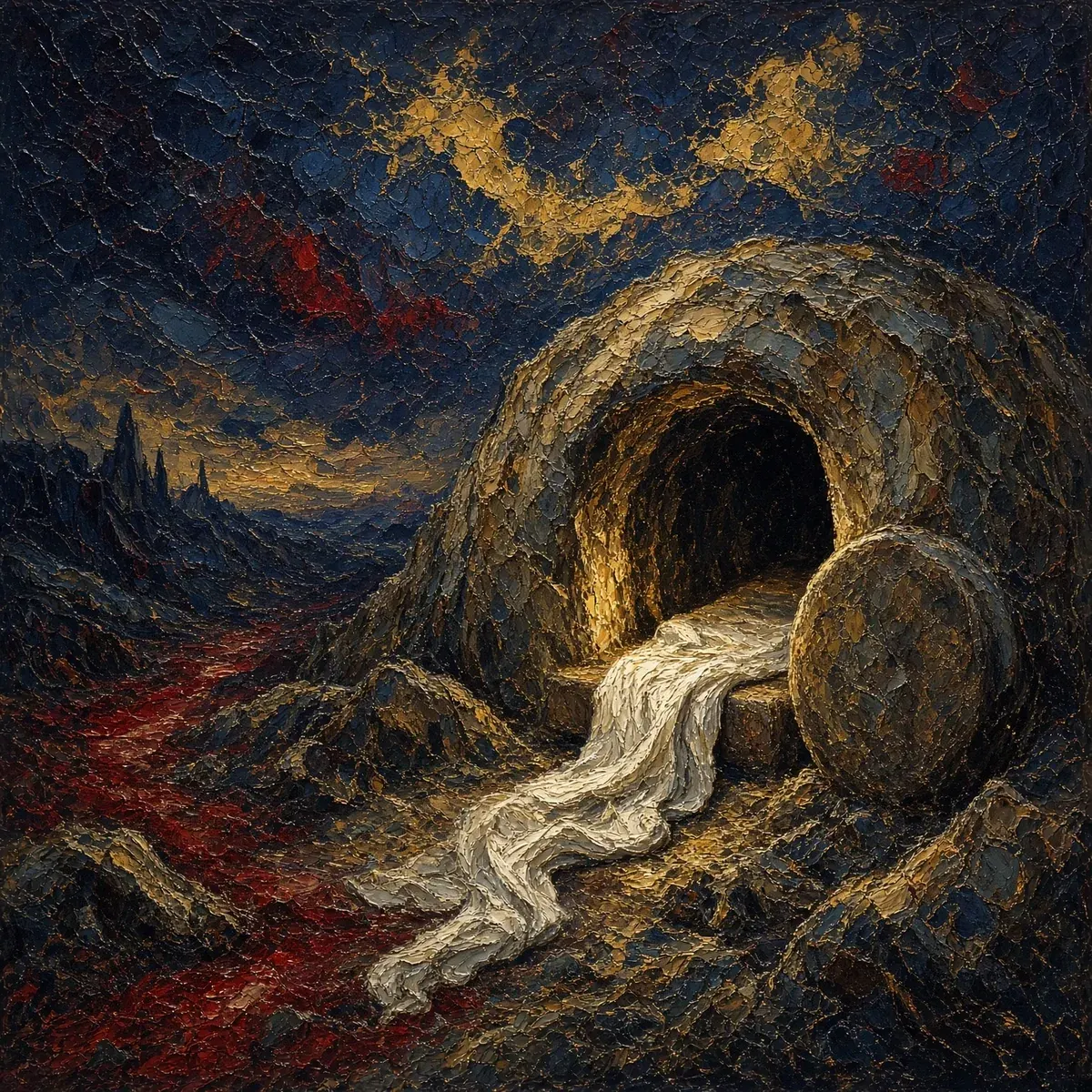
Objects of the Bible

The stone and the empty tomb

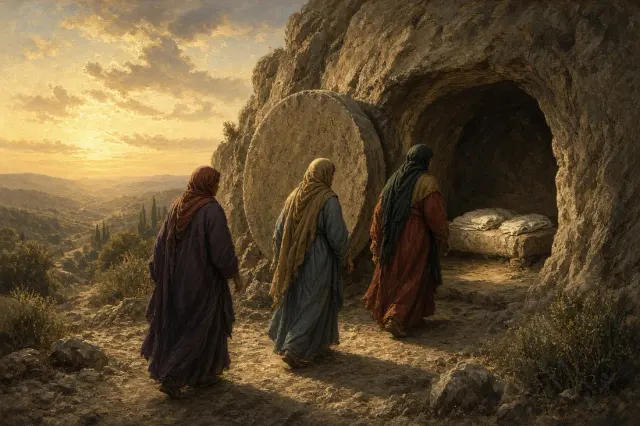
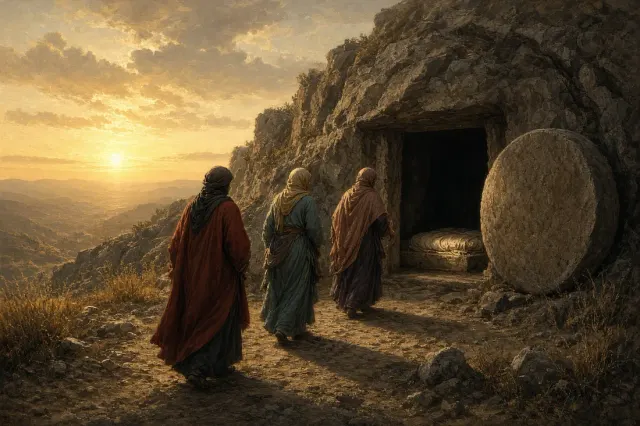
The women set out knowing they could not move it, and worked out the problem on the way.

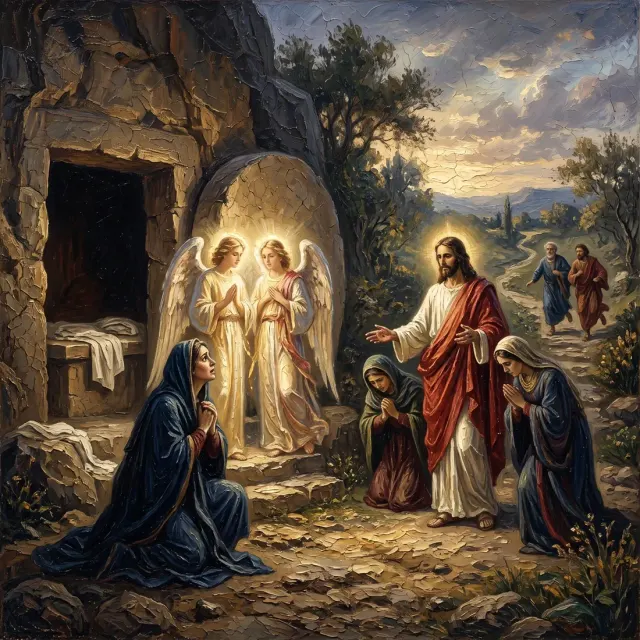
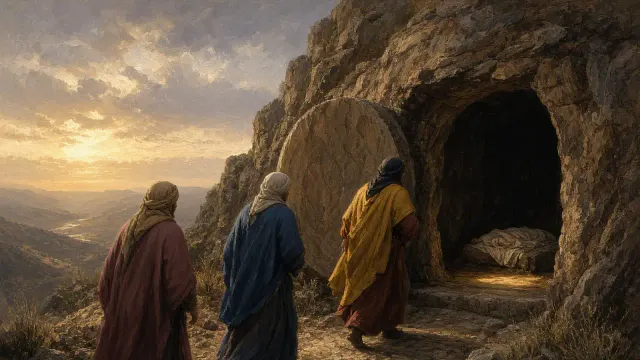
Mark gives the detail that fixes the scene: they said among themselves, Who shall roll us away the stone from the door of the sepulchre? They had bought spices and set off at sunrise with no plan for the last obstacle, which is what people do when they are grieving. Matthew adds a guard and a seal, requested by the chief priests on the grounds that the disciples might steal the body, which means both possible explanations were on the table before the morning began.

Where it appearsMatthew 28 · Mark 16

Scroll down to the account
The stone and the empty tomb

The movements, in the order the text gives them.

The Account of The stone and the empty tomb

  1. 01

    Mark 16:1-3

    Who shall roll us away the stone

    The practical problem is raised after they have already set out, which is exactly how grief organises a morning.

    The spices are ready. Access is not. The women have bought what they need to anoint a body, but their conversation concerns the stone between them and that body. The Book of Mark gives their journey a wonderfully solid obstacle: not a philosophical difficulty, but a blocked entrance. Their purpose is explicit. They are coming to perform an act of care for someone dead, not to attend a resurrection announcement.

    The location is not a new discovery for every member of the group. Mary Magdalene and the other Mary have already watched the burial in Mark 15:47. The women therefore return to a known place with a known problem, and the text lets that practical concern occupy the foreground. It supplies neither the stone's weight nor a team recruited to move it. No need to manufacture either. The sunrise is precise, the purchased spices are concrete, and the unanswered question makes their limited expectation unmistakable. They have prepared for a body that will stay where it was laid.

    Verse by verse

    1. 16:1

      Mark places the purchase of the spices after the Sabbath and states their purpose: anointing Jesus.

    2. 16:3

      The question concerns moving the stone from the entrance. Mark gives no measurement for its weight or diameter.
    Mark 16:1-3

    King James Version · 3 verses

    16:1And when the sabbath was past, Mary Magdalene, and Mary the mother of James, and Salome, had bought sweet spices, that they might come and anoint him.

    16:2And very early in the morning the first day of the week, they came unto the sepulchre at the rising of the sun.

    16:3And they said among themselves, Who shall roll us away the stone from the door of the sepulchre?

    Mark 16:1-3: Who shall roll us away the stone
  2. 02

    Matthew 27:62-66

    Make it as sure as ye can

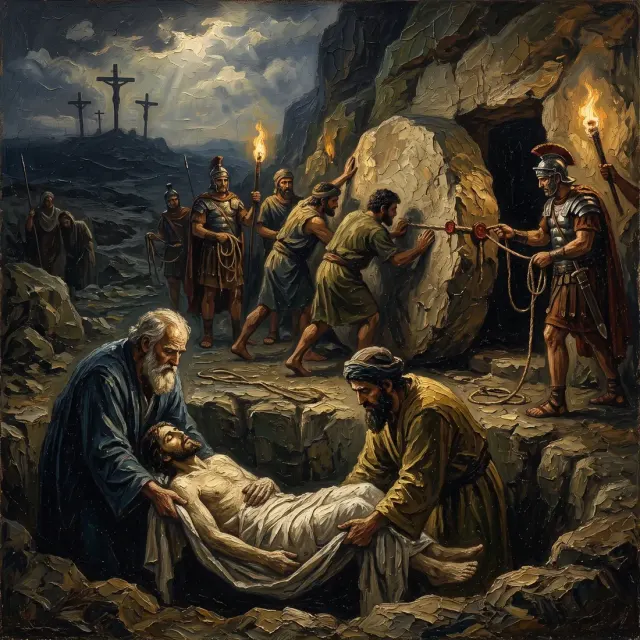
    The guard is requested the day before, and the reason given names the alternative explanation out loud.

    Even the grave is considered insufficient supervision. The chief priests and Pharisees remember Jesus' prediction, but remembering is not the same as believing it. Their stated concern is that the disciples might steal the body and announce a resurrection. That distinction matters: the passage records an attempt to prevent a claim, not an admission that Jesus will rise.

    Security becomes the paragraph's repeated demand. The tomb must be made sure; Pilate tells them to make it as sure as they can; they make it sure with a seal and a guard. The language almost bolts the door three times. Yet the measures remain ordinary measures against ordinary interference. The Book of Matthew specifies neither the sealing material nor the number of soldiers, and the familiar illustrations should not be allowed to supply missing evidence. What it does supply is the extraordinary attention directed at one recently buried man. Joseph has closed the tomb to complete a burial. The delegation wants it secured against a proclamation.

    Verse by verse

    1. 27:64

      The proposed theft is the delegation's stated fear. Matthew does not present it as something the disciples planned.

    2. 27:66

      The stone is sealed and a guard is stationed. The verse does not describe the seal's construction or count the guards.

    Matthew 27:62-66

    King James Version · 5 verses

    27:62Now the next day, that followed the day of the preparation, the chief priests and Pharisees came together unto Pilate,

    27:63Saying, Sir, we remember that that deceiver said, while he was yet alive, After three days I will rise again.

    27:64Command therefore that the sepulchre be made sure until the third day, lest his disciples come by night, and steal him away, and say unto the people, He is risen from the dead: so the last error shall be worse than the first.

    27:65Pilate said unto them, Ye have a watch: go your way, make it as sure as ye can.

    27:66So they went, and made the sepulchre sure, sealing the stone, and setting a watch.

    Matthew 27:62-66: Make it as sure as ye can
  3. 03

    Matthew 28:5-6

    Come, see the place where the Lord lay

    The invitation is to inspect an absence. The evidence offered is an empty shelf rather than a vision.

    The angel does not retire the word crucified. The women are looking for Jesus, which was crucified, and that is precisely the person declared risen. Death has not become a mistaken identification or an embarrassing detail to remove. The announcement joins the executed Jesus to the living Jesus without substituting another figure between them.

    Its explanation is also more than an empty space. He is not here is followed by for he is risen, and then by as he said. Absence, resurrection, remembered speech: the clauses belong together. An unoccupied tomb by itself would leave several questions open; the angel supplies the interpretation and invites inspection of the place. Matthew records the stone's removal, but does not describe the physical process by which Jesus left the grave. The contrast nearby is sharp enough without additions. In verse 4, the guards become as dead men; in verse 6, the man they were guarding is announced alive. The watchers resemble corpses. The crucified man does not remain one.

    Verse by verse

    1. 28:5

      Which was crucified identifies the risen Jesus with the person who suffered execution; the resurrection announcement does not erase that identification.

    2. 28:6

      As he said connects the announcement with Jesus' prior predictions. The invitation is to inspect the place where his body lay.

    Matthew 28:5-6

    King James Version · 2 verses

    28:5And the angel answered and said unto the women, Fear not ye: for I know that ye seek Jesus, which was crucified.

    28:6He is not here: for he is risen, as he said. Come, see the place where the Lord lay.

    Matthew 28:5-6: Come, see the place where the Lord lay
  4. 04

    Mark 16:7

    Tell his disciples and Peter

    Two words are added to the instruction, and they are addressed to the one man who had publicly denied knowing him.

    Peter gets two words that the rest of the group does not: and Peter. The last time the Book of Mark lingered over him, he was remembering a prediction he had fulfilled by denying Jesus, and he wept. Now another remembered prediction reaches him through an invitation. His failure has not been concealed, but neither has his name been omitted from the message.

    The wording does not require the conclusion that Peter has ceased to be a disciple. A person can be singled out within a group without being expelled from it. What the sentence undeniably does is prevent his inclusion from being merely assumed. The women are specifically commissioned to carry the announcement to him as well as to the disciples. Galilee, meanwhile, is not an improvised destination. Jesus had already named it in Mark 14:28, immediately after predicting the scattering of the flock. The message at the tomb points back to that promise. The meeting was announced with their failure already in view. Peter's name is still on the invitation.

    Verse by verse

    1. 16:7

      And Peter singles him out for explicit inclusion. The wording does not itself declare that he had stopped being one of the disciples.

    2. 16:7

      As he said recalls Mark 14:28, where Jesus promises to go before the disciples into Galilee after rising.

    Mark 16:7

    King James Version · 1 verse

    16:7But go your way, tell his disciples and Peter that he goeth before you into Galilee: there shall ye see him, as he said unto you.

    Mark 16:7: Tell his disciples and Peter
  5. 05

    Mark 16:8

    Neither said they any thing to any man; for they were afraid

    The earliest ending of Mark stops here, on fear and silence, which is not how an account is invented.

    The stone is no longer the obstacle. The women have encountered a message so overwhelming that the immediate result is flight, trembling, amazement, and silence. The Book of Mark does not polish them into composed public speakers before allowing the scene to end. It names fear plainly. The announcement has changed the meaning of the tomb before its hearers have found their footing.

    The silence should neither be denied nor stretched into a claim that they never spoke again. This verse describes their frightened departure; the KJV continues the chapter and records Mary Magdalene reporting to Jesus' companions in verse 10. The immediate contrast still has its force: an instruction to tell has been followed by people saying nothing. That is not an invitation to invent a private refusal or to pronounce a verdict the verse does not give. It is the unsoftened account of their response at the tomb. Resurrection has been announced, but its first hearers in this scene are not yet calmly explaining it. They are running.

    Verse by verse

    1. 16:8

      Trembling and amazement describe the women's immediate response. The verse does not assign them a motive beyond its explicit statement that they were afraid.

    2. 16:8

      Codex Sinaiticus and Codex Vaticanus end Mark here; many other manuscripts include 16:9-20, the ending printed in the KJV.

    Mark 16:8

    King James Version · 1 verse

    16:8And they went out quickly, and fled from the sepulchre; for they trembled and were amazed: neither said they any thing to any man; for they were afraid.

    Mark 16:8: Neither said they any thing to any man; for they were afraid

Why it matters

The stone is not moved to let anyone out. It is moved so that people can see in, which the account treats as the point: come, see the place where the Lord lay. What follows is a series of inspections rather than an appearance. Mark’s earliest ending has the women leaving in fear and saying nothing to anyone, which is a strange way to end a resurrection account unless it happened. The first witnesses in all four gospels are women, whose testimony was not admissible in a court, which is not how anyone would build a case.

2 songs

The music

Every song in the catalogue whose passage falls inside these chapters.

  1. Matthew 28:1-10; Mark 16:1-11; Luke 24:1-12; John 20:1-18

    He Is Risen

  2. Mark 16:1-20

    He Is Risen

Nearby

All the objects

Report an error on this page