
Places of the Bible

Bethany

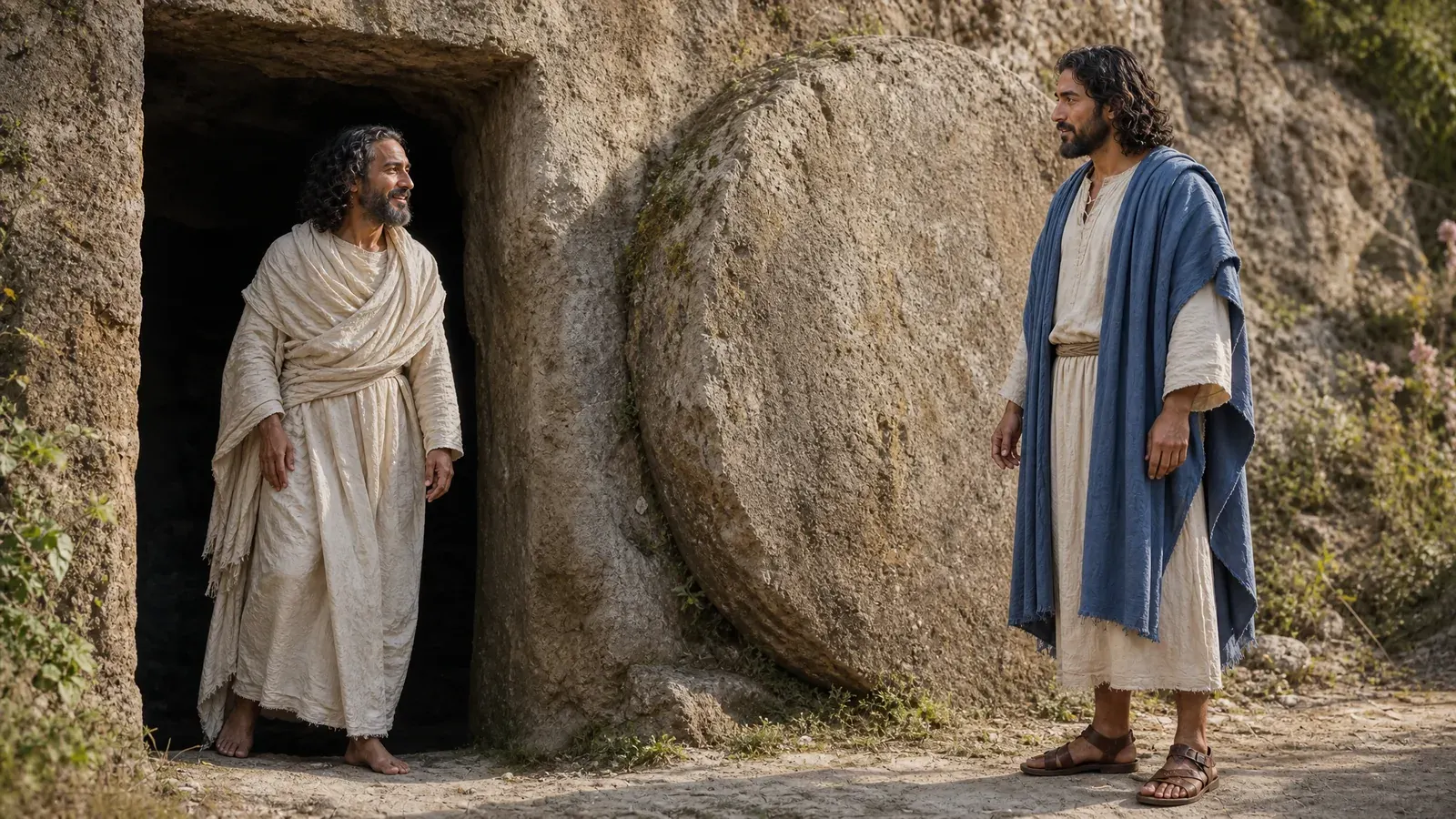
Two miles from Jerusalem, which is close enough for the mourners to have come out and close enough for the news to get back.

John gives the distance himself: now Bethany was nigh unto Jerusalem, about fifteen furlongs off. Under two miles, on the far side of the Mount of Olives. It is where he stays during the last week rather than in the city, and it is the one house in the gospels that reads like a home: a woman who cooks and complains, a woman who sits and listens, a brother who dies. The proximity to Jerusalem is not scene setting. It is why the council hears about Lazarus within days.

Where it appearsJohn 11 · John 12 · Luke 10 · Mark 14

Scroll down to the account

The movements, in the order the text gives them.

The Account of Bethany

  1. 01

    Luke 10:38-42

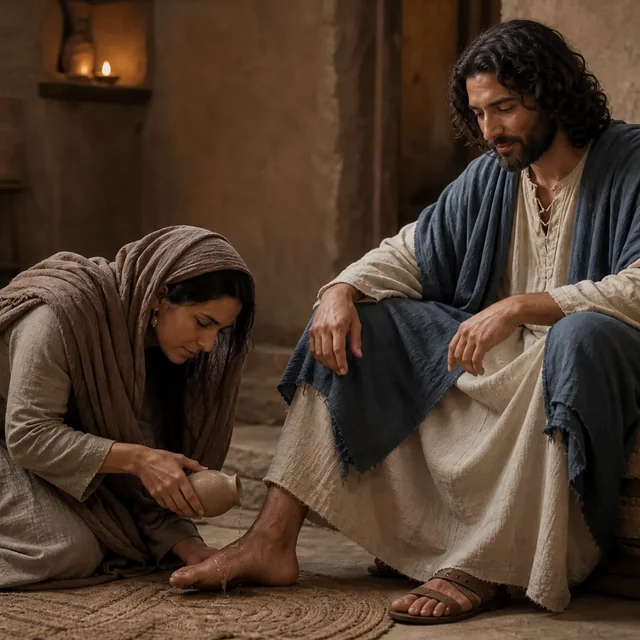
    Martha was cumbered about much serving

    The complaint is reasonable and it is answered rather than dismissed. One thing is needful, and the choice is described as a good part.

    Martha welcomes a guest and then asks him to settle a staffing dispute. The request has an edge: her sister has left her alone, and Jesus apparently has not noticed. But he has noticed Mary. She is sitting at his feet and hearing his word, which makes her more than an idle pair of hands. She is a learner. Martha's proposal would interrupt precisely the activity for which Jesus defends her.

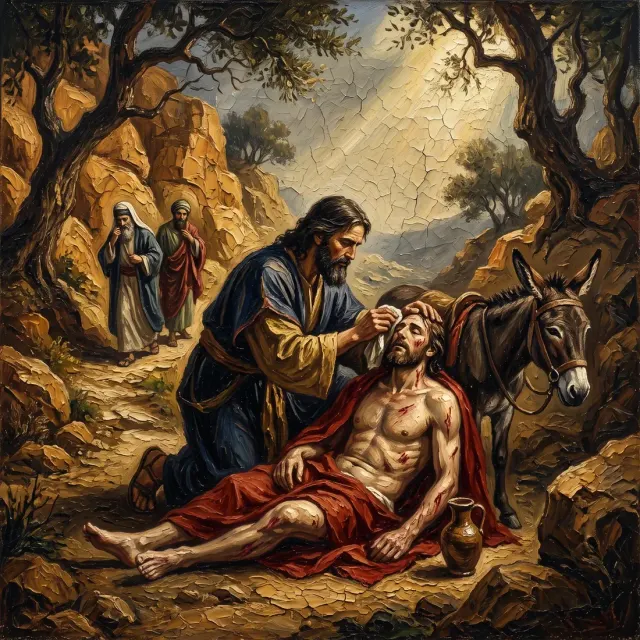
    The criticism falls on being cumbered, careful and troubled, not on hospitality itself. This same chapter has just commended the Samaritan's costly, practical care. The Book of Luke has not changed its mind about helping people between one paragraph and the next. The problem is that serving has become distraction, and distraction is demanding authority over hearing. Martha, Martha gives the correction a personal address; it does not erase the welcome with which she opened her house. Nor does Jesus declare two permanent classes of Christian, the useful Martha and the spiritual Mary. He identifies what is happening in this room. The guest has something to give, and one sister is receiving it.

    Verse by verse

    1. 10:38

      Luke calls this a certain village without naming it. Its association with Bethany comes from the family identified in John 11:1.

    2. 10:40

      The Greek perispao describes being distracted or pulled away. The fault is not contained in the word for service itself.

    3. 10:42

      The good part is Mary's chosen portion. Jesus protects her hearing of his word rather than announcing that every practical duty is unnecessary.
    Luke 10:38-42

    King James Version · 5 verses

    10:38Now it came to pass, as they went, that he entered into a certain village: and a certain woman named Martha received him into her house.

    10:39And she had a sister called Mary, which also sat at Jesus’ feet, and heard his word.

    10:40But Martha was cumbered about much serving, and came to him, and said, Lord, dost thou not care that my sister hath left me to serve alone? bid her therefore that she help me.

    10:41And Jesus answered and said unto her, Martha, Martha, thou art careful and troubled about many things:

    10:42But one thing is needful: and Mary hath chosen that good part, which shall not be taken away from her.

    Luke 10:38-42: Martha was cumbered about much serving
  2. 02

    John 11:5-6

    When he had heard therefore that he was sick, he abode two days still

    The therefore is the difficult word. The delay is placed immediately after the statement that he loved them, not before it.

    Love is stated before the delay, not offered afterward as an excuse. The Book of John names Martha, her sister and Lazarus, leaving no member of the household outside that affection. Then comes the sentence that refuses to behave as expected: he remained where he was for two more days. The connection is therefore, not a comfortable but that would let the delay stand as an exception to the love. John puts the two facts beside each other and leaves their difficulty intact.

    The surrounding verses give stated purposes: the glory of God, the glorifying of the Son, and the disciples' belief. They do not supply a timetable detailed enough to establish exactly when Lazarus died relative to the arrival of the message. The four days in the grave belong to the later arrival at Bethany. Nor does the chapter attribute the delay to fear of returning to Judaea, although the disciples explicitly raise that danger. The passage does not describe a forgotten patient or an absent attachment. It describes a loved family and an intentional delay. Neither fact is permitted to swallow the other.

    Verse by verse

    1. 11:5

      The Greek verb for loved is imperfect, describing an existing relationship rather than a new affection produced by the emergency.

    2. 11:6

      The two-day delay is explicit. The exact time of Lazarus' death relative to the messenger's arrival is not supplied.

    John 11:5-6

    King James Version · 2 verses

    11:5Now Jesus loved Martha, and her sister, and Lazarus.

    11:6When he had heard therefore that he was sick, he abode two days still in the same place where he was.

    John 11:5-6: When he had heard therefore that he was sick, he abode two days still
  3. 03

    John 11:32-35

    Jesus wept

    He knows what he is about to do and weeps anyway. The crowd reads it two ways in the next verse, and the text lets both readings stand.

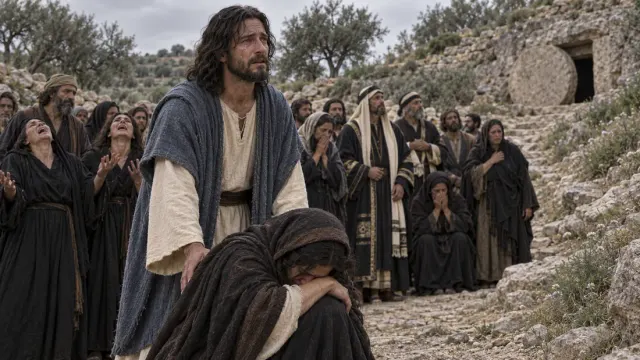
    The tears do not arrive because Jesus has only just learned that Lazarus is dead. He has already said it plainly to the disciples. He has also spoken of waking him. Foreknowledge and grief occupy the same passage without canceling each other. The Book of John does not make the tears a misunderstanding that needs to be corrected before the miracle can proceed.

    Mary's opening sentence repeats Martha's earlier words almost exactly, but the encounter takes a different shape. Martha's conversation unfolded into a declaration about resurrection and life. Here Mary is at his feet, the accompanying mourners are weeping, and Jesus is troubled. The word translated groaned carries a force that can include indignation, not merely a gentle sigh. Readers differ over what that indignation is directed against; the passage does not name its object. It does name the tears. No elaborate speech is placed between the invitation to the grave and the shortest sentence in this English passage. Jesus wept. Bethany is not made less bereaved because he has power over death. The power is present, and so is the grief.

    Verse by verse

    1. 11:32

      Mary repeats the substance of Martha's statement in John 11:21. Their shared words do not make the two encounters identical.

    2. 11:33

      Embrimaomai expresses strong feeling and can carry indignation. Its precise object here is disputed, so neither death nor the mourners' unbelief should be supplied as an explicit statement.

    3. 11:35

      This verse has two words in the KJV but three in Greek. Claims about its length need to specify the language.

    John 11:32-35

    King James Version · 4 verses

    11:32Then when Mary was come where Jesus was, and saw him, she fell down at his feet, saying unto him, Lord, if thou hadst been here, my brother had not died.

    11:33When Jesus therefore saw her weeping, and the Jews also weeping which came with her, he groaned in the spirit, and was troubled,

    11:34And said, Where have ye laid him? They said unto him, Lord, come and see.

    11:35Jesus wept.

    John 11:32-35: Jesus wept
  4. 04

    John 11:43-44

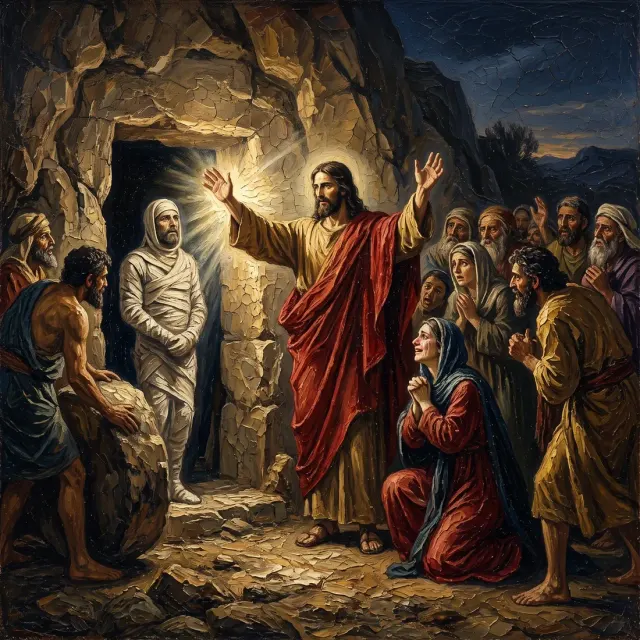
    Loose him, and let him go

    The dead man comes out bound hand and foot, and the last instruction is given to the bystanders rather than to him.

    The command is addressed to the person who cannot obey it. That is the force of Lazarus, come forth: no living assistant is told to revive him, and no treatment is described. Jesus' preceding prayer has already placed the act in his relationship with the Father and made the surrounding people its witnesses. The loud call is not an incantation whose missing ingredients need reconstructing. It is a summons, and the dead man answers by appearing.

    The burial cloths remain. The Book of John is quite concrete about hands, feet and face, but does not explain the mechanics of moving while bound. Filling that gap with a hopping figure or a levitating body contributes more imagination than information. What the text does supply is a second command, this time to the living. They can remove the wrappings. Earlier they could move the stone. Neither ordinary task is confused with the act that has just taken place between them. Bethany's mourners have not raised Lazarus, but they are not left watching a spectacle at a safe distance either. Their hands are needed at the end. The man needs unbinding.

    Verse by verse

    1. 11:43

      The preceding prayer in John 11:41-42 explicitly connects the act with the Father and with the witnesses' belief that Jesus was sent by him.

    2. 11:44

      Napkin means a cloth here, not modern disposable tableware. The passage describes the bindings but not the mechanics of Lazarus' exit.

    John 11:43-44

    King James Version · 2 verses

    11:43And when he thus had spoken, he cried with a loud voice, Lazarus, come forth.

    11:44And he that was dead came forth, bound hand and foot with graveclothes: and his face was bound about with a napkin. Jesus saith unto them, Loose him, and let him go.

    John 11:43-44: Loose him, and let him go
  5. 05

    John 12:9-11

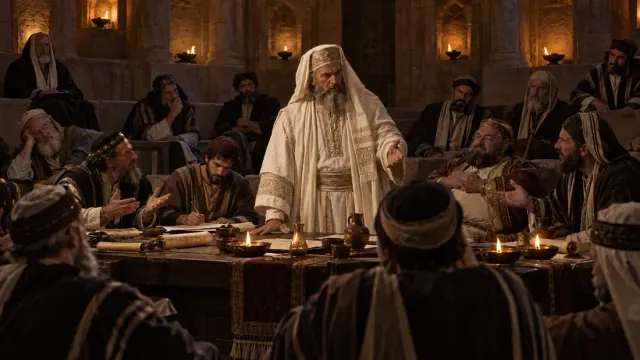
    They consulted that they might put Lazarus also to death

    The evidence has become the problem. A man is marked for death for the offence of being alive.

    Lazarus has become dangerous by being alive. The chief priests' consultation is not about correcting his testimony or exposing a trick. It is about killing him also. That also carries the weight of the existing plot against Jesus in the previous chapter: one intended death has acquired a second intended victim. The man brought out of the grave is now being considered for another one.

    The Book of John gives a reason, not an invitation to invent one. Many are believing in Jesus because of Lazarus. Earlier in the chapter he has been sitting at a meal, an ordinary activity with an extraordinary history behind it. No speech from him is recorded. His presence is enough to bring visitors and provoke a consultation about his death. The distinction within the passage matters: the chief priests make the plan, while many of the Jews believe. Those groups must not be collapsed into a collective accusation. Bethany's proximity to Jerusalem makes this no remote village curiosity, safely out of sight. The evidence is close, recognizable and drawing a crowd. John records a plan to remove it; he does not say the plan against Lazarus was carried out.

    Verse by verse

    1. 12:9

      John 11:18 places Bethany about fifteen furlongs from Jerusalem. The nearby city helps explain the movement of mourners and visitors between the two places.

    2. 12:10

      Also connects Lazarus' proposed death with the decision against Jesus already reported in John 11:53. The execution of this plan against Lazarus is not reported.

    3. 12:11

      The passage distinguishes the plotting chief priests from the many Jewish people who believe. It does not assign the plot to the entire people.

    John 12:9-11

    King James Version · 3 verses

    12:9Much people of the Jews therefore knew that he was there: and they came not for Jesus’ sake only, but that they might see Lazarus also, whom he had raised from the dead.

    12:10But the chief priests consulted that they might put Lazarus also to death;

    12:11Because that by reason of him many of the Jews went away, and believed on Jesus.

    John 12:9-11: They consulted that they might put Lazarus also to death

Why it matters

The raising is the most reluctant miracle in the gospels. He hears that Lazarus is sick and stays two days longer where he was. When he arrives, both sisters greet him with the same sentence, said in the same order, and it is a reproach: if thou hadst been here, my brother had not died. He does not argue with either of them. He asks where they laid him, and then the shortest verse in the Bible happens, and then he tells the men standing there to move a stone off a grave that has been shut four days.

5 songs

The music

Every song in the catalogue whose passage falls inside these chapters.

  1. John 11:1-46

    Lazarus, Come Forth

  2. John 11:45-57

    One Man Should Die

    Play here
    Open song pageRead lyrics
  3. John 12:1-11

    Six Days Before Passover

    Play here
    Open song pageRead lyrics
  4. Luke 10:38-42

    The Better Part

    Play here
    Open song pageRead lyrics
  5. Mark 14:1-26

    Broken and Poured Out

Nearby

All the places

Report an error on this page