The big picture
A dense crowd surrounds Jesus, the teacher, while he speaks first to his followers. He warns against false appearances and fear of people, then refuses to settle a family inheritance dispute. The dispute leads to a warning about trusting stored wealth. He teaches confidence in the Father's care and readiness for an unknown return. Faithful service matters more than calculating a date. Jesus also says his coming will divide households and urges the crowd to recognise the seriousness of the present time.
In this chapter
- God’s Care Frees His Friends to Speak Luke 12:1-12
Hypocrisy among the Pharisees, a strict religious group, brings a warning from Jesus to his followers.
- Stored Wealth Cannot Secure Another Night Luke 12:13-21
A man asks Jesus to make his brother divide an inheritance.
- The Father Knows His Flock’s Needs Luke 12:22-34
Food and clothing must not become worries that rule the followers' lives, Jesus says.
- Entrusted Power Brings Greater Responsibility Luke 12:35-48
Jesus pictures servants dressed and ready with lamps burning when their master returns.
- His Coming Divides Households Luke 12:49-53
Jesus says he has come to bring fire to the earth and speaks with urgency about its kindling.
- Recognise the Time and Settle Before Judgement Luke 12:54-59
The crowd knows how to read the weather, Jesus says.
Central truth
Trust in God's care matters more than security built on goods or public praise, and Jesus calls for faithful readiness.


Scripture beside the summary
Luke · King James Version · 59Luke 12:1-12
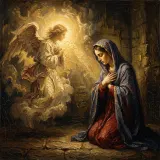
God’s Care Frees His Friends to Speak
Hypocrisy among the Pharisees, a strict religious group, brings a warning from Jesus to his followers. What is hidden will be exposed. They must fear God, whose judgement reaches past death, rather than people who can only kill the body. Yet this God remembers cheap sparrows and knows every hair of their heads. They matter to him. Jesus will acknowledge those who acknowledge him and deny those who deny him. He distinguishes forgivable speech against himself from blasphemy against the Holy Ghost, God's Spirit, which will not be forgiven. When they are questioned by religious and civil officials, the Spirit will teach them what to say.
In everyday life
A school whistleblower meets a trusted supporter before speaking about unsafe practices. She still knows the hearing carries risks, but she is no longer facing it as someone forgotten. The support helps her tell the truth rather than rehearse a false safe answer. Jesus promises God's intimate care and the Spirit's words, not merely human backing.
Notice
Luke 12:7 The counted hairs make God's knowledge personal and precise. Jesus places that care beside the warning about judgement, so reverence need not mean feeling forgotten.
Luke 12:1-12
King James Version1In the mean time, when there were gathered together an innumerable multitude of people, insomuch that they trode one upon another, he began to say unto his disciples first of all, Beware ye of the leaven of the Pharisees, which is hypocrisy.
2For there is nothing covered, that shall not be revealed; neither hid, that shall not be known.
3Therefore whatsoever ye have spoken in darkness shall be heard in the light; and that which ye have spoken in the ear in closets shall be proclaimed upon the housetops.
4And I say unto you my friends, Be not afraid of them that kill the body, and after that have no more that they can do.
5But I will forewarn you whom ye shall fear: Fear him, which after he hath killed hath power to cast into hell; yea, I say unto you, Fear him.
6Are not five sparrows sold for two farthings, and not one of them is forgotten before God?
7But even the very hairs of your head are all numbered. Fear not therefore: ye are of more value than many sparrows.
8Also I say unto you, Whosoever shall confess me before men, him shall the Son of man also confess before the angels of God:
9But he that denieth me before men shall be denied before the angels of God.
10And whosoever shall speak a word against the Son of man, it shall be forgiven him: but unto him that blasphemeth against the Holy Ghost it shall not be forgiven.
11And when they bring you unto the synagogues, and unto magistrates, and powers, take ye no thought how or what thing ye shall answer, or what ye shall say:
12For the Holy Ghost shall teach you in the same hour what ye ought to say.
Luke 12:13-21
Stored Wealth Cannot Secure Another Night
A man asks Jesus to make his brother divide an inheritance. Jesus refuses the role of judge over the dispute and warns against greed. Life does not consist in having many things. He describes a rich farmer whose land yields more than his barns can hold. The man plans larger barns and years of comfort, speaking only of his own goods and ease. God calls him foolish because his life ends that night. Who will own the hoard then? Jesus applies the warning to those who accumulate for themselves without being rich toward God. Storage can preserve grain but cannot guarantee the owner's future.
In everyday life
A successful antiques dealer signs for another storage unit and calculates years of comfort from the stock inside. He never includes his failing health in the plan until a grave diagnosis arrives. The full shelves cannot buy the time he assumed. Jesus places a person's life under God's immediate claim, not merely under the uncertainty of health.
Notice
Luke 12:20 Asking who will receive the goods exposes what is missing from the plan. The man can enlarge his barns but cannot keep possession of his life.
Luke 12:13-21
King James Version13And one of the company said unto him, Master, speak to my brother, that he divide the inheritance with me.
14And he said unto him, Man, who made me a judge or a divider over you?
15And he said unto them, Take heed, and beware of covetousness: for a man’s life consisteth not in the abundance of the things which he possesseth.
16And he spake a parable unto them, saying, The ground of a certain rich man brought forth plentifully:
17And he thought within himself, saying, What shall I do, because I have no room where to bestow my fruits?
18And he said, This will I do: I will pull down my barns, and build greater; and there will I bestow all my fruits and my goods.
19And I will say to my soul, Soul, thou hast much goods laid up for many years; take thine ease, eat, drink, and be merry.
20But God said unto him, Thou fool, this night thy soul shall be required of thee: then whose shall those things be, which thou hast provided?
21So is he that layeth up treasure for himself, and is not rich toward God.
Luke 12:22-34
The Father Knows His Flock’s Needs
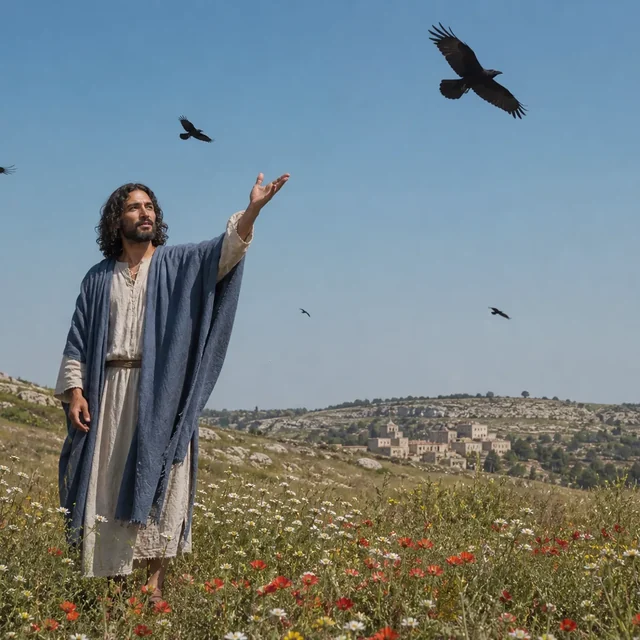
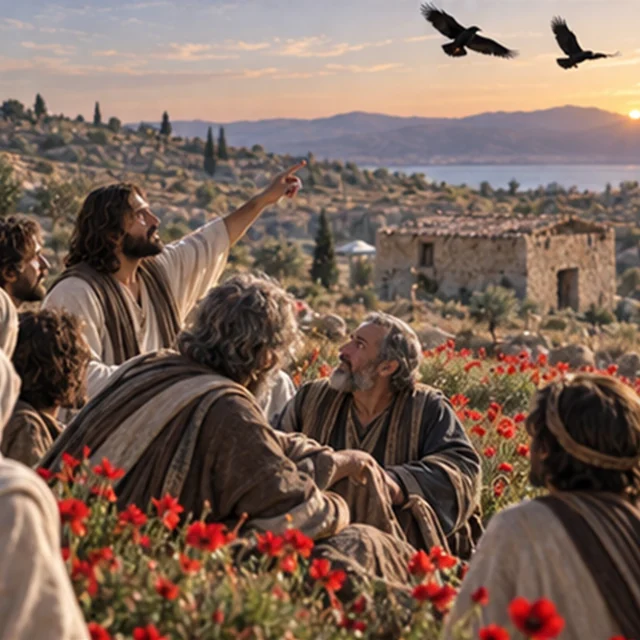
Food and clothing must not become worries that rule the followers' lives, Jesus says. Ravens have no barns, yet God feeds them. Flowers do not spin cloth, yet their beauty exceeds Solomon's, the earlier king famed for splendour. If God cares for grass soon burned as fuel, he cares for them. Worry cannot add the life or stature they seek. Their Father knows their needs. They should seek his kingdom, which he gladly gives to his little flock. Jesus calls for selling possessions and helping the poor, storing lasting treasure in heaven. What they treasure draws their hearts toward it.
In everyday life
A scholarship student sits over a budget and keeps recounting the same feared shortfall. Her guardian points to the agreed support already in place, then helps her plan study and a modest gift for someone in need. Trust changes what occupies her attention. Jesus promises the Father's kingdom and care, not a guaranteed funding agreement.
Notice
Luke 12:32 The little flock hears of the Father's delight in giving. The kingdom is presented as a gift received in trust.
Luke 12:22-34
King James Version22And he said unto his disciples, Therefore I say unto you, Take no thought for your life, what ye shall eat; neither for the body, what ye shall put on.
23The life is more than meat, and the body is more than raiment.
24Consider the ravens: for they neither sow nor reap; which neither have storehouse nor barn; and God feedeth them: how much more are ye better than the fowls?
25And which of you with taking thought can add to his stature one cubit?
26If ye then be not able to do that thing which is least, why take ye thought for the rest?
27Consider the lilies how they grow: they toil not, they spin not; and yet I say unto you, that Solomon in all his glory was not arrayed like one of these.
28If then God so clothe the grass, which is to day in the field, and to morrow is cast into the oven; how much more will he clothe you, O ye of little faith?
29And seek not ye what ye shall eat, or what ye shall drink, neither be ye of doubtful mind.
30For all these things do the nations of the world seek after: and your Father knoweth that ye have need of these things.
31But rather seek ye the kingdom of God; and all these things shall be added unto you.
32Fear not, little flock; for it is your Father’s good pleasure to give you the kingdom.
33Sell that ye have, and give alms; provide yourselves bags which wax not old, a treasure in the heavens that faileth not, where no thief approacheth, neither moth corrupteth.
34For where your treasure is, there will your heart be also.
Luke 12:35-48
Entrusted Power Brings Greater Responsibility
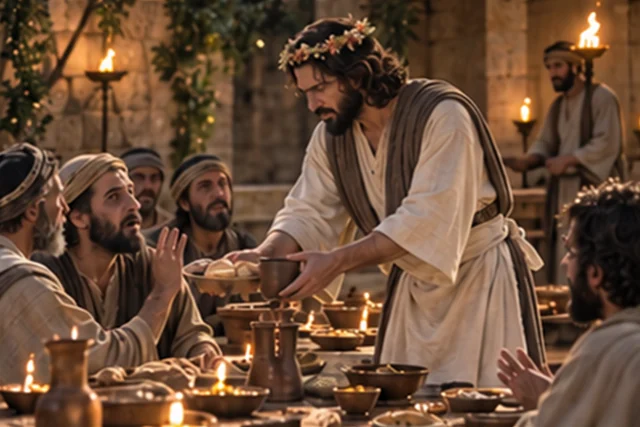
Jesus pictures servants dressed and ready with lamps burning when their master returns. He will honour them by serving them a meal. Since his arrival is unknown, readiness must continue. Peter, a close follower, asks who the teaching concerns. Jesus describes a steward feeding the household faithfully and receiving greater trust. An abusive steward uses delay to beat others and get drunk. The master returns unexpectedly and cuts him apart, assigning him to the unfaithful. Servants who know the master's will receive heavier punishment than those acting without that knowledge. The images are severe: greater gifts and knowledge bring greater responsibility, not greater freedom to harm.
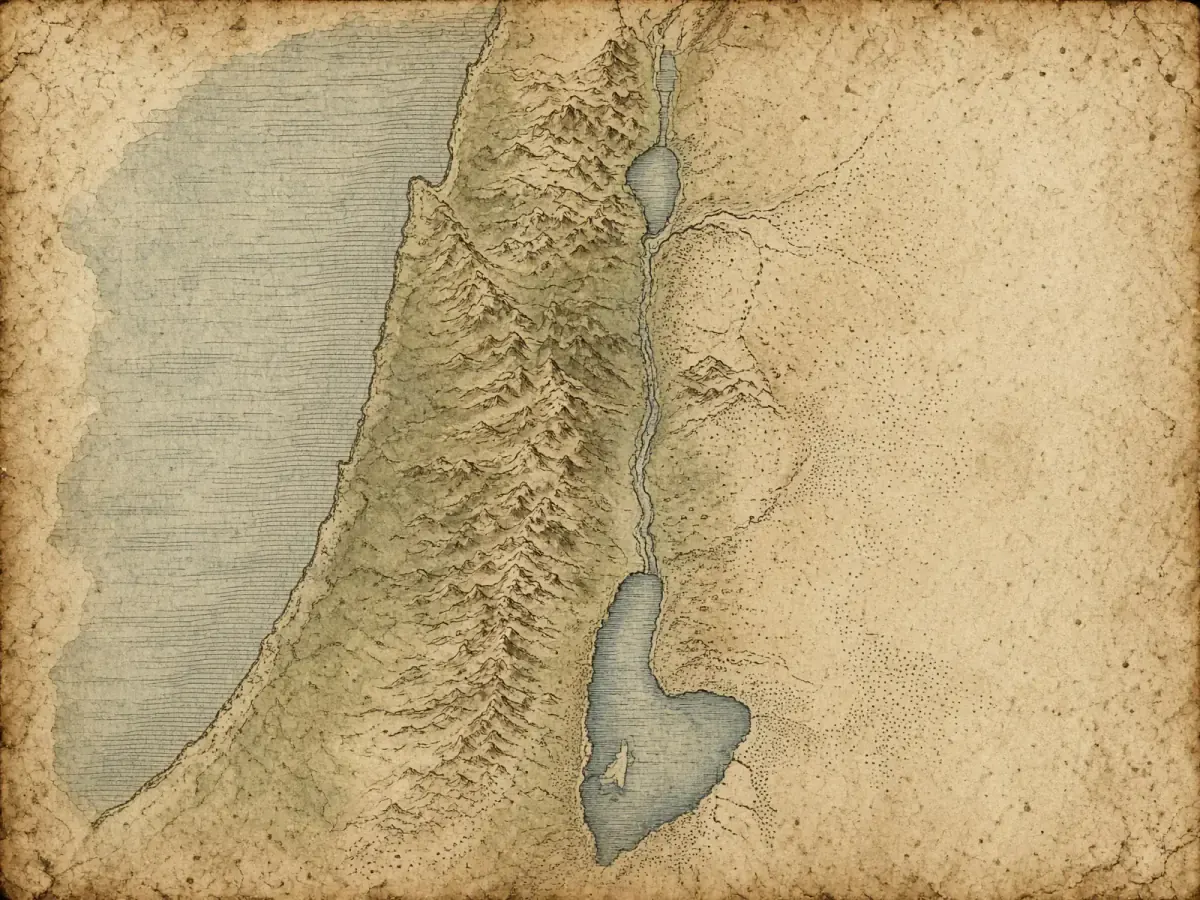
In everyday life
A residential-care reviewer checks whether meals and medicines were provided while the manager was away. The senior worker's extra training increases her responsibility for missed care; it does not excuse her. The residents' daily needs remain real without a supervisor watching. Jesus describes final judgement through a master's severe punishments, not a modern employment review.
Notice
Luke 12:48 Jesus links what is required with what has been entrusted. Knowledge and responsibility increase accountability rather than providing a shield from it.
Luke 12:35-48
King James Version35Let your loins be girded about, and your lights burning;
36And ye yourselves like unto men that wait for their lord, when he will return from the wedding; that when he cometh and knocketh, they may open unto him immediately.
37Blessed are those servants, whom the lord when he cometh shall find watching: verily I say unto you, that he shall gird himself, and make them to sit down to meat, and will come forth and serve them.
38And if he shall come in the second watch, or come in the third watch, and find them so, blessed are those servants.
39And this know, that if the goodman of the house had known what hour the thief would come, he would have watched, and not have suffered his house to be broken through.
40Be ye therefore ready also: for the Son of man cometh at an hour when ye think not.
41Then Peter said unto him, Lord, speakest thou this parable unto us, or even to all?
42And the Lord said, Who then is that faithful and wise steward, whom his lord shall make ruler over his household, to give them their portion of meat in due season?
43Blessed is that servant, whom his lord when he cometh shall find so doing.
44Of a truth I say unto you, that he will make him ruler over all that he hath.
45But and if that servant say in his heart, My lord delayeth his coming; and shall begin to beat the menservants and maidens, and to eat and drink, and to be drunken;
46The lord of that servant will come in a day when he looketh not for him, and at an hour when he is not aware, and will cut him in sunder, and will appoint him his portion with the unbelievers.
47And that servant, which knew his lord’s will, and prepared not himself, neither did according to his will, shall be beaten with many stripes.
48But he that knew not, and did commit things worthy of stripes, shall be beaten with few stripes. For unto whomsoever much is given, of him shall be much required: and to whom men have committed much, of him they will ask the more.
Luke 12:49-53
His Coming Divides Households
Jesus says he has come to bring fire to the earth and speaks with urgency about its kindling. The precise meaning of the fire is debated, but judgement and the testing of response are in view. He also names a baptism still ahead, an overwhelming suffering he must pass through. He feels its pressure until it is fulfilled. His coming does not produce immediate harmony. Families will divide over him, with parents, children, and in-laws set against one another. He is naming the conflict allegiance brings, not commanding relatives to hate. Even close family bonds will feel the force of differing responses to him.
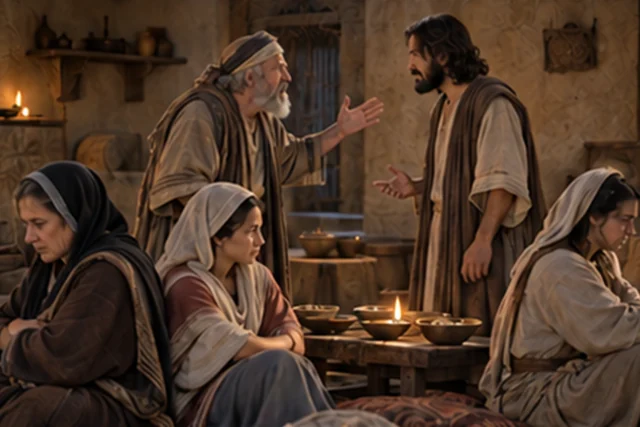
In everyday life
A recent convert places a baptism invitation on the table and hears relatives refuse to attend. The shared meals and memories remain, but a new allegiance has exposed a deep disagreement. She cannot make the conflict vanish by pretending the choice is trivial. Jesus predicts division caused by his own coming, not every dispute over a personal decision.
Notice
Luke 12:53 The examples remain inside one household, including in-laws. Jesus does not limit the coming division to distant public groups or official opponents.
Luke 12:49-53
King James Version49I am come to send fire on the earth; and what will I, if it be already kindled?
50But I have a baptism to be baptized with; and how am I straitened till it be accomplished!
51Suppose ye that I am come to give peace on earth? I tell you, Nay; but rather division:
52For from henceforth there shall be five in one house divided, three against two, and two against three.
53The father shall be divided against the son, and the son against the father; the mother against the daughter, and the daughter against the mother; the mother in law against her daughter in law, and the daughter in law against her mother in law.
Luke 12:54-59
Recognise the Time and Settle Before Judgement
The crowd knows how to read the weather, Jesus says. Clouds from the west bring rain, and a south wind brings heat. Yet they fail to judge the present time rightly. He asks why they do not discern what is right. Then he pictures someone on the way to court with an opponent. Settling the dispute now avoids being handed from judge to officer and into prison until every last coin is paid. The point is urgency before a decisive hearing. Familiar skill in reading weather does not compensate for failing to respond while a chance to make matters right remains.
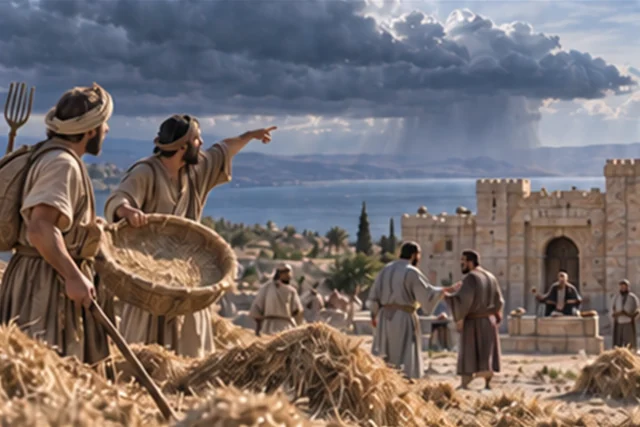
In everyday life
A small-claims defendant stops outside the courthouse and finally offers the repayment he has delayed for months. He knows that once the hearing begins, further costs and an order will replace the chance for a voluntary settlement. The remaining time matters. Jesus uses the legal scene to warn of a deeper reckoning before God.
Notice
Luke 12:58 The agreement is sought while both parties are still on the way. Jesus stresses the opportunity before the case passes into the judge's hands.
Luke 12:54-59
King James Version54And he said also to the people, When ye see a cloud rise out of the west, straightway ye say, There cometh a shower; and so it is.
55And when ye see the south wind blow, ye say, There will be heat; and it cometh to pass.
56Ye hypocrites, ye can discern the face of the sky and of the earth; but how is it that ye do not discern this time?
57Yea, and why even of yourselves judge ye not what is right?
58When thou goest with thine adversary to the magistrate, as thou art in the way, give diligence that thou mayest be delivered from him; lest he hale thee to the judge, and the judge deliver thee to the officer, and the officer cast thee into prison.
59I tell thee, thou shalt not depart thence, till thou hast paid the very last mite.
Details worth noticing
The opening image
Luke 12:1 begins with “In the mean time, when there were gathered together an innumerable multitude of people, insomuch that they trode one upon another, he began to say unto his…”
Where the chapter turns
Luke 12:31 forms a natural hinge: “But rather seek ye the kingdom of God; and all these things shall be added unto you.”
The final note
Luke 12:59 leaves the reader with “I tell thee, thou shalt not depart thence, till thou hast paid the very last mite.”
A word trail through the chapter
The words lord, cometh, Fear, thought, daughter, hour help reveal the chapter’s repeated concerns.
KJV words made clear
- covetousness
- A grasping desire to possess more, especially what belongs to others.
- steward
- A trusted servant managing a household and its supplies.
- straitened
- Under pressure or distress while awaiting something that must happen.
Music and video connected to the passage
Related media appears when its Scripture reference overlaps this study. Music and video can illuminate a theme while the biblical text remains the foundation.