
Ezra

10 Chapters
Ezra: The Whole Book, Chapter by Chapter
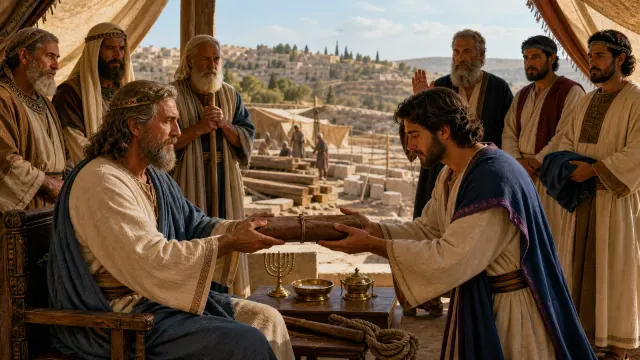
The Return Begins in a Royal Proclamation
Ezra 1 begins with no demolition, battle, or homecoming scene. It begins with a royal document. Cyrus declares that the house of the LORD in Jerusalem may be rebuilt, and the Book of Ezra places that decree inside the fulfillment of Jeremiah's word. The same chapter then turns from permission to response. God raises the spirits of household leaders, priests, Levites, and others to go, while neighbors supply silver, gold, goods, animals, and voluntary offerings. Finally, the temple vessels taken by Nebuchadnezzar leave imperial custody under an inventory and named custodians. Restoration begins here as both divine stirring and organized transfer, with people, resources, legal authority, and sacred objects all moving toward Jerusalem.
One complete chapter pageOpen chapter →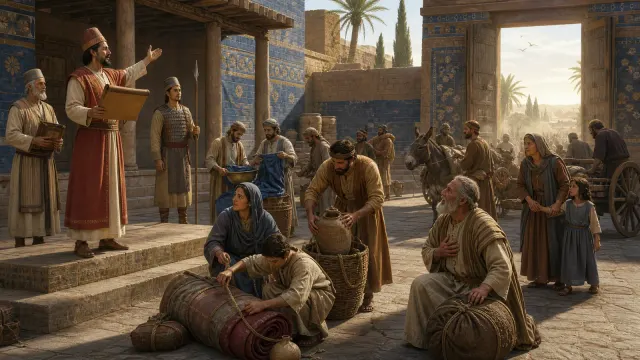
A Returned People Counted by Name and Place
Ezra 2 turns the return into a register. Families are counted by ancestral names, other groups by towns, and temple servants by their particular work. The Book of Ezra also preserves what the records cannot settle: some households cannot demonstrate Israelite descent, and some priestly claimants cannot locate the genealogy required for service. The chapter refuses to turn those missing documents into invented certainty. Its totals, servants, singers, transport animals, and offerings make the migration practical as well as communal. By the end, the people are not gathered forever in one camp around Jerusalem. Priests, Levites, singers, porters, Nethinims, and others settle in their cities, so the long list becomes a map of a people taking up life in the land again.
One complete chapter pageOpen chapter →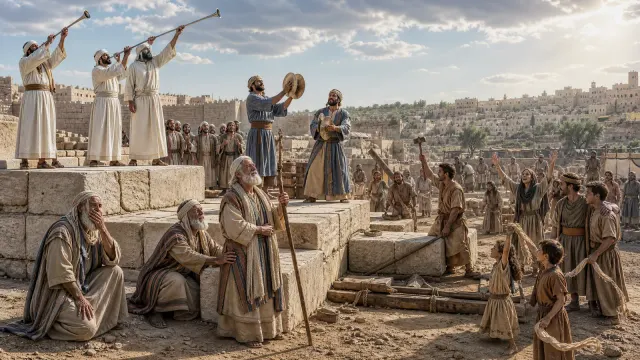
An Altar First, Then a Foundation and Mingled Voices
Ezra 3 restores worship in an order that may feel backwards at first: altar before temple, sacrifices before foundation, calendar before walls. Jeshua and Zerubbabel lead the people in rebuilding the altar on its established site, and fear of surrounding peoples remains present while morning and evening offerings begin. The chapter then turns to materials, wages, cedar, transport, and supervision, showing how a celebrated foundation depends on ordinary procurement and labor. When the foundation is finally laid, the Book of Ezra refuses to give the moment one emotion. Priests and Levites praise, many people shout for joy, and older witnesses who remember the former house weep loudly. The sounds become impossible to separate, making restoration audible as both recovery and loss at once.
One complete chapter pageOpen chapter →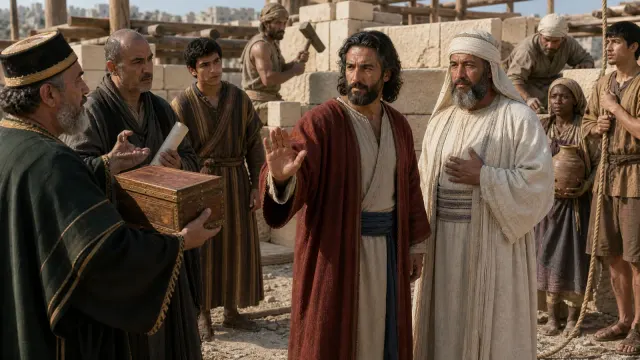
Opposition Moves from the Building Site to the Royal Archive
Ezra 4 shows opposition changing forms. A proposed partnership in temple construction is refused, after which local resistance weakens the builders, hires counselors, and follows the work into royal correspondence. The chapter then preserves letters concerning Jerusalem's walls under Artaxerxes before returning in its final verse to the earlier interruption of temple construction. That arrangement creates a chronological question the Book of Ezra itself does not spell out, but it clearly distinguishes the city-and-wall dispute from the temple project surrounding it. In the letters, language becomes a weapon: Jerusalem is called rebellious, future tax refusal is predicted, and past records are used to justify a present halt. The chapter ends with work on the house of God stopped until Darius's second year.
One complete chapter pageOpen chapter →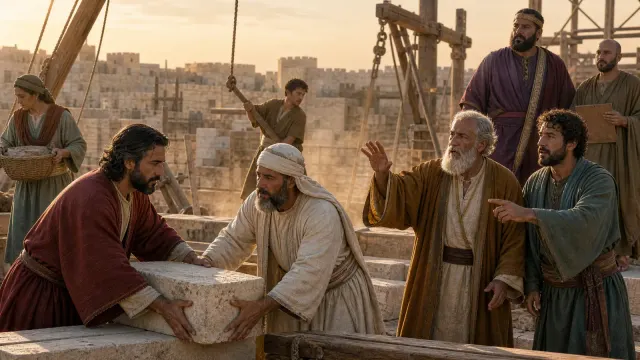
The Builders Resume While the Inquiry Travels
Ezra 5 begins where the stopped work left off, but this time prophetic speech and renewed construction move together. Haggai and Zechariah stand with Zerubbabel, Jeshua, and the elders as the temple work resumes. Provincial officials arrive and ask who authorized the project, yet unlike the earlier enforcement under Artaxerxes, this inquiry does not immediately halt construction. Tatnai reports the substantial stones, timber, and rapid progress to Darius, then includes the elders' own explanation. Their defense is notable for what it admits as well as what it claims: Israel's fathers provoked God, Nebuchadnezzar destroyed the former house, Cyrus later authorized rebuilding, and the royal record can verify it. The chapter ends with an appeal not for sympathy but for an archival search and a ruling.
One complete chapter pageOpen chapter →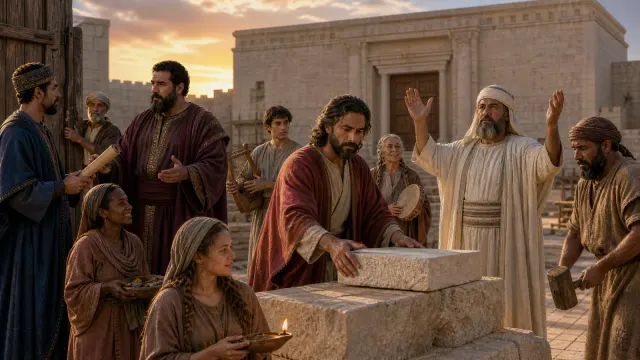
The Decree Is Found, and the Temple Is Finished
Ezra 6 answers the question raised by Tatnai's inquiry with a document found somewhere other than the place first searched. The royal memorandum at Achmetha confirms Cyrus's authorization, specifies construction terms, provides for royal funding, and orders the temple vessels restored. Darius then turns confirmation into active support: provincial officials are to leave the builders alone, pay expenses from regional revenue, and supply the daily needs of sacrifice. The temple is completed in Darius's sixth year, dedicated with offerings for all Israel, and staffed through ordered priestly and Levitical service. The chapter closes with Passover and unleavened bread, bringing returned exiles and others who have separated themselves to seek the LORD to one table of worship.
One complete chapter pageOpen chapter →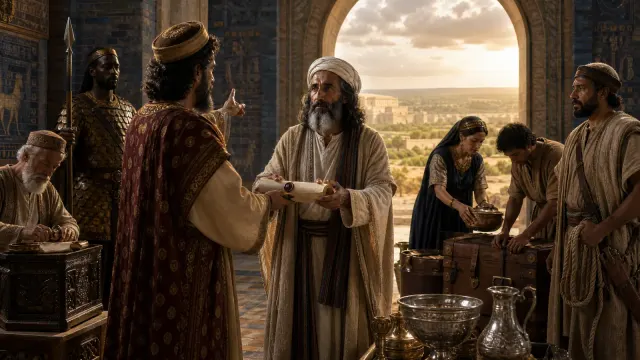
Ezra Arrives with a Prepared Heart and a Royal Commission
Ezra 7 finally introduces the man whose name the book bears, and his arrival marks a new phase after the temple has already been completed. Ezra is established through priestly descent, skill in the law of Moses, and a heart prepared to seek that law, do it, and teach it. Artaxerxes gives him a broad commission: willing Israelites may return with him, offerings and vessels may be carried to Jerusalem, treasury resources may be used, temple servants receive tax exemptions, and Ezra may appoint judges and teach the law. The Book of Ezra does not leave that authority as a royal achievement alone. Its closing first-person thanksgiving attributes the king's favorable disposition to God, and Ezra responds by gathering leaders for the journey ahead.
One complete chapter pageOpen chapter →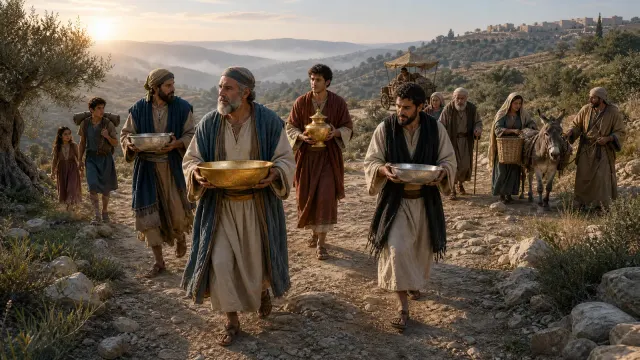
A Guarded Trust Without a Military Escort
Ezra 8 slows the second return down long enough to show what responsible trust looks like. The travelers are counted by family, then inspected at Ahava, where Ezra discovers that the company lacks the Levites needed for temple service. Qualified ministers are recruited, and the group then fasts for a safe journey because Ezra has chosen not to request a military escort after publicly speaking of God's protecting hand. Yet the chapter never confuses faith with carelessness. Silver, gold, and vessels are weighed into named custody before departure and weighed again after arrival in Jerusalem. The Book of Ezra holds prayer, danger, logistics, accounting, sacrifice, and official paperwork together. The journey succeeds, and its success can be both thanked for and documented.
One complete chapter pageOpen chapter →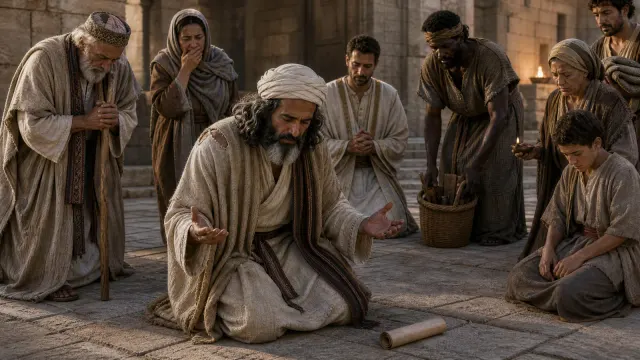
A Restored Temple Does Not Settle the People’s Faithfulness
Ezra 9 breaks the momentum of successful return almost immediately. Officials report that Israelites, priests, Levites, and especially leaders have entered marriages associated in the report with the abominations of surrounding peoples. Ezra responds before he legislates: he tears his garments, pulls hair from his head and beard, and sits stunned until the evening sacrifice. His prayer then speaks in the first-person plural, identifying with a community whose long record of trespass has already led through conquest and captivity. The restored remnant is described modestly, as a foothold and "a little reviving" within continued Persian subjection. That small mercy sharpens the crisis. The chapter closes without a solution or divine reply, only with God's righteousness and the people's trespass still standing face to face.
One complete chapter pageOpen chapter →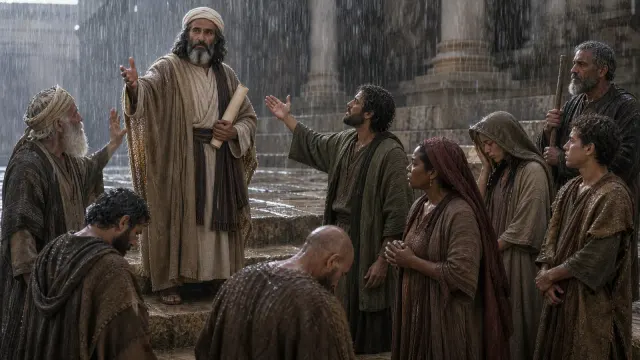
A Covenant of Separation and an Ending Without a Celebration
Ezra 10 turns confession into a communal process, but the Book of Ezra does not make that process light or tidy. While Ezra weeps before the house of God, a great assembly gathers, and Shechaniah proposes a covenant to dismiss foreign wives and the children born to them. Ezra accepts the proposal and requires an oath. A compulsory summons then brings the returned community to Jerusalem under threat of forfeiture and exclusion, where heavy rain makes an immediate mass hearing impractical. The people agree to separation but ask for scheduled examinations with local elders and judges. The inquiry takes months. Priests, Levites, singers, porters, and other Israelites are named among those implicated. The book closes with the affected marriages and children still visible, offering no final feast to soften the human consequences.
One complete chapter pageOpen chapter →Source: eBible.org · eng-kjv2006