
The big picture
Hostile neighbours oppose the returned people of Judah and Benjamin, two tribes of Israel. Zerubbabel and Jeshua, the leaders of the return, refuse their offer to help build God's temple. The neighbours then try to stop the work. They hire advisers and send claims to Persia's kings, who rule the region. Letters call Jerusalem, the city being rebuilt, a threat to royal power. Examples from several reigns show this lasting pressure. The temple work stops until Darius, a later Persian king, rules.
In this chapter
- The Leaders Refuse a Shared Project Ezra 4:1-3
The opponents hear that God's temple is being built and offer to help.
- Resistance Continues Through Several Reigns Ezra 4:4-7
Local people weaken the builders' resolve and cause trouble at the site.
- A Letter Calls Jerusalem Rebellious Ezra 4:8-16
Rehum and Shimshai write to Artaxerxes with other groups in the region.
- The King’s Reply Is Enforced by Force Ezra 4:17-23
Artaxerxes orders a search of the old records.
- The Temple Work Remains Stopped Ezra 4:24
The account now returns to God's house at Jerusalem.
Central truth
Opponents use pressure and royal accusations to obstruct rebuilding, leaving God's house unfinished for years despite the earlier permission to build.

Scripture beside the summary
Ezra · King James Version · 24Ezra 4:1-3
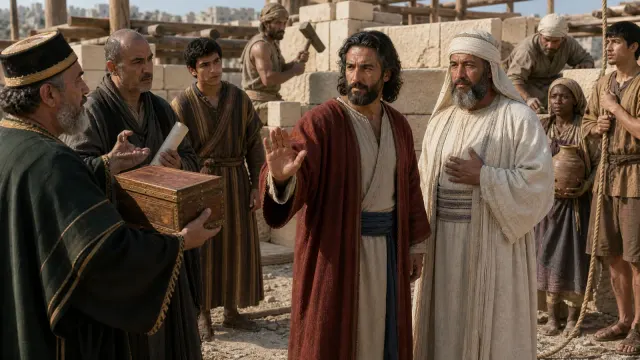
The Leaders Refuse a Shared Project
The opponents hear that God's temple is being built and offer to help. They say they seek the same God. They claim to have sacrificed to him since Assyria brought them to the land. The returned leaders refuse. Cyrus gave this task to their own people, they say. They will build the house together without these partners. Similar words about God do not settle who has charge of the work. The account has already named those making the offer as enemies of the returnees.
In everyday life
A garden trust chair declines an offer from a group contesting the site's ownership. They say they want the same green space, but she keeps the grant's work with the team legally assigned to it. Shared language has not resolved the conflict. The returnees' boundary concerns God's temple and the charge given through Cyrus.
Notice
Ezra 4:3 The leaders refer to Cyrus's command when refusing the offer. Their answer names responsibility for the work rather than debating every detail of the neighbours' claim.
Ezra 4:1-3
King James Version1Now when the adversaries of Judah and Benjamin heard that the children of the captivity builded the temple unto the LORD God of Israel;
2Then they came to Zerubbabel, and to the chief of the fathers, and said unto them, Let us build with you: for we seek your God, as ye do; and we do sacrifice unto him since the days of Esar-haddon king of Assur, which brought us up hither.
3But Zerubbabel, and Jeshua, and the rest of the chief of the fathers of Israel, said unto them, Ye have nothing to do with us to build an house unto our God; but we ourselves together will build unto the LORD God of Israel, as king Cyrus the king of Persia hath commanded us.
Ezra 4:4-7
Resistance Continues Through Several Reigns
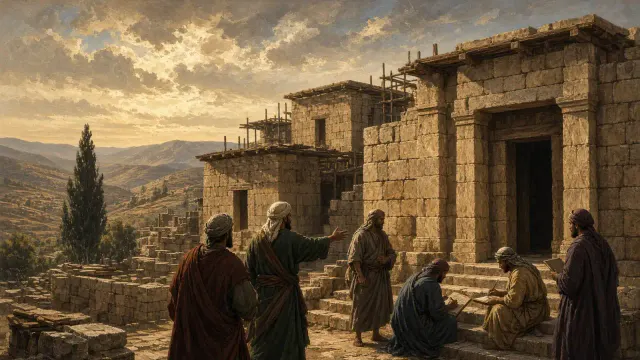
Local people weaken the builders' resolve and cause trouble at the site. They hire advisers to block the work. This goes on through Cyrus's reign and into the time of Darius. The account then turns to later reigns. Accusers write under Ahasuerus, and another letter goes to Artaxerxes. Each case uses the royal system to press a local feud. The threat does not end with one ruler. New letters give old hostility another way to hold back the people and their building plans.
In everyday life
A footpath volunteer watches the same land dispute reappear through several permit cycles. Opponents hire agents, file fresh objections and discourage the workers who arrive with tools. Each new season brings another delay. The obstruction has become a sustained effort. Ezra's opponents are resisting the rebuilding of the returned people's sacred and civic life.
Notice
Ezra 4:5 Hired advisers work against the project across more than one reign. The delay comes through persistent opposition rather than a single unanswered complaint.
Ezra 4:4-7
King James Version4Then the people of the land weakened the hands of the people of Judah, and troubled them in building,
5And hired counsellors against them, to frustrate their purpose, all the days of Cyrus king of Persia, even until the reign of Darius king of Persia.
6And in the reign of Ahasuerus, in the beginning of his reign, wrote they unto him an accusation against the inhabitants of Judah and Jerusalem.
7And in the days of Artaxerxes wrote Bishlam, Mithredath, Tabeel, and the rest of their companions, unto Artaxerxes king of Persia; and the writing of the letter was written in the Syrian tongue, and interpreted in the Syrian tongue.
Ezra 4:8-16
A Letter Calls Jerusalem Rebellious
Rehum and Shimshai write to Artaxerxes with other groups in the region. They call Jerusalem a bad city, known for revolt. They claim its rebuilt walls will lead to lost taxes. The king will lose control beyond the river, they warn. They ask him to search old records for proof of past unrest. The writers say they care for his honour because he pays them. Their letter turns a local quarrel into a threat to royal wealth. It asks the empire to take their side.
In everyday life
A toll-road contractor writes to a landowner about a planned new crossing. He says it will take away fees and points to old disputes as proof. His letter makes his own fear sound like care for the owner's rights. Jerusalem's enemies ask a foreign king to stop the walls because they fear a revolt.
Notice
Ezra 4:13 The letter stresses lost tax income if the city is rebuilt. The writers choose an argument likely to matter to the distant king who can stop the work.
Ezra 4:8-16
King James Version8Rehum the chancellor and Shimshai the scribe wrote a letter against Jerusalem to Artaxerxes the king in this sort:
9Then wrote Rehum the chancellor, and Shimshai the scribe, and the rest of their companions; the Dinaites, the Apharsathchites, the Tarpelites, the Apharsites, the Archevites, the Babylonians, the Susanchites, the Dehavites, and the Elamites,
10And the rest of the nations whom the great and noble Asnappar brought over, and set in the cities of Samaria, and the rest that are on this side the river, and at such a time.
11This is the copy of the letter that they sent unto him, even unto Artaxerxes the king; Thy servants the men on this side the river, and at such a time.
12Be it known unto the king, that the Jews which came up from thee to us are come unto Jerusalem, building the rebellious and the bad city, and have set up the walls thereof, and joined the foundations.
13Be it known now unto the king, that, if this city be builded, and the walls set up again, then will they not pay toll, tribute, and custom, and so thou shalt endamage the revenue of the kings.
14Now because we have maintenance from the king’s palace, and it was not meet for us to see the king’s dishonour, therefore have we sent and certified the king;
15That search may be made in the book of the records of thy fathers: so shalt thou find in the book of the records, and know that this city is a rebellious city, and hurtful unto kings and provinces, and that they have moved sedition within the same of old time: for which cause was this city destroyed.
16We certify the king that, if this city be builded again, and the walls thereof set up, by this means thou shalt have no portion on this side the river.
Ezra 4:17-23
The King’s Reply Is Enforced by Force
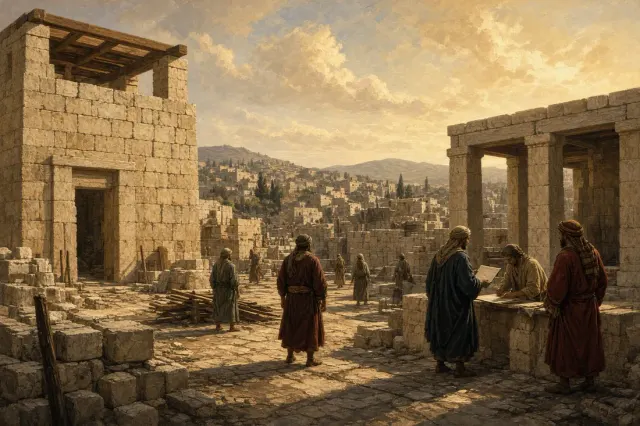
Artaxerxes orders a search of the old records. They show past revolts and kings who once took tribute from the region. He tells the officials to stop the city work until he gives a new order. They must act fast to prevent loss to the crown. Rehum and his companions hurry to Jerusalem with the reply. They force the builders to stop. Their pressure now carries the king's name. A written order gives local enemies the power to halt work they already opposed.
In everyday life
A bridge inspector arrives with a stop-work order after an owner accepts a rival's complaint. Workers put down their tools while security closes the gate. The written decision gives local pressure an authority it did not have before. The order against Jerusalem serves a foreign king's fear of rebellion and blocks a returning community.
Notice
Ezra 4:21 The order lasts until another royal command is given. It stops the city work without declaring that no future permission can ever change the ruling.
Ezra 4:17-23
King James Version17Then sent the king an answer unto Rehum the chancellor, and to Shimshai the scribe, and to the rest of their companions that dwell in Samaria, and unto the rest beyond the river, Peace, and at such a time.
18The letter which ye sent unto us hath been plainly read before me.
19And I commanded, and search hath been made, and it is found that this city of old time hath made insurrection against kings, and that rebellion and sedition have been made therein.
20There have been mighty kings also over Jerusalem, which have ruled over all countries beyond the river; and toll, tribute, and custom, was paid unto them.
21Give ye now commandment to cause these men to cease, and that this city be not builded, until another commandment shall be given from me.
22Take heed now that ye fail not to do this: why should damage grow to the hurt of the kings?
23Now when the copy of king Artaxerxes’ letter was read before Rehum, and Shimshai the scribe, and their companions, they went up in haste to Jerusalem unto the Jews, and made them to cease by force and power.
Ezra 4:24
The Temple Work Remains Stopped
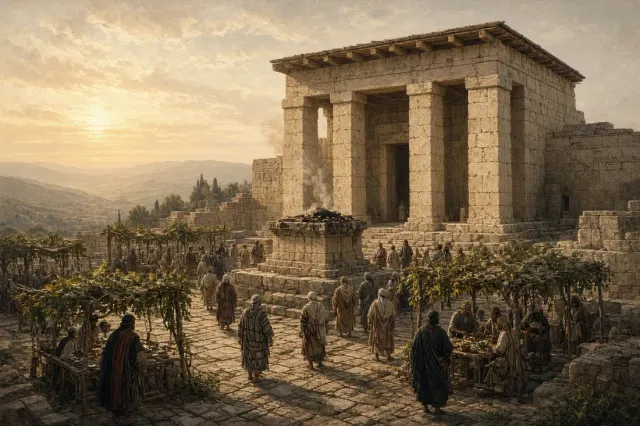
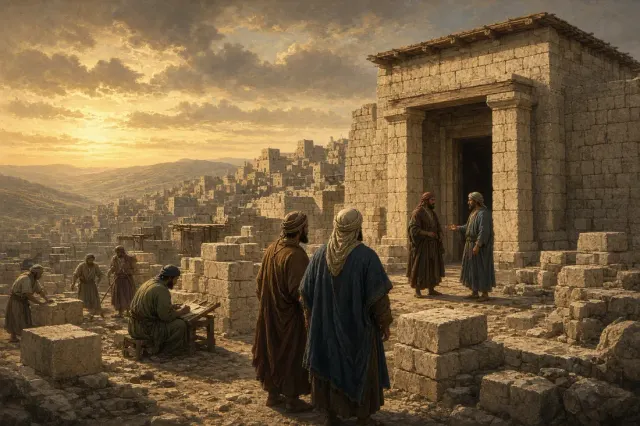
The account now returns to God's house at Jerusalem. Its work has stopped and stays stopped until Darius's second year. The letters described above show how enemies used royal power against the city. Here the focus returns to the unfinished temple. The people have come home, but they have not yet completed the task that brought them back. No building progress is described in the gap. The date points ahead to the next stage, when work on God's house will begin again.
In everyday life
A clock restorer covers an unfinished clock after a money dispute closes the workshop. Seasons pass with its hands still on the bench. She writes the date in the work log to mark where the pause begins. The temple's delay interrupts the rebuilding of God's house after exile, not a private repair.
Notice
Ezra 4:24 The stopping point is dated by Darius's second year. The brief notice returns attention to the temple after the wider examples of opposition.
Ezra 4:24
King James Version24Then ceased the work of the house of God which is at Jerusalem. So it ceased unto the second year of the reign of Darius king of Persia.
Details worth noticing
The opening image
Ezra 4:1 begins with “Now when the adversaries of Judah and Benjamin heard that the children of the captivity builded the temple unto the LORD God of Israel;”
Where the chapter turns
Ezra 4:14 forms a natural hinge: “Now because we have maintenance from the king’s palace, and it was not meet for us to see the king’s dishonour, therefore have we sent and certified the…”
The final note
Ezra 4:24 leaves the reader with “Then ceased the work of the house of God which is at Jerusalem. So it ceased unto the second year of the reign of Darius king of Persia.”
A word trail through the chapter
The words king, city, rest, Jerusalem, Artaxerxes, kings help reveal the chapter’s repeated concerns.
KJV words made clear
- unto
- to
- thee
- you
- thou
- you
- thy
- your
- hath
- has
Music and video connected to the passage
Related media appears when its Scripture reference overlaps this study. Music and video can illuminate a theme while the biblical text remains the foundation.