The big picture
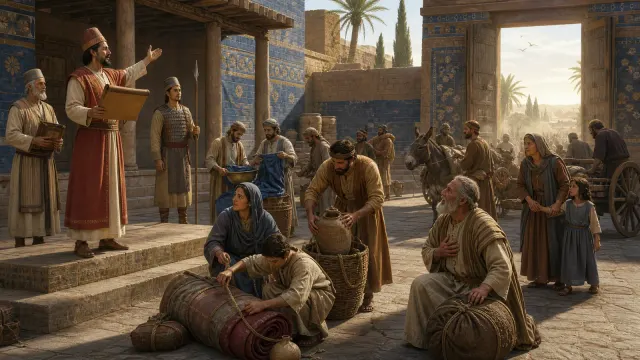
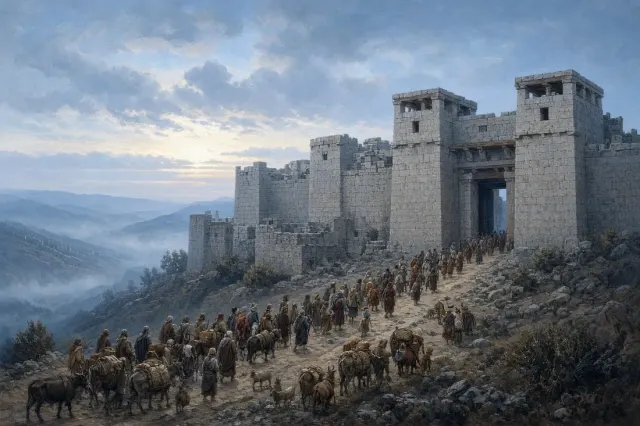
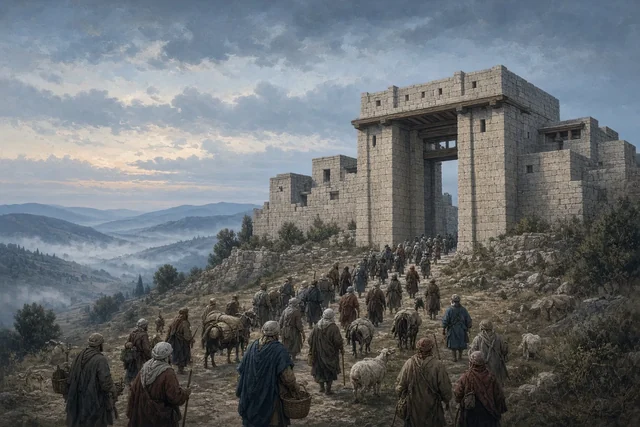
The return from Babylon, the land of captivity, now takes the shape of named families and towns. Zerubbabel, one of the returning leaders, heads the list with other men. The people go back to Jerusalem, their former capital, and Judah, the land around it. Priests, singers, gatekeepers and other temple workers are counted with them. Some cannot prove their family lines and face limits on sacred service. The final totals include servants and animals, followed by gifts for rebuilding and settlement in the towns.
In this chapter
- Family Names Give Shape to the Return Ezra 2:1-20
The list names people returning from the captivity imposed by Nebuchadnezzar.
- Towns Are Linked with Their People Ezra 2:21-35
The next groups are named through towns and places.
- Sacred Workers Return with Their Families Ezra 2:36-58
Priestly families appear next, followed by Levites, singers and gatekeepers.
- Missing Records Limit Some Claims Ezra 2:59-63
Some returning families cannot prove their ancestry within Israel.
- People and Animals Make a Travelling Community Ezra 2:64-67
The whole assembly is given as 42,360 people.
- Gifts and Homes Begin Life Again Ezra 2:68-70
On reaching the site of God's house, some family leaders give freely for its rebuilding.
Central truth
The return restores a named community with family roots, sacred duties and shared resources, while missing records leave some claims unresolved.
Scripture beside the summary
Ezra · King James Version · 70Ezra 2:1-20
Family Names Give Shape to the Return
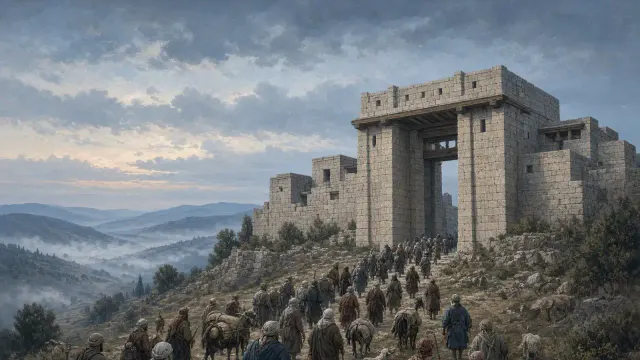
The list names people returning from the captivity imposed by Nebuchadnezzar. They travel with Zerubbabel and other leaders to their own cities. Family groups follow, each with a count of its men. The groups vary greatly in size. Parosh has more than two thousand, while Gibbar has fewer than one hundred. Each still receives a place in the record. The return is not an unnamed crowd moving across a border. Families carry their identity through exile and are counted as they come home.
In everyday life
The reunion registrar lays family cards across a long dining table. Some branches need several sheets; others fit on one small card. She gives each its own place rather than merging the smaller groups into a vague total. These returning families are rebuilding a people after captivity, not gathering for a single meal.
Notice
Ezra 2:3 The first family count belongs to a named ancestral group. The numbers preserve ties within the returning people rather than counting every traveller as unrelated.
Ezra 2:1-20
King James Version1Now these are the children of the province that went up out of the captivity, of those which had been carried away, whom Nebuchadnezzar the king of Babylon had carried away unto Babylon, and came again unto Jerusalem and Judah, every one unto his city;
2Which came with Zerubbabel: Jeshua, Nehemiah, Seraiah, Reelaiah, Mordecai, Bilshan, Mispar, Bigvai, Rehum, Baanah. The number of the men of the people of Israel:
3The children of Parosh, two thousand an hundred seventy and two.
4The children of Shephatiah, three hundred seventy and two.
5The children of Arah, seven hundred seventy and five.
6The children of Pahath-moab, of the children of Jeshua and Joab, two thousand eight hundred and twelve.
7The children of Elam, a thousand two hundred fifty and four.
8The children of Zattu, nine hundred forty and five.
9The children of Zaccai, seven hundred and threescore.
10The children of Bani, six hundred forty and two.
11The children of Bebai, six hundred twenty and three.
12The children of Azgad, a thousand two hundred twenty and two.
13The children of Adonikam, six hundred sixty and six.
14The children of Bigvai, two thousand fifty and six.
15The children of Adin, four hundred fifty and four.
16The children of Ater of Hezekiah, ninety and eight.
17The children of Bezai, three hundred twenty and three.
18The children of Jorah, an hundred and twelve.
19The children of Hashum, two hundred twenty and three.
20The children of Gibbar, ninety and five.
Ezra 2:21-35
Towns Are Linked with Their People
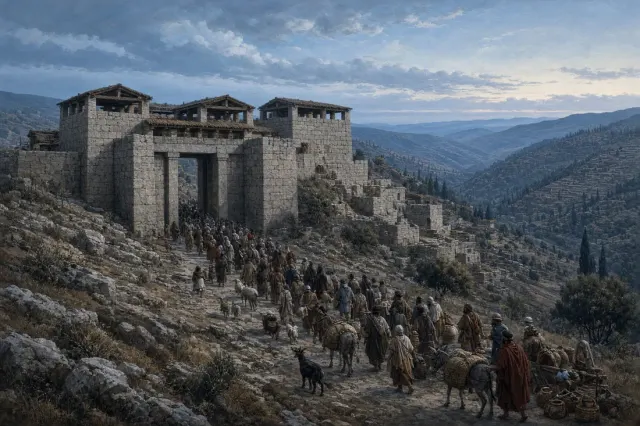
The next groups are named through towns and places. Beth-lehem, Netophah, Anathoth and many others each have their people counted. Some entries join several towns in one total. Jericho has 345, while Senaah has 3,630. The range shows that return reaches both smaller and larger communities. Place names matter because people are going back to local homes, not only to the city where the temple will stand. A restored country needs its towns populated as well as its sacred centre rebuilt.
In everyday life
A bus dispatcher marks returning evacuees by village on a route map. One stop needs a coach; another needs only a small van. Each place still belongs on the route. The map turns a crowd into people with homes to reach. Ezra's town groups return after exile to rebuild life among God's people.
Notice
Ezra 2:25 Several towns share one entry and one number. The list can group neighbours together while still preserving the names of the places to which they belong.
Ezra 2:21-35
King James Version21The children of Beth-lehem, an hundred twenty and three.
22The men of Netophah, fifty and six.
23The men of Anathoth, an hundred twenty and eight.
24The children of Azmaveth, forty and two.
25The children of Kirjath-arim, Chephirah, and Beeroth, seven hundred and forty and three.
26The children of Ramah and Gaba, six hundred twenty and one.
27The men of Michmas, an hundred twenty and two.
28The men of Beth-el and Ai, two hundred twenty and three.
29The children of Nebo, fifty and two.
30The children of Magbish, an hundred fifty and six.
31The children of the other Elam, a thousand two hundred fifty and four.
32The children of Harim, three hundred and twenty.
33The children of Lod, Hadid, and Ono, seven hundred twenty and five.
34The children of Jericho, three hundred forty and five.
35The children of Senaah, three thousand and six hundred and thirty.
Ezra 2:36-58
Sacred Workers Return with Their Families
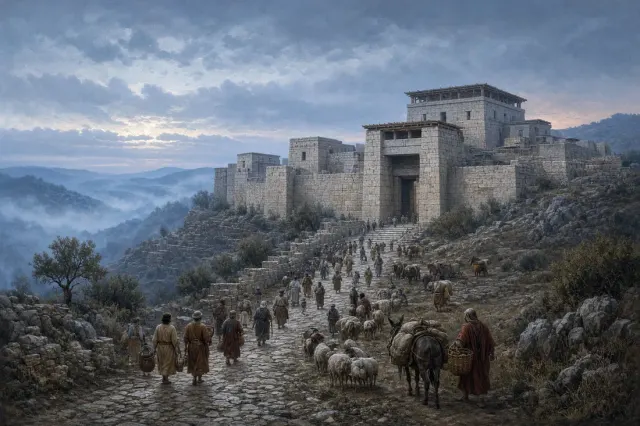
Priestly families appear next, followed by Levites, singers and gatekeepers. The Nethinims, workers assigned to temple service, are listed by family as well. Descendants of Solomon's servants share a total with them. Rebuilding worship will need more than an altar and walls. People with different inherited duties must return and take their places. The long names give visible space to helpers whose work is less prominent than the priests' role. A functioning sacred house depends on the whole range of service.
In everyday life
A theatre wardrobe keeper checks the return roster for a company after a long closure. Singers are listed beside stagehands, door staff and costume helpers. The opening cannot happen with performers alone. She makes sure the less visible teams have their places. Ezra records inherited duties for service in God's temple, not hired theatrical roles.
Notice
Ezra 2:42 Gatekeepers have their own family list and total. Guarding access to the temple belongs among the work needed for restored worship, alongside singing and priestly service.
Ezra 2:36-58
King James Version36The priests: the children of Jedaiah, of the house of Jeshua, nine hundred seventy and three.
37The children of Immer, a thousand fifty and two.
38The children of Pashur, a thousand two hundred forty and seven.
39The children of Harim, a thousand and seventeen.
40The Levites: the children of Jeshua and Kadmiel, of the children of Hodaviah, seventy and four.
41The singers: the children of Asaph, an hundred twenty and eight.
42The children of the porters: the children of Shallum, the children of Ater, the children of Talmon, the children of Akkub, the children of Hatita, the children of Shobai, in all an hundred thirty and nine.
43The Nethinims: the children of Ziha, the children of Hasupha, the children of Tabbaoth,
44The children of Keros, the children of Siaha, the children of Padon,
45The children of Lebanah, the children of Hagabah, the children of Akkub,
46The children of Hagab, the children of Shalmai, the children of Hanan,
47The children of Giddel, the children of Gahar, the children of Reaiah,
48The children of Rezin, the children of Nekoda, the children of Gazzam,
49The children of Uzza, the children of Paseah, the children of Besai,
50The children of Asnah, the children of Mehunim, the children of Nephusim,
51The children of Bakbuk, the children of Hakupha, the children of Harhur,
52The children of Bazluth, the children of Mehida, the children of Harsha,
53The children of Barkos, the children of Sisera, the children of Thamah,
54The children of Neziah, the children of Hatipha.
55The children of Solomon’s servants: the children of Sotai, the children of Sophereth, the children of Peruda,
56The children of Jaalah, the children of Darkon, the children of Giddel,
57The children of Shephatiah, the children of Hattil, the children of Pochereth of Zebaim, the children of Ami.
58All the Nethinims, and the children of Solomon’s servants, were three hundred ninety and two.
Ezra 2:59-63
Missing Records Limit Some Claims
Some returning families cannot prove their ancestry within Israel. Others claim priestly descent but cannot find their names in the register. They are therefore excluded from priestly service as unfit until the claim is resolved. The governor says they must not eat the most holy food until a priest can seek an answer through Urim and Thummim. These are sacred means of seeking God's decision. Lack of proof does not erase their presence among the returnees, but it prevents an unverified claim to sacred privilege.
In everyday life
A registrar at a guild workshop checks a claimant's papers before handing over tools reserved for qualified members. The person is present and welcome to speak, but the missing record leaves the role unsettled. The decision waits for proper authority. The priestly claims here require sacred judgement and concern food set apart to God.
Notice
Ezra 2:63 The restriction remains until a priest can seek a decision. The governor does not pretend that missing records have already settled every question about descent.
Ezra 2:59-63
King James Version59And these were they which went up from Tel-melah, Tel-harsa, Cherub, Addan, and Immer: but they could not shew their father’s house, and their seed, whether they were of Israel:
60The children of Delaiah, the children of Tobiah, the children of Nekoda, six hundred fifty and two.
61And of the children of the priests: the children of Habaiah, the children of Koz, the children of Barzillai; which took a wife of the daughters of Barzillai the Gileadite, and was called after their name:
62These sought their register among those that were reckoned by genealogy, but they were not found: therefore were they, as polluted, put from the priesthood.
63And the Tirshatha said unto them, that they should not eat of the most holy things, till there stood up a priest with Urim and with Thummim.
Ezra 2:64-67
People and Animals Make a Travelling Community
The whole assembly is given as 42,360 people. A further 7,337 male and female servants are named in the totals, along with two hundred singers. Horses, mules, camels and donkeys are counted too. These figures show the size and practical needs of the returning group. Animals carry people and goods, while servants form part of its working life. The return is a major movement of households and resources. The totals gather the separate lists into a view of the whole company.
In everyday life
A ferry purser checks passengers, crew and vehicles before a community moves to an island. A total of passengers alone would not show the space needed for supplies and transport. Separate counts make the crossing workable. Ezra's totals record a people's return from captivity to restore their homeland and sacred worship.
Notice
Ezra 2:65 Servants are counted separately from the main assembly total. The return includes people with different social roles, not only the named family groups above.
Ezra 2:64-67
King James Version64The whole congregation together was forty and two thousand three hundred and threescore,
65Beside their servants and their maids, of whom there were seven thousand three hundred thirty and seven: and there were among them two hundred singing men and singing women.
66Their horses were seven hundred thirty and six; their mules, two hundred forty and five;
67Their camels, four hundred thirty and five; their asses, six thousand seven hundred and twenty.
Ezra 2:68-70
Gifts and Homes Begin Life Again
On reaching the site of God's house, some family leaders give freely for its rebuilding. They contribute gold, silver and priestly garments according to what they can afford. The gifts add practical support to their return. Priests, Levites, singers, gatekeepers, temple workers and the wider people settle in their towns. The chapter ends with people at home rather than still on the road. Rebuilding will begin from communities that have both places to live and a shared commitment to the sacred house.
In everyday life
The village seamstress arrives at a damaged meeting place with cloth and savings she can spare. Others give tools or cash from their own means, then go home to prepare for the work. Arrival leads into settled support rather than ending the task. These gifts serve the rebuilding of God's temple after captivity.
Notice
Ezra 2:69 The leaders give according to their ability. Shared support does not require every household to have the same resources or make an identical gift.
Ezra 2:68-70
King James Version68And some of the chief of the fathers, when they came to the house of the LORD which is at Jerusalem, offered freely for the house of God to set it up in his place:
69They gave after their ability unto the treasure of the work threescore and one thousand drams of gold, and five thousand pound of silver, and one hundred priests’ garments.
70So the priests, and the Levites, and some of the people, and the singers, and the porters, and the Nethinims, dwelt in their cities, and all Israel in their cities.
Details worth noticing
The opening image
Ezra 2:1 begins with “Now these are the children of the province that went up out of the captivity, of those which had been carried away, whom Nebuchadnezzar the king of Babylon…”
Where the chapter turns
Ezra 2:1 forms a natural hinge: “Now these are the children of the province that went up out of the captivity, of those which had been carried away, whom Nebuchadnezzar the king of Babylon…”
The final note
Ezra 2:70 leaves the reader with “So the priests, and the Levites, and some of the people, and the singers, and the porters, and the Nethinims, dwelt in their cities, and all Israel in…”
A word trail through the chapter
The words children, twenty, fifty, seven, five, forty help reveal the chapter’s repeated concerns.
KJV words made clear
- unto
- to
Music and video connected to the passage
Related media appears when its Scripture reference overlaps this study. Music and video can illuminate a theme while the biblical text remains the foundation.